Deutsch
Incense Cedar (Calocedrus decurrens)
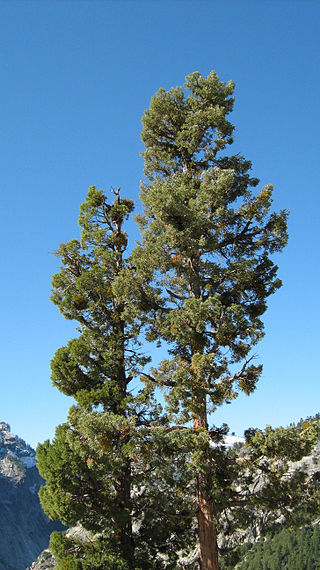
Incense cedar (Calocedrus decurrens), also known as California incense cedar, is an evergreen conifer native to the US states of California and Oregon, as well as Baja California in Mexico. It stands out for its massive, columnar trunk, thuja-like scaly foliage, and the orange, deeply furrowed bark of older trees; free-standing specimens develop narrow, dense crowns reaching down to the ground. The trees grow to heights of over 60 metres — with an extreme recorded maximum of 69 metres — and can live 300 to 500 years, occasionally reaching as much as 1,000, though they grow comparatively slowly. Its species name, decurrens, refers to the characteristic leaf-scales running down along the twig. Within its natural range in the mountain forests of the Sierra Nevada, it often grows alongside giant sequoias and Douglas firs. The characteristic, faintly sweet bark of older trees can grow up to 15 centimetres thick, effectively protecting the trunk from the wildfires common to the region.
In the United States, incense cedar is the primary wood source for pencil manufacturing, prized for its soft, straight grain that sharpens easily without splintering. Its aromatic wood was also historically used and valued by Indigenous peoples of California, including for tool handles and construction. Despite its English name, it is not botanically a true cedar but belongs to the cypress family — the name refers purely to its characteristically spicy, incense-like scent, most pronounced in freshly cut wood. Besides pencils, its wood was historically also valued for fence posts and roof shingles, thanks to its exceptional weather resistance. The distinctive, incense-like scent of freshly sawn wood gave the tree both its English and German names. Incense cedar has also grown increasingly popular as an ornamental tree in parks and gardens outside North America, prized for its striking columnar shape.
Burned as incense, incense cedar releases a warm, woody, resinous scent with a subtle spiciness reminiscent of both cedar and pine. Like other cedars, it is associated with grounding, protection, and cleansing, evoking the fresh atmosphere of a California conifer forest. Some West Coast American incense traditions also use incense cedar branches in cleansing rituals, similar to the use of white sage, though this practice is far more recent than the millennia-old incense traditions of other cultures.
Used in the following concerts