Deutsch
Rosemary (Salvia rosmarinus)
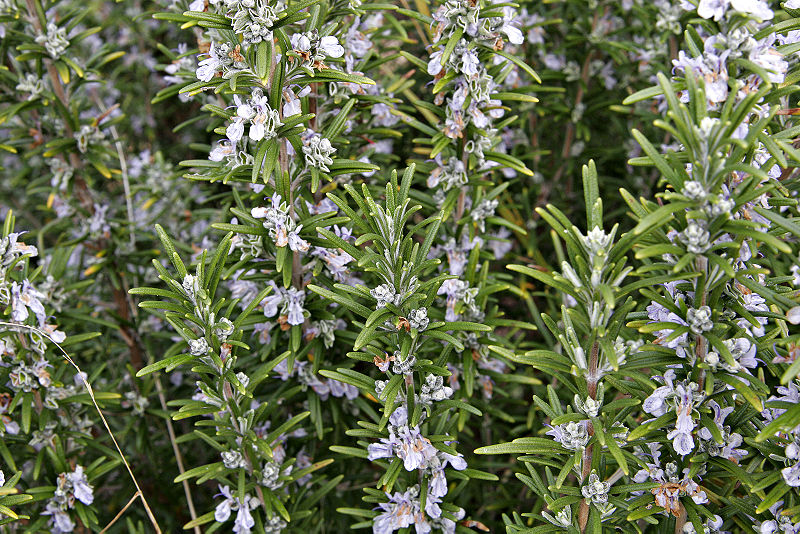
Rosemary is a perennial evergreen shrub native to the dry, rocky coastal areas of the Mediterranean. Its scientific name, Salvia rosmarinus (formerly Rosmarinus officinalis), translates to "dew of the sea," a poetic nod to its habitat. Its needle-like leaves are dark green and glossy on top, with a distinctive silvery-white, fuzzy underside, releasing a potent fragrance whenever they're brushed or crushed. As one of the best-known culinary herbs in the world, rosemary today grows in gardens and kitchens far beyond its Mediterranean homeland. Few other herbs bridge kitchen, garden, and incense quite so naturally.
Since antiquity, rosemary has been tied to memory — Greek students wore garlands of it while studying, believing it sharpened recall, a tradition still echoed in Shakespeare's Hamlet, where Ophelia says: "There's rosemary, that's for remembrance." In medieval Europe it was carried at weddings as a sign of fidelity and placed at funerals as a token of remembrance, and a sprig was often hung over doorways in the belief that it kept illness and misfortune at bay. In the 14th century, rosemary was also the main ingredient of "Hungary Water," one of Europe's earliest alcohol-based perfumes. Modern research continues to examine whether the plant's carnosic acid can genuinely support cognitive function — a late piece of evidence for an age-old folk belief.
As incense, rosemary is valued for its powerful cleansing and invigorating properties. When burned, it produces a robust, clean, camphoraceous scent — a refreshing, pine-like aroma underpinned by earthy, woody, and slightly peppery tones. Rosemary was already burned alongside other herbs for ritual purification in Greek and Roman temples. It is traditionally used to this day to clear a space of negative energy, sharpen mental clarity, and ward off fatigue of mind and spirit. In the southern French herb blend "herbes de Provence," rosemary remains a staple ingredient to this day, and in modern diffusers and scented candles, its aroma is widely marketed for supporting focus and productivity. This combination of age-old symbolism and everyday familiarity makes rosemary an especially approachable entry point into the world of incense herbs. Rosemary thus remains one of the most versatile and approachable incense herbs of all.
Used in the following concerts