Incense of Music 71/ Biłat + Jasinska, Matsuno

Incense of Music 71

A multisensory concert – Friday, 27th March 2026, 8 pm

Julia Biłat: cello

Zuza Jasinska: voice
Keisuke Matsuno: guitar, electronics

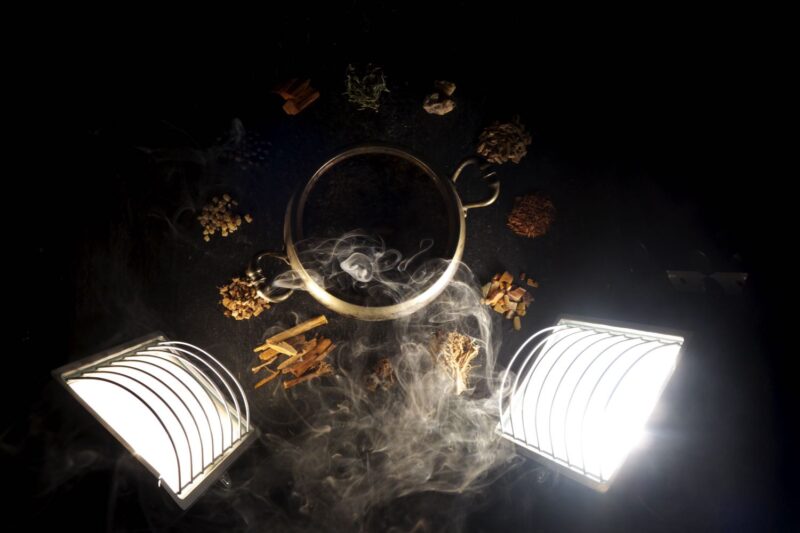
Incense burning: Eucalyptus, Dittany

PANDA Platforma in der Kulturbrauerei, Knaackstr. 97, 10435 Berlin


Join us for a unique sensory experience that brings together two distinct musical voices for a special double set. Julia Biłat is a Berlin-based cellist, composer, and sonic explorer. In her solo performances, she transcends the conventional concert format, weaving together deeply personal cello improvisations with elements of performance art. Her work is a profound exploration of the body, voice, and space, creating a captivating and introspective sound world. Zuza Jasinska & Keisuke Matsuno present a dialogue of voice and guitar. Zuza, a vocalist and composer, blends folk-pop intimacy with jazz inflection and the fearless spirit of experimental improv. Her evocative voice is met by Keisuke's intricate and sensitive guitar work, creating a sound that is both delicate and powerful. A carefully selected, curated incense blend will accompany the auditory journey and deepen the evening's atmosphere with its botanical aromas. Eucalyptus, for its clear, invigorating freshness, and Dittany (Burning Bush), for its purifying, mentally-sharpening tradition, will be smoldered. Let the music fill your ears and the fragrance transport your mind. This event is not recommended to people sensitive to smoke.


Julia Biłat is a Berlin-based, classically trained cellist, improviser, and composer. She is dedicated to her exploratory, genre-bending practice at the intersection of improvisation, composition, and performance art. ​ As a cellist, she participates in various classical, jazz, improvisation and performance projects such as Stegreif.Orchestra, Camila Nebbia's The Hanged One or Fabiana Striffler's Archiotic Quintet. ​ Commissioned by Stegreif.Orchestra, she has composed and co-directed several productions (most recently, #bechange Hildegard von Bingen, 2022/2023). ​ In recent years, Julia Biłat has focused on a solo format, in which she combines performance art with solo cello improvisations, creating structures where the body and voice - along with spatial awareness - play an important role. With her solo project she has performed at the Butohpolis Festival in Warsaw, Poland, at the Into The Open Festival in Kuehlhaus, Berlin and at the Intermittenze Festival in Catania, Italy among others.

https://www.juliabilat.com/


Zuza Jasinska: "I am a vocalist based in Berlin, Germany. I compose and sing music like folk-pop, jazz, and experimental improv. I I was raised in Poland, in a city called Toruń, nestled by the Vistula River and famous for its gingerbread. There’s a moment caught on camera from when I was just a little bean—my mom turning to my dad and saying, “I’m telling you, she’ll be singing.” And here we are. I shaped my style by mimicking the sounds around me—it got so out of hand that I started calling myself a chameleon. Copy, paste, repeat. I loved it. Today, I sound more like me. I stopped copying, and it turned out pretty well. For now, that’s it. I’ll add more later."

https://www.zuzajasinska.com/


Katya Vlasova

Keisuke Matsuno plays the guitar. And he creates sounds & noise through self-made analog audio signal processing. He also writes instrumental songs about the small things in life. And does other things that inspire him. What inspires you? Keisuke plays solo, with his trio (w/ Andrea Parkins & Steve Heather), his quartet (w/ Evi Filippou, Alexander Binder, Hanno Stick), Wood River, Hues, Smashing Humans, The Killing Popes, Jim Black Quartet, John Zorn’s Bagatelles, Trio Schmetterling,…

https://keisukematsuno.tumblr.com/


Eucalyptus, originally native to the forests of Australia, is a distinctive, fast-growing, and evergreen tree. It is cultivated worldwide in warm regions and is particularly known for its long, leathery, and often sickle-shaped leaves, which are rich in essential oils. These oils not only give the plant its unmistakably fresh, camphor-like scent but are also the reason for its versatile uses. As incense, the dried leaves of eucalyptus release their powerful effect when smoldering. As they burn, a clear, invigorating, and minty fragrance unfolds—one that has long been valued in various cultures. Traditionally, burning eucalyptus is believed to have a strong purifying and clarifying effect on the air and atmosphere of a space. Above all, however, it is associated both symbolically and practically with the respiratory system: the rising smoke is said to clear and support free breathing—a property drawn from traditional folk medicine. Beyond this physical aspect, the scent is also considered mentally stimulating and conducive to concentration, making it suitable for meditation or focused work. In modern incense practice, eucalyptus is often blended with warmer resins such as frankincense or with citrus notes to balance its intense, cool character. Due to its potent effect, only a small amount should be burned at a time, and this should be done in well-ventilated spaces. The smoke can be irritating for people with asthma, young children, or pets, so special caution is advised here. In this way, eucalyptus as an incense connects ancient knowledge with a powerful, tangible presence that remains relevant to this day.

Franz Eugen Köhler, Köhler's Medizinal-Pflanzen


Dittany, also known as the "Burning Bush" or "Gas Plant," is an impressive, rare, and protected perennial plant native to warm, limestone-rich regions of Southern and Central Europe. Botanically, it belongs to the rue family (Rutaceae). It is characterized by its upright, glandular flower spikes in pink or white and its feathery, citrus-scented leaves. The entire plant is rich in essential oils, which on hot summer nights can form a cloud-like, flammable atmosphere around the plant—giving rise to its biblically inspired name, "Burning Bush." As incense, dittany is a highly traditional but now rarely used and protected plant. In the past, primarily the dried and crushed roots and seeds were used for smudging. The smoke has an intensely aromatic, spicy-bitter scent, with a clearer, lemony to camphor-like note compared to its more famous relative, frankincense. It is often described as "purifying" and "mentally sharpening." Since antiquity, dittany has been regarded as a powerfully protective and cleansing incense. It was burned to ward off negative influences and to bless spaces and people.


Incense of Music 70/ Notte, Nussbaumer

Incense of Music 70

A multisensory concert – Friday, 27th February 2026, 8 pm

Sophie Notte: cello, voice, performance

Georg Nussbaumer: composition, performance

Incense burning: propolis, peony

PANDA Platforma in der Kulturbrauerei, Knaackstr. 97, 10435 Berlin


A collaboration of Berlin based cellist Sophie Notte (cello/performance) and Austrian artist Georg Nussbaumer (composition/performance/installation): on the formation and decay of harmonies – flies and hair – echoes of music from the past – tiny cows and a dragon – egg – caterpillar (larva) – pupa – butterfly (imago) – pair – flock – swarm... and back to egg. A diptych (with side panels) consisting of two chamber music compositions for violoncello and other sound sources, based on major 19th-century compositions. However, these are not arrangements; rather, the originals are melted down and thus become formless material for new creations, while retaining their tone, their ‘smell’. In both pieces, the cello is a central carrier of unfolding arches and vaults, within which—expanded in dimension by enveloping sonic and installation-based elements—further spaces of association open up. An alchemical process with an open outcome. Goldless and ephemeral.  Propolis and peony will be smoldered. For guests who are particularly sensitive to smoke, this event is not recommended.


by F Dondero

Sophie Notte (*1991) is a cellist and performer. She grew up in Trier and studied cello in Saarbrücken, Berlin and Rostock. She now lives in Berlin and has been a permanent member of Solistenensemble Kaleidoskop since 2020, with which she feels deeply connected. Over the past few years, she has collaborated with artists and composers such as Achim Freyer, Georg Nussbaumer, Pol Pi, Wojciech Blecharz, François Sarhan, and Stefan Streich, and has performed at various festivals and venues, including Musiktheatertage Wien, MAERZ Musik, Musikinstallationen Nürnberg, Donaufestival, Athens Epidaurus Festival, Burgtheater Wien, Kampnagel, Berlinische Galerie, Auditorio de Tenerife, and Centre Pompidou. Besides working with Kaleidoskop, she is currently involved in a production of Schubert’s Winterreise arranged for three female performers and directed by Achim Freyer, as well as in a cello duo formation with Mathis Mayr focusing on contemporary repertoire.


Photo by Peter Putz

Georg Nussbaumer (*1964) lives in Vienna and is regarded as a virtuoso "Gesamtkunstwerker" whose works are located between composition, installation art, performance and theatre. Large- format scenic works, which constitute multi-layered pictorial sound spaces and combine thematic and motivic stylistic elements to form large holistic structures, are juxtaposed with reduced sound installations or even non-sounding processes, which often deal with music, its history and effect and ultimately with its production. He works with highly specialized performers and musicians just as naturally as with an audience getting drunk or chewing gum, with archers, freedivers, a motorcycle club or hundreds of singers from rural amateur choirs. His work is shown internationally at festivals, theatres and exhibitions such as Donaueschingen Music Festival, Steirischer Herbst, Maerzmusik, soundscape Vilnius, Ring Festival Los Angeles, Opera Dagen Rotterdam, Teatr-e Shahr Tehran, Beethovenfest Bonn, and many more. For the European Capital of Culture Bad Ischl 2024, he realized projects with choirs, shooters, marching bands, and a bell-laden railway carriage.

www.georgnussbaumer.com


Propolis, often termed "bee glue," is a remarkable natural substance with a long history beyond the hive. It is a complex resinous mixture that honeybees produce by combining gathered plant resins and saps—primarily from tree buds like poplar and conifer—with their own enzymes and beeswax. This sticky, antimicrobial compound is used to seal cracks, sterilize the hive interior, and mummify intruders, acting as the colony's chemical immune system. When used as incense, raw propolis—in the form of dried granules, chunks, or occasionally powdered—reveals a deeply aromatic and therapeutic profile. The scent of burning propolis is profound, complex, and evocative. Its primary character is richly resinous, balsamic, and woody, with a foundational note reminiscent of poplar buds, storax, and warm honey. Upon heating, it releases a smoky, slightly pungent quality, layered with subtle hints of vanilla, cinnamon, and a faint medicinal sharpness (due to its natural flavonoids and phenolic compounds). The overall impression is one of a warm, ancient forest, beehives in the sun, and profound depth. For burning, it is best to use a charcoal disc or an electric incense warmer. Only a small piece (the size of a pea or two) is needed, as the fragrance is potent and the smoke can be dense. It is often blended with complementary incenses like frankincense, myrrh, cedarwood, or dried citrus peel to balance its intensity and add complexity. Propolis has been valued since antiquity not just as a medicine but also as a ritual substance. Its use as incense is rooted in its powerful protective and purifying properties. In various folk traditions, the smoke of propolis was believed to:

*Cleanse and sanitize the air during illness or epidemics, leveraging its natural antimicrobial virtues.
*Create a sacred or guarded space for ritual and meditation, invoking a sense of safety and spiritual hygiene.
*Promote grounding, resilience, and healing, with its warm, enveloping scent fostering an atmosphere of recovery and wellness.

Energetically, it is associated with protection, boundaries, health, and the wisdom of the collective (much like the hive itself). It is considered an incense for clearing stagnant energy, strengthening personal aura, and fostering a deeply rooted, calm environment. In summary, propolis incense offers a unique, primal, and deeply grounding aromatic experience. It connects the user to ancient traditions of hive wisdom, forest resilience, and ceremonial cleansing, making it a powerful tool for those seeking a profound and protective sensory journey.


Portrait of a peony by Chinese artist Yun Shouping, 17th century

The peony (Paeonia) is an impressive, long-lived perennial, best known for its large, opulent, and often fragrant blooms. For millennia, it has been a symbol of wealth, honor, feminine beauty, and healing in many cultures. When used as incense, it is traditionally the dried and crushed root, or more rarely the petals, that are burned. The smoke releases a floral-spicy, earthy, and slightly sweet fragrance profile, with subtle peppery or minty nuances and a woody depth. This meditative and warm scent is considered balancing, calming, and protective, and is believed to create a sensual, comforting atmosphere. In European folk magic, peony was burned to ward off evil spirits and for protection, while it is also associated with healing, self-love, sensual openness, and gently making contact with the spiritual world. In practice, it is often used in small amounts blended with other materials like rose petals or sandalwood and is particularly suited for meditative smudging in a calm setting. It is important that it comes from controlled, non-toxic cultivation. In summary, as an incense, peony combines ancient symbolic power with a warm, grounding floral scent and is a subtle companion for moments of self-care, cleansing, and creating a sense of sanctuary.


Incense of Music 69/ Younes, Hamedi

Incense of Music 69/ Younes, Hamedi

A multisensory concert – Friday, 30th January 2026, 8 pm

Mevan Younes, Buzuq

Elham Hamedi, Kamancheh


Fabio Dondero (Incense): Myrrh, Lavander


PANDA Platforma in der Kulturbrauerei, Knaackstr. 97, 10435 Berlin

Echoes from Mesopotamia

A Musical Dialogue Prepare for a musical journey to the cradle of civilization, where the spirit of ancient Mesopotamia is channeled through the strings of two master musicians. Mevan Younes on the buzuq and Elham Hamedi on the kamancheh engage in a profound dialogue, exploring the vast emotional landscape of Kurdish and Mesopotamian heritage. The evening begins with the resonant, metallic pluck of the buzuq. Mevan Younes coaxes intricate, rhythmic patterns from its long neck, each note buzzing with a vibrant, earthy energy. His playing is both percussive and melodic, building complex architectures of sound that recall the sun-baked landscapes and resilient spirit of its people. The buzuq speaks in the language of fire, dance, and the unyielding passage of time. Then, the voice of the kamancheh enters. Held upright and bowed with profound sensitivity by Elham Hamedi, its sound is the evening's response to the buzuq's day. It is a voice of poignant beauty and lyrical sorrow—a soaring, weeping melody that seems to touch the very soul. Elham coaxes microtones and delicate ornaments from its strings, navigating the intricate pathways of Kurdish maqams (modes) with breathtaking precision. The kamancheh speaks of longing, of history, and of the deep, flowing rivers of the region. Together, they do not merely play in unison; they converse. They argue, they mourn, they celebrate. Through composed pieces and spirited improvisations, they explore the rich tapestry of their shared musical heritage. The buzuq lays down a rhythmic, harmonic foundation, over which the kamancheh paints stories in shades of joy and melancholy. Their interplay is a testament to the diversity and depth of this ancient tradition, at once fiercely rhythmic and heartbreakingly tender. A Note on the Atmosphere: Enhancing this auditory journey, a subtle fragrance lingers in the air—the sacred, resinous depth of myrrh echoing the buzuq's ancient roots, and the ethereal, herbal calm of lavender mirroring the kamancheh's soulful cry. This scent is but a whisper, a ghost in the hall, designed to deepen the immersion into the soundscape without ever distracting from its power. This is more than a concert; it is an invitation to witness a living tradition. It is a rare opportunity to experience the echoes from Mesopotamia, not as relics from a museum, but as a vibrant, evolving conversation between two exceptional artists and their instruments.

Mevan Younes

Born in the multicultural city of Al Hassak north of Syria, the musician has become specializes in a traditional oriental instrument with Buzuq. Already at the age of seven began his musical education at his Father, where he initially learned mainly the Kurdish music. Later, Mevan then sat at the College of Music in Damascus Damascus Higher Institute of Music) continued his musical education and completed his studies under the Care of Professor Askar Ali Akbar in 2011. During this time he also took up the work as Buzuq teacher on. Mevan is a member of the Syrian Arab National Orchestra and has been a guest in the past numerous events such as the Morgenland Festival in Osnabrück or the Rskilde Festival in Denmark. Involvement in international events led Mevan into various countries such as Turkey, Tunisia, Ghana, Kurdistan, Denmark, France and Germany. Since 2015, Mevan Younes lives in Germany Greater Berlin, where he has his other pursued musical education and together in various bands and ensembles is active. Among other things, Mevan is part of the Ugarit trio and the Berlin Orient ensemble.

www.mevanyounes.com

Elham Hamedi

(1987, Mahabad) is a Kurdish musician, singer, and composer specializing in the Persian kamancheh. She studied Classical Persian Music at the University of Art in Tehran and later taught at the Diyarbakir Academy of Music. Since 2020, she has been studying composiMon at the Barenboim-Said Academy in Berlin with Stefan Winkler and Arnulf Herrmann. Her performances as both an instrumentalist and singer have taken her to Malaysia, the Middle East, Russia, and Europe, including a recent appearance in Oslo and a live RBB broadcast from Berlin’s Luisenkirche. In 2019, she received second prize in the ISAM ComposiMon CompeMMon, and in 2024, she presented a widely acclaimed solo recital at the Ostheimer Organ FesMval.


Myrrh: The Sacred Resin

As a plant, myrrh comes from small, thorny trees of the genus Commiphora, native to the dry, arid regions of Northeast Africa and the Middle East. The treasured resin is not the wood or sap, but a fragrant gum that naturally oozes from the bark to heal wounds. Harvesters make deliberate cuts to encourage more of this valuable secretion, which hardens into tear-shaped, reddish-brown granules. As an incense, myrrh is legendary. When burned, it releases a rich, complex aroma that is simultaneously earthy, bittersweet, and slightly medicinal. Its scent is deeply ancient and spiritual, evoking images of temple rites, sacred ceremonies, and caravan routes. Unlike floral scents, myrrh provides a profound, grounding base note. It is known for its purifying, meditative qualities, and has been used for millennia to create a solemn, contemplative atmosphere.

Lavender: The Calming Bloom

As a plant, lavender is a beautiful and resilient shrub native to the Mediterranean region, easily recognized by its slender, silvery-green leaves and tall spikes of tiny, vibrant purple flowers. It thrives in sunny, rocky landscapes, and its iconic colour is named after the plant itself. The essence of lavender is contained in tiny oil glands on its flowers, which release their fragrance when touched or warmed by the sun. As an incense, lavender offers a distinctly herbal, floral, and slightly sweet aroma. When burned, its scent is calming and clean, known to ease the mind and promote a sense of peace and relaxation. Unlike heavy, resinous incenses, lavender's smoke is often lighter and more airy. It is used to purify a space, relieve stress, and encourage restful sleep, making it a staple for creating a serene and balanced atmosphere.