Deutsch
Himalayan Cedar (Cedrus deodara)
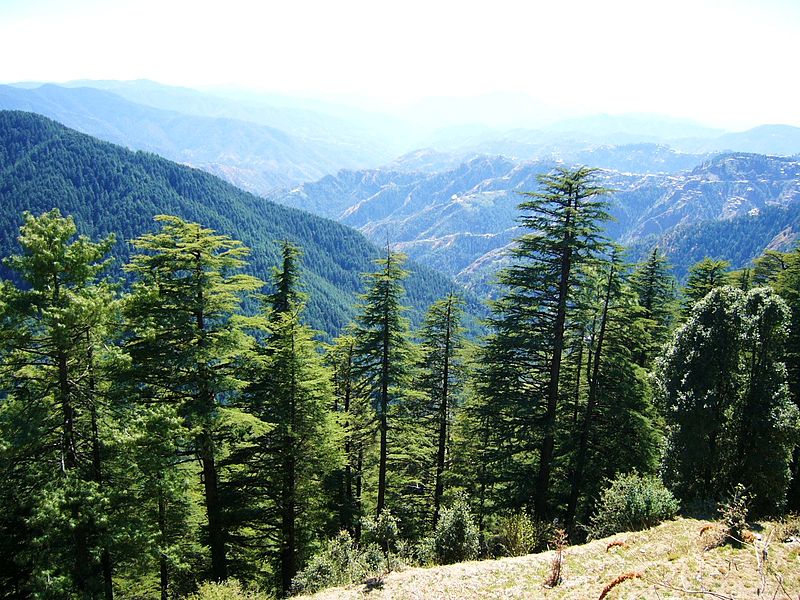
Cedrus deodara, known in English as the Himalayan cedar, is a large, evergreen conifer native to the western Himalayas — eastern Afghanistan, northern Pakistan and northern India, and Tibet and western Nepal — occurring at altitudes of 1,500 to 3,200 metres. It is the tallest-growing of the true cedars, reaching 40 to 50 metres, exceptionally up to 60 metres, with a conic crown of level branches and characteristically drooping branchlets. Its wood is particularly fragrant and resin-rich. Its Sanskrit name, "devadaru" — a compound of deva, "god," and daru, "wood" — means "wood of the gods," reflecting its long-standing religious and ritual significance in Hindu tradition. The characteristic, slightly drooping cones ripen only in their second year and disintegrate on the tree rather than falling whole, as with many other conifers. The wood is exceptionally weather-resistant and was traditionally used for bridges, railway sleepers, and boat-building, structures that needed to withstand the harsh climatic conditions of the Himalayas.
In Hinduism the tree is considered sacred, referenced in numerous legends and associated with Shiva. Thanks to its insect- and rot-resistant, aromatic wood, it was used for centuries in the construction of temples and sacred buildings across the Himalayan region — from Kashmir to Nepal, cedarwood still defines many historic sacred structures today. Its essential oil has also long been used in Ayurvedic medicine, applied to clear a space and settle the mind, often burned alongside other woods or resins. In many villages of the western Himalayas, felling a mature deodar without ritual permission is still considered a disrespectful act. To this day, branches and needles are burned in many places during religious ceremonies and fire rituals (havan) to purify a space and honour deities. Nineteenth-century British colonial administrators prized the wood so highly for railway and bridge construction that entire forests in Kashmir and the Punjab were systematically felled, a legacy still visible in the landscape today.
Burned as incense, Cedrus deodara releases a warm, woody, sweet-balsamic scent, related to common cedarwood but softer and rounder in character. It is associated with spiritual grounding, meditation, and the creation of sacred space, and remains part of Hindu and Buddhist ritual practice across the Himalayas today. In Ayurvedic practice, burning cedarwood has long served to clear a space and calm the mind, often at the start of meditation or a spiritual ritual. Some incense traders describe its aroma as calmer and less sharp than that of many juniper or spruce resins, making it especially suited to longer meditation sessions.
Used in the following concerts