
 Deutsch
Ein olfaktorisches Konzert – 30. Januar 2017, 20 Uhr – DOHA – Mit Gareth Lubbe (Viola, Obertongesang), Hayden Chisholm (Saxophon, Obertongesang) und Claudio Bohórquez (Cello, Obertongesang) – Fabio Dondero und Dominik Breider (Incense burning): Palo Santo und White Sage – Palais im Roten Salon in der Volksbuehne, Berlin – LINK VOLKSBUEHNE
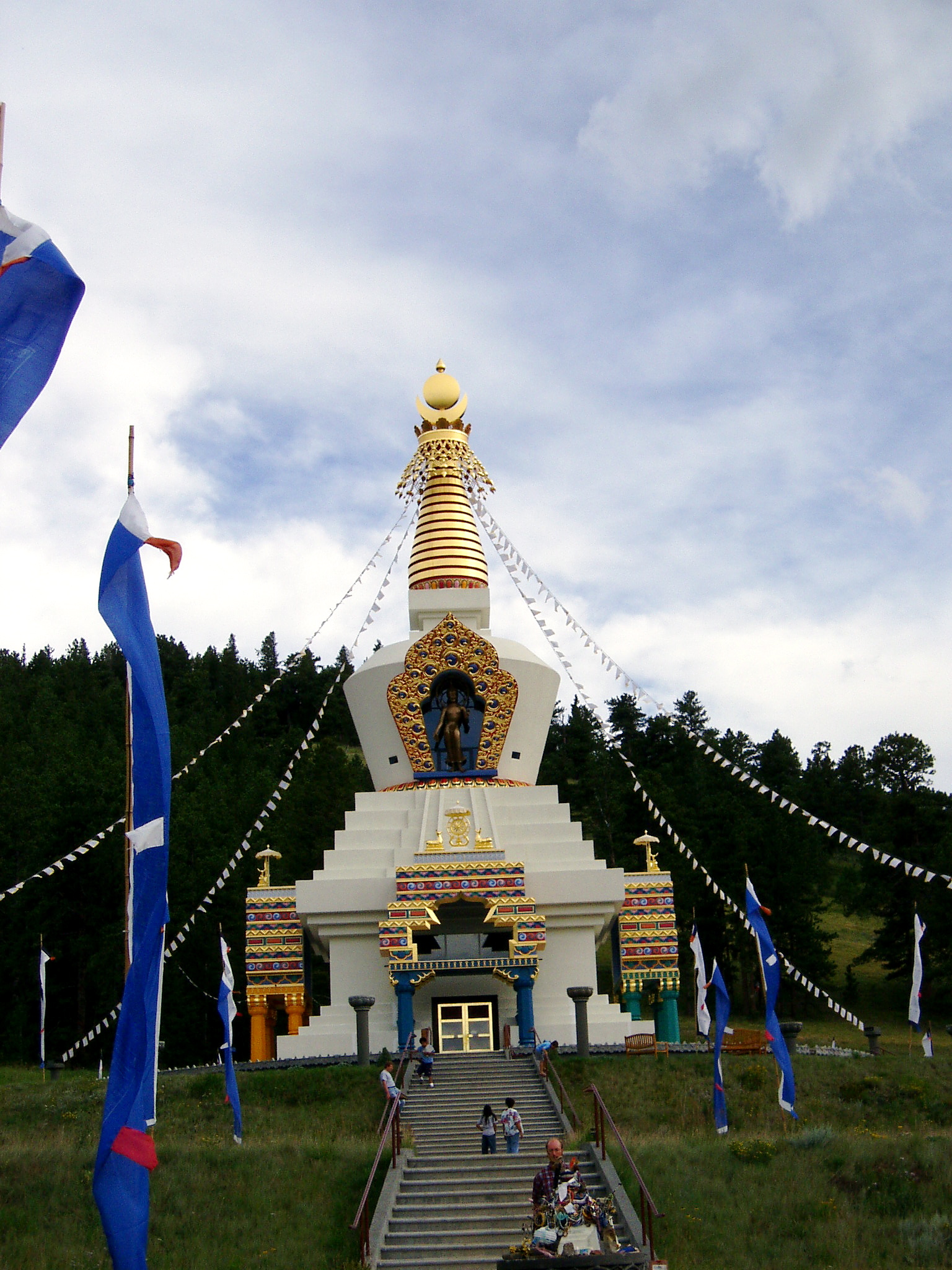
Das Improvisationstrio Doha entstand auf einer spirituellen Reise im Jahr 2004 in Colorado, USA. In der Großen Stupa von Dharmakaya im Shambala Mountain Center in den Rocky Mountains fand sich der geeignete Ort, um die Stimmen aus drei Kontinenten im Zustand der Meditation miteinander zu vereinigen. Aus dem gemeinsamen Musizieren gingen damals u.a. eine CD–Aufnahme und eine Konzertreise in den USA hervor. Über die letzten 13 Jahre hinweg wurde Doha im Stillen genährt und unter Freunden weitergeführt und aus dem buddhistisch-schamanischen Experiment von einst wurde eine innere zeitlose Bühne, die von den Musikern immer noch betreten werden kann. An diesem Ort erscheint alles wie improvisiert: ein lauschendes Beobachten von Einschwingungsvorgängen im Raum währenddessen dem eigenen Instrument gleichzeitig neue Klänge entsteigen…
May my hands create beautiful things and my feet take me where I most need to be. The heart will hear with an all listening ear, the voice speak the words needed. May my eyes see the signs and symbols of the earth, my body and space be washed by the fragrant smoke of this plant. The smoke itself carries my calls to the sky in spirals.
(Native American Smudging Prayer )
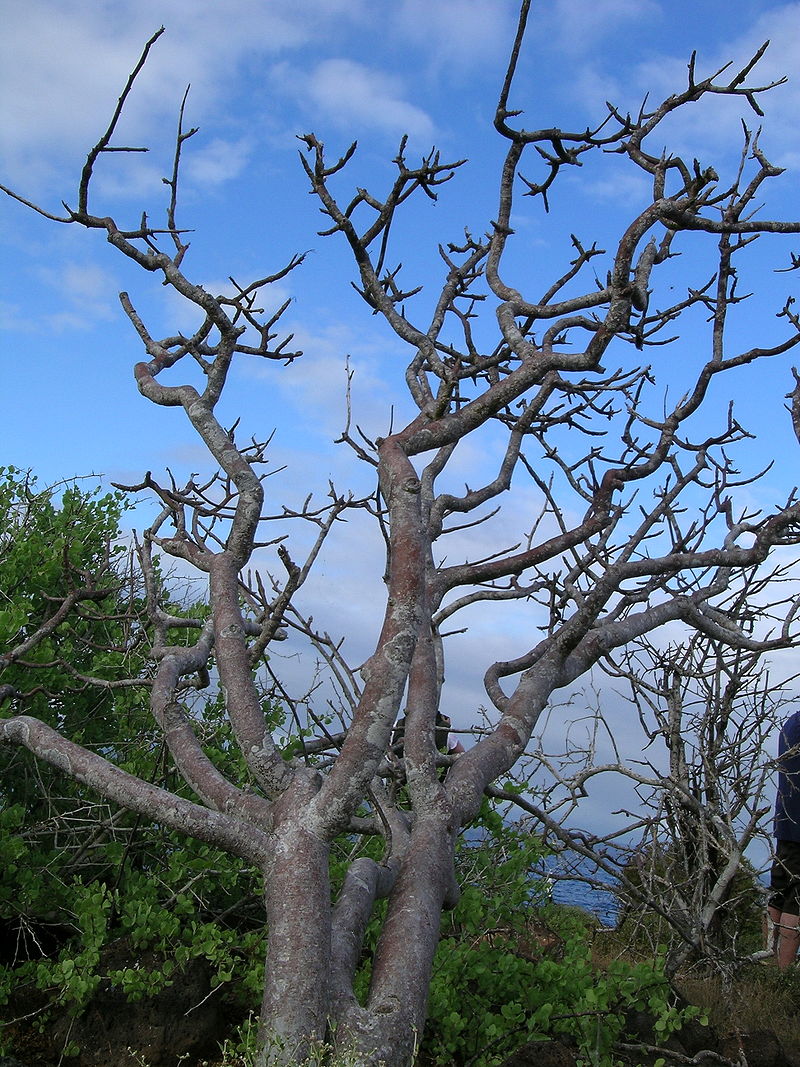
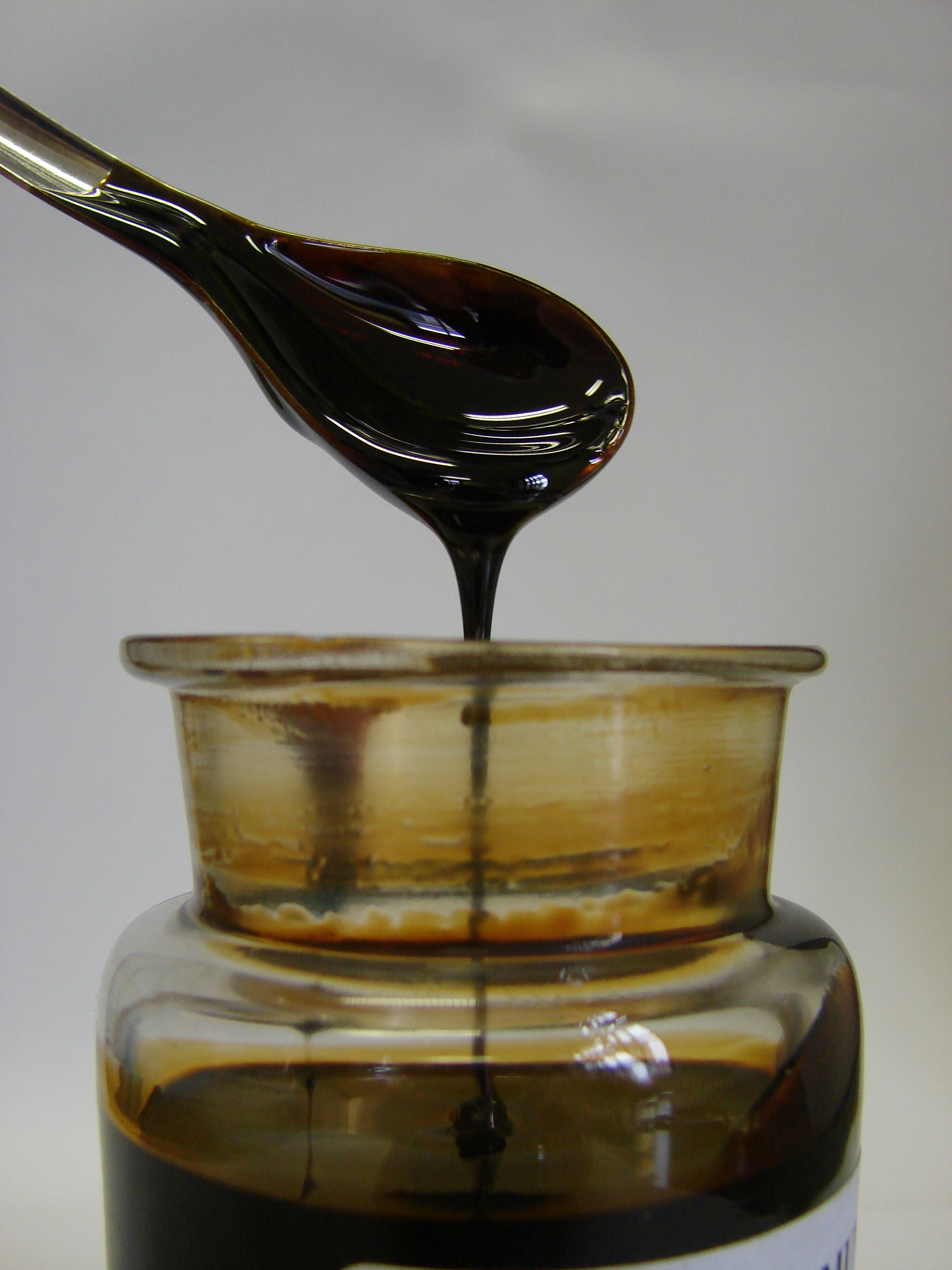
Die Bezeichnung Palo Santo ist ein Sammelbegriff für verschiedene harzreiche Hölzer Mittel- und Südamerikas. Besonders begehrt waren die in Peru und Ecuador gewachsenen Hölzer der Art Bursera graveolens. Diese Pflanze gehört zu den Balsambaumgewächsen und ist ein Verwandter von Weihrauch und Myrrhe. Man verräuchert sie durch einfaches Anglühen eines größeren Holzstücks mit der Flamme oder, vor allem in Südamerika, auf Kohlen. Palo Santo dient zur Reinigung von Körper und Haus u.a. nach Kontakt mit Kranken und Verstorbenen. Die Inka setzten Palo Santo gegen Atemwegs- und Ohrenentzündungen ein und verräucherten es auch in Mischungen mit Mate und den Federn des Nandu. Über die körperliche Reinigung hinaus wirkt Bursera graveolens psychisch stimulierend und leicht euphorisierend. Als heiliges Holz gewährt es Schutz vor Zauberei und bösen Geistern. Bereits vor der klassischen Zeit der Inka gab es spirituelle Zentren (z.B. in Pátzcuaro in Michuacán, Mexico), für die der Gebrauch von Bursera-Graveolens-Räucherungen belegt werden kann. Von den Inka und anderen indigenen Gruppen über die Criollos des spanischen kolonialen Kastensystems und bis heute wird Palo Santo zur Reinigung von der mala energia verräuchert.Bei den Naporuna im Amazonastiefland von Ecuador ist Palo Santo ein Mittel gegen mal aire, die “Krankheit des springenden Bauchnabels”. Siehe zum ethnomedizinischen Kontext u.a.: Michael Knapper, Zwischen mal aire und Malaria – Medizinischer Pluralismus bei den Naporuna im Amazonastiefland von Ecuador. Indiana 2001 ( http://www.redalyc.org/articulo.oa?id=247018427013).
Nicht zu verwechseln ist Palo Santo mit dem früher auch in hiesigen Krankenhäusern bei der “Susfumigation” (d.h. “Räuchern eines Kranken”; siehe: Das recht vollkommene königliche Dictionarium Französisch-Teutsch, Bd.2, Nürnberg 1712-1715) verwendeten sogenannten Peru-Balsam, Balsamum peruvianum, das aus Myroxylon balsamum var. pereirae gewonnen wird und nicht aus Peru, sondern aus Mittelamerika bzw. Asien stammt.
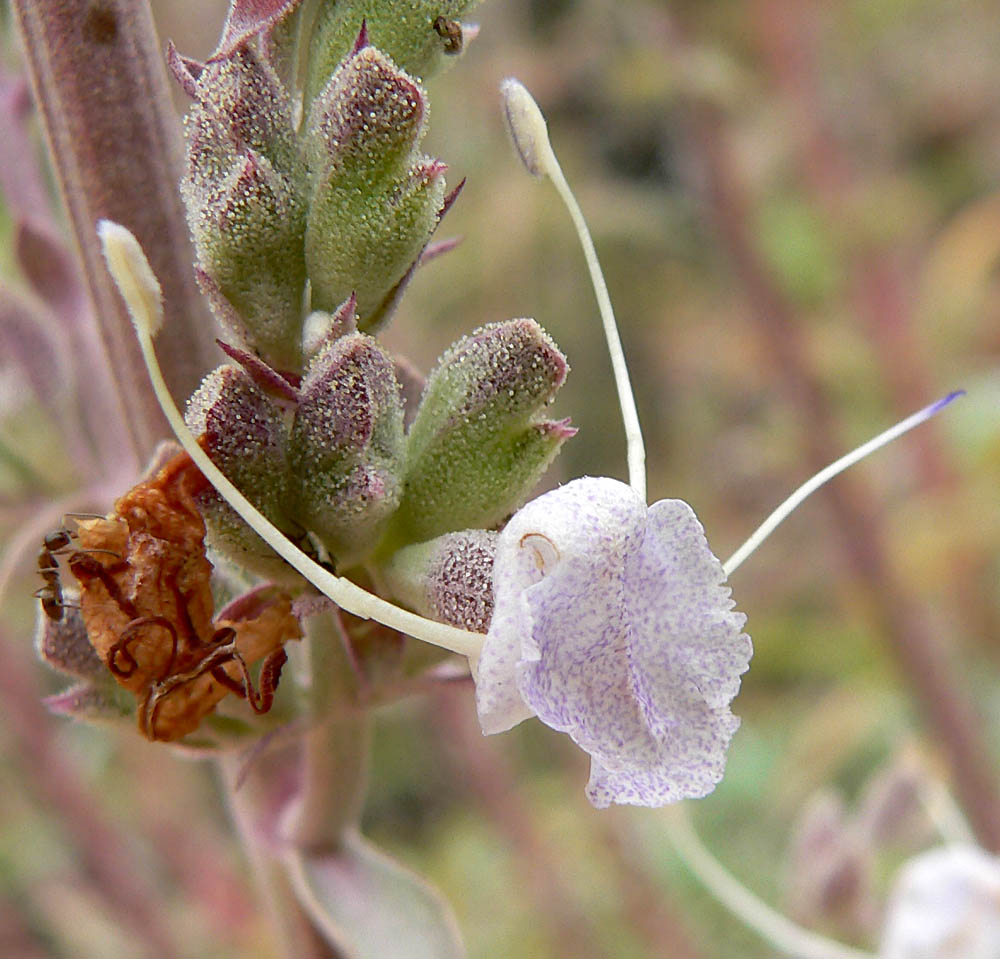
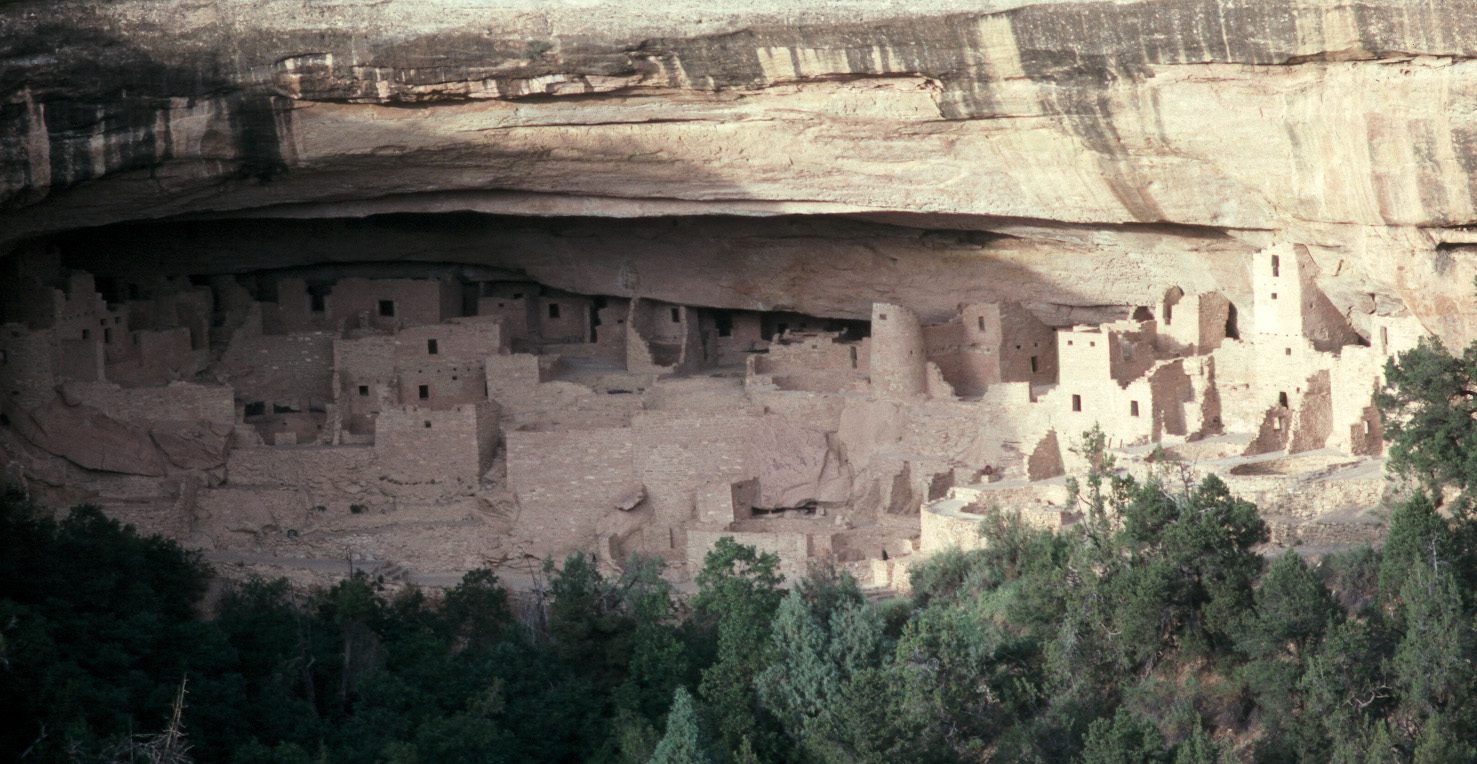
Weißer Salbei, eine Pflanzenart aus der Gattung Salvia in der Familie der Lippenblütler(Lamiaceae), wird auch Indianischer Salbei genannt. Er wächst vor allem im Südwesten der USA und im Nordwesten von Mexiko und wurde von dort aus gehandelt. Viele indigene Völker Nordamerikas, so die Anasazi-Kultur in Utah, Colorado, Arizona und New Mexico, benutzten White Sage zur Reinigung von Körper und Geist, beispielsweise im Rahmen von Schwitzhüttenzeremonien oder bei wichtigen Beratungsgesprächen, um diese zum bestmöglichen Abschluss zu bringen. Außerdem wird das Kraut bis heute in Nordamerika in sogenannten smudging-Zeremonien zum Vertreiben schlechter Geister verräuchert. Die psychotropen Wirkungen bestehen vor allem in einer Steigerung der Aufmerksamkeit und des sinnlichen Fokus. Mit über 800 Arten weltweit ist Salvia eine sehr artenreiche Gattung.Viele wurden schon vor der Antike verräuchert oder anderweitig als Heilpflanzen genutzt, etliche Arten Salvia beispielsweise in der daoistischen chinesischen Medizin. Von Mönchen eingeführt und im Mittelalter in europäischen Klostergärten kultiviert, wurde der Echte Salbei (Salvia officinalis) als Küchengewürz und in der Heilkunde auch diesseits der Alpen bekannt. Etwas in Verruf geraten ist in neuerer Zeit die Art Salvia divinorum aus der Sierra Mazateca im mexikanischen Bundesstaat Oaxaca, die auch Azteken-Salbei genannt wird. Salvia divinorum gehört zu den stark psychoaktiven Salbei-Arten mit halluzinogenem Potential.In niedriger Dosierung verwandelten die Mazateken das Rauschmittel in ein Heilmittel. Verglichen mit dem fulminanten Salvia divinorum wirkt der von uns verräucherte Indianersalbei Salvia apiana eher subtil, doch abhängig von Applikationsform und Dosierung entwickelt auch er beim Musikhören ganz unterschiedliche, überraschende Wirkungen.
Claudio Bohórquez (Cello, Obertongesang)
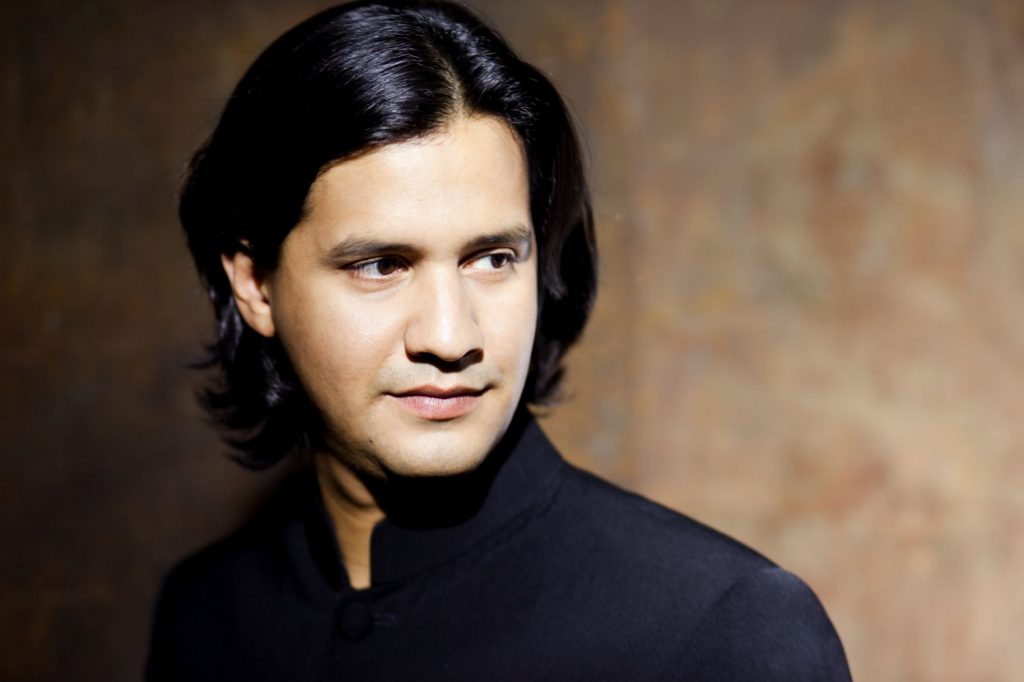
Der in Deutschland geborene Cellist peruanisch-uruguayischer Abstammung zählt zu den gefragtesten Musikern seines Instrumentes. Im Jahr 2000 erreichte er weltweite Aufmerksamkeit mit dem Gewinn des Internationalen Pablo-Casals-Wettbewerb der Kronberg Academy und des Internationalen Musikwettbewerbs in Genf. Seine Karriere als Solist führte ihn seither auf die renommiertesten Konzertpodien des klassischen Kulturbetriebs. Darüber hinaus ist Claudio seit 2011 Professor für Cello; zunächst tätig an der Musikhochschule Stuttgart und seit 2016 an der Hochschule für Musik Hanns Eisler Berlin. Über die Zusammenarbeit mit Dirigenten und Orchestern an den großen Häusern hinaus versteht Claudio Bohórquez die Auseinandersetzung mit dem Repertoire der abendländischen Musik-Hochkultur immer auch vor dem universalen phänomenologischen Hintergrund des schlichten menschlichen Grundbedürfnisses nach Musik. Diese Offenheit gegenüber den musikalischen Ausdrucksformen des Folk und des Jazz wurde auch für sein eigenes Spiel stilprägend. Claudio spielt ein Violoncello von G. B. Rogeri.
http://www.claudiobohorquez.com/
https://www.youtube.com/watch?v=3FJ5Cmavw4I
Hayden Chisholm (Saxophon, Obertongesang)
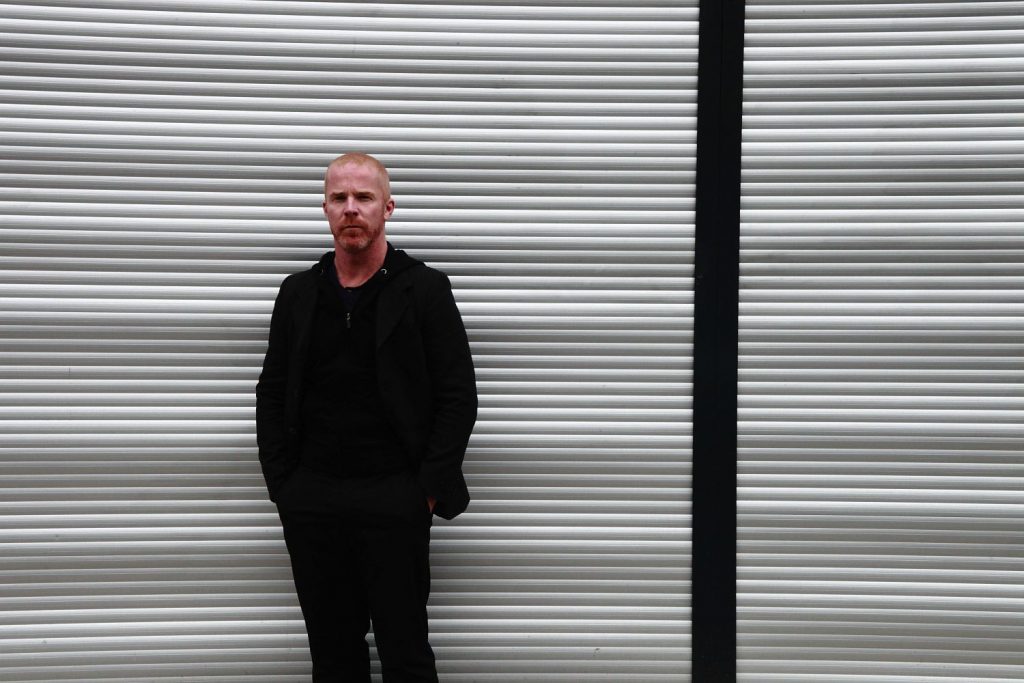
Hayden wuchs in New Plymouth in Neuseeland auf. Seine vielfältigen multi-instrumentalistischen und kompositorischen Studien sowie seine Reiselust führten ihn schon früh an Hochschulen in der Schweiz, Griechenland, Indien, Jugoslawien, Japan und schließlich als Saxophonist zu Frank Gratkowski an die Musikhochschule in Köln, wo er sein Saxophon-Studium abschloss. Unter anderem wurde er hier in den 90er Jahren durch seine enge Verbindung mit Nils Wograms Root 70 zu einer Lokalgröße von überregionaler Strahlkraft. Ab 1995 unternahm er Konzerttourneen durch Indien, Europa, Afrika und Lateinamerika, unter anderem mit dem Pianisten John Taylor. Seit 2002 arbeitet Chisholm mit der Aktionskünstlerin Rebecca Horn zusammen und machte die Musik zum Dokumentarfilm Moon Mirror Journey. Außerdem wirkt er mit als Saxophonist, Klarinettist und Keyboarder an Alben und Konzerten von Sebastian Gramss’ Underkarl, Antonis Anissegos, David Sylvian, Burnt Friedman, Jaki Liebezeit, Lula Pena (u.a.). Chisholm ist als Protagonist im Dokumentarfilm Sound of Heimat – Deutschland singt (2012) von Arne Birkenstock und Jan Tengeler zu sehen. 2013 wurde ihm aufgrund seiner „einzigartigen Klangästhetik“ der SWR-Jazzpreis verliehen. 2015 und 2016 veröffentlichte Hayden zwei 13-teilige CD-Boxen, die sein bisheriges Oeuvre als Musiker und Komponist zusammenfassen.
https://www.youtube.com/watch?v=J9cYqAqq3nI
Gareth Lubbe (Viola, Obertongesang)
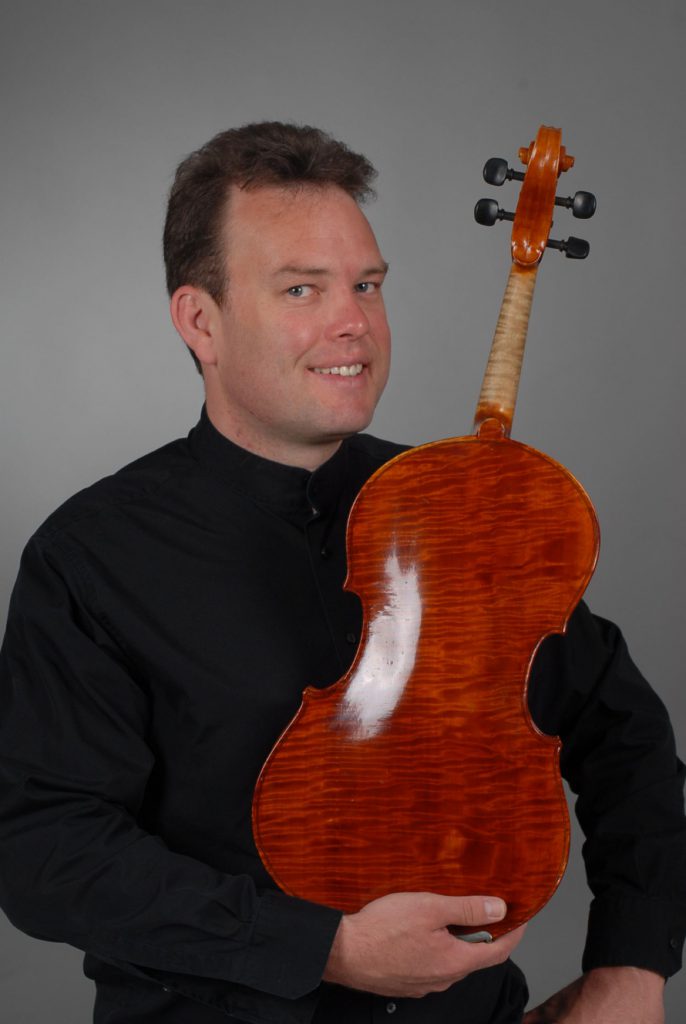
Gareth Lubbe, geb. in Johannesburg, Südafrika, begann seine musikalische Ausbildung am Klavier und an der Geige im Alter von vier Jahren. Fünf Jahre später gab er in Johannesburg als Geiger sein Debut mit Orchester. Es folgten zahlreiche Preise bei regionalen und nationalen Wettbewerben. Noch während seiner Jugendzeit in Südafrika erlernte Gareth überdies das virtuose Spiel auf etlichen Instrumenten und schuf die Basis für seine dämonischen Künste als Obertonsänger und Improvisateur. Von 1995 bis 2001 absolvierte er ein Violinstudium an der Musikhochschule Köln und Kammermusikstudien beim Alban Berg Quartett. Anschließend schloss er ein Viola-Studium bei Barbara Westphal an der Musikhochschule Lübeck an. 2006 und 2007 war Gareth Lubbe Solobratscher in der Königlich Flämischen Philharmonie in Antwerpen unter Phillippe Herreweghe, bevor er nach Leipzig ging, wo er als Solobratscher an das Gewandhaus berufen wurde. Im April 2013 wurde Gareth als Professor für Viola an die Folkwang Universität der Künste in Essen geholt. Darüber hinaus gastiert er weiterhin solistisch und tritt als Kammermusiker und gefeierter Obertonsänger weltweit auf.
http://www.folkwang-uni.de/de/home/musik/lehrende/?mehr=1&detaildozent=702