
 Deutsch
Journal
All entries
46 entries
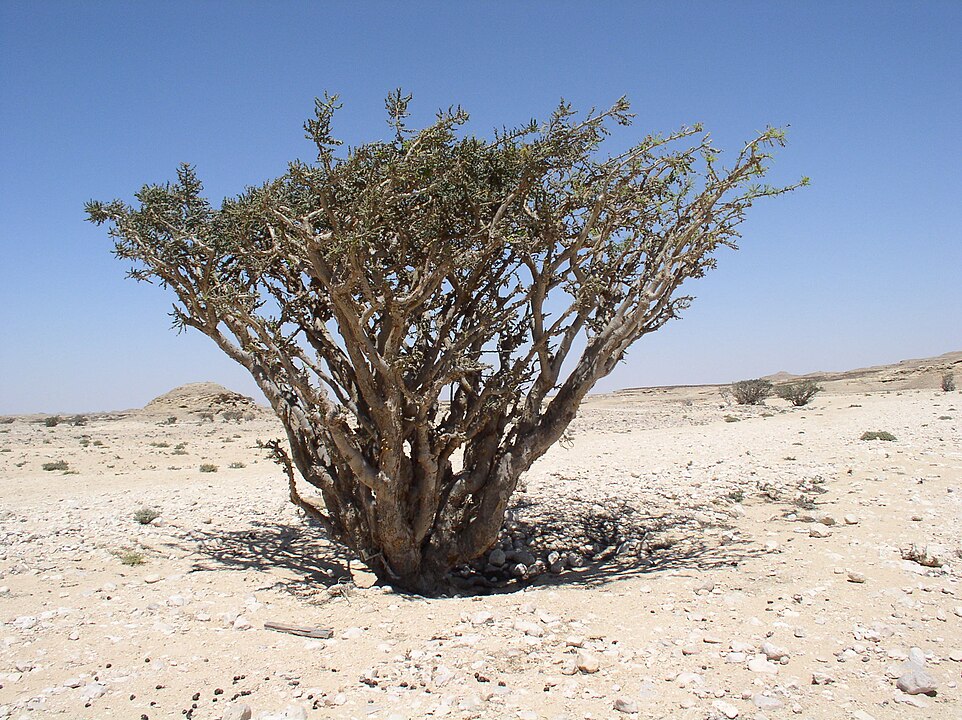
The first time you place a piece of frankincense on the embers, you are rarely thinking that you are smelling thousands of years of trade history. Even more rarely do you think that “frankincense” as a single thing does not exist. The word covers the resin of several species of the genus Boswellia: a good two dozen have been botanically described, but only a handful shape the market. Depending on species, location, harvest time and sorting, the resin smells and smokes completely differently: fresh and lemony, sweet and balsamic, peppery, dark and resinous, or almost like a conifer forest. This text walks through the most important origins, from Dhofar in Oman via Yemen to Somalia, Ethiopia and India.
A tree that wants nothing but stone
Frankincense trees are frugal. They grow on barren, rocky ground in the dry regions of southern Arabia, the Horn of Africa and India, often with several twisted trunks and a flat crown. The resin forms as a wound seal: harvesters score the bark with a special knife, the milky sap emerges and hardens over several weeks into the “tears” that are later sorted by hand. The first cuts of a season usually yield the lesser material, later harvests the better grades. This is exactly why colour, size and scent depend so strongly on the time of harvest.
This frugality is also the problem. The International Union for Conservation of Nature (IUCN) classes Boswellia sacra, one of the most important species, as “near threatened”; overgrazing, fire and over-tapping put pressure on the stands. Anyone who buys frankincense is therefore always buying a piece of an increasingly scarce landscape.
On top of that, the tree reacts slowly to interference. If it is tapped too often and too deeply, the plant is weakened and produces fewer viable seeds. Young trees barely regenerate on grazed land, because goats and camels eat the shoots. The best tears therefore often come from stands that are managed gently and with breaks.
A short history of the scent
Frankincense is one of the oldest trade goods in the world. Around 1470 BCE, the Egyptian queen Hatshepsut equipped an expedition to the Land of Punt, which she knew as the source of frankincense and myrrh; the reliefs in her mortuary temple at Deir el-Bahari show living trees in pots being shipped to Egypt. Whether these were actually Boswellia or related myrrh trees is still disputed among specialists. Later, the Incense Route connected the coasts of southern Arabia with the Mediterranean. Its traces in the south of Oman, including Wadi Dawkah, Shisr, Khor Rori and Al-Baleed, have been part of the UNESCO World Heritage as the “Land of Frankincense” since the year 2000.

Oman: Hojari, the benchmark
In the south of Oman, in the province of Dhofar, grows Boswellia sacra, the species many consider the “classic” frankincense. This is where the grades that serve as the benchmark are produced, and this is where you meet the term Hojari. In Oman it denotes less a single origin than a range of high-quality grades; in international trade, Hojari and “Silver” are regarded as the highest quality classes.
The most famous representative is green Hojari, also called “Royal Green” or, in Arabic, akhdar. Its tears are translucent, with a pale green to silvery sheen, and even cold they smell intensely of fresh lemon and lime. When heated, a delicate sweetness, a hint of orange peel and a bright, almost coniferous undertone come in. The smoke is white, soft and barely bitter. The result feels “clean”, clear and airy. It is no coincidence that this Hojari is also prized as chewing gum, because the taste is round and not very bitter.
Below it follow further grades: a yellowish-white “Superior” Hojari, which smells somewhat warmer and softer, and an amber-brown Hojari, which is stronger, more resinous and less citrus-driven. In trade you also come across names such as Najdi, Shazri and Sha’abi. They stand for other growing sites and quality levels and are generally darker, cloudier and more resinous, with less citrus and more wood, smoke and bitterness. That does not make them worse, only different: they are traditionally valued for everyday use in Omani households, and many swear by their stronger, warmer character. However, descriptions vary from dealer to dealer, and the names are not protected; anyone who wants to be sure should ask about origin, harvest year and sorting.

Comparing Hojari for the first time, you quickly notice how closely the senses follow the price difference. A good piece of green Hojari smells of a freshly cut citrus fruit even in the hand, without any warmth. Darker grades such as Sha’abi, by contrast, are often described as warmer and smokier and need some heat to open up. Both impressions belong to the diversity of the region, and both have their place, in everyday household use as much as at celebrations and religious occasions.
Yemen and Socotra: the quiet relatives
Boswellia sacra also grows in the east of Yemen, in Hadramawt and Mahra. Botanically and in scent, this frankincense is very close to the Omani one, and for centuries southern Arabia as a whole, not just present-day Oman, was the heart of the trade. Today, Yemeni frankincense is hard to find on international markets, and indications of origin are often vague; war and instability make harvest and export difficult.
The island of Socotra plays a special role. It is home to several endemic frankincense trees, including Boswellia socotrana and Boswellia popoviana, which grow nowhere else. Their resins are hardly traded and are of botanical and local interest rather than a product you could buy in Europe.
Somalia, part one: Maydi, the king
On the Horn of Africa grows a species that differs clearly from the Arabian ones: Boswellia frereana, which occurs only in the north of Somalia, in Somaliland and Puntland, where it clings to cliff faces and limestone slopes. Its resin is called Maydi (also Yigaar or “Coptic frankincense”), and locals call it the king of frankincenses. The tears are large, clear and golden yellow. The scent is lemony, peppery and sweet at the same time and recalls elemi. Maydi burns with strikingly little smoke and very cleanly, which is why it is popular in Arabia as chewing gum. It is also processed there into a paste applied for joint complaints.
According to reports, most of the harvest goes to Saudi Arabia, where pilgrims take the resin home. There are up to seven trade grades. And although Maydi is considered the king, on the Omani market the very best Hojari is said to be even more expensive. Both hold their rank, just in completely different ways: Maydi is clear, sweet and peppery, Hojari fresh, lemony and airy.
A special feature of Maydi is that it serves not only as incense. In Somalia and on the Arabian Peninsula it is chewed and used in folk medicine. That a resin moves so naturally between kitchen, medicine and ritual says a lot about the role of frankincense in these cultures: it is less a luxury good than everyday life.
Somalia, part two: Beyo and Boswellia carterii
Somalia’s second great frankincense is called Beyo and is usually traded under the name Boswellia carterii. Whether this is a species of its own or a form of Boswellia sacra is botanically disputed: an influential study from the 1980s held both to be the same species, while more recent chemical analyses point rather to different chemotypes. To the nose, however, the difference is clear. Somali Beyo is darker and more resinous than Hojari, with more wood and smoke and less citrus. It delivers the volume: Somalia is considered one of the largest frankincense suppliers in the world, and a large share of trade frankincense and essential oil comes from this source. For Beyo there are usually three trade grades.
For scent perception this is a useful thought: the African grades are not simply “cheaper” variants of the Arabian ones, but aromas of their own with their own uses. Anyone who knows only a single frankincense knows only a fraction of the possibilities.
Ethiopia, Eritrea, Sudan: the paper tree
Further west and south, further species grow. Boswellia papyrifera, the “paper tree” with its peeling bark, is widespread in Ethiopia, Eritrea and Sudan and is therefore also traded as Sudanese frankincense. Its tears are large and light, and the scent is often described as fresher, sharper and less sweet than that of the Arabian grades; typical are esters such as octyl acetate, which give it something fruity and cool. In addition there are Boswellia rivae and Boswellia neglecta, which are used in Ethiopia, Somalia and Kenya. Their resins are regarded as distinct but are little standardised and reach Europe less often. At Incense of Music, Boswellia rivae appeared in the fifth concert as one of these rarer species.
India: Salai Guggul
A frankincense tree also grows on the Indian subcontinent: Boswellia serrata, known in Sanskrit and Hindi as Salai Guggul. Its resin smells lemony and fresh, but more austere and less sweet than the Arabian grades. In the Ayurvedic tradition it has long been important, and in the making of Asian incense it is the frankincense par excellence. The term “olibanum” is mostly used in trade for frankincense in general; some specialists, however, want to define it more narrowly and restrict it to the Indian resin.

What you smell: a little chemistry
A frankincense tear consists of resin, gum and essential oil. The scent comes from the volatile fractions, above all terpenes such as α-pinene and limonene, whose proportions change from species to species and from site to site. The famous boswellic acids and substances such as incensole acetate, by contrast, are hardly volatile; they shape chemistry and research more than smell.
How you heat the resin matters, too. On glowing charcoal it burns hot, and the scent becomes smokier, more bitter, darker. On a mica plate or an electric incense warmer that heats only gently, the volatile, lemony fractions show themselves much longer. Anyone who really wants to get to know green Hojari should try it this way.
A simple test at home: place two different grades side by side, each on its own warmer or mica plate, and wait five minutes. The first cloud of scent is usually the most lemony and volatile; only later do the resinous and woody tones emerge. This way you get to know frankincense in phases, like a perfume with top, heart and base notes.
What to look for when buying
Good dealers state species, origin and harvest year. Look for whole tears rather than dust and broken pieces, for translucency and even colour, and for the smell when cold: it should be clear, not musty, not soapy, not artificial. A very low price for “Hojari” is a warning sign, because the term is not protected. And finally, sustainability is worth a look: fair trade relationships and certifications such as FairWild are one way of protecting the stands that make this scent possible in the first place.
Frankincense at Incense of Music
In our concerts, too, frankincense is a recurring guest: it has been used in numerous concerts, for example in concerts 8, 18 and 25, each time combined with other plants and resins, and it is part of tonight’s concert as well, on 16 October 2026. The appeal often lies precisely in the interplay: a clear, lemony frankincense surrounds a bright sound differently than a dark, resinous one surrounds a deep one. If you consciously notice the scent at the next concert, you may hear the music a little differently.
You will find more about the plant and the concerts in which it appeared on our page Frankincense.

Hardly any plant has become as well known in recent years as white sage. As a bundled smudging herb it lies in esoteric shops, drugstores and online shops; on social media there is talk of “cleansing” rooms. Yet Salvia apiana is first of all a shrub that grows on the dry slopes of Southern California, and for several Indigenous peoples of this region it has long been food, medicine and sacred plant all at once. This text tells of the plant, of its use among the Cahuilla, Chumash and their neighbours, and of the questions that arise when a healing herb becomes a commodity.
The plant
White sage belongs to the mint family (Lamiaceae), the family of lavender, thyme and mint. It is an evergreen subshrub that grows about 1.3 to 1.5 metres tall and about as wide, and it grows on dry slopes in coastal sage scrub, in chaparral and in open pine forests from Southern California to Baja California, mostly below about 1,500 metres. Its leaves are silvery white to grey-green and strongly aromatic. In spring, around April and May, white to pale lavender flowers appear on long, sturdy stems.
The species name apiana refers to bees: the flowers are an important food source for bees, butterflies and hummingbirds, which is why the plant is also called “bee sage”. Quail eat the seeds. The scent is strong, camphoraceous, sharp and resinous, and it differs clearly from culinary sage (Salvia officinalis). Analyses of the essential oil name 1,8-cineole and camphor, among others, as important constituents. The genus name Salvia goes back to the Latin salvare, “to heal”. And botanically, too, the plant has not always gone by this name: an older designation is Ramona polystachya.
White sage has its place in a fragile habitat. The coastal vegetation of Southern California has come under heavy pressure from development, fires and changed land use. For many animals the sage is an important part of this web, and for the people who have lived there for millennia it is much more than that.
White sage is robust and demanding at the same time. It needs well-drained, dry soil, full sun and little water; too much watering harms it. In the garden it is propagated more easily from seed than from cuttings, and it readily crosses with related sages such as Salvia leucophylla and Salvia clevelandii. On stabilised slopes its roots hold the soil in place. This makes it interesting for restoration projects, in which Indigenous communities in many places now raise plants themselves and replant areas.
There is a risk of confusion over the name. In the USA, “white sage” is also used for other plants, for example Artemisia ludoviciana, a sagebrush of the Great Plains that is likewise used for smudging there. Anyone reading about “white sage” should therefore pay attention to which species is meant and from which tradition the description comes.
Who uses it, and how
Several nations in the south of California and northern Baja have used white sage. The sources name above all the Cahuilla, the Chumash, the Kumeyaay (also called Diegueño) and the Luiseño; there are also records for the Kawaiisu, the Costanoan and others. An important point in advance: there is no single Indigenous use. Each of these communities has its own languages, traditions and rules, and the information in the literature often comes from ethnobotanical surveys of the twentieth century. Whoever writes here is an outsider and reports what is documented. At the same time, this knowledge is alive, and many people carry it on.
As food
White sage was first of all a food plant. Its seeds were one component of pinole, a staple food of the Pacific coast: they were collected with seed-beater baskets and flat baskets, parched and ground into meal. The Cahuilla harvested large quantities of the seeds and prepared gruel and biscuits from them, in later times also with wheat flour and sugar. The Chumash and neighbouring communities also ate leaves and stems; among the Luiseño, the peeled young shoot tips were eaten. The sage was also used as a spice.
As medicine
The medicinal use is widely documented. After childbirth, Cahuilla women drank a tea made from the roots, which was meant to bring healing and strength. Several groups placed a few seeds in the eye to flush out foreign objects: the seeds swell and turn mucilaginous, as Europeans know from the seeds of clary sage. Against colds, the Cahuilla burned sage in their sweat houses, ate the seeds or drank a tea, which the Diegueño also knew for this purpose. The Cahuilla and the Kumeyaay treated fever by eating leaves or smoking them in the sweat house; an infusion of the leaves served as a cough remedy. Headaches, rheumatism and body aches are also mentioned. Among the Chumash, according to the scientific literature, it was regarded as a calming and diuretic remedy and as a help against colds. Body care belongs here too: the Cahuilla mixed crushed leaves with water as shampoo and conditioner, and others describe the sage as a deodorant.
It is remarkable how closely food, healing and ritual interlock. The same plant that came to the table as gruel was burned in the sweat house, drunk as tea and used as a cleanser. There was no sharp boundary between what we would today call “kitchen”, “pharmacy” and “religion”. The plant was part of everyday life, and dealing with it followed rules of respect: not taking more than needed, not without thanks and prayer, and with consideration for the stands.

In ritual and ceremony
White sage is best known as a smudging plant. The leaves and stems are burned to cleanse and bless places, people and objects; they are part of purification ceremonies. The Luiseño lit ceremonial hunting fires from sage branches. For the Chumash, according to the scientific literature, the plant is a ritual and medicinal companion. It is typical that these two spheres are not separate: whoever harvests the plant does so with prayer, thanks and ceremony, and what counts as “medicine” is at the same time a spiritual practice. The plant guides that advise on caring for the stands therefore emphasise that prayer and gratitude belong to the harvest.
Smudging with sage and other plants is today widespread in many Indigenous communities in North America, but it takes different forms and carries different meanings depending on the nation. The Californian traditions are only one part of it. That white sage is today gathered, dried and used for smudging in many parts of the country also has to do with more recent history: until the second half of the twentieth century, Indigenous ceremonies in the USA were restricted by government policy, and it was only the American Indian Religious Freedom Act of 1978 that secured protection for religious practice. In its wake, many practices were lived more openly again and at the same time became known beyond the boundaries of the communities.
From sacred herb to commodity
With popularity came pressure. White sage is today sold in large quantities, often advertised as “wildcrafted”. Because there are few large-scale growers, a large part of the supply in the USA reportedly comes from illegal wild harvesting on private or public land. Under California law, white sage may not simply be gathered by the roadside, and commercial permits for wild sale are said not to exist. The Chumash and other Indigenous communities in California have long been concerned about overharvesting. Several organisations list the species on watch or risk lists, and groups such as the California Native Plant Society support Indigenous initiatives that want to protect the plant. The problem is aggravated by fires that destroy large areas of habitat.
How a responsible harvest looks is described similarly by Indigenous gatherers: you harvest only what you actually need for the ceremony, you leave the plant standing and do not cut it bare, and you make sure it can recover. This measure is hardly compatible with a business in which hundreds of kilograms are gathered in a short time. In the view of many communities, this is where the real conflict lies: not in smudging itself, but in an economy that gives little back to the plant and to the people who tend it.
There is also a cultural question. Many Indigenous practitioners say that such medicine plants should not be bought and sold, because the attitude of the person who harvested them travels with the plant. Whoever gathers it takes what is needed for the ceremony, and it is recommended to harvest only at the end of the growing season after flowering. For many communities it is bitter when they have to buy their own medicine from the same dealers who endanger their stands. Initiatives such as the “Return & Protect White Sage” campaign work to give Indigenous communities renewed access to their land and their plants.
What does this mean for all who appreciate the scent? There is no simple answer, but there are some pointers. You can ask where the sage comes from, and if the origin is unclear, do without it. You can choose plants from cultivation that are not under threat, such as native mugwort, juniper or culinary sage, or grow white sage yourself in the garden where the climate allows. And you can consciously refrain from terms, rituals and gestures that you do not know and that belong to another tradition.
What you smell, and what is known
Dried and heated, white sage smells herbaceous, camphoraceous, sharp and slightly sweet, with a resinous depth. The smoke is clearly more austere than that of frankincense and less round. Research has only examined the plant more closely in recent years: besides the essential oil it contains terpenes, diterpenes and flavonoids, and extracts showed effects on nervous system receptors in laboratory tests. A review from 2022 summarises that the traditional uses as a calming agent, diuretic and against colds need to be compared with the chemical findings and that many questions remain open. In other words: the tradition is old and rich, the scientific backing young and patchy. As with any smoke, it can irritate the airways; smudging is not suitable for people who are sensitive to smoke.
Burning herbs in Europe: alternatives and respect
In Europe, burning herbs has a long history of its own that has nothing to do with California: juniper, mugwort, sage, thyme, lavender or frankincense were burned in churches, parlours and stables to cleanse rooms, welcome guests or improve the air. Anyone who wants to discover the ritual of smoking for themselves can connect with these traditions. Native culinary sage (Salvia officinalis), for example, smells different from its Californian relative, namely warmer, spicier and less camphoraceous, and it is easy to grow in your own garden.
Where you still want to use white sage, three questions help: Where does it come from? Who harvested it, and under what conditions? And what do I use it for? An honest answer to these is more important than any certification, because terms such as “sustainable” or “wildcrafted” are not protected in trade.
White sage at Incense of Music
White sage has also appeared at Incense of Music: in concert 65 on 4 July 2025, together with priprioca, and in concert 74 on 12 June 2026, together with Aralia racemosa. This post is meant to help understand the plant we smell in these concerts in its context: as a shrub with a history, as food and medicine for the people of Southern California, and as a scent whose origin deserves respect.
Journal — Instruments
The Voice in the Middle: A Short History of the Viola
Larger than the violin, smaller than the cello, and yet it sounds like neither. On an instrument that learned to speak from the middle – and on the people who make it glow.

Antonio Stradivari, contralto viola of the “Cuarteto Real”, 1696, Royal Palace, Madrid – photo: Joseolgon, CC BY 4.0, via Wikimedia Commons
An instrument caught in between
Some instruments claim the room the moment they sound: the violin with its brilliance, the cello with its warm depth. And then there is the viola, which has made its home somewhere in between. In the string quartet it rarely carries the melody and almost never the bass. It fills the harmony, connects, mediates, holds things together. Listen closely, though, and you notice that the essential things often happen right there, in the middle.
On 16 October, Incense of Music No. 76 brings three violas to the stage at once: AJ Nilles, Grégoire Simon and Yodfat Miron. A good reason to listen to this idiosyncratic instrument at length.
Where it comes from
The viola is as old as the violin itself – perhaps even a little older. Both emerged in northern Italy in the first decades of the sixteenth century as the family of viole da braccio, “arm viols”, as opposed to the viole da gamba, which were held between the knees. From that braccio, German derived its word “Bratsche”; Italian simply kept “viola”, and in French it is called “alto” – after the voice it takes in the ensemble.
Among the earliest pictures of this new family of instruments are the music-making angels Gaudenzio Ferrari painted in the 1530s in the dome of the pilgrimage church at Saronno near Milan. The oldest surviving instruments come from Andrea Amati of Cremona, who built violins, violas and cellos around the middle of the century – in shapes that remain essentially valid today.
In the music of the sixteenth and seventeenth centuries the middle register was often covered twice or three times over: there were alto and tenor violas in different sizes. Many of the large tenor violas were later cut down, because they were awkward to play and musical textures changed. Only a few have survived in their original size.
An impossible instrument
The viola is tuned a fifth below the violin, C – G – D – A, which puts it exactly an octave above the cello. Acoustically speaking, its body would need to be more than fifty centimetres long for that tuning. But such an instrument could no longer be held under the chin. So violas are usually built somewhere between roughly 38 and 43 centimetres – a compromise between physics and the human arm.
That very compromise defines its sound. For its range, the viola is really “too small”, and you can hear it: its tone is slightly veiled, dark, a little nasal, sometimes austere, often touched with a quiet melancholy. Hector Berlioz, one of the first composers to take it seriously, praised its deeply melancholic character in his treatise on orchestration. Many listeners feel it is the string instrument closest to the human voice – an alto voice that does not need to shine in order to move you.
It has a peculiarity on paper, too: the viola reads alto clef, a C clef on the middle line. Hardly any other instrument still uses it regularly – one more thing that makes violists a small, close-knit community.
The great makers
Alongside Andrea Amati and his descendants in Cremona, it was above all the Brescian school that produced large, powerful violas: Gasparo da Salò and his pupil Giovanni Paolo Maggini built instruments of impressive size and dark strength that violists still seek out today.
Antonio Stradivari made hundreds of violins but very few violas – only around ten survive. Each of them is a legend. The tenor viola of the so-called Medici Quintet of 1690 can be seen in Florence, the “Archinto” of 1696 belongs to the Royal Academy of Music in London, and the viola of the Spanish “Cuarteto Real”, also from 1696, is kept in the Royal Palace in Madrid. When the “Macdonald” viola of 1719 was offered for sale in 2014, the minimum bid was 45 million dollars – it found no buyer. Not a single viola is known by Giuseppe Guarneri “del Gesù”, Stradivari’s great rival.
In the twentieth century, makers kept trying to solve the size problem. The violist Lionel Tertis developed his own particularly sonorous “Tertis Model” together with the luthier Arthur Richardson; later makers experimented with asymmetrical, ergonomic shapes promising more resonance with less weight. The perfect viola, musicians like to say, does not exist – only instruments that handle their compromise especially beautifully.
Music for the viola
For a long time the viola was an instrument of the inner voices. Yet even in the Baroque there were exceptions: Georg Philipp Telemann wrote one of the earliest viola concertos, and Johann Sebastian Bach left out the violins altogether in the Sixth Brandenburg Concerto – two violas lead the piece. Mozart, who liked to play viola himself in quartets, gave it an equal solo role alongside the violin in the Sinfonia concertante K. 364; to make it sound more brilliant, it is even tuned a semitone higher there.
In the nineteenth century Berlioz wrote the symphony “Harold en Italie” with solo viola for Paganini – who found the part not virtuosic enough and never played it. Brahms composed his two late sonatas op. 120 for clarinet or viola. The real breakthrough came in the twentieth century: Paul Hindemith, himself an outstanding violist, wrote sonatas and concertos for his instrument and gave the premiere of William Walton’s Viola Concerto in 1929. Béla Bartók was working on a viola concerto when he died; his pupil Tibor Serly completed it. And Dmitri Shostakovich’s last work, finished in 1975, is a sonata for viola and piano – a farewell in dark, quiet colours.
New music in particular has loved the viola, perhaps because it leaves so much space between the notes. Giacinto Scelsi wrote “Manto”, a piece in which the violist begins to sing in the third part. Luciano Berio dedicated one of his “Sequenzas” to it, Morton Feldman the cycle “The Viola in My Life”. György Ligeti opened his Sonata for solo viola with “Hora lunga”, a “long song” recalling Romanian shepherds’ melodies. Two of these works – Ligeti’s “Hora lunga” and Scelsi’s “Manto III” – will also be heard at the concert on 16 October.


Left: Antonio Stradivari, tenor viola of the “Medici Quintet”, 1690, Galleria dell’Accademia, Florence – photo: Yair Haklai, CC BY-SA 4.0. Right: Lionel Tertis, c. 1920 – Bain News Service, public domain. Both via Wikimedia Commons
The great voices of the viola
That the viola is regarded as a solo instrument today is owed above all to one man: Lionel Tertis (1876–1975). The Englishman gave concert after concert, arranged works for his instrument and persuaded composers to write for him. He was followed by the Scot William Primrose (1904–1982), whose virtuosity finally proved that the viola can do everything the violin can – only in a different colour. Bartók’s concerto was written for him.
In the following generation, Yuri Bashmet, Kim Kashkashian, Nobuko Imai and Tabea Zimmermann shaped the image of the instrument – Zimmermann, incidentally, also as a long-standing professor in Berlin. Today Antoine Tamestit, who plays the 1672 “Mahler” Stradivari viola, Lawrence Power and Maxim Rysanov are among its best-known voices. And far beyond classical music, John Cale drew a droning trail through rock history with his amplified viola in The Velvet Underground.
The middle as a place
No instrument is the butt of as many jokes as the viola. Those who play it know them all – and usually laugh the loudest. Behind the teasing lies a quiet admiration: the viola does not have to push itself to the front in order to be indispensable. It is the instrument of in-between tones, of resonance, of listening.
Perhaps that is why it suits incense so well. A scent, too, does not impose itself; it spreads, fills a room from within and connects what was separate before. On 16 October, three violas meet frankincense from Yemen and white sage – and in “Under the Voice”, a composed improvisation for three partially muted violas, the voice in the middle itself becomes a space.
Incense of Music No. 76 – AJ Nilles, Grégoire Simon, Yodfat Miron: Friday, 16 October 2026, 8 pm, PANDA Platforma, Berlin. Program & tickets · Subscribe to the newsletter
Journal — Ceremonies, Part 5/5
Incense Ceremonies: Asia
The fifth and final part of the series leads to the one continent where burning incense became a formalized art in its own right, ranked alongside the tea ceremony and flower arranging.

High-grade agarwood (oud) — Photo: Hafizmuar, CC BY-SA 3.0, via Wikimedia Commons
In Japan, kōdō — literally ‘the way of fragrance’ — ranks alongside chadō, the tea ceremony, and kadō, the art of flower arranging, as one of the three classical ‘ways’ of Japanese aesthetics. Contrary to what Western usage might suggest, one does not ‘smell’ fragrant wood in kōdō — one ‘listens’ to it, monkō, ‘listening to incense’. This choice of words is no mere figure of speech: it points to a stance of concentrated, almost meditative attention, the kind more often attributed to listening to music than to smelling.
At the center of kōdō stands almost exclusively jinkō, agarwood — that dark, resin-soaked wood produced when trees of the genus Aquilaria become infected by a particular mold and, as a defense response, deposit a dense, strongly fragrant resin into their tissue. Undamaged Aquilaria wood barely smells at all; only the injury makes it valuable — one of the rare plant materials in which the defense mechanism itself, rather than the healthy plant, becomes the coveted scent.
In the traditional parlor game genjikō, tied to the fifty-four chapters of The Tale of Genji, participants take turns guessing which of several heated wood samples smell identical and which differ — an exercise in discrimination traditionally linked to literary education and courtly refinement, still passed on today in specialized schools.
In China, the use of incense in temples reaches back at least to the Han dynasty; incense sticks — sandalwood, cloves, various resins, often pressed into long, thin rods — remain to this day a fixed part of both Buddhist and Taoist temple visits, where worshippers place them before statues, often in odd numbers, usually three, symbolizing the Buddha, the Dharma, and the Sangha. The rising smoke is held to be a visible connection between the world of the living and that of gods and ancestors.
India, meanwhile, with dhoop and agarbatti (incense sticks), has one of the most widespread everyday forms of incense burning anywhere — scarcely a Hindu household exists where incense sticks are not lit daily, usually in the morning, as part of puja before a small household shrine, often accompanied by a burning oil flame, the arti. Unlike Japanese kōdō, this is not a contemplative solitary art but a low-threshold, daily practice that embeds religious devotion directly into ordinary domestic life.
In Tibetan Buddhism, meanwhile, the sang offering is one of the most visible everyday ceremonies of all: on small stone altars in front of houses, monasteries, and at mountain passes, people burn blends of juniper, rhododendron, and various herbs, often in the early morning hours — the rising smoke is understood as an offering to local deities and protective spirits, and is so omnipresent across the Tibetan cultural sphere that for many travelers it becomes the actual smell of the Himalayas, ahead of any incense stick.
Agarwood itself connects almost all these traditions as Asia’s most expensive and most widely traded incense material — top grades from wild, naturally infected trees fetch prices on the international market that far exceed those of gold by weight, which has in turn led to considerable pressure on wild Aquilaria populations and to a growing, contentiously discussed plantation cultivation.
What unites these very different traditions — Japan’s listening to scent, China’s connecting with ancestors, India’s daily devotion — is a matter-of-factness with which scent has, across Asia and for millennia, been treated as an independent, serious sensory form, not an accessory to other arts but, in the case of kōdō, explicitly one of them. It was therefore no coincidence that Incense of Music 67, in October 2025, worked with exactly this material: agarwood, the scent that Asia has, for centuries, not only smelled but listened to.
With this, this small excursion through the incense ceremonies of five continents also comes to a close — five very different answers to the same ancient human gesture: a fire, a scent, a moment made special by it.
Journal — Music & Scent
Scriabin, Scent, and His Music
A composer convinced that C major was red and F-sharp major blue-violet planned, near the end of his life, a work meant to involve scent — he never finished it.

Alexander Scriabin, 1914 — photographer unknown, public domain, via Wikimedia Commons
Alexander Scriabin was one of the best-known synesthetes in the history of music: for him every key had a fixed color, C major glowing red, D major yellow, F-sharp major a deep blue-violet — an association he put into concrete practice in his orchestral work Prometheus: The Poem of Fire (1910), with a score line devised specifically for the piece for a ‘clavier à lumières’, a light-keyboard meant to project colored light into the concert hall during performance.
Whether Scriabin’s color-hearing was ‘genuine’, neurologically grounded synesthesia, or more a self-constructed, philosophically and mystically inflected system, remains debated to this day — his color assignments match those of other known synesthetes only partially, which argues against a purely neurological explanation. Scriabin himself was, in any case, less interested in neurological precision than in a sweeping, theosophically shaped artistic vision, in which music, color, movement, and ultimately the entire cosmos were meant to merge into a single, all-connecting experience.
Following exactly this logic, Scriabin planned, toward the end of his life, his greatest, never-realized project: the Mysterium, a days-long total artwork of music, light, dance, architecture and — explicitly — scent, meant to take place in a temple built specifically for it in India and, in Scriabin’s own grandiose conception, literally usher in the end of the existing world and the beginning of a new, higher state of consciousness. Scriabin’s sudden death in 1915, at only forty-three, from blood poisoning, left only sketches and a smaller preliminary piece, the Preparatory Act.
Musically, Prometheus rests on the so-called ‘mystic chord’, a six-note sonority Scriabin developed from stacked fourths, which replaced classical major and minor triads and gave the piece its hovering, barely tonally anchored sound world — the very sound world to which the light-keyboard part assigned a continuously shifting band of color, synchronized with the orchestra’s harmonic shifts.
How exactly scent was meant to be used within this Mysterium is not recorded — Scriabin’s notes speak only generally of ‘fragrances’ meant to pervade the space, without naming any concrete recipes or materials. It is, in that sense, one of the earliest known examples of a composer wanting to think of scent not as decorative accessory but as an equal component of a total artwork — more than a hundred years before concerts deliberately combining music with incense became conceivable at all.
It was no coincidence that Scriabin appeared, in September 2025, on the program of Incense of Music 66, explicitly under the banner of synesthesia, alongside works by Cage, Silvestrov and Ravel, accompanied by the clear, invigorating scent of grapefruit incense — a counterpoint to Ravel’s impressionistic tone colors and Scriabin’s mystical harmonies, one that, a century after his death, made practical exactly the connection between sound and scent that Scriabin himself could only sketch.
Journal — Ceremonies, Part 4/5
Incense Ceremonies: Africa
The fourth part of the series leads to the coast from which the ancient world’s most valuable resin has shipped for nearly five thousand years — and further, to a ritual that uses scent to cleanse not the room but the body itself.

Boswellia sacra, the frankincense tree — Photo: Krzysztof Ziarnek, Kenraiz, CC BY-SA 4.0, via Wikimedia Commons
Few commodities have shaped a coastline as frankincense has shaped that of present-day Somalia and northeastern Ethiopia. Boswellia sacra grows there on barren, almost vegetation-free limestone slopes, often straight out of the rock — a frugal, stubborn tree that thrives precisely where almost nothing else does. It is harvested through deliberate cuts in the bark, from which a milky sap emerges that hardens in the air into the amber-colored ‘tears’ known in trade as frankincense.
Trade in this resin reaches back at least to the third millennium before our era: Egyptian expeditions to the legendary ‘Land of Punt’ — likely located on the coast of present-day Somalia or Eritrea — brought back frankincense, myrrh, and even whole frankincense trees with their root balls, as reliefs in Hatshepsut’s mortuary temple at Deir el-Bahari record. For millennia the Horn of Africa region, together with the Hadramaut of southern Arabia across the Gulf of Aden, remained a nearly unrivaled source for the resin burned in Jerusalem, in Rome, and later in every Catholic mass.
Today Somali and Ethiopian frankincense compete chiefly with resin from Oman for the reputation of highest quality — both regions point to millennia of experience, and both face the same problems: overharvesting, political instability in the harvesting areas, and a growing global demand that puts pressure on traditional, often nomadically organized harvesting communities. Studies in recent years have warned that some Boswellia populations could decline significantly within a few decades if harvest pressure continues unchanged.
Further south, in present-day Sudan, an entirely different, body-centered incense tradition exists: dukhan, the ‘smoke bath’. In this practice, tied above all to weddings, the bride — traditionally prepared for days beforehand with oils, scrubs and fragrant substances — crouches over a pit of glowing coals onto which aromatic sandalwood, sometimes mixed with resins and spices, is scattered, wrapped in a cloth that holds the smoke against the body. The smoke penetrates skin and hair so thoroughly that the scent lingers for days — a ritual closely tied to purity, transition and female identity, also practiced in slightly altered form outside of weddings.
In Ethiopia, meanwhile, incense is inseparable from the coffee ceremony: before the freshly roasted coffee is brewed, frankincense or another resin is often burned on a small charcoal brazier right beside the jebena, the traditional clay pot — the smoke serves as a gesture of welcome to guests and as a fixed part of a ritual that often lasts a full hour and carries far more social than culinary weight.
In southern Africa, meanwhile, among the traditional healers and diviners known as sangoma in South Africa, Zimbabwe, and neighboring countries, burning imphepho (Helichrysum species, related to the European curry plant) serves to invite the ancestors — amadlozi — to a ceremony: the characteristic smoke, reminiscent of curry and dry hay, is held to be a bridge between the living and the dead, and few sangoma sessions begin without it.
What unites these very different practices is the close weave of scent with transitions: the passage from raw harvest to sacred material in the case of the frankincense trade, from girl to wife in dukhan, from stranger to guest in the Ethiopian coffee ceremony, from the living to the ancestors among the sangoma. African incense practice, however differently it plays out from region to region, marks almost without exception a threshold moment — not everyday life itself, but the moment something changes.
Journal — Mythology
Laurel and the Nymph Daphne
A joke that goes wrong, a chase, a transformation — and a Greek word that is, at once, a tree and a nymph.

Gian Lorenzo Bernini, Apollo and Daphne (1622–1625), Galleria Borghese, Rome — photo: CC BY-SA 4.0, via Wikimedia Commons
In Ovid’s telling, the myth starts as a joke that goes wrong. Apollo, freshly triumphant after killing the serpent Python, mocks Cupid for playing with a bow too heavy for a child; Cupid answers by firing two arrows — a gold one into Apollo, to make him fall helplessly in love, and a blunt lead one into the nymph Daphne, to make her recoil from love entirely. Apollo chases; Daphne runs, and keeps running, until her strength gives out at the bank of her father’s river.
What she asks for, in that last moment, is not rescue but transformation — to be changed into something Apollo cannot want in the same way. Her father, the river god Peneus, grants it: her feet root into the ground, bark closes over her skin, her hair becomes leaves, her arms become branches. She becomes a laurel, and in Greek her own name, daphne, is simply the word for the tree she turns into — the myth doubling as an explanation for why the plant is called what it is.
Apollo, unable to have her any other way, declares the laurel his own for good: wreaths of it would crown victors at the Pythian Games held at his own sanctuary in Delphi, and later, wound around the heads of poets and Roman generals returning in triumph — an honor, “poet laureate” among its descendants, that still carries her name, quietly, whether or not anyone remembers the chase that produced it.
Journal — Plants
Sandalwood and the Slowness of Fragrance
A sandalwood tree gives almost nothing of its scent for twenty years. What it finally yields has been prized, and overharvested, for three thousand.

Santalum album, from Köhler’s Medizinal-Pflanzen (1887) — public domain, via Wikimedia Commons
Santalum album, Indian sandalwood, is a small tree — rarely taller than nine metres — native to Indonesia, the Philippines and Western Australia. Carried across the Indian Ocean by Austronesian traders more than three thousand years ago, it took root in southern India and became so closely tied to the subcontinent that most people now think of it as native there.
Only the heartwood carries the fragrance, and it takes its time: the oil — nearly 90 percent santalol, the compound responsible for sandalwood’s warm, milky scent — develops after about a decade and reaches its full strength only after twenty years of growth. A tree cut too early yields wood with almost nothing to it.
In Hindu and Buddhist ritual, sandalwood paste and smoke have marked temples, cremations and daily devotion for millennia; in perfumery, its oil grounds fragrances from incense to eau de parfum. That combination of slow growth and constant demand has taken a toll: Indian sandalwood production fell from around four thousand tonnes a year in the early 1970s to under three hundred by 2011, and the species is now listed as vulnerable.
India responded with decades of strict export and harvesting controls — reason enough for much of today’s sandalwood incense to come from plantations rather than wild trees. What is burned in a few seconds took twenty years, at least, to become itself.
Journal — Materials
Copal and Amber: A Comparison
The same raw material, two entirely different timescales — and a simple acetone test that shows which resin has actually finished its transformation.

Tumble-polished Baltic amber — Photo: W.carter, CC BY-SA 4.0, via Wikimedia Commons
Amber and copal are often mistaken for each other, and the confusion is not entirely innocent — copal has been sold as amber for as long as both have been valued, because at a glance, freshly polished, they can look nearly identical. The honest difference between them is mostly a matter of time: copal is tree resin on its way to becoming amber, not yet finished, anywhere from a few centuries to a few hundred thousand years old; true amber, Baltic amber especially, has had tens of millions of years to complete a chemical process copal has barely started.
That incomplete process is also how you tell them apart without a lab. Amber is fully polymerized — its molecular chains have long since finished cross-linking into something chemically stable and largely inert. Copal hasn’t finished the job, which means a drop of acetone, or even firm rubbing with an alcohol-soaked cloth, will soften or dissolve its surface, leaving it slightly tacky; the same test does essentially nothing to real amber. It is the standard field test jewelers still use, and the standard trick that has let copal pass as “young amber” for a very long time.
The two materials also carry different weight culturally. Amber’s story runs mostly through Europe — the Amber Road, Baltic trade, Roman collectors. Copal’s runs mostly through Mesoamerica, where the Nahuatl word copalli simply meant incense in general, and where the Maya and Aztec burned it in enormous quantities as a central part of religious ritual, long before either culture had any contact with the Baltic coast or its much older resin.
Journal — Ceremonies, Part 3/5
Incense Ceremonies: North America
The third part of the series turns to a practice that is at once one of the world’s best known and most frequently misunderstood: the smudging traditions of Native America.

White sage (Salvia apiana) in Joshua Tree National Park — Photo: Joshua Tree National Park, public domain, via Wikimedia Commons
Few incense rituals have become as popular outside their originating context as ‘smudging’ with white sage (Salvia apiana), a plant that grows only in the dry coastal regions of Southern California and Baja California. In numerous Indigenous traditions of North America — among them the Chumash, the Lakota, and many Californian peoples, though by no means all in the same form — burning sage serves to clear a person, a space, or an object of negative energy, often embedded in prayers, songs, or larger ceremonial contexts.
Alongside sage, sweetgrass (Hierochloe odorata) plays a central role, usually braided into long plaits and often burned only after the sage — symbolically, first driving out the negative, then inviting in the positive, the sweet. Cedar, in turn, especially among the Anishinaabe and many Plains peoples, is regarded as a protective plant, often burned in connection with drum ceremonies or the entering of sacred spaces. Together with tobacco, these three plants form the so-called ‘four sacred plants’ as understood in many, though not all, North American traditions.
What matters here is this: there is no single, unified ‘Indigenous incense ritual’. The more than five hundred federally recognized tribes in the United States alone — from the coastal peoples of California to the Haudenosaunee in the northeast — maintain distinct, often very different spiritual practices, which moreover rarely stand alone but are embedded in larger ceremonial, communal, and often healing contexts that frequently remain hidden from an outside view.
The global popularity of ‘smudging’ — found today in countless wellness contexts, yoga studios and esoteric shops worldwide, usually detached from any religious or cultural framework — has led in recent years to a growing, more nuanced debate. What is criticized is rarely the practice of burning incense as such, which nearly every culture on earth has found its own form of, but two quite specific things: the use of particular, protected terms and sacred objects outside their ritual context, and a commercial overharvesting of Salvia apiana, which is now visibly declining within its limited natural range.
Botanically, white sage is not a cultivated plant in any straightforward sense — it grows wild, slowly, on hard-to-reach slopes, and can hardly be farmed sustainably at scale. The international boom has put pressure on exactly the plant that, in its original use, was always harvested in small, deliberate quantities.
Against this backdrop, a project like Incense of Music 52, which in November 2021 worked explicitly with white sage, carries a particular responsibility rather than a mere choice of material: an incense material with such a specific cultural history is hard to treat as pure aroma, detached from the question of where it comes from and who first understood it as sacred.
It is also worth noting that practices like these were, for a long time, by no means self-evidently protected under US law: only the American Indian Religious Freedom Act of 1978 made clear that traditional spiritual practices — including access to sacred sites and materials — enjoy constitutional protection, after they had been actively suppressed for much of the nineteenth and twentieth centuries by state assimilation policy, including at the so-called boarding schools, where Indigenous religious ceremonies remained forbidden for decades.
Other North American traditions remain far less known internationally, though they are equally old — the burning of copal-like resins among Mesoamerican-influenced communities in the present-day American Southwest, for instance, or the specific tobacco ceremonies of the Haudenosaunee, in which tobacco is not smoked but burned, so that prayers may literally ‘rise’. They are a reminder that ‘North American incense ceremony’ is a collective term for a diversity that resists reduction to a single image — sage smoke over an abalone shell — however widespread that image has since become.
Journal — Music & Scent
Debussy’s Piano Music — What Plant Might Fit?
A single afternoon at the 1889 Paris World’s Fair was enough to change Debussy’s music forever — and offers, more than a century later, a surprisingly precise answer to the question of a fitting scent.

Magnolia champaca, the champaca flower — Photo: Vinayaraj, CC BY-SA 3.0, via Wikimedia Commons
In the summer of 1889 the twenty-seven-year-old Claude Debussy repeatedly visited the Javanese pavilion of the Paris World’s Fair, where a gamelan orchestra from what was then the Dutch East Indies performed — metallophones, gongs, interlocking, overlapping rhythms, a sound world that had almost nothing in common with the European art music of his time. Debussy himself later noted that Javanese counterpoint made ‘Palestrina’s look like child’s play’. This encounter never let go of him.
Its traces are unmistakable in Pagodes, the first piece of his 1903 piano collection Estampes: pentatonic scales, hovering, unresolved sonorities, layered textures stacked without the usual harmonic drive of Western music — a deliberate approach to the Javanese sound ideal, without copying it. Similar sound worlds run later through La Mer and large parts of Images, that typically Debussyan suspended state between clarity and dissolution, between a clearly recognizable image and its blurring.
Were one to set a plant beside this music, the flower that plays a central role in Javanese culture itself all but suggests itself: the champaca flower, Magnolia champaca, cream-white to orange-yellow, with a heavy, honey-sweet, faintly fruity scent that has been used across South and Southeast Asia for centuries for temple offerings, for perfumed hair oil, and for ritual garlands — in Java itself it is among the trees most commonly planted at sacred sites.
It is telling that Debussy never visited Java — Estampes, the collection of three piano pieces headed by Pagodes, is, taken as a whole, a collection of imagined places: the Javanese soundscape is followed by La soirée dans Grenade, a Spanish-flavored piece by a composer who, at the time of composing it, had likewise never been to Spain, before Jardins sous la pluie closes the cycle with a familiar French garden in the rain. Debussy composed ‘elsewhere’, in other words, largely secondhand, from sounds, images and accounts rather than his own travel experience — a working method very familiar to perfumery, where likewise few compositions named ‘oud’ or ‘saffron’ come from perfumers who have ever set foot at their geographic point of origin.
The parallel lies not only in geographic origin. Champaca scent is considered, in perfumery, ‘heavy and slow to volatilize’ — it unfolds slowly, lingers long in the air, without organizing itself into clearly distinguishable phases, not unlike the way Debussy’s harmonies rarely progress clearly from major to minor, from tension to resolution, but instead remain suspended in between. Both — scent and music alike — resist the linear, goal-directed structure that Western ears and Western noses often expect.
It was not entirely a coincidence that Debussy appeared on the program of Incense of Music 51 in June 2021, when Yannick Rafalimanana, on the occasion of the project’s very first digital collaboration, played the composer’s piano works on a historical 1896 Bechstein — the very type of instrument Debussy himself composed on. A coincidence of programming, certainly, but one that shows how persistently certain connections between sound and scent reassert themselves the moment one begins to look for them.
In the end, the question of which plant ‘fits’ Debussy remains, of course, speculative — music cannot be translated into scent the way a text is translated into another language. But rarely does the answer lie this close at hand: a flower from exactly the sound world that changed a young Parisian composer forever, on a summer afternoon in 1889.
Journal — Materials
Labdanum and the Goats
For thousands of years, a resin was combed out of goats’ beards, before anyone thought to just comb the shrubs directly.

Cistus (rockrose) — photo, public domain (CC0), via Wikimedia Commons
For most of its history, labdanum was harvested by goats without their consent. The Cistus shrubs it comes from exude a dark, sticky resin from their leaves in the heat of the day, and goats and sheep grazing among them would walk away with the stuff matted into their beards and the hair of their legs. Someone then had the job of combing it out — which is, historically, exactly what happened, before anyone thought to just sweep the shrubs directly.
The tool built for that second method, a rake called a lambadistrion, had a double row of leather thongs where the teeth would normally be, designed to catch and pull the resin off the plant itself without needing an intermediary goat at all — a nineteenth-century Cretan version, made of wood, was called an ergastiri.
Labdanum turns up in the Hebrew Bible too, though not always recognizably: the spice the Ishmaelite traders carry down to Egypt in Genesis, alongside balm, is lot in the original — almost certainly labdanum, though older English translations render it, confusingly, as “myrrh.” At Incense of Music 12, we burned it next to lavender, warm and slightly animalic where the lavender was clean and sedative — a pairing that, it turns out, owes something to several thousand years of goats.
Journal — Plants
Palo Santo, the Holy Wood
Its name means ‘sacred stick.’ Across the dry forests of Peru and Ecuador, a fallen branch of palo santo becomes, once lit, an instrument of purification.

Bursera graveolens — Photo: David Stang, CC BY-SA 4.0, via Wikimedia Commons
Palo santo is the wood of Bursera graveolens, a tree native to the seasonally dry tropical forests stretching from Mexico and Central America down through Colombia, Ecuador and Peru to the Galápagos Islands. It belongs to Burseraceae, the same resin-rich plant family as frankincense and myrrh — a distant cousin, on the other side of the world, of the trees burned along the incense route.
In Peru, where much of today’s palo santo is harvested, law permits only the collection of wood from trees that have already fallen or died of natural causes — never live ones cut down. Left to season for several years, the heartwood develops the terpene-rich fragrance the wood is prized for; freshly cut wood has almost none.
Indigenous communities across the Andes and Amazon have long burned palo santo in rituals of purification, believed to clear a space — physical or otherwise — of what no longer belongs there. In recent decades the same gesture has travelled far from its origins, into yoga studios and living rooms worldwide, sometimes stripped of the context that gave it meaning.
The IUCN lists Bursera graveolens as a species of least concern, though illegal logging persists in parts of Peru despite the regulations meant to prevent it. A stick of palo santo, then, carries two histories at once: a slow chemistry of resin and time, and a live question about who gets to harvest a sacred wood, and how.
Journal — History
Who Was Pedanius Dioscorides?
A Roman military physician from Cilicia wrote a book that stood as the standard pharmacological reference for fifteen hundred years — never rediscovered, because it never disappeared.

Vienna Dioscurides (Codex Vindobonensis Med. Gr. 1), made c. 512 CE, public domain, via Wikimedia Commons
Almost everything known about Pedanios Dioscorides comes from his own book, since no other ancient source bothers to describe the man himself. He was born sometime around 40 CE in Anazarbus, a city in Cilicia in what is now southern Turkey, likely trained in medicine at nearby Tarsus, and later describes his own life as that of a soldier — very probably a physician attached to the Roman army, a posting that took him, and his professional curiosity, across a wide stretch of the eastern Mediterranean.
That mobility shows in the book. Written in Greek sometime between 50 and 70 CE under the title Peri hylēs iatrikēs — On Medical Material, known to posterity by its Latin name, De Materia Medica — it catalogues roughly six hundred plants along with assorted minerals and animal-derived substances, describing each one’s appearance, where it grows, and, at length, what it treats. Dioscorides organized the whole thing not alphabetically, which would have been easier to compile, but by therapeutic affinity — aromatic and warming substances grouped near each other, an arrangement clearly built for a working physician reaching for the next-best option, not for a reader looking up a name.
The book’s afterlife is the more remarkable part. It stayed in continuous use, without ever needing to be rediscovered, for over a millennium and a half — copied and recopied in Greek, translated into Latin, then into Arabic where it shaped medieval Islamic pharmacology as thoroughly as it had shaped Byzantine medicine, and translated back into Latin again during the Renaissance. Its most celebrated surviving copy, made around 512 CE for the Byzantine noblewoman Juliana Anicia and now known as the Vienna Dioscurides, illustrates plant after plant in careful, life-sized color, some of the earliest botanical illustration to survive from antiquity at all.
For an incense and materia-medica-minded project like this one, Dioscorides is close to a patron figure: someone who catalogued myrrh, frankincense, labdanum, nard, and dozens of other aromatics this journal keeps returning to, not as curiosities but as working tools, in a book still being consulted, in one form or another, some two thousand years after he wrote it.
Journal — History
A Small History of Perfume
Before perfume was something worn, it was something burned — the word itself still carries that origin.

Alabastron for perfumed oil, early Ptolemaic Egypt — Cleveland Museum of Art, CC0
‘Perfume’ derives from the Latin per fumum, ‘through smoke’ — a reminder that humanity’s earliest scent practices began not with liquids in flacons but with resins burning on glowing coals. In Mesopotamia and Egypt, for millennia, fragrance belonged first to temples and gods, not to personal grooming.
Only gradually did scent migrate from the altar to the body. Egyptian ointment recipes such as the famous kyphi — a complex blend of wine, honey, raisins and a good dozen resins and herbs, macerated over days — served ritual and cosmetic purposes alike; alabastra and unguent vessels, like the early Ptolemaic piece pictured here, show how much a matter of course perfumed oils had already become in the daily life of wealthy Egyptians, long before Greece or Rome developed traditions of their own.
The medieval Islamic world brought the decisive technical turn: the Persian scholar Ibn Sina (Avicenna) refined alembic distillation in the tenth and eleventh centuries to the point where pure floral essences such as rosewater could, for the first time, be produced at scale — a technique that eventually found its way back to Europe by way of al-Andalus. Until then the West had known mainly oil-based, heavy fragrant substances; distillation was what first made lighter, more volatile compositions possible.
In the seventeenth and eighteenth centuries the center of European perfumery shifted increasingly to Grasse in southern France, where tanners began perfuming their leather gloves to mask the harsh smell of tanning — the ‘gantiers parfumeurs’ became a guild of their own, from which the modern perfume industry eventually grew. The leap from temple smoke to ballroom flacon had thus, spread across more than three thousand years, reached its provisional endpoint — only to face, in the nineteenth century, the next revolution at once: the first synthetic fragrance molecules.
That revolution began in 1889 with Guerlain’s Jicky, commonly called the first modern perfume because it was the first to deliberately deploy synthetic molecules — artificial vanillin and coumarin — alongside natural materials, not to replace them but to create facets of scent no purely natural material had delivered until then. Chanel No. 5 pushed this principle further in 1921 with a conspicuous dose of synthetic aldehydes, creating a fragrance deliberately meant to smell no longer like a single flower but like a composed abstraction — a final break with the millennia-old idea that a perfume should, first and foremost, imitate nature.
Journal — Literature
Scent and Literature
The hardest sense to describe has, despite that difficulty, produced some of the most singular pages in world literature.
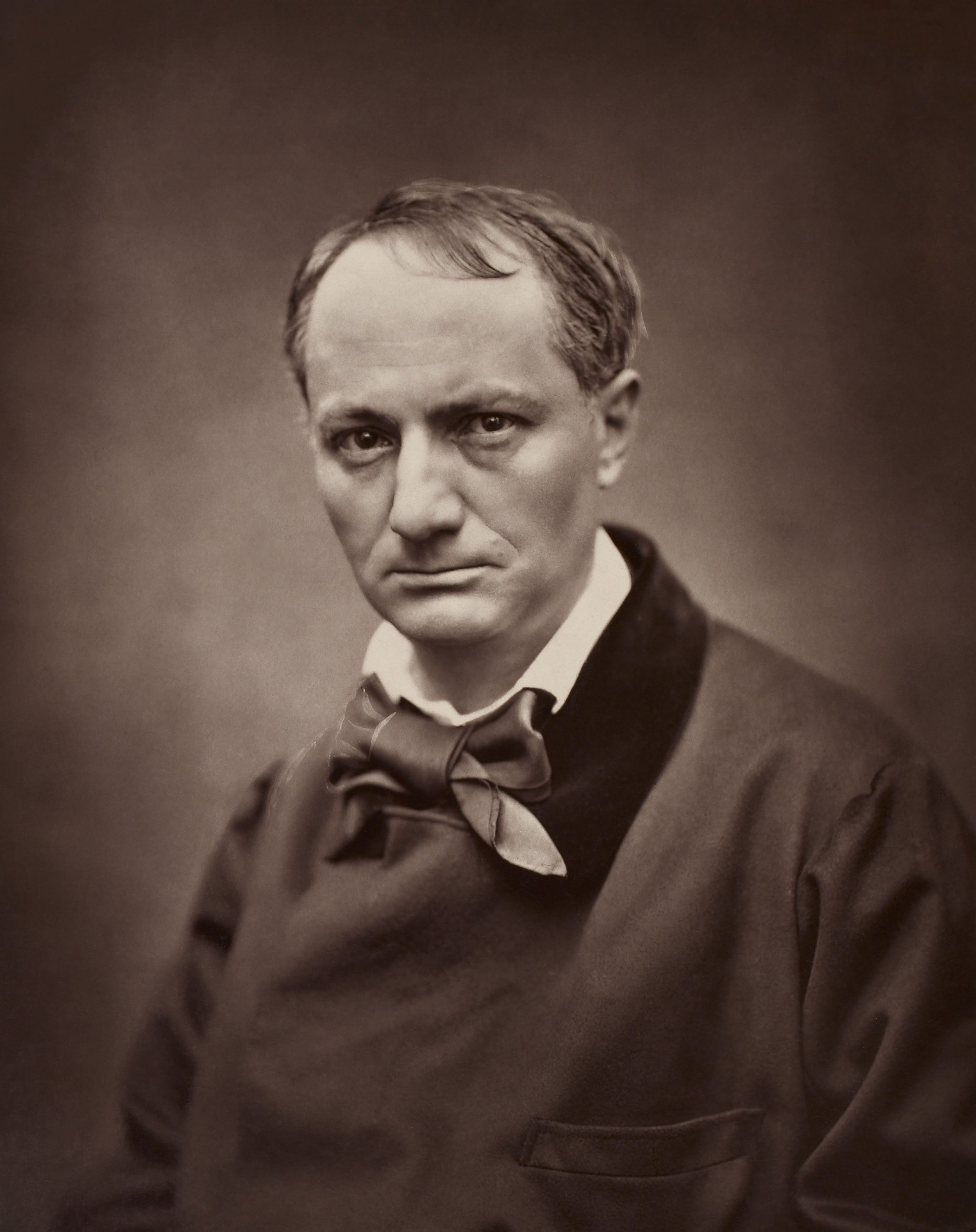
Charles Baudelaire, circa 1862 — Photo: Étienne Carjat, public domain, via Wikimedia Commons
Long before Baudelaire, scent was already central imagery in biblical love poetry: the Song of Songs, likely composed in the first millennium before our era, describes the beloved through an abundance of scent metaphors — myrrh, spikenard, henna, ‘a garden locked’ full of spices — in which fragrance is not decorative accessory but a direct emblem of desire itself. This close bond between scent and erotic language runs, often unnoticed, through large stretches of world literature up to Baudelaire and beyond.
No poet placed scent as systematically at the center of his poetics as Charles Baudelaire. His programmatic sonnet Correspondances, published in 1857 in Les Fleurs du mal, casts nature as a ‘temple’ whose living pillars let ‘confused words’ escape, while ‘scents, colors, and sounds answer one another’ — one of the earliest and most influential literary formulations of that synesthetic kinship between the senses, taken up directly by later Symbolists such as Rimbaud and Mallarmé.
Baudelaire did not stop at theory. In La Chevelure he celebrates a lover’s hair as a vehicle for travel — ‘I breathe for a long time the scent of your hair,’ he writes, letting it carry him to Africa, to distant harbors, into entire imagined worlds; in Le Flacon he describes how an old, half-empty perfume bottle, opened after years, releases an ‘intoxicated soul’ and an entire lost past — an anticipation of Proust’s madeleine, more than sixty years before Proust published his novel.
Where Baudelaire celebrates scent, Joris-Karl Huysmans drives it to exhaustion in his 1884 novel À rebours (Against Nature): his protagonist Des Esseintes, a decadent aesthete who has withdrawn entirely from society, experiments in a laboratory of his own with perfume blends, composes ‘scent symphonies’, and arranges raw materials by their supposed musical correspondence — a fictional figure who takes exactly the scent-sound analogy that Septimus Piesse had coined as a technical term a few decades earlier and inflates it into a caricature of an entire way of life.
A century later, Patrick Süskind pulled off the rare feat, in Perfume (1985), of building an entire novel around the sense of smell itself: his protagonist Grenouille, born without any scent of his own but gifted with a superhuman ability to smell, becomes a murderous perfumer seeking to distill the ‘perfect’ human scent. Süskind’s greatest achievement lies less in the plot than in the language itself: he describes smells with a precision and richness of vocabulary that shows how much literary potential lies in a sense that language otherwise notoriously serves badly.
These examples — Baudelaire, Huysmans, Proust, Süskind — are separated by more than a century, yet they share a common observation: scent resists direct description almost always, and can almost only be captured by detour — through memory, through comparison, through an entire story told around it. Perhaps that is exactly why scent, unlike in the visual arts or in music, can never be directly depicted in literature but only ever narrated — and why exactly this indirection has produced so many of the most singular pages in world literature.
An incense concert like Incense of Music stands, without naming it, in exactly this tradition: it attempts, by other means, to do what took Baudelaire an entire sonnet and Süskind an entire novel — to make the most fleeting of all senses graspable, for a moment.
Journal — Sources
Gold, Frankincense and Myrrh: The Gifts of the Three Kings
King, God, mortal — how a third-century reading turned three Arabian trade goods into theology.

Matthias Stom, The Adoration of the Magi (c. 1635–1639), public domain, via Wikimedia Commons
The gospel of Matthew names only the gifts, not the number of givers — “gold, and frankincense, and myrrh” is all the text says, and the tradition of exactly three magi is a later inference, one gift per visitor, that stuck. What did take hold early, and firmly, was a way of reading the three gifts as a coded description of who the child was.
The clearest early statement of it comes from Origen, the third-century theologian working in Alexandria and Caesarea: gold, he wrote, because the child was a king; frankincense, because he was God, fit for temple use; myrrh, because he was mortal, the resin used to prepare bodies for burial. The interpretation has been repeated, with only minor variation, in Christian commentary and carols ever since — most memorably in the nineteenth-century hymn that gives myrrh the line “breathes a life of gathering gloom . . . sealed in the stone-cold tomb,” folding a death foretold into a birth story.
The choice of materials was not arbitrary in another sense, either: both frankincense and myrrh came from the same narrow belt of Commiphora and Boswellia trees native to southern Arabia and the Horn of Africa, and travelled the same incense routes north — the very connection that let medieval and Renaissance painters place the magi’s homeland loosely in “the East” without needing to be more specific. Two of the three gifts, in other words, were simply the most valuable trade goods the Arabian peninsula had to offer, elevated into theology by the company gold kept them in.
At Incense of Music 8, we burned frankincense alongside juniper and elemi — a reminder, every time, that the resin in the story is not a symbol first and an incense second, but the reverse: a substance people already knew, burned in temples for a thousand years before anyone wrote a nativity around it.
Journal — Cultural History
Intoxication by Scent — A Cultural History
Long before anyone drank or smoked something to alter the mind, people may already have been sitting in a room full of smoke without meaning to.

Opium poppy (Papaver somniferum) — Photo: Ermell, CC BY-SA 4.0, via Wikimedia Commons
The Greek historian Herodotus describes, in the fifth century before our era, how the Scythians, after a burial, threw hemp seeds onto red-hot stones inside a closed tent — ‘and they enjoy the vapor,’ he writes, ‘and shout for joy.’ It is one of the earliest surviving descriptions of an intoxication produced not by drinking or smoking in the modern sense, but by simply inhaling smoke inside an enclosed space — archaeological finds of charred cannabis seeds in Scythian burial chambers have since largely confirmed Herodotus’s account.
The most famous oracle of antiquity, too, that of the Pythia at Delphi, has been linked since ancient times to intoxicating vapors: ancient authors describe a sweetish smell said to rise from a crack in the earth beneath the temple, while the Pythia, in trance, delivered her ambiguous pronouncements. Geological surveys of the site in the early twenty-first century did find evidence of ethylene-bearing gases along local fault lines — an explanation discussed among specialists but by no means conclusively proven. Regardless of the exact chemistry, the case shows how closely inhaled vapor and religious authority could be tied together in antiquity.
Egyptian kyphi, too, that layered incense blend of wine, honey and a good dozen resins, was burned, according to ancient authors such as Plutarch, not only as incense but deliberately in the evening, to promote sleep and pleasant dreams — an early, conscious use of smoke to alter consciousness, if in gentler form than among the Scythians.
Modern pharmacology confirms part of these millennia-old observations with striking directness, and for the best-known of all incense materials at that: a 2008 Israeli-American study published in The FASEB Journal identified in burning frankincense smoke a substance called incensole acetate, which, in animal testing, produced measurable anti-anxiety and mood-lifting effects, mediated through an ion channel (TRPV3) in certain brain regions — a mechanism that has nothing to do with classic intoxicants, but that could explain why frankincense smoke, across millennia and independently across so many religious contexts, was felt to be calming and uplifting.
The boundary between ‘scent’ and ‘drug’ was, historically, thus never as clean as today’s usually separate treatment of perfumery history and drug history suggests. The same plants — hemp, poppy, various resins — appear in incense ceremonies as much as in explicit intoxication practices, often in the same cultural context, sometimes even in the same ceremony, depending on the quantity burned and its concentration.
An often-told but historically much-doubted legend places a similar connection in medieval Persia and the Levant: the name of the Ismaili sect known as the ‘Assassins’ is said to derive from hashishiyya, ‘hashish users’, with the story that its followers were intoxicated with hashish before assassinations, to give them a foretaste of paradise. Modern historians now mostly regard this story as a later, largely European embellishment with no reliable contemporary evidence — an example of how easily intoxication and incense can, in hindsight too, condense into a dramatic but unreliable narrative.
An unexpected, much more recent continuation of this old blurring between scent and intoxication turned up, of all places, in the early twenty-first century: ‘herbal blends’, sold openly under names like K2 or Spice as ‘incense, not for human consumption’, actually contained synthetic cannabinoids and triggered, from around 2008 onward, a wave of regulatory bans across the US and Europe — a cynical but telling example of how the legal status of the word ‘incense’ itself was exploited to sell a substance that, by then, shared nothing with classic fragrance but the packaging.
A project like Incense of Music, which in October 2019 worked, among other things, with dragon’s blood — the deep red resin of several tropical tree species, credited with magical and healing powers since antiquity — moves, in that sense, within a tradition that has never strictly separated intoxication from ritual: wherever smoke rises, the passage between elevation and altered consciousness has historically rarely been far.
Journal — History
Where Citrus Fruits Come From
Almost the entire citrus family tree traces back to four wild species — and an eight-million-year-old “cradle” in the eastern Himalayas.

Citrus medica (citron), colored watercolor — Wellcome Collection, CC BY 4.0, via Wikimedia Commons
Every orange, lemon, lime, and grapefruit alive today is, genetically, a mix-and-match descendant of just a handful of wild ancestors. Genomic sequencing published in Nature in 2018 traced the whole genus back to a “citrus cradle” in the foothills of the eastern Himalayas and what is now southern China and northern Myanmar, where the group diversified over roughly eight million years — first as citrus’s own wild species spread with the retreat of the Miocene monsoon, then, much later, as people began deliberately crossing them.
Only four of those wild species turn out to matter for almost everything we eat: the mandarin, the pummelo, the citron, and a minor papeda relative. Sweet orange is a mandarin-pummelo hybrid; sour orange, used for marmalade and for the essential oils neroli and petitgrain, is roughly the same cross in different proportions; lemon is a cross between sour orange and citron; grapefruit, the newest of the major citrus fruits, arose from a pummelo crossed with a sweet orange, probably in eighteenth-century Barbados. Almost the entire aisle, in other words, comes down to combinations of two or three founding fruits.
The citron was first to travel. It reached the Middle East and the Mediterranean centuries before any other citrus, likely carried west in the wake of Alexander’s campaigns, and became the etrog of Jewish tradition — the fragrant citrus fruit still held and ritually blessed during Sukkot, chosen, tradition says, partly for a scent that fills a room the moment the fruit is handled. Sweet oranges and lemons arrived far later and by a different route, spread west by Arab traders through the medieval Mediterranean, then reintroduced from Chinese stock by Portuguese merchant ships around the sixteenth century — closely enough associated with that trade that several languages, Greek and Romanian among them, still call the orange some version of “the Portuguese fruit.”
At Incense of Music 22, we burned neroli and petitgrain side by side — from the same bitter orange tree, one oil from its blossom, the other from its leaves and twigs, two entirely different scents from a single hybrid whose own ancestry runs back, eight million years and two wild species deep, to a mountain range neither fruit has any memory of.
Meanwhile, in Japan …
Field notes · June 15, 2019
On Ranjatai, the most revered block of agarwood in Japan, kept — and only rarely cut — at the Shōsōin in Nara.
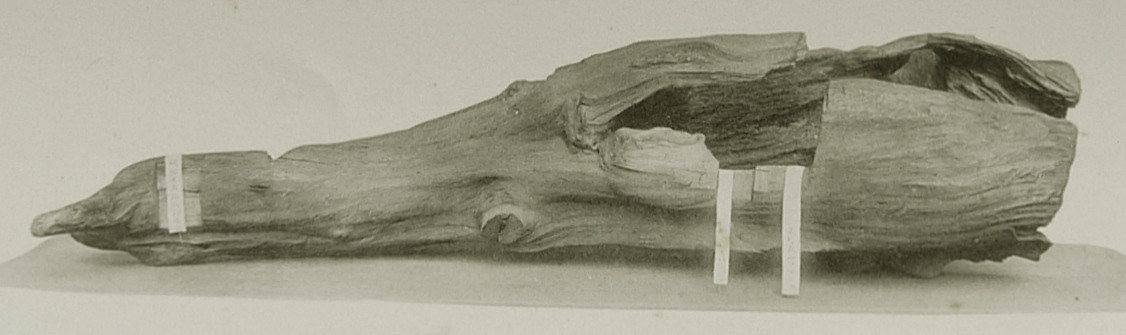
Ranjatai (蘭奢待), the imperial store of agarwood at the Shōsōin, Nara — incenseofmusic.com archive
In the Shōsōin treasure house at Nara lies a block of agarwood some one and a half metres long, known since at least the eighth century as Ranjatai. Emperors, shoguns and at least one modern head of state have each, over the centuries, been permitted to cut away a sliver for themselves — the wood is that rare, and that revered.
Its scent, warmed gently rather than burned outright, is said to be complex almost beyond description: somewhere between honey, leather and rain on warm stone. Kōdō, the Japanese “way of incense”, grew up around exactly this kind of attention — listening to a scent, as the tradition puts it, rather than simply smelling it.
Journal — Literature
The Plants of the Song of Songs
Henna, nard, saffron, calamus, frankincense trees — a spice route condensed into verse, listed almost breathlessly in chapter four.

Indian spikenard (Nardostachys jatamansi) — illustration from an Islamic manuscript, public domain, via New York Public Library / Wikimedia Commons
No book of the Hebrew Bible names more plants per verse than the Song of Songs, and nowhere more densely than chapter four, where the bridegroom describes his bride as “a garden enclosed” and then, almost breathlessly, lists what grows in it: henna with nard, nard and saffron, calamus and cinnamon, every tree of frankincense, myrrh and aloes, “with all the chief spices.”
Several of those names need unpacking. Henna — camphire in the King James translation — is Lawsonia inermis, the same shrub whose leaves are still ground into the reddish-brown dye used across the Middle East and South Asia; its clusters of small white flowers are intensely fragrant, and the same book places them growing wild in the vineyards of En Gedi, by the Dead Sea. Nard is spikenard, Nardostachys jatamansi, a root from the high Himalayas that had to travel further than almost anything else mentioned in the text to reach an Israelite garden — proof that this “garden” was never meant as a literal, plantable plot, but an inventory of everything precious, gathered in one impossible place. Aloes, here, means not the succulent but agarwood, the same resin-soaked wood burned elsewhere across this project’s own journal.
Outside chapter four, the garden keeps growing. The bride compares her lover to an apple tree among the trees of the wood; he calls her a lily among thorns, and later the lily becomes the image for her lips, dripping with liquid myrrh. Pomegranates recur three times, their orchard alongside henna and nard in the same chapter-four catalogue, and again as a metaphor for a temple behind a veil. Mandrakes — dudaim, a plant long associated in the ancient Near East with fertility — perfume the air in chapter seven, and cedar and fir beams, not growing but built, form the rafters of the house the lovers imagine sharing.
Taken together, the plants of the Song of Songs form less a garden than a spice route condensed into verse — the resins and roots of incense trade routes standing in, throughout, for a desire the text otherwise declines to describe directly.
Journal — Reflections
What Is the Essence of a Plant?
The word ‘essence’ sounds as if every plant held one single, true scent that merely needed to be set free. Chemistry says otherwise.

Lavender field in Provence — Photo: Marek Gehrmann, CC BY-SA 3.0, via Wikimedia Commons
People speak of ‘essential oils’ and almost always mean a single liquid in a single bottle. What is actually distilled from a lavender field, though, is a mixture of often more than a hundred different volatile molecules — linalool and linalyl acetate make up the lion’s share, but only their interplay with dozens of minor components, in shifting proportions, produces the scent instantly recognized as ‘lavender’. There is no single substance called lavender. There is an orchestra.
This composition, moreover, is anything but constant. Soil, altitude, the weather in the year of harvest, the timing of the harvest, even the hour of the day it is cut all shift the ratios between the molecules — two harvests from the same field can differ noticeably, and the very same species smells different at altitude in Provence than it does in the lowlands. What gets distilled, then, is not ‘the’ essence of the plant, but a snapshot: the chemical answer this particular plant gave to this particular year, this particular soil.
On top of this, different extraction methods applied to the very same plant produce genuinely different ‘essences’. Steam distillation yields the classic essential oil, but heat-sensitive flowers such as jasmine or tuberose barely survive this process intact and are instead processed through enfleurage — the slow embedding of fresh blossoms in odorless fat — or through solvent extraction into what is called an absolute, which differs noticeably in composition and scent from a distilled oil of the same plant. Modern CO2 extraction adds a third, again different variant. There is thus not even a single possible ‘essence’ per plant, but several, depending on which method one meets it with.
The word ‘essence’ comes from an older, Aristotelian idea that every thing carries an unchanging, essential core that makes it what it is — a notion that has stubbornly survived into modern perfumery language, even though chemistry has long since drawn a different picture: not a core but a process; not a substance but a relationship between hundreds of molecules and their own unrepeatable surroundings.
Perhaps that is the real reason scent is so hard to put into words. Whoever smells ‘lavender’ is not smelling one thing, but a small entire story — cut from a particular slope, in a particular summer, at a particular hour. The idea of a single ‘essence’ is convenient, but it conceals what is actually happening: every plant renegotiates with its environment anew, every year, and the scent is the record of that negotiation.
Journal — Body & Scent
Why Does Scent Matter So Much in Dance?
No other everyday space brings unfamiliar bodies as close together as a dance floor — and where bodies are close, smell is never far behind.

Tango dancers at the Sunderland Club, Buenos Aires — Photo: Jorge Royan, CC BY-SA 3.0, via Wikimedia Commons
The sweat a dancing body produces differs chemically in notable ways from that produced by jogging. Part of it comes from the apocrine glands, located mainly under the arms and in the genital area, which secrete a protein-rich fluid that is, on its own, almost odorless — only skin bacteria break it down into the volatile fatty acids we perceive as ‘body odor’. Unlike eccrine sweat glands, which serve mainly to cool the body, apocrine glands also respond to emotional arousal — closeness, excitement, attraction.
The widely cited ‘sweaty T-shirt study’ by Swiss zoologist Claus Wedekind, from 1995, found that women tended to rate the body odor of men with a particularly different MHC gene cluster — a key component of the immune system — as more pleasant, with a notable exception among women taking hormonal contraceptives. The study remains debated to this day and disputed in its details, but is still regarded as one of the most influential pieces of evidence that body odor reveals more about potential partners than conscious smelling might at first suggest.
Historically, people were well aware of this connection, if without the matching chemistry. In the eighteenth and nineteenth centuries, one’s own, unperfumed ‘scent signal’ was, in some European ballroom traditions, quite deliberately courted — a handkerchief, briefly tucked under the arm and then handed to a particular dance partner, was, in parts of Austria and southern Germany, a known, if informal, courtship signal, and carried its own blunt name: the ‘sweat cloth’.
The waltz itself, when it moved from rural dances of southern Germany and Austria into Vienna’s ballrooms at the end of the eighteenth century, triggered a decades-long morality scandal for exactly this reason: unlike the courtly contredanses before it, dancers held each other in a close embrace, cheek near cheek — close enough that critics of the time openly warned of the ‘danger of contagion’ from a stranger’s body odor and, for a time, condemned the waltz as immoral, long before it established itself as socially acceptable.
Tango, which emerged in the immigrant neighborhoods of Buenos Aires around 1900, makes this bodily closeness a central element of the dance itself: the abrazo, the close embrace in which chest meets chest, leaves little room for perfumed distance. Many experienced tango dancers report that the scent of a familiar dance partner develops, over time, into its own recognizable signal — not unlike a familiar voice or a familiar walk.
Perfume on the dance floor is, in that sense, always a balancing act: too much of it masks exactly the body’s own signal, which apparently serves an evolutionary communicative function of its own; too little leaves the space unfiltered to pure, often sweat-soaked body odor. Experienced dancers therefore often choose particularly light, skin-close scents — ones that accompany one’s own smell rather than replace it.
Journal — Sources
Myrrh as a Symbol of Wealth in the Old Testament
Anointing oil, a year of beauty treatment for Esther, a sachet worn between the breasts in the Song of Songs — why myrrh stood for luxury in the Hebrew Bible.

Commiphora myrrha — illustration: Köhler’s Medizinal-Pflanzen (1887), public domain, via Wikimedia Commons
In the Hebrew Bible, myrrh — mor — appears wherever the text wants to signal that no expense was spared. It is one of four spices, alongside cinnamon, sweet cane, and cassia, mixed into the sacred anointing oil in Exodus 30, a formula so exclusive that the same chapter forbids anyone from replicating it for personal use, on pain of being “cut off from his people.”
The Book of Esther makes the economics explicit. Before any young woman was brought before King Ahasuerus, she spent twelve months in preparation: six months with oil of myrrh, then six more with perfumes and cosmetics — a full year’s supply of a single ingredient as a routine cost of entering the palace. In the Song of Songs, myrrh is what the bridegroom is made of, a sachet worn between the breasts overnight, myrrh dripping from fingers onto a door handle — wealth folded into intimacy rather than ceremony.
The expense was real, not just poetic. Myrrh comes from Commiphora trees that grow almost nowhere outside the Arabian Peninsula and the Horn of Africa, and every grain that reached Jerusalem had already traveled the same incense routes that carried frankincense north — taxed at every stop, changing hands across a thousand miles of desert before it was worth mentioning in a poem at all.
Journal — Literature
The Meaning of Scent in Marcel Proust
A small cake dipped in lime-blossom tea, and an entire novel growing out of it — few literary images have shaped our understanding of smell and memory as much as this one.

Marcel Proust, circa 1895 — Photo: Otto Wegener, public domain, via Wikimedia Commons
The most famous madeleine in literary history appears near the very beginning of Proust’s seven-volume In Search of Lost Time: the narrator, grown and bored on a winter’s day, dips a small cake into lime-blossom tea — and, the moment the mixture touches his lips, is flooded by a wave of memory that brings back an entire lost childhood in Combray, streets, gardens, people he had believed long forgotten.
What matters about this scene is that it happens involuntarily. Proust calls this phenomenon mémoire involontaire, involuntary memory, and sets it sharply against conscious, effortful remembering, which for him remains forever incomplete and pale. Only taste — closely related, both physiologically and literarily, to smell — has the power to bring back a whole, bodily-lived past unfiltered, without the mind first having to reconstruct it laboriously.
This literary observation anticipates, without knowing it, something neuroscience would only confirm a century later: the olfactory bulb is closely wired to the hippocampus and the amygdala, the brain regions responsible for memory and emotion — and almost without a detour through the cortex, the seat of conscious thought. Visual and auditory stimuli, by contrast, are first processed via the thalamus, in a sense ‘filtered’, before reaching the memory center. Smells have it easier: a shorter, more direct line into emotional memory.
The madeleine, moreover, is only the best known, not the only, scent trigger in the novel. Shortly before it, the young narrator already describes the stunning, almost painful scent of hawthorn hedges (aubépines) in bloom along the paths of Combray, with an intensity that makes clear how much Proust himself — plagued his whole life by severe asthma, and in his final years literally working in a cork-lined room kept as free of dust and smell as possible — experienced scent as something nearly overpowering, something one could hardly escape.
The ‘Proust effect’, named after him, denotes in psychology today exactly this phenomenon: the particular ability of smells to trigger far more vivid, emotionally dense memories than images or sounds can manage. Anyone who has ever been abruptly transported back to a past time by a single, fleeting scent — a particular detergent, a particular brand of cigarette, the smell of a house not entered in years — has experienced Proust’s madeleine in their own body, quite without any lime-blossom tea at all.
About Other Beings
Field notes · October 2, 2018
A short fact about how a dog actually smells the world.

incenseofmusic.com archive
The percentage of a dog’s brain devoted to analyzing smells is actually forty times higher than a human’s!
Deforestation in Germany
Field notes · September 15, 2018
A short, personal note from the days of the Hambach Forest protests.

Hans Holbein the Younger, detail from Dance of Death (1538)
Things look bad for the orangutan. Sadly, also for Bechstein’s bat. Faced with the reckless destruction of our ecological heritage in the Hambach Forest for reasons of pure profit, I find myself, in conversation with my friends in East Asia, slowly running out of arguments…
Journal — Literature
Visit to Godenholm
Field notes · July 15, 2018
A passage from Ernst Jünger’s 1952 novella, on watching incense smoke become something closer to vision than scent.

AntanO, Incense stick, CC BY-SA 4.0, via Wikimedia Commons
“The light began to crackle; a blue thread rose from the edge of the candlestick. I looked at it first with astonishment, then with delight, as if a new force of the eye had come to me. In it the games of this honey-scented smoke revealed themselves, rising on a slender stem and then ramifying in a delicate crown. It was as if my imagination had created it – a pale web of sea lilies in the depths barely trembling from the surf. (…) Now a breath of air hit the vision and smoothly turned it around the axis like a dancer. (…) The rays and lattices of the miracle flower swung into new levels, into new fields. Myriads of molecules bowed to harmony. Here all laws no longer worked under the veil of appearance; the substance was so ethereal that it could mirror them openly. How easy and compelling this all was. The numbers, measures and weights freely emerged from matter. They threw off the robes. (…) This corresponds to intuitions in which areas are revealed, where otherwise only music advances – to the weightless zone between sensible and spiritual reality. (…)”
Ernst Jünger, Visit to Godenholm, 1952

The passage exists in Jünger’s own German, quoted here in the original alongside the English above.
Journal — Science
Why Is Lavender a Sedative?
Linalool and linalyl acetate appear to act on the same system as some anti-anxiety medications — with clinical evidence that goes beyond simple aromatherapy.
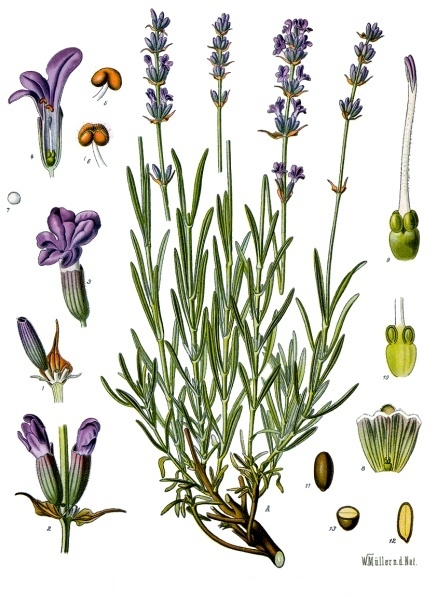
Lavandula angustifolia — illustration: Köhler’s Medizinal-Pflanzen (1887), public domain, via Wikimedia Commons
Crush a lavender flower and most of what reaches the nose is linalool and linalyl acetate — two related compounds that make up the bulk of the essential oil, and that turn out to do more than just smell calming. In animal studies and a growing number of controlled human trials, both compounds appear to act on much the same system as some anti-anxiety medications: they enhance signaling through GABA-A receptors, the brain’s main inhibitory switch, and modulate certain calcium channels involved in nerve excitability.
The clearest clinical evidence comes from an oral lavender oil preparation, marketed as Silexan, tested against generalized anxiety disorder in several placebo-controlled trials; in some, its effect size matched low-dose lorazepam, a benzodiazepine, without the sedation, dependence risk, or withdrawal that come with it. Simple inhalation has weaker but still measurable effects — a frequently cited study in a dental waiting room found patients exposed to ambient lavender scent reported less anxiety than a control group, with no difference in how alert they otherwise felt.
None of this was demonstrated by chemists first. Lavender’s name is often traced to the Latin lavare, to wash, from its use in Roman bathwater, and it was strewn on floors through the Middle Ages as much for its calming reputation as for masking odors. At Incense of Music 12, in March 2017, we burned lavender alongside labdanum — a pairing that turns out to make some chemical sense: one calms while it clears the room, the other, a resin combed from the same rockrose family, does the opposite, warm and slightly animalic.
Galbanum in the Naturalis Historia
Field notes · May 31, 2018
What Pliny the Elder wrote about the resin galbanum in the first century — in the original Latin, with a translation below.

Ferula gummosa (galbanum) — illustration: Köhler’s Medizinal-Pflanzen (1887), public domain, via Wikimedia Commons
De galbano diximus. neque umidum neque aridum probatur et quale docuimus. per se bibitur ad tussim veterem, suspiria, rupta, convulsa, inponitur ischiadicis, lateris doloribus, panis, furunculis, corpori ab ossibus recedenti, strumis, articulorum nodis, dentium quoque doloribus. inlinitur et cum melle capitis ulceribus. purulentis infunditur auribus cum rosaceo aut nardo. odore comitialibus subvenit et vulva strangulante vel in stomachi defectu. abortus non exeuntes trahit adpositu vel suffitu, item ramo hellebori circumlitum atque subiectum. serpentes nidore urentium fugari diximus. fugiunt et perunctos galbano. medetur et a scorpione percussis. bibitur et in difficili partu gabae magnitudine in cyatho vini, vulvasque conversas corrigit, cum murra autem et vino mortuos partus extrahit. adversatur et venenis, maxime toxicis, cum murra et vino.
Gaius Plinius Secundus, 77–78 p.Ch.n.
A rough translation: “We have already spoken of galbanum. Neither the moist nor the dry kind is approved, but only that of the quality described earlier. Taken on its own, it is drunk for a chronic cough, shortness of breath, ruptures and convulsions; applied externally, it relieves sciatica, pain in the side, swellings, boils, bone abscesses, goiters, swollen joints, and even toothache. Mixed with honey, it is rubbed onto ulcers of the scalp. Combined with rose oil or nard, it is poured into discharging ears. Its odor is said to help those suffering epileptic fits, a suffocating womb, or a failing stomach. Applied or fumigated, it draws out a retained miscarriage, especially when wrapped around a branch of hellebore. As noted elsewhere, the smoke of burning galbanum drives away snakes — they flee, too, from anyone anointed with it. It is also said to help those stung by a scorpion. Drunk, the size of a bean, in a cup of wine, it eases difficult childbirth and corrects a displaced womb; mixed with myrrh and wine, it expels a dead fetus. Combined with myrrh and wine, it is also said to counter poisons, especially the toxic kind.”
Journal — Science
Jacobson’s Organ
Field notes · March 15, 2018
A brief note on the vomeronasal organ — and what’s left of it in humans.

P.Fernandes (Trebaruna), Detalhe boca Fred, CC BY 3.0, via Wikimedia Commons
Jacobson’s organ, also known as the vomeronasal organ (VNO), is part of the olfactory system. It corresponds to the olfactory pits of fish. During human fetal development the organ forms and then regresses before birth. Whether the VNO still fulfills a function in human perception after birth is considered controversial. In the case of the cat, the entrance to Jacobson’s organ can be seen on the palate, behind the incisors.
Journal — Science
How Does the Human Sense of Smell Work?
Over a thousand different receptor genes, a direct line into memory, and the ability to distinguish more than a trillion smells — the most underrated sense is also the more complicated one.

Diagram of the olfactory pathway, from Henry Gray, Anatomy of the Human Body (1918) — Illustration: Henry Vandyke Carter, public domain, via Wikimedia Commons
Every breath carries scent molecules across the nasal mucosa up to a small, coin-sized patch high in the roof of the nose: the olfactory epithelium, a few square centimeters on which several million olfactory sensory cells sit tightly packed. Each of these cells carries only a single type of olfactory receptor on its surface — in humans, around 400 functional genes code for that many distinct receptor types, considerably fewer than the roughly 800 genes the genome sets aside for olfactory receptors altogether, since over half of them have, over the course of human evolution, degraded into non-functional pseudogenes.
This system was only discovered in 1991, when Linda Buck and Richard Axel, in a paper now considered legendary, identified the gene family of olfactory receptors — one of the largest gene families in the entire human genome. For this discovery both received the Nobel Prize in Physiology or Medicine in 2004, more than a decade after the original publication, a sign of how long it took for the full scope of the discovery to be appreciated.
A combinatorial principle is decisive here: a single scent molecule rarely activates only one receptor type, but usually a characteristic pattern of several receptors activated simultaneously, each at a different intensity. The brain reads this pattern like a code — with only around 400 different ‘letters’, a practically inexhaustible number of different ‘words’, that is, perceived smells, can be formed this way. A widely cited, if methodologically disputed, 2014 study calculated the ability to distinguish more than a trillion different scent combinations — far more than the eye can distinguish in colors or the ear in tones.
Anatomically, the path these signals take is also unusual. Every other sense — sight, hearing, touch, even taste — is first routed through the thalamus, a kind of central relay station, before reaching consciousness. The olfactory pathway, by contrast, runs directly from the olfactory bulb to the amygdala and hippocampus, the centers for emotion and memory — with no such detour at all. This anatomical shortcut is considered one of the most plausible explanations for why smells are remembered so much more immediately and with such emotional density than images or sounds.
What we colloquially call ‘taste’ is, moreover, mostly smell: the famous pinched-nose test shows it at once — pinch your nose while eating and you can still taste sweet, salty, sour, bitter and umami, but lose almost the entire, finer flavor profile. This so-called retronasal smell, in which scent molecules rise from the back of the throat into the nose while chewing, accounts for the vast majority of what we take to be ‘taste’ — one reason people with smell loss (anosmia) frequently report an almost complete loss of enjoyment in eating, even when their tongue functions unchanged.
Just how vulnerable this system is became widely apparent only through the COVID-19 pandemic: sudden loss of smell rapidly emerged as one of the most characteristic early symptoms of infection, often with no accompanying cold symptoms at all. The cause is now understood to lie chiefly in damage to the supporting cells of the olfactory epithelium, not the olfactory sensory cells themselves — which explains why smell returns, at least partially, within weeks or months for most of those affected. Out of this crisis, so-called smell training became an established therapy: those affected systematically sniff strongly distinct scents — classically rose, lemon, clove, and eucalyptus — two to four times a day, to specifically support the regeneration of the olfactory cells and their neural wiring.
Compared with many other mammals, the human nose is commonly held to be weak — a reputation that obscures rather than describes the system’s actual capability. What sets humans apart from a dog is not the sensitivity of individual receptors, but chiefly the smaller number of functional receptor genes and a smaller olfactory epithelium. The combinatorial principle itself — pattern rather than single signal — works no less elegantly in us than in any other mammal.
Journal — Language
Jahai!
Field notes · March 2, 2018
A dozen words for smell that English doesn’t have — on the language of the Jahai, hunter-gatherers of the Malay Peninsula.

Taman Negara, Malaysia — Photo: Vyacheslav Argenberg, CC BY 4.0, via Wikimedia Commons
“It is widely believed that people are bad at naming odors. This has led researchers to suggest that smell representations are simply not accessible to the language centers of the brain. But is this really so? Psychologist Asifa Majid from Radboud University Nijmegen and linguist Niclas Burenhult from Lund University, Sweden, have found new evidence for smell language on the Malay Peninsula.”
Radboud University Nijmegen, “Odors Expressible in Language, as Long as You Speak the Right Language,” ScienceDaily, 3 January 2014.
“In Jahai there are around a dozen different words to describe different qualities of smell. For example, ltpɪt describes the smell of various flowers and ripe fruit, durian, perfume, soap, agarwood, and binturong (bearcat), among others. Cŋɛs, another smell word, is used for the smell of petrol, smoke, bat droppings and bat caves, certain species of millipede, the root of wild ginger, and more. These terms refer to different qualities of odor and are abstract — in the same way that blue and purple are abstract.”
Asian Scientist Magazine, “Odors Expressible In Malay Hunter-Gatherer Language,” January 2014.
See also: Süddeutsche Zeitung, „Explosion der Düfte“.
Journal — Scents
The Princess and the Bitter Orange Tree
A name that has clung to a Roman princess for more than three hundred years, because her gloves smelled better than anyone else’s.

Citrus aurantium, the bitter orange — Photo: Zeynel Cebeci, CC BY-SA 4.0, via Wikimedia Commons
Neroli comes from the blossoms of the bitter orange tree, not the fruit — a fine but crucial distinction, since the same tree yields two entirely separate scents besides: petitgrain from leaves and twigs, bitter orange oil from the peel. The blossom oil itself is green, faintly bitter, with a metallic sharpness at the top that only opens, after a few minutes, into something honeyed and almost skin-warm. Anyone who knows only the sweet, round orange-blossom water from the kitchen is usually startled by pure neroli.
The scent, admittedly, was not entirely new at the princess’s time: orange-blossom water, aqua nanfa, had already been known centuries earlier in Arab-influenced Sicily and in al-Andalus, used in both cooking and cosmetics. What changed with Anne Marie Orsini was not the discovery of the scent, but its social status: thanks to her, a regionally common water became a status symbol of the European courts.
The oil owes its name not to botany but to a woman. Anne Marie Orsini, Duchess of Bracciano and Princess of Nerola — a small town northeast of Rome — made bitter orange oil fashionable at her court toward the end of the seventeenth century: she used it to perfume her gloves and her bathwater, and within a short time the European courts no longer spoke of bitter orange oil at all, only of acqua di Nerola. A princely title turned into a generic name that no perfumer’s training omits to this day.
The eighteenth century took up the fashion gladly: neroli became one of the load-bearing components of early eau de cologne, that cool citrus-herbal composition that conquered half the world from Cologne outward. Today neroli sits, in perfumery, most often at the heart of a composition, between the fleeting top notes and the heavier base — an oil that can conjure a seventeenth-century ballroom just as easily as, quite unpretentiously, an orange grove in spring. It was not entirely a coincidence that Incense of Music 22, in December 2017, put exactly this pairing on the program: petitgrain and neroli, two faces of the same tree, burned side by side on a single evening.
Journal — Science
Why the Human Sense of Smell Fell Out of Favor
An estimated sixty percent of our olfactory receptor genes are switched off. A trail that runs through genetics, color vision, and the nineteenth century.
Olfactory bulb and tract — illustration from Gray’s Anatomy (1918), public domain, via Wikimedia Commons
Of the roughly eight hundred olfactory receptor genes stored in the human genome, a majority — commonly put at somewhere around sixty percent — are pseudogenes: broken copies, switched off by mutations, that no longer produce a working receptor. Compare that to a mouse, where the great majority of the same gene family still functions, and the pattern looks less like decay and more like abandonment.
One of the more debated explanations ties this directly to color. In a widely cited 2004 study in PLOS Biology, Yoav Gilad and colleagues found that primate lineages which evolved full trichromatic vision — the ability to see red distinctly from green, not just the blue-yellow contrast most mammals manage — lost olfactory receptor genes at a markedly faster rate than lineages that kept only two-color vision. The suggestion was that once a primate could spot a ripe red fruit against green leaves from a distance, the nose became a slightly less essential source of the same information, and evolution stopped bothering to maintain every receptor gene precisely. Later work has pushed back on how direct that link really is, and the debate is not settled.
The idea is older than the genetics, though. In the nineteenth century, the French anatomist Paul Broca divided mammals into “macrosmatic” and “microsmatic” — strong-smellers and weak-smellers — and noticed that the olfactory regions of the brain shrank, relative to everything else, as the neocortex expanded in primates and especially in humans. Broca’s own explanation leaned on some now-outdated ideas about free will and instinct, but the basic observation held up: proportionally, almost no mammal devotes less of its brain to smell than we do.
None of this means human smell is negligible — trained noses can still distinguish on the order of a trillion different odor mixtures, by one influential estimate. It means, rather, that of all our senses, smell is the one evolution seems to have let coast, quietly, while vision and reasoning took over the jobs it used to do alone. It is a fitting origin story for an incense project: if the nose had to fight harder to be noticed, this whole undertaking is, in a small way, an argument for paying it that attention back.
Journal — Zeremonien, Teil 2/5
Zeremonien mit Räuchern: Südamerika
The second part of the series leads to where a tree that should, by rights, be dead only begins to smell once it has died.

Cleansing ritual with palo santo (Bursera graveolens) at Centro Takiwasi, Peru — Photo: François Delonnay, CC BY-SA 4.0, via Wikimedia Commons
The second excursion in this small Journal series on the incense ceremonies of five continents leads to South America — and within it, first, to palo santo, the ‘holy wood’.
Palo santo comes from the tree Bursera graveolens, which grows along the dry Pacific coast of Ecuador and Peru, in the same forests that also shape the Galápagos Islands. What is peculiar about this wood: freshly cut, it barely smells at all. Only once a branch has died and lain on the forest floor for several years do the essential oils concentrate in the wood — limonene, menthofuran, a trace of turpentine and pine — into the sweetish, resinous, almost citrus scent known today. Sustainably harvested palo santo therefore comes, by definition, from wood that has already died and fallen, never from felled trees.
In the Andean regions of Peru and Ecuador, palo santo has for generations been part of limpiezas — cleansing rituals often tied to ayahuasca ceremonies, to the work of curanderos, or simply to the start and close of a day. The smoke is held to clear a room, a person, or an object of ‘heavy’ energy; it is often guided with a feather or the bare hand around the body or the space. The photograph accompanying this post shows exactly such a ritual, just before an earth ceremony at Centro Takiwasi in Peru — a place that combines traditional plant medicine with Western addiction therapy.
Copal, the resin of various Bursera and Protium species, accompanies palo santo in many Mesoamerican and Andean traditions as a second central incense material — among the Maya and Aztec, copal was so closely bound to the divine that its smoke was literally understood as food for the gods. Both resins, palo santo and copal, now face demand pressure from their popularity on the global wellness market that is not always met sustainably in their regions of origin — a tension that sets South American incense practice apart from many others: it is at once ancient and, in its present worldwide form, remarkably young.
Beyond the resins, blown tobacco smoke also plays a central ceremonial role across much of the Andes, usually in the form of mapacho, a particularly nicotine-rich wild tobacco. Healers blow the smoke deliberately over the body, objects, or a space — an act that resembles Western smoking far less than a directed, almost medicinal application, often accompanied by icaros, the traditional healing songs of the Amazon region, which during a ceremony are understood to guide the smoke itself.
In the street markets of Lima, Quito, or Mexico City, meanwhile, one encounters a much more everyday form of South American incense practice: the sahumerio, ready-made herb bundles of rue, rosemary, basil, and other locally available plants, burned far outside any shamanic context to protect the home from ‘bad energy’ — a folk, often Catholic-inflected continuation of the same basic idea that lives on in more concentrated, spiritually charged form in the Andean ceremonies.
Journal — History
The Incense Route
For centuries, a single scent moved empires. Frankincense carried by camel caravan from southern Arabia to the Mediterranean built cities, financed temples, and made a resin worth more than gold.

Boswellia sacra, Wadi Dawkah, Oman — Photo: Mauro Raffaelli, CC BY-SA 3.0, via Wikimedia Commons
From roughly the third century BC to the second century AD, a network of overland and maritime routes carried frankincense and myrrh from southern Arabia and the Horn of Africa to the temples and marketplaces of the Mediterranean world. The routes ran north from the incense-producing regions of Dhofar and Hadramaut, through waystations in the Arabian interior, to hubs such as Petra and Gaza, before the resin reached Rome, Alexandria and beyond.
The Nabataeans, based at Petra, controlled a pivotal stretch of the route — the point where paths from the Gulf of Aqaba and the Dead Sea converged — and grew wealthy taxing the caravans that passed through. Other trading cities, among them Gerrha on the Persian Gulf and the ports of Khor Rori and Qana on the Arabian Sea, linked the overland route to seaborne trade reaching as far as India.
Frankincense itself is harvested from Boswellia sacra, a low, resinous tree that grows in the arid hills of Oman, Yemen and Somalia. The tree is cut in careful incisions; the wound seeps a milky resin that hardens into the fragrant “tears” burned as incense across the ancient world. In Hellenistic and Roman times, its value was said to exceed that of gold.
The route’s importance faded as Rome established direct maritime trade with India and, later, after the seventh-century Arab conquest of Egypt redrew the region’s trading map. But something of it survives in Incense of Music each time a resin is placed on the coal: a small return to a trade that once moved along caravan tracks for a thousand miles, tree to temple, temple to city, city to memory.
Journal — Science
The Hidden Link Between Smell and Taste
The tongue can tell apart exactly five things. Almost everything else we call “taste” is actually smell.

Gerrit van Honthorst, Allegory of Taste (c. 1623–1624), public domain, via Wikimedia Commons
Pinch your nose shut and eat a jellybean — most people, tested this way, cannot tell a lemon one from an orange one, and sometimes cannot even tell they’re eating a jellybean at all rather than plain sugar. The tongue, on its own, is a surprisingly blunt instrument: it distinguishes only five qualities — sweet, sour, salty, bitter, and umami — nothing that would explain the difference between a strawberry and a raspberry.
What we call flavor is mostly smell, arriving by the back door. As we chew, aroma molecules rise up the throat into the nasal cavity from behind, reaching the same olfactory receptors that a sniff reaches from the front — a route physiologists call retronasal olfaction, as opposed to the orthonasal kind used for ordinary smelling. It is why food turns bland and interchangeable during a bad cold: the tongue still works perfectly, but the passage behind it is blocked.
Wine tasting makes the point almost embarrassingly well. Trained tasters describe leather, violets, wet stone, and black cherry in a glass that, chemically speaking, offers the tongue only sourness, a little sweetness, and tannin’s bitterness — everything else is retronasal smell, reconstructed by the brain into something we insist on calling taste.
Journal — Ceremonies, Part 1/5
Incense Ceremonies: Europe
The first part of a series on incense ceremonies around the world begins where incense has remained most visible to this day — in churches most people pass without a thought for the ceremony behind it.

The Botafumeiro swings through the transept of Santiago de Compostela Cathedral — Photo: Luis Miguel Bugallo Sánchez, CC BY-SA 3.0, via Wikimedia Commons
This post opens a small series in the Journal: five excursions into the incense ceremonies of five continents, in loose sequence — not a race through the map of the world, but five separate considerations. Europe comes first, and within it, the continent’s oldest surviving incense tradition.
Europe’s oldest surviving incense tradition reaches back to Greek and Roman antiquity, where frankincense — always imported, never grown locally — was a fixed part of sacrificial ritual: no altar offering was considered complete without the accompanying clouds of smoke, and frankincense was valuable enough that private households could often afford it only for special occasions.
Early Christianity adopted the practice only hesitantly — frankincense was so closely tied to the Roman imperial cult that refusing to burn it before a statue of the emperor was, for early Christians, literally a matter of life and death, and plays a central role in numerous martyrdom accounts. Only after Christianity itself became the state religion did frankincense shift from a symbol of pagan loyalty into a fixed liturgical element of the church’s own rites — a remarkable reinterpretation of the same material within a few centuries.
To this day, censing with the thurible, a metal vessel swung on chains, accompanies solemn masses in both the Catholic and Orthodox churches: the rising smoke traditionally symbolizes the prayers of the faithful ascending to heaven, an image found almost verbatim already in the biblical Psalm 141 — ‘let my prayer rise before you like incense.’
The most spectacular surviving form of this practice is found in the Cathedral of Santiago de Compostela: the Botafumeiro, a silver vessel roughly 1.5 meters tall and weighing around 80 kilograms, is swung by a team of eight men, the tiraboleiros, on a system of ropes across the entire transept of the cathedral, nearly grazing the ceiling — reaching a speed of over 60 kilometers per hour at the lowest point of its arc. The practical origin of this tradition likely lies less in the purely spiritual than in the plainly practical: exhausted pilgrims, months on the road, filled the medieval cathedral with a smell that generous swinging clouds of frankincense were meant to overpower.
North of the Alps, independent of church liturgy, a distinct folk incense tradition developed that remains alive to this day, above all in the German-speaking and Alpine world: censing during the Rauhnächte, the twelve nights between Christmas and Epiphany. With blends of frankincense, myrrh, juniper, sage and other herbs, people walk through house and stable to symbolically smoke out the old year and receive the new one pure — a practice whose pre-Christian roots remain debated, but which has, in its present form, become tightly interwoven with the church calendar surrounding those twelve nights.
Lavender and labdanum, the resinous exudate of the rockrose, gathered across the Mediterranean since antiquity — according to legend originally combed from the fur of grazing goats that had brushed against the sticky rockrose shrubs — stand as an example of a third, less ceremonial but equally old European incense tradition: the domestic, often informal burning of simple, locally available herbs and resins, entirely without the institutional frame of church or ritual, simply to make a room smell pleasant.
In the twentieth century, finally, Europe gave incense and scent a third, secular meaning: in 1937, the French chemist René-Maurice Gattefossé, after burning his hand in a laboratory explosion and allegedly cooling it, by chance, in pure lavender oil, coined the term ‘aromathérapie’ — the birth of a movement that understood essential oils no longer primarily as religious or ritual, but as medical and therapeutic, and thereby, without meaning to, drew a line back to Europe’s oldest incense traditions, in which healing and ceremony had never been strictly separate to begin with.
It was no coincidence that exactly this pairing — lavender and labdanum — appeared on the program of Incense of Music 12 in March 2017, in a concert titled Archivo Pittoresco that played explicitly with remembered, imagined pasts. Europe’s incense history, from the sacrificial altar through the cathedral to the kitchen table, shows this: the one continent that never grew frankincense itself has, over two and a half millennia, made it as thoroughly its own as almost no other imported good.
Journal — Practice
The Alchemy of Scent: What Makes a Good Blend?
The tools of perfumery and of alchemy come from the same workshop — the idea of a ‘good blend’ has barely changed since.

Juniper berries (Juniperus communis) — Photo: W.carter, CC BY-SA 4.0, via Wikimedia Commons
The alembic, that bulbous distilling vessel with its characteristic upward-curving spout, was not invented by perfumers but by alchemists — al-anbiq, the Arabic word behind it, itself traced to a Greek origin, originally denoted an apparatus for separating substances, used to search for gold just as much as for pure rosewater. The quinta essentia, the fifth essence beyond the four classical elements that alchemists hoped to capture in distilled liquids, survives linguistically to this day in the word ‘essence’ for a fragrant oil.
One of the earliest surviving texts to treat scent-making systematically, as an exact science, comes tellingly from a polymath rather than a perfumer: the Arab philosopher al-Kindi wrote, in the ninth century, the Book of the Chemistry of Perfume and Distillations, with over a hundred concrete recipes and quantities for ointments, scented waters, and incense — a work that still treated chemistry, medicine, and the art of scent as, quite naturally, a single discipline.
A ‘good blend’ in modern perfumery follows a basic principle that remains remarkably close to alchemical staging: the fragrance pyramid of top, heart, and base notes. Top notes — usually citrus, light herbs — evaporate within minutes and form the first impression; heart notes, often floral, carry the composition’s actual character over hours; base notes — resins, woods, musk-like materials — evaporate most slowly and anchor the composition on the skin, sometimes for an entire day.
An ‘accord’ rarely arises from a single raw material, but almost always from the deliberate interplay of several: juniper berries, for instance, resinous and fresh with a hint of pine needle, rarely work alone, but mostly in interplay with frankincense or cedar, where they brighten a heavier base with a green, almost earthy freshness — exactly the principle Incense of Music 8 was programmed around in August 2016, when frankincense, juniper and elemi were burned together.
What ultimately makes a blend ‘good’ is harder to reduce to rules than the pyramid suggests: too much symmetry quickly turns sterile, too much contrast falls apart into separate pieces. The finest compositions, whether from a tenth-century alembic or a twenty-first-century concert hall, are usually held together by the same hard-to-grasp criterion — a balance that is felt more than it is calculated.
Journal — Plants
Sweet Flag and the Scent Hidden Underground
Field notes · March 18, 2016
A wetland reed that ancient Egyptians pressed into perfume, and that European apothecaries mistook for iris for a hundred years before anyone got its name right.

Acorus calamus (sweet flag) — Photo: Krzysztof Ziarnek, Kenraiz, CC BY-SA 4.0, via Wikimedia Commons
Sweet flag grows quietly at the edges of ponds and slow rivers, an unremarkable stand of sword-shaped leaves rising from mud. Pull one free, though, and crush it between your fingers: it releases a sweet, warm, faintly citrus scent that has nothing modest about it. The fragrance sits in the rhizome, a knuckled underground stem about the thickness of a finger, brown-skinned and white inside, that has carried the plant from the river valleys of Kazakhstan, where it is thought to originate, into wetlands on every continent it now calls home.
The Egyptians knew this smell early. A perfume recipe surviving on the Chester Beatty papyrus, written some thirteen hundred years before our era, lists the rhizome among its ingredients — one of the oldest fragrance formulas we can still read. It traveled less directly through Europe: herbals from the late fifteenth century describe it, but for decades confused it with the native irises it superficially resembles, a mix-up that took a surprisingly long time to sort out. By the late sixteenth century it had reached Britain, prized as much for its scent as for its bittersweet, candied root.
Beyond Europe, the plant moved through entirely separate traditions of use — in Chinese, Nepalese and Indian herbal medicine, and among North American communities including the Chipewyan, who prepared the young stalks and rhizome as both food and remedy. Its principal fragrant compound, beta-asarone, is also the reason the United States banned the plant from food and drink in 1968; European bitters that still use it in small amounts sit in something of a grey area by comparison.
What survives of all this, three thousand years on, is essentially the same gesture: breaking a rhizome and letting the scent rise. A small, stubborn continuity — from an Egyptian perfumer’s workshop to a marsh at the edge of an anonymous lake — that incense, unlike almost anything else, seems able to hold onto.
Journal — Plants
Wormwood and the Bitterness That Became a Drink
Field notes · March 15, 2016
Bitter enough to give a spirit and a stomach remedy the same name, and to turn a third of the rivers bitter in the Book of Revelation.

Artemisia absinthium (wormwood) — Photo: Agnieszka Kwiecień, Nova, CC BY-SA 4.0, via Wikimedia Commons
Wormwood announces itself before it is touched: a low, silvery shrub whose finely cut leaves seem dusted with frost even in midsummer heat, native to the dry ground of North Africa and temperate Eurasia and now settled in as far as Canada and the Kashmir Valley. The silver comes from a coat of fine hairs and oil glands that give the plant its bitterness and its smell at once — sharp, herbal, faintly medicinal, the scent of something you’d expect to be good for you.
That bitterness gave the plant its long career. Its German name, Wermut, passed more or less intact into English as vermouth, the fortified wine it still flavors; the same plant, distilled rather than steeped, became the principal bittering agent in absinthe. English brewers used it in place of hops through parts of the eighteenth century, and herbalists across centuries turned to it as a remedy against intestinal worms — the origin of its English common name.
Its bitterness reached further than the apothecary. Revelation names Wormwood as a falling star that turns a third of the world’s rivers undrinkable; Shakespeare has a nurse rub it on her breast to wean an infant in Romeo and Juliet. Long before either, Lucretius reached for it as an image of medicine that must be sweetened to be taken at all — bitter wormwood, stirred into honeyed wine so a child would not refuse the cup.
Burned rather than drunk, the same bitterness turns into something else: a sharp, clean, herbal smoke, closer to sage or tarragon than to anything sweet. It is the kind of scent that seems to clear a room rather than fill it — an odd, fitting inheritance for a plant so often used, in one form or another, to drive something out.
Journal — Materials
Amber and the Forest That Turned to Stone
Field notes · March 14, 2016
A resin that outlived the forest it dripped from by roughly forty million years, and that still smells, when burned, of the pine trees no one has seen since.
Tumble-polished Baltic amber — Photo: W.carter, CC BY-SA 4.0, via Wikimedia Commons
Amber is not a stone, whatever it looks like set into a ring: it is the resin of trees that grew across northern Europe around forty million years ago, hardened over geological time into something that will take a polish and outlast almost anything organic ever should. Most of what reaches jewelers and collectors today — a form specifically called succinite — comes from a single, astonishingly concentrated source: the coast around Kaliningrad, on the Baltic, which still holds something like ninety percent of the world’s easily reachable amber.
That concentration built an economy older than most of the states that have since claimed the coastline. The so-called Amber Road carried the resin south to the Mediterranean for centuries before anyone wrote the trade down in detail; by the time of the Roman emperor Nero, in the first century, Roman traders were already dealing directly with Baltic sources for a material with no local origin of its own. Along the way it became one of the few raw materials to travel from northern Europe to Rome rather than the other way around.
Amber’s second life, beyond ornament, is what happens when it burns. Heated rather than polished, it releases a resinous, faintly sweet scent, unmistakably related to pine even after forty million years — a smell that made it a component of incense recipes across the cultures it reached, and a source, when distilled, of the succinic acid and oils once blended into imitation musks.
What makes it strange to hold, more than its age, is the occasional passenger: insects and plant fragments trapped mid-flight in the resin before it ever hardened, carried forward across an almost unthinkable span of time. Burn a fragment of Baltic amber today and the smoke rising from it is, chemically, still smoke from a forest that has not existed for forty million years.
Journal — Plants
The Cedar of Lebanon and the Memory of a Forest
Field notes · March 11, 2016
A tree old enough to appear in the oldest surviving epic in world literature, and rare enough now that its own seedlings need DNA testing to be told apart from imitations.

Cedrus libani, the cedar of Lebanon — Photo: Zeynel Cebeci, CC BY-SA 4.0, via Wikimedia Commons
The cedar of Lebanon can reach forty meters, its horizontal branches eventually spreading into the broad, flat-topped silhouette that makes a mature tree unmistakable from a distance. It grows only at altitude — between roughly thirteen hundred and three thousand meters, on the mountains of Lebanon, western Syria and south-central Turkey, where cool winters bring enough rain and snowmelt to sustain a tree that can live for centuries. A related form on Cyprus’s Troodos Mountains is usually classed as its own variety.
Few trees carry as much recorded history. In the Epic of Gilgamesh, the hero travels to a legendary Cedar Forest guarded by a monster; later Babylonian versions of the story place that forest in Lebanon itself. The Hebrew Bible returns to the tree repeatedly — Solomon sources cedar timber for the Temple in Jerusalem, and the Psalms compare the righteous to a cedar that flourishes in Lebanon. Phoenician shipbuilders felled it for hulls that reached Egypt, Greece and Rome; the tree still stands on Lebanon’s flag, the one plant a modern nation has put at the center of its own emblem.
That long harvest has a cost. The cedar is now listed as vulnerable, its old forests reduced to a handful of protected remnants — among them the Cedars of God near Bsharri, a reserve that survives more or less because it always has, watched over for centuries. Turkey now plants over fifty million young cedars a year across some three hundred square kilometers, and researchers at the American University of Beirut have developed DNA methods simply to confirm that a given seedling is genuinely Cedrus libani, since young cedars of different species are otherwise nearly impossible to tell apart.
What is burned in incense is a small, unremarkable-looking piece of the same wood that built temples and ships and gave an epic its central forest — a resinous, dry, slightly smoky scent that carries, if only distantly, something of a tree old enough to have outlasted the empires that once cut it down.
Journal — History
Rosemary and the Water of the Queen of Hungary
The oldest surviving recipe for Europe’s first alcohol-based perfume: rosemary, spirit of wine — and a queen who probably never existed.

Rosmarinus officinalis — illustration: Köhler’s Medizinal-Pflanzen (1887), public domain, via Wikimedia Commons
Long before perfume meant alcohol and oil bottled for its own sake, it meant medicine. The oldest surviving recipe for what would become known as Hungary Water dates to around 1370: rosemary steeped in spirit of wine, sometimes with a little thyme, distilled into a clear, sharp-smelling liquid meant to be drunk, rubbed into aching joints, or dabbed onto the temples for headaches.
The legend attached to it — that a hermit gave the recipe to a queen of Hungary, restoring her youth and beauty well into old age, curing a paralysis so completely that a Polish king proposed marriage — took shape mostly in retellings from the seventeenth century onward, long after the water itself existed. Who the queen actually was is not settled; the story simply needed one, and Hungary’s queens were unlucky enough to supply it.
What is certain is that the water travelled. Charles V of France is said to have received a flask of it in 1370, and from there it spread across the continent as the fragrance most people reached for, whether they were ill or just wanted to smell clean, until eau de cologne finally displaced it in the eighteenth century. Later recipes softened the original’s sharpness with lavender, mint, sage, orange blossom, and lemon; French versions distilled at Montpellier, prized for the quality of the local rosemary, were guarded by name against counterfeits in the newspapers of the day.
Rosemary alone, then, was Europe’s first taste of a fragrance built the modern way — not ground into an oil or bound into a paste, but pulled out of a plant with alcohol and captured in a bottle a queen, real or invented, could carry with her.
Journal — Reflections
What Do Scents and Sounds Have in Common?
Why do we speak of a scent as ‘high’ or ‘deep’, of a perfume as having ‘chords’ and ‘notes’ — and is that only a figure of speech, or is there more to it?

A Chladni figure — the pattern fine sand forms on a vibrating plate — Photo: Rodrigo Tetsuo Argenton, CC BY-SA 4.0, via Wikimedia Commons
The language of perfumery is thoroughly borrowed from music: top note, heart note, base note; a good perfume is ‘composed’, and the finest noses in the industry are still called ‘perfumers’ — literally, in French, parfumeurs, never mere ‘mixers’. This vocabulary is over a hundred years old — the perfumer Septimus Piesse published, in 1857, an actual ‘odophone’, a scale that assigned individual raw materials specific pitches, from the ‘deep bass’ of heavy musk and amber notes to the ‘high treble’ of mint and citrus.
For a long time this was taken as a pretty metaphor and nothing more. But experimental psychology has, over the past two decades, begun tracing this analogy in earnest, and has found remarkably consistent, cross-cultural patterns: in studies including work by Anne-Sylvie Crisinel and Charles Spence at the University of Oxford, participants reliably matched sweet, fruity scents to high pitches, and smoky, earthy scents to low ones — regardless of whether they had any musical training at all.
These so-called crossmodal correspondences are probably no accident, but a byproduct of how the brain organizes perception in the first place: the areas responsible for smell, for hearing, and even for perceiving brightness exchange far more information with one another than was long assumed. In synesthetes — people in whom these channels become entangled into conscious, often very precise color or shape perceptions — this effect shows up especially clearly; but in a weaker form, the studies suggest, we all carry a little synesthesia within us.
Long before Kandinsky, the French Jesuit priest Louis-Bertrand Castel had already designed, in 1725, an ‘ocular harpsichord’ (clavecin oculaire) — a keyboard instrument meant to display a colored surface with every key struck, built on the firm conviction that tones and colors could be set into a precise, almost mathematical relationship with one another. The device worked poorly in practice and was mocked by some contemporaries, but the idea behind it — a formal, reproducible translation between sensory qualities — kept returning in ever new variations, all the way to Scriabin’s ‘light keyboard’ almost two hundred years later.
Outside art and research too, the analogy has proven itself in practice: wine tasters reach quite naturally for musical terms — a wine is described as ‘harmonious’, as ‘discordant’, or as having a ‘long finish’ — and the food industry now experiments deliberately with background music to shape the perceived taste of food and drink: high, bright tones make sweetness taste sweeter, low, dissonant sounds heighten the impression of bitterness — a commercially applied confirmation of exactly the crossmodal correspondences Crisinel and Spence demonstrated in the laboratory.
Historically this connection was never entirely forgotten. Goethe’s theory of colors already sought correspondences between tones and colors, and Kandinsky explicitly described how certain colors triggered musical associations in him — yellow like a shrill trumpet, blue like a cello. That scent was usually missing from these considerations likely had less to do with the connection being weaker than with the fact that, in Western cultural history, smell was long regarded as the least ‘spiritual’ of the senses — too bodily, too animal, to stand seriously alongside eye and ear.
A project like Incense of Music, which has deliberately placed music and incense side by side since its very first evening in June 2015, is not, in that sense, working against a mere metaphor, but with a kinship anchored more deeply in perception itself than the phrase ‘scent chord’ might suggest. Whoever hears a tone and smells a smoke at the same concert brings both, consciously or not, into the same inner workshop — the place where perception has long since stopped sorting itself neatly by sense organ.