Deutsch
Frankincense (Boswellia sacra)

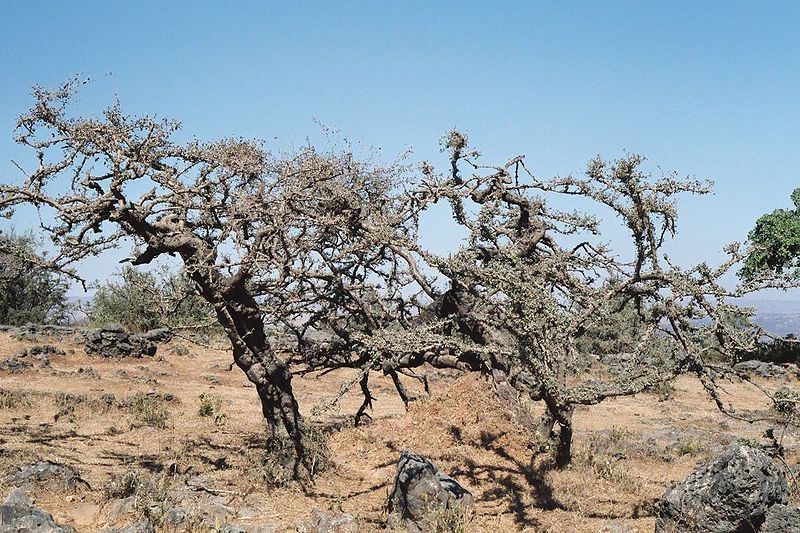
Frankincense comes from Boswellia sacra, a small, deciduous tree in the frankincense family (Burseraceae), native to the Arabian Peninsula — chiefly Oman and Yemen — and to northeastern Africa, particularly Somalia. The tree grows two to eight metres tall with one or several trunks, tolerates extremely dry, harsh conditions, and favours rocky slopes and ravines up to 1,200 metres, typically on calcareous soil. Deliberate incisions in the bark release a milky sap that hardens in the air into aromatic, tear-shaped resin lumps known as "frankincense tears." More than 80 percent of the world's frankincense production still comes from Somalia today; the ancient Egyptians called these resin pearls the "sweat of the gods." The harvest season typically runs from April to September; the first cuts of the year, known as "migshasi," yield lower-grade resin, while later cuts produce the more prized, paler tears. Experienced harvesters, often from family operations that pass the craft down across generations, make the incisions with a special knife called a "manqaf" and return repeatedly to the same tree to collect the hardened resin.
Frankincense ranks among the oldest and most precious incense materials in human history, traded for over 5,000 years along the legendary Incense Route connecting Arabia to the Mediterranean; for centuries its value matched that of gold. It played a central role in the religious rites of ancient Egypt and Mesopotamia, as well as in Judaism, Christianity, and Islam — appearing in the New Testament as one of the three gifts brought to the infant Jesus. Frankincense from Yemen's Hadramaut region has long been especially prized. To this day it remains central to Christian, Jewish, Islamic, and Hindu ceremony, burned in churches, temples, and mosques around the world.
Burned as incense, frankincense releases a warm, resinous scent with subtle notes of citrus, pine, and a faintly spicy depth. It is regarded by many as the archetypal incense material, still associated today with purification, prayer, and the creation of sacred space across numerous religious traditions worldwide. It is also credited with calming, meditation-enhancing properties: its smoke is said to help open the airways and is linked to a sense of mental tranquility, making it valued as much in mindfulness and meditation practice as in traditional religious ceremony. Connoisseurs distinguish numerous grades: pale, almost translucent tears are considered especially pure and valuable, while darker, bark-flecked pieces trade at lower prices. In Oman, the finest grade is traditionally reserved for the Sultan and regarded as a gift of particular distinction.
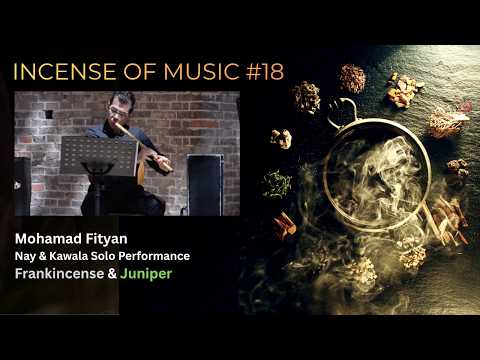
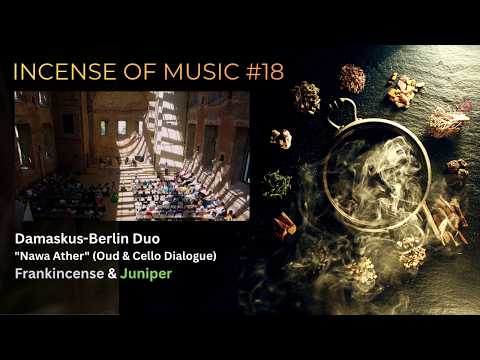
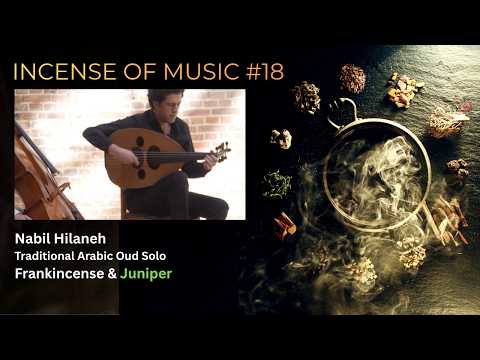
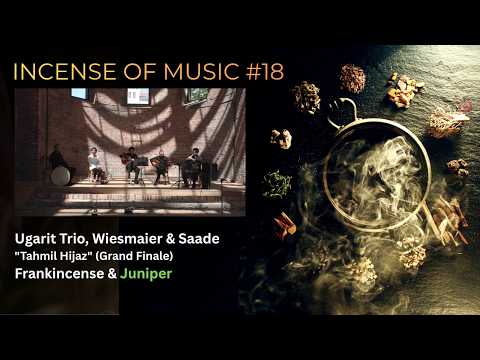
Used in the following concerts