
 Deutsch
Incense of Music 16
Love in Numbers — The Elemi Quartet Plays Works by Hayden Chisholm
An olfactory concert – Thursday, 25 May 2017, 4 pm
Christian Weidner: alto sax
Philip Gerschlauer: alto sax
Moritz Köther: alto sax
Bastian Duncker: alto sax
Composition: Hayden Chisholm
St. Elisabethkirche, Berlin Mitte — opening evening of "Zeig Dich!", Evangelischer Kirchentag 2017
Opening "Zeig Dich!" ("Show Yourself!") at the 2017 German Protestant Kirchentag, Incense of Music appears with the Elemi Quartet at St. Elisabethkirche in Berlin Mitte. The quartet — four alto saxophones — performs the work "Love in Numbers" by Hayden Chisholm, along with other pieces by the New Zealand composer, who is deeply engaged with overtones, including a world premiere: "Elegie," composed especially for the occasion. Chisholm himself does not perform this evening, but his sound world of microtonal shifts and floating overtone structures runs through the entire programme. For the occasion, we will burn elemi and myrrh.
Incense of Music is an olfactory concert series in which exquisite incense is burned simultaneously with the music being performed. Sound and scent interpenetrate synaesthetically, interacting in ways that sharpen listeners' and musicians' sensory focus and support a shared spiritual awareness. For in the moment of its extinguishing, the plant passes something on to us. Its essence is carried into the spiritual-physical being of the human, played across to us. Invisible as the tones themselves, the scent molecules stream into us. They communicate with us by changing our mind.
For guests who are particularly sensitive to smoke, this event is not recommended.


Artists
Christian Weidner — alto sax
Christian Weidner (b. 4 March 1976 in Kassel) began playing piano at the age of seven and discovered the alto saxophone and jazz at twelve. Early on, he gained experience with the Hessen State Youth Jazz Orchestra and the German National Youth Jazz Orchestra (BuJazzO). At 18 he was engaged by Gunter Hampel, with whom he worked for eight years until 2002, and also played in the German-French Jazz Ensemble under the direction of Albert Mangelsdorff. In 1996 he won the German national "Jugend jazzt" competition with the Naima Jazz Quintet, which he led. Weidner studied at the Hamburg University of Music and Theatre, as an Erasmus exchange student at the Royal College of Music in Stockholm, and finally at the Hanns Eisler School of Music Berlin, graduating in 2002; his teachers included Jeff Clayton, John Ruocco, Joakim Milder, and Kenny Werner. He has lived in Berlin since 1999 and has since been active in numerous internationally renowned projects, including "Royce" with Simon Stockhausen, Frank Gratkowski's microtonal saxophone quartet "Fo[u]r Alto," the legendary trio "Der Rote Bereich" led by Frank Möbus, and the Robert Landfermann Quintet. Weidner has twice received the Berlin Senate Prize (2001 and 2004) and now holds a professorship at the HMDK Stuttgart.
Philip Gerschlauer — alto sax
Philipp Gerschlauer (b. 30 September 1986 in Lich) began playing saxophone at age seven, inspired by the Muppet Show character Zoot, and added piano lessons at ten. At just 16 he was accepted as a junior student of classical saxophone at the Frankfurt University of Music and Performing Arts, and from 2004 to 2010 was a member of the Hessen State Youth Jazz Orchestra. After studying in Mainz, he moved to the Jazz Institut Berlin in 2009 to study with Peter Weniger, and relocated to New York in 2012 to complete his Master's at New York University with Tony Moreno, Chris Potter, and Stefon Harris. Gerschlauer is considered one of the world's leading microtonal saxophonists, having divided the octave on his instrument into 128 notes. Since 2018 he has also studied church organ, in order to play both instruments simultaneously. Tours have taken him to Russia, Japan, the USA, China, Jordan, Syria, Palestine, Israel, and Lebanon, among other countries. He lives with his family in Berlin.
Moritz Köther — alto sax
Moritz Köther discovered his love of music and the saxophone only at the age of 16 — before that, his time was spent mainly at the skate park. From 2007 to 2009 he studied at the Cologne University of Music and Dance under Frank Haunschild, before continuing at the Jazz Institut Berlin from 2009 to 2013 under Peter Weniger and Kurt Rosenwinkel, graduating with a Bachelor's degree. He is one of the most active figures on the Berlin jazz scene and has played and recorded with musicians including Johnny Griffin, Kurt Rosenwinkel, Till Brönner, and Wanja Slavin. His own projects include the duo Hjortron with Swiss guitarist Anatole Buccella and the band Hypnochrome. He tours internationally, with concerts ranging from the Mercedes-Benz Arena in Berlin to the mayor's office in Singapore.
Bastian Duncker — alto sax
Bastian Duncker was born in 1989 in Kiel, Germany, and plays various wind instruments, primarily alto and baritone saxophone. From 2007 to 2012 he studied at the Jazz Institut Berlin under Peter Weniger, Greg Cohen, and Claudio Puntin. In 2012/2013 he was Artist in Residence with "musicmatters" in Colombo, Sri Lanka. Since 2014 he has been a permanent member of the house band of Berlin record label Philophon and an active part of the Berlin jazz scene. He has performed and recorded with, among others, Stella Chiweshe, Gunter Hampel, Hayden Chisholm, Guy One & the Polyversal Souls, Hailu Mergia, John Hollenbeck, Idris Ackamoor & the Pyramids, and James Wylie. Concert tours and workshops have taken him to Algeria, Ghana, Nigeria, Togo, Benin, Ivory Coast, Mexico, Sri Lanka, and India, among other places.
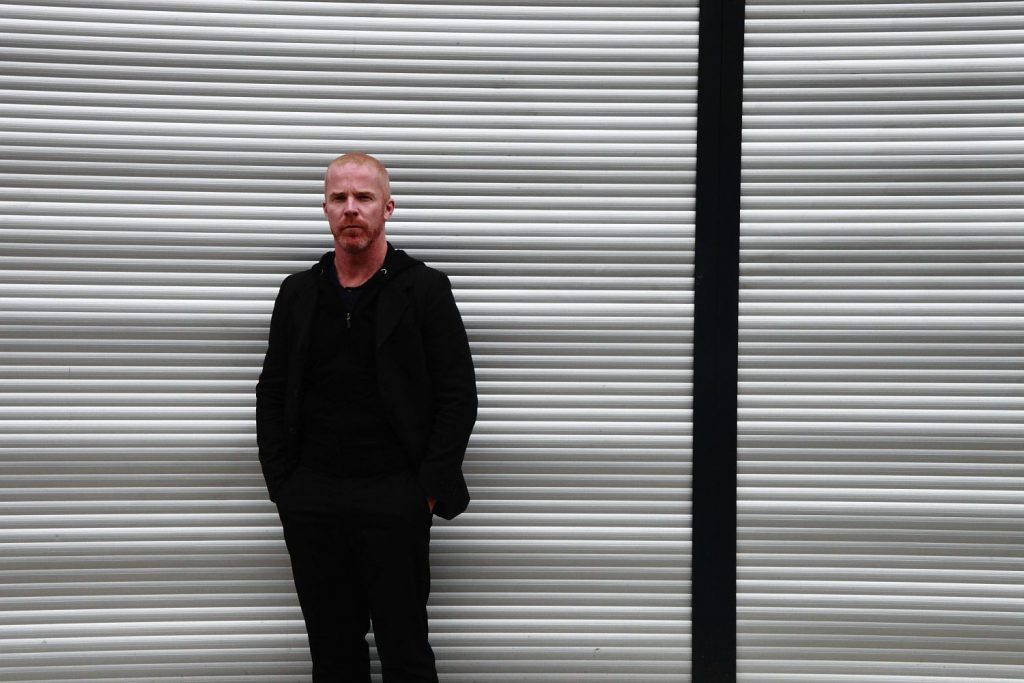
Hayden Chisholm — composition
Hayden grew up in New Plymouth, New Zealand. His wide-ranging multi-instrumental and compositional studies, together with a taste for travel, took him early on to institutions in Switzerland, Greece, India, Yugoslavia, and Japan, before he completed his saxophone studies under Frank Gratkowski at the Cologne University of Music. Through his close association with Nils Wogram's Root 70, he became a local figure of far-reaching influence there during the 1990s. From 1995 he toured India, Europe, Africa, and Latin America, including with pianist John Taylor. Since 2002, Chisholm has collaborated with action artist Rebecca Horn and composed the music for the documentary "Moon Mirror Journey." Chisholm appears as a protagonist in the documentary "Sound of Heimat – Deutschland singt" (2012) by Arne Birkenstock and Jan Tengeler. In 2013 he was awarded the SWR Jazz Prize for his "unique sound aesthetic." He is credited with developing a new microtonal language for saxophone in the 1990s, and in 2011 he launched the Moontower Foundation Music Edition.
Incense
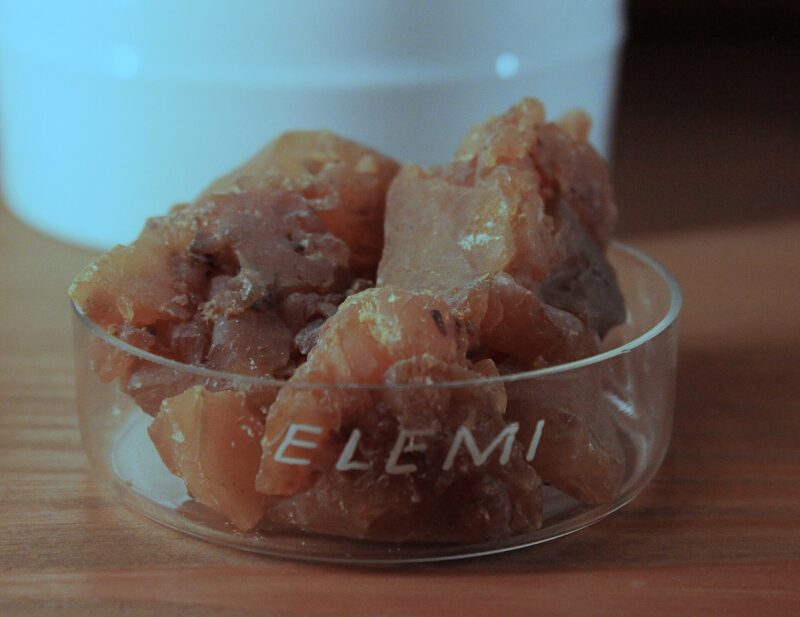
Elemi is the resin of Canarium luzonicum, a tropical evergreen tree in the family Burseraceae — the same family that produces frankincense and myrrh. The genus Canarium comprises around 100 tropical and subtropical tree species, distributed from West Africa across South and Southeast Asia to the Pacific islands; the trees can reach 40 to 50 metres in height. Incisions in the bark release a soft, pale yellow, honey-like resin, from which the essential elemi oil is steam-distilled.
The name elemi is thought to derive from an Arabic phrase meaning "as above, so below" — a nod to the hermetic principle, said to reflect the resin's sublime effect on mood and spirit. Elemi has long been used in traditional medicine across Southeast Asia and in ancient Egypt, including in embalming. In European pharmacy it was for centuries a valued ingredient in wound-healing balms and salves, and remains used in herbal medicine today for bronchitis, catarrh, persistent coughing, and skincare. Commercially, the resin is also used in varnishes, lacquers, and certain printing inks.
Burned as incense, elemi releases a fresh, sharp, citrusy-resinous scent with hints of pine needles — brighter and more lemon-like than classic frankincense. It is associated with mental clarity and an invigorating, refreshing effect.

Myrrh comes from small, thorny trees of the genus Commiphora, native to the dry, arid regions of Northeast Africa and the Middle East — particularly Somalia, Yemen, and Ethiopia. The treasured resin is not the wood or sap, but a fragrant gum that naturally oozes from the bark to heal wounds. Harvesters make deliberate cuts to encourage more of this valuable secretion, which hardens into tear-shaped, reddish-brown granules over several weeks.
Myrrh has been traded across the ancient world for over 4,000 years, carried along the same incense routes that connected Arabia, Egypt, and the Mediterranean. As early as the 5th Dynasty, the Egyptian pharaoh Sahure commissioned one of the earliest recorded expeditions to the land of Punt in the Horn of Africa specifically to bring back large quantities of myrrh and frankincense. The Egyptians used it in embalming and temple rites; it was burned as an offering in Jewish, early Christian, and Islamic traditions alike, and appears in the Bible as one of the three gifts brought to the infant Jesus, alongside gold and frankincense. The New Testament also records that Jesus was offered wine mixed with myrrh before the crucifixion, and that his body was wrapped in a mixture of myrrh and aloes after his death.
When burned, myrrh releases a rich, complex aroma that is simultaneously earthy, bittersweet, and slightly medicinal. Unlike floral scents, it provides a profound, grounding base note, still used today for meditation, temple ceremonies, and moments that call for gravity and stillness rather than lightness.