
 Deutsch
Incense of Music Nr. 19
Ein olfaktorisches Konzert – 18. Juni 2017, 20 Uhr, Einlass 19 Uhr
TANGO ARGENTINO: Gustavo Beytelmann: Klavier; Oscar Bohórquez: Geige; Claudio Bohórquez: Cello – Musik von Astor Piazolla und Gustavo Beytelmann – Fabio Dondero und Dominik Breider (Incense burning): Palo Santo und Copal Oro. Roter Salon in der Volksbuehne, LINK VOLKSBUEHNE
„Wenn der Tango sich nicht verändert,
verkommt er zu einem Musikmuseum
und hört auf, Volksmusik zu sein.“
Zum Konzert verräuchern wir Copal Oro aus Guatemala und Palo Santo aus Peru.
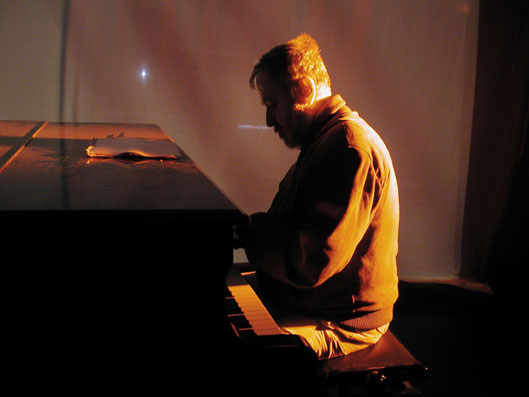
Gustavo Beytelmann (Piano)
Der Tango- und Jazzpianist wird 1945 in Venado Tuerto, Argentinien, in eine musikbegeisterte Familie hineingeboren. Sein Vater, ein talentierter Geiger, unterrichtet ihn seit frühester Kindheit auf dem Klavier. Mit 13 Jahren tritt Gustavo dem Tanzorchester seines Vaters bei und wird schnell zu einem versierten Deuter des Tango und anderer Tanzmusik.
1962 beginnt er ein Studium im Fach Klavier sowie Harmonielehre und Komposition am Institute of Music of the University of Rosario. Einige Jahre später setzt er seine Kompositionsstudien bei Francisco Kröpfl in Buenos Aires fort, schreibt Musik für das Kino (u.a. zu La Maffia, Quebracho und Los Gauchos Judios), arbeitet als Pianist und Arrangeur für die Plattenbranche und tritt mit verschiedenen Jazzensembles auf.
1976 übersiedelt Gustavo Beytelmann nach Paris und nimmt auf Einladung Astor Piazzolla’s 1977 an dessen Europatournee teil (Astor Piazzolla y su Octeto electrónico: Olympia, 1977). In der Folge formiert er zusammen mit befreundeten argentinischen Exilmusikern die Gruppe Tiempo Argentino, mit der er über 12 Jahre durch Europa und die Amerikas tourt und seinen Ruf als Maestro Tango Argentino begründet. Später verlagert sich sein Leben für einige Zeit in die cinematografische Metropole Rom. Er komponiert Musik für das italienische Radio, Fernsehen und Kino. Zurück in Paris produziert er zusammen mit Juan José Mosalini und Patrice Caratini drei Alben („Violento“, „La Bordona“, „Imágines“), die einflussreiche Ideen zur Entwicklung des zeitgenössischen Tango beisteuern. Ab 1993 widmet sich Gustavo Beytelmann verstärkt der Komposition, veröffentlicht zahlreiche Aufnahmen seiner Werke, kompiliert Klassiker des Tango und arrangiert Partituren, immer auf der Suche nach neuen Verbindungsformen von traditionellem und modernem improvisatorischen Ausdruck, neuen Fassungen für den Tango als Volksmusik. Er wird composer in residence in Dijon in den Jahren 1995 und 1998 sowie in Guebwiller 2002 und 2003. Seit 1996 ist er künstlerischer Leiter der Tango-Abteilung am Konservatorium in Rotterdam, unterrichtet an den Universitäten von Seattle und Bellingham (USA), sowie seit 2005 an der Musikhochschule in Monaco.
www.gustavobeytelmann.com
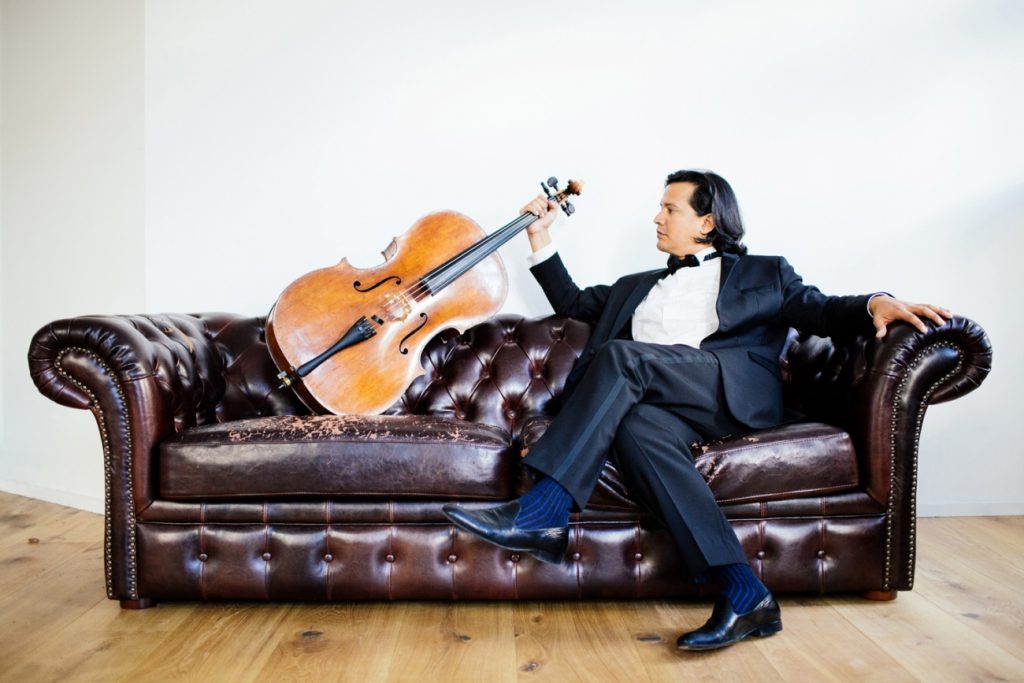
Claudio Bohórquez (Cello)
Der in Deutschland geborene, in Berlin lebende Cellist peruanisch-uruguayischer Abstammung zählt weltweit zu den gefragtesten Musikern seines Instrumentes. Im Jahr 2000 machte er mit dem Gewinn des Pablo-Casals-Wettbewerb der Kronberg Academy und dem Gewinn des Internationalen Musikwettbewerbs in Genf ein internationales Publikum auf sich aufmerksam. Seine Karriere als Solist führt ihn seither auf die Konzertpodien in Europa, Nord- und Südamerika und in Asien.
Claudio Bohórquez ist seit 2003 Professor für Cello, zunächst tätig an der Musikhochschule Stuttgart und seit 2016 an der Hochschule für Musik Hanns Eisler Berlin. Claudio Bohórquez konzertierte mit den deutschen Rundfunkorchestern, der Sächsischen Staatskapelle Dresden, dem Gewandhausorchester Leipzig, dem Württembergischen Kammerorchester Heilbronn, den Wiener Symphonikern, dem Collegium Musicum Basel, dem Orchestre de Paris, dem Orchestre Philharmonique de Radio France, dem Orchestre de Toulouse, dem Orchestre de la Suisse Romande, dem Tonhalle-Orchester Zürich, der Academy of St. Martin in the Fields, der Tschechischen Philharmonie, dem Russischen Nationalorchester und den Warschauer Philharmonikern auf. In Japan konzertiert er mit dem NHK Symphony Orchestra und mit dem Tokyo Philharmonic Orchestra. In den USA gab Claudio Bohórquez Konzerte mit Boston Symphony, Chicago Symphony, Cleveland Orchestra, Detroit Symphony, Los Angeles Philharmonic, National Symphony und dem Philadelphia Orchestra. Zu den namhaften Dirigenten, mit denen Claudio Bohórquez bisher arbeitete und auftrat, zählen Daniel Barenboim, Rafael Frühbeck de Burgos, Jonathan Darlington, Thomas Dausgaard, Christoph Eschenbach, Hans Graf, Ruben Gazarian, Manfred Honeck, Yakov Kreizberg, Sir Neville Marriner, Eiji Oue, Krzysztof Penderecki, Leonard Slatkin, Tugan Sokhiev, Lothar Zagrosek und David Zinman.
Die Saison 2014/15 führte den Künstler mehrfach in die USA, u.a. zu Konzerten mit dem National Symphony Orchestra unter Christoph Eschenbach in Washington und dem Los Angeles Philharmonic unter Charles Dutoit. Als Ergänzung dazu gab es Konzerte in Finnland mit der Kymi Sinfonietta unter Andreas Delfs oder in Warschau mit der Sinfonia Varsovia unter Krzysztof Urbanski anlässlich Krzysztof Penderecki´s 80. Geburtstag. 2015/16 unternahm Claudio zwei Japan-Gastspiele: eine Tournee mit dem NHK Symphony Orchestra sowie Trio-Abende mit Daishin Kashimoto (Violine) und Yu Kosuge (Klavier).
Claudio spielt ein Violoncello von G. B. Rogeri (ca. 1690), das ihm von der Landeskreditbank Baden-Württemberg zur Verfügung gestellt wird.
www.claudiobohorquez.com
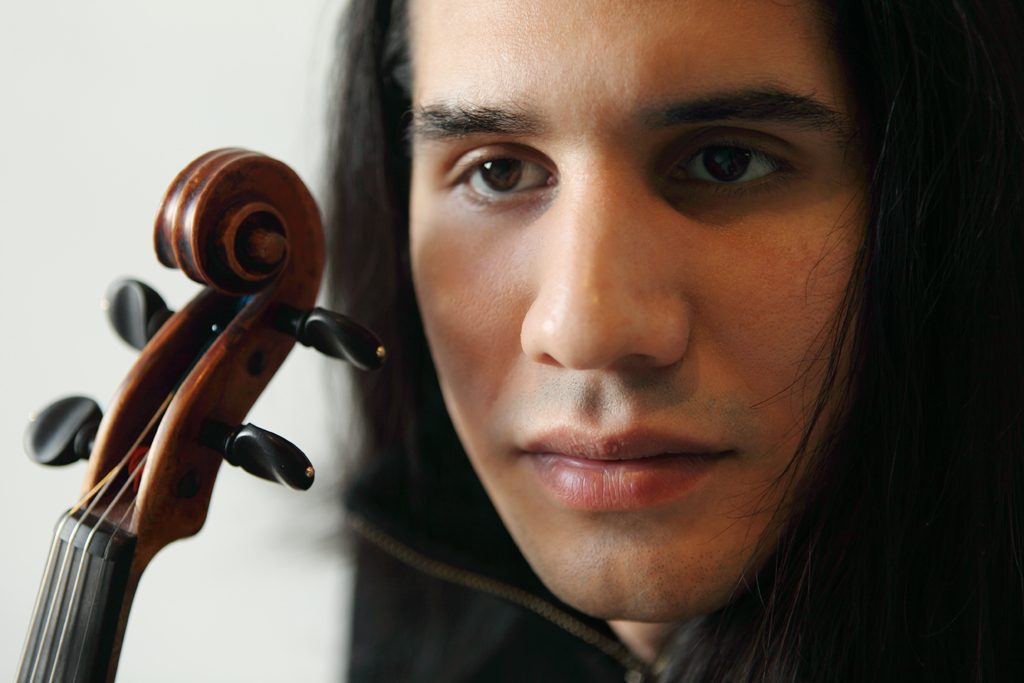
Oscar Bohórquez (Geige)
Der deutsche Geiger lateinamerikanischer Abstammung studierte Violine bei Aaron Rosand am Curtis Institute of Music in Philadelphia und vervollkommnete seine Fertigkeiten bis 2008 bei Günter Pichler an der Universität für Musik in Wien. “Oscar Bohórquez ist einer der vielversprechendsten jungen Geiger…seine hervorragende Technik, seine musikalische Tiefe und sein Charisma sind ausserordentlich.”, so kommentierte Christoph Eschenbach sein Spiel. Im September 2009 feierte Oscar Bohórquez seinen Einstand als Solist mit der London Philharmonic Orchestra; zur gleichen Zeit erschien ein Solo-Album mit Werken von Piazzolla, Bertold Hummel und Ysaye. Er trat als Kammermusiker mit Boris Pergamenschikow, Julius Berger, Markus Groh und Gustavo Beytelmann (u.a.) auf. Mit seinem Bruder, dem Cellisten Claudio Bohórquez, spielte er 2011 das Album „Seduced“ ein. In Deutschland gastierte Oscar Bohórquez unter anderem in der Alten Oper Frankfurt, in der Meistersingerhalle Nürnberg, im Leipziger Gewandhaus und der Berliner Philharmonie. Bohórquez konzertierte in Europa, Lateinamerika, USA und China unter den Dirigenten Sebastian Weigle, Alexander Shelley, Francesco La Vecchia, Miguel Harth Bedoya und Carlos Miguel Prieto. In 2012 begann Bohórquez die Zusammenarbeit mit dem in Paris ansässigen, auf lateinamerikanische Kammermusik spezialisierten AlmaViva Ensemble, für das er Einspielungen machte.
Oscar residiert zur Zeit in Paris, São Paulo und Karlsruhe. Er musiziert auf der legendären Violine “Grande Dame” (G.B. Guadagnini, 1770).
http://oscarbohorquez.com/