
 Deutsch
Incense of Music 26
A multisensory concert – Thursday, 31 May 2018, 7 pm
Hayden Chisholm: saxophone, overtone singing
Yannis Despotakis: percussion, overtone singing
Gareth Lubbe: piano, viola, overtone singing
Incense: Palo Santo, Galbanum
Salon Dreiklang, Paul-Robeson-Strasse 47, 10439 Berlin
For the 1st time together on stage, Gareth Lubbe, Hayden Chisholm and Yannis Despotakis (South Africa, New Zealand and Greece — viola/overtone singing, alto sax/overtone singing, percussion/overtone singing) unite their sentiments in order to deliver a global sonic meditation for one night only. All are welcome.
For guests who are particularly sensitive to smoke, this event is not recommended.
Artists
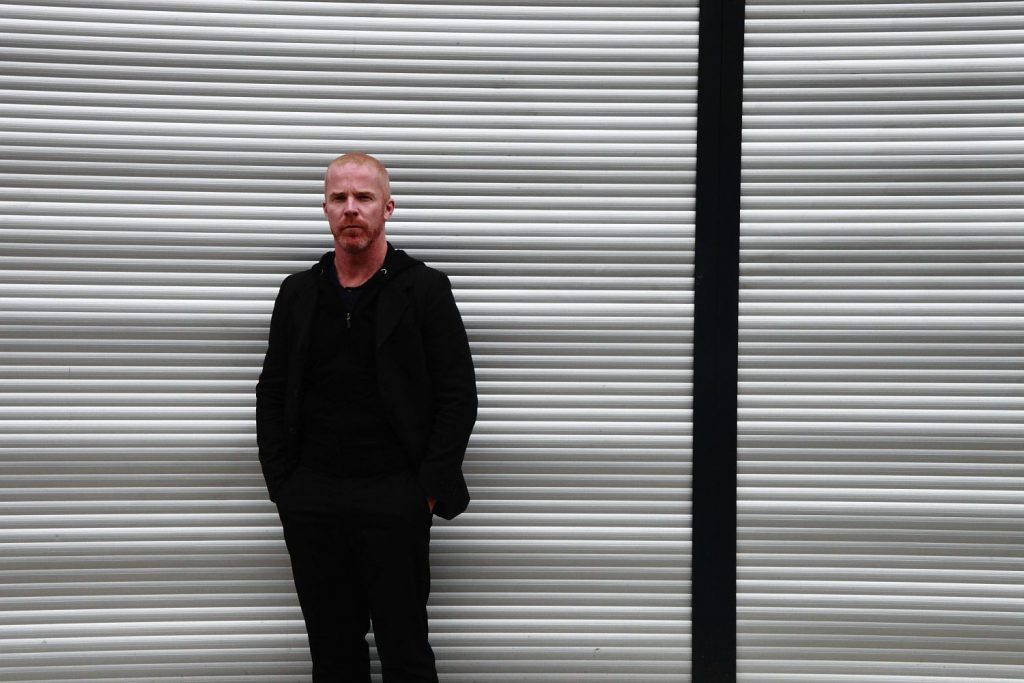
Hayden Chisholm — saxophone, overtone singing
Hayden grew up in New Plymouth, New Zealand. His wide-ranging multi-instrumental and compositional studies, together with a taste for travel, took him early on to institutions in Switzerland, Greece, India, Yugoslavia, and Japan, before he completed his saxophone studies under Frank Gratkowski at the Cologne University of Music. Through his close association with Nils Wogram's Root 70, he became a local figure of far-reaching influence there during the 1990s. From 1995 he toured India, Europe, Africa, and Latin America, including with pianist John Taylor. Since 2002, Chisholm has collaborated with action artist Rebecca Horn and composed the music for the documentary "Moon Mirror Journey." As a saxophonist, clarinetist, and keyboardist, he has also contributed to albums and concerts by Sebastian Gramss' Underkarl, Antonis Anissegos, David Sylvian, Burnt Friedman, Jaki Liebezeit, and Lula Pena. Chisholm appears as a protagonist in the documentary "Sound of Heimat – Deutschland singt" (2012) by Arne Birkenstock and Jan Tengeler. In 2013 he was awarded the SWR Jazz Prize for his "unique sound aesthetic." In 2015 and 2016, Hayden released two 13-part CD box sets summarizing his body of work to date as a musician and composer. He is credited with developing a new microtonal language for saxophone in the 1990s, and in 2011 he launched the Moontower Foundation Music Edition.

Yannis Despotakis — percussion, overtone singing
Born (naturally) in Athens, Greece. His origins lay inside the triangle that unites Piraeus, Crete, and Istanbul (a.k.a. Konstantinoupoli). From a very young age he showed that he had great appeal with hitting and banging all kinds of surfaces, by discovering a pair of chopsticks in his mother's kitchen. He has received clinics and lessons from many remarkable human beings, each one playing a catalytic role in his so-far course of discovering his true self. He is always trying and most of the time he manages not to be forced to do things he doesn't want to do. He feels his soul is healthy by finding what he truly wants, because that IS. He believes that one of the things that has radically helped his psychosynthesis is getting involved for the past 12 years with traditional Mongolian singing (a.k.a. overtone singing — Khoomei), because it purifies and crystallizes all the inner energy channels (a.k.a. chakras). He cooks every day, and very well. In 2007 he met the remarkable Hayden Chisholm (NZL), and the fall inside the rabbit hole began. Since 2009, Hayden and Yannis have worked closely together. The flame is still rocking and the rabbit hole gets deeper and deeper.

Gareth Lubbe — piano, viola, overtone singing
Gareth Lubbe, born in Johannesburg, South Africa, began his musical education on piano and violin at the age of four. Five years later he made his orchestral debut as a violinist in Johannesburg, followed by numerous prizes at regional and national competitions. Still during his youth in South Africa, Gareth also learned to play a range of instruments virtuosically, laying the foundation for his remarkable abilities as an overtone singer and improviser. From 1995 to 2001 he studied violin at the Cologne University of Music and chamber music with the Alban Berg Quartet, before continuing with viola studies under Barbara Westphal at the Lübeck University of Music. In 2006 and 2007, Gareth Lubbe was principal violist of the Royal Flemish Philharmonic in Antwerp under Philippe Herreweghe, before moving to Leipzig, where he was appointed principal violist of the Gewandhaus Orchestra. In April 2013, Gareth was appointed professor of viola at the Folkwang University of the Arts in Essen. He continues to perform internationally as a soloist, chamber musician, and celebrated overtone singer.
Incense

Palo Santo — Spanish for "holy wood" — comes from the tree Bursera graveolens, native to the dry coastal forests of Ecuador, Peru, and neighbouring regions of South America. Its aromatic wood is traditionally never cut from a living tree, but collected only years after the tree has died naturally, once the resin has fully developed within the wood.
The Inca and other pre-Columbian cultures of South America already used Palo Santo for spiritual cleansing rituals, to ward off negative energy, and in traditional medicine. In recent years, sharply rising global demand — driven by its spread through wellness and incense practices worldwide — has raised sustainability concerns much like those surrounding white sage.
Burned, Palo Santo releases a warm, sweet, woody scent with notes of pine, mint, and citrus. It is traditionally burned as sticks or shavings, believed to dispel negative energy and promote calm, clarity, and creativity.

Galbanum is the resin of Ferula galbaniflua (or Ferula erubescens), a member of the giant fennel family that grows chiefly in Persia and regions east of the Aral Sea. Today, the resin is harvested primarily in the mountains of northern Iran — around 80 tonnes annually — and contains a water-soluble gum fraction, alcohol-soluble resins, and essential oil.
Galbanum ranks among the oldest known incense materials, named in the Book of Exodus as one of the sacred ingredients of the Ketoret incense burned in the Temple of Jerusalem. The medieval scholar Rashi interpreted galbanum's bitter character within that blend as a deliberate reminder of unrepentant sinners. According to legend, the torch of Prometheus was also fashioned from the woody stalk of a related giant fennel. It was likewise used in ancient Egypt and in Greco-Roman medicine, including by Hippocrates and Pliny. In modern perfumery, galbanum helped define the "green" fragrance family from the mid-20th century onward, and remains a component of well-known scents such as Chanel No. 19 and Guerlain's Vol de Nuit.
Unlike many sweet or resinous incenses, galbanum releases a sharp, green, almost bitter-herbaceous scent with hints of freshly cut grass, parsley, pine needles, pepper, and a faintly musky, powdery depth. This unusual, unmistakably "green" note makes it a prized top note in perfumery, and it has traditionally been associated with protection and energetic cleansing.