Deutsch
Gustavo Beytelmann
Piano
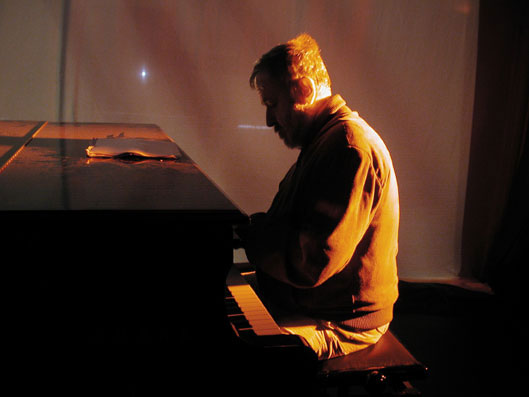
The tango and jazz pianist was born in 1945 in Venado Tuerto, Argentina, into a music-loving family. His father, a talented violinist, taught him piano from earliest childhood. At 13, Gustavo joined his father's dance orchestra and quickly became a skilled interpreter of tango and other dance music. In 1962 he began studying piano, harmony, and composition at the Institute of Music of the University of Rosario, later continuing his compositional studies with Francisco Kröpfl in Buenos Aires, writing music for film (including "La Mafia," "Quebracho," and "Los Gauchos Judíos") and working as a pianist and arranger for the recording industry. In 1976 he moved to Paris, and in 1977, at Astor Piazzolla's invitation, joined his European tour with the Octeto Electrónico.
He subsequently formed the group Tiempo Argentino with fellow exiled Argentine musicians, touring Europe and the Americas with them for over twelve years and establishing his reputation as a maestro of tango argentino. After a period in Rome, composing music for Italian radio, television, and film, he returned to Paris to produce three influential albums with Juan José Mosalini and Patrice Caratini that shaped the development of contemporary tango. From 1993, Gustavo Beytelmann devoted himself increasingly to composition, releasing numerous recordings of his own works, compiling tango classics, and arranging scores, always in search of new connections between traditional and modern improvisatory expression. He served as composer in residence in Dijon (1995, 1998) and Guebwiller (2002, 2003). Since 1996 he has been artistic director of the tango department at the Rotterdam Conservatory, teaching at the universities of Seattle and Bellingham (USA), and since 2005 at the Monaco Music Academy.
Featured in the following concerts