Deutsch
Mastic (Pistacia lentiscus)
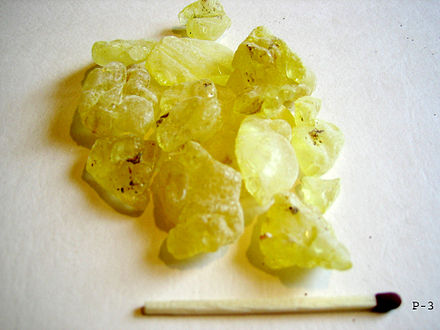
Mastic, also known as mastiha, is a resin from the mastic tree (Pistacia lentiscus), an evergreen shrub found across the Mediterranean, though the resin from the Greek island of Chios is especially renowned. Incisions in the bark release a clear sap that hardens in the air into brittle, pale yellow tears — the tree yields resin of real quality only in the mild microclimate of the island's southern half. Chios still carries the nickname "the mastic island," and the Greek verb "mastichan," to chew, coined in connection with the hardened resin, survives in the English word "to masticate."
On Chios, mastic has been harvested since antiquity; the Greek physician Dioscorides already noted its medicinal properties in the 1st century CE, and it was known in ancient Greece and Rome as a chewing gum and flavoring agent. In the Middle Ages, the Genoese trading company Maona di Chio controlled the island's mastic monopoly, turning it into one of the most valuable commodities of the eastern Mediterranean. The twenty "mastic villages" (Mastichochoria) in southern Chios, along with their traditional harvesting technique, were recognised by UNESCO as Intangible Cultural Heritage of Humanity in 2014, and traditional Chios mastic harvesting today also holds protected designation of origin status within the EU. Over the centuries, the resin found wide use in traditional medicine, including for digestive support, and remains an ingredient in Greek treats such as "kaimaki" ice cream today. Harvesting traditionally runs from summer into autumn: fine white clay or cloth is laid out beneath each tree specifically to catch the resin tears as they fall and harden. Medieval crusaders and pilgrims carried mastic back to Europe from the eastern Mediterranean, where it long ranked as a prized trade commodity, and it remains a classic ingredient in Turkish delight and certain Greek liqueurs today.
As incense, mastic gives off a sweet, woody fragrance with subtle hints of pine and citrus — often described as refreshing and uplifting. It is traditionally used in religious ceremonies, meditation, and aromatherapy, believed to promote relaxation, reduce stress, and enhance focus. In the Greek Orthodox Church, mastic is still occasionally blended into incense mixtures today to lend them an additional resinous-sweet nuance.
Used in the following concerts