
 Deutsch
Incense of Music 59
A multisensory concert – Saturday, 11 January 2025, 8 pm
PANDA Platforma in der Kulturbrauerei, Knaackstr. 97, 10435 Berlin
Experience an unforgettable evening of experimental jazz as Kit Downes (piano), Thorbjørn Silas Stefansson (bass), and Tony Buck (drums) come together for an intimate and atmospheric performance at Panda Platforma. These three internationally renowned musicians will guide you through an immersive sonic journey, blending intricate improvisations with deep, meditative soundscapes.
This event is not recommended for people who are sensitive to smoke.
Artists

Kit Downes — piano
Kit Downes is a BBC Jazz Award winning, Mercury Music Award nominated solo recording artist for ECM Records. He has toured the world playing piano, church organ, and harmonium with his own bands ("ENEMY", "Troyka" and "Elt") as well as with artists such as Squarepusher, Bill Frisell, "Empirical", Andrew Cyrille, Sofia Jernberg, Benny Greb, Mica Levi, and Sam Amidon. Kit performs solo pipe organ and solo piano concerts, and also collaborates with violinist Aidan O'Rourke, drummer Seb Rochford, and in the organ trio "Deadeye". He has written commissions for the Cheltenham Music Festival, the London Contemporary Orchestra, and the Cologne Philharmonie, and has given solo organ concerts at the Elbphilharmonie Hamburg, the Royal Albert Hall London, and the BBC Proms. He holds a fellowship at the Royal Academy of Music in London, where he himself studied and now teaches. His ECM records "Obsidian", "Dreamlife of Debris", and "Vermillion" have been released to much critical acclaim.
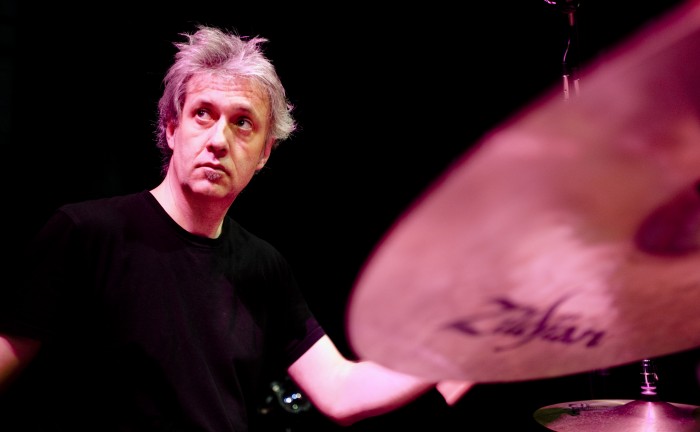
Tony Buck — drums
Tony Buck is regarded as one of Australia's most creative and adventurous exports, with vast experience across the globe. As a drummer, percussionist, improviser, guitarist, video maker, and producer, he has been involved in a highly diverse array of projects but is probably best known around the world as a member of the trio "The Necks". Apart from The Necks, he has played, toured, or recorded with Jon Rose, Otomo Yoshihide, John Zorn, Phil Minton, Evan Parker, Lee Ranaldo, and many others. Following studies in Australia, he spent time in Japan, where he formed "Peril" with Otomo Yoshihide, before relocating to Europe in the mid-nineties. He also creates video works for use with live music performance and has had pieces shown in Tokyo, Belfast, Berlin, New York, and Sydney. Current projects include "Spill" with Magda Mayas, the New York-based trio "Glacial", and a long-standing duo with Axel Dörner.

Thorbjørn Silas Stefansson — bass
Thorbjørn Stefansson, a renowned double bassist and composer, is widely recognized as a versatile artist within the European improvised music scene. He is an integral part of both the Danish and German jazz scenes and has collaborated with numerous national and international artists. Thorbjørn is involved in several projects and released the debut album with the trio Dream Big Fish in 2024. Other releases include "Sun Ark" (2024) and "Nissen Mosh – Precious" (2022). In 2021 he received the JIB Jazz Prize for "Outstanding Soloist". Thorbjørn has toured in Denmark, Germany, Switzerland, the Netherlands, and the USA, performing at internationally acclaimed jazz festivals.
Incense
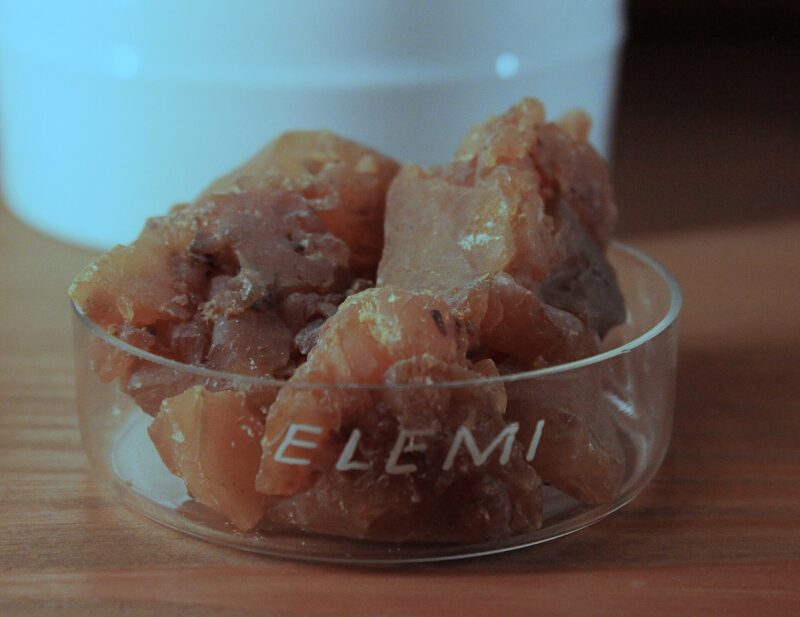
Elemi is a fragrant resin obtained from trees of the Canarium genus, native to tropical regions, particularly the Philippines and other parts of Southeast Asia. When the bark is wounded, a soft, sticky resin seeps out, gradually hardening in the air.
Elemi has been used for centuries in perfumes, incense, and traditional medicine. In ancient times it served, much like myrrh and frankincense, as an ingredient in ointments and embalming practices, and across much of Southeast Asia it remains part of traditional healing to this day.
Burned, elemi releases a fresh, lemony, and slightly spicy scent with balsamic undertones, often described as both uplifting and calming — ideal for rituals or meditation. Its soft, sticky texture makes it especially well suited to incense making, where its rich, grounding aroma creates a soothing, spiritual atmosphere.

Dammar resin is harvested from large tropical rainforest trees, most notably in the genera Shorea, Hopea, and Canarium, native to Southeast Asia, particularly Indonesia and Malaysia. The resin exudes from the bark as a protective response to injury and hardens into pale yellowish to nearly translucent tears or lumps — unlike many other resins, it barely darkens with age, which may be the source of its name, thought to derive from a Malay word meaning "light" or "torch."
Beyond its use as incense, dammar has historically served as a raw material for varnishes and lacquers, and remains valued today in art conservation, where its clarity and protective qualities are used to seal paintings and wooden objects. Across Southeast Asia, burning dammar has long been part of cleansing rituals intended to clear the atmosphere and invite positive energy.
Burned, dammar releases a bright, citrusy scent with notes of lemon and lime, underscored by a warm, faintly vanilla-like sweetness and a clean, resinous undertone that recalls fresh sap rather than deep, aged wood. It is considered a "lighter" resin compared to frankincense or myrrh, and blends well with other resins to add a bright top note to more complex compositions.