Incense of Music 77/ Lomakova, Bodet
Incense of Music 77
A multisensory concert – Friday, 27 November 2026, 8 pm
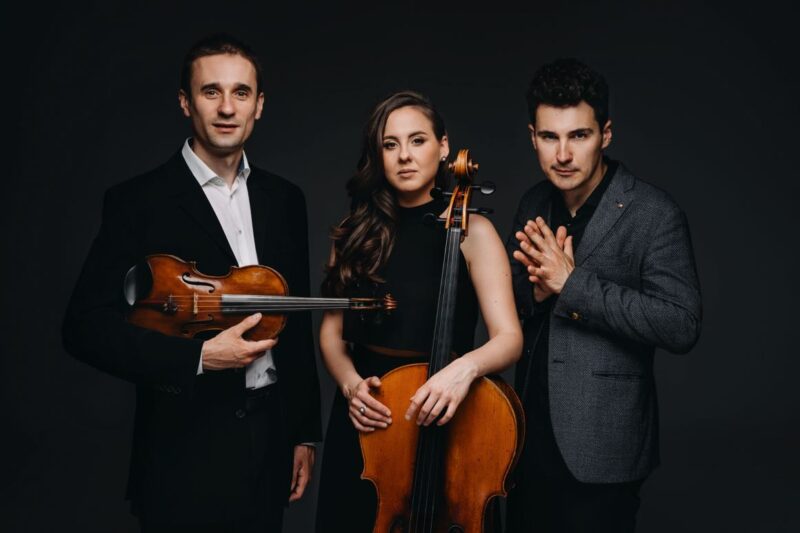
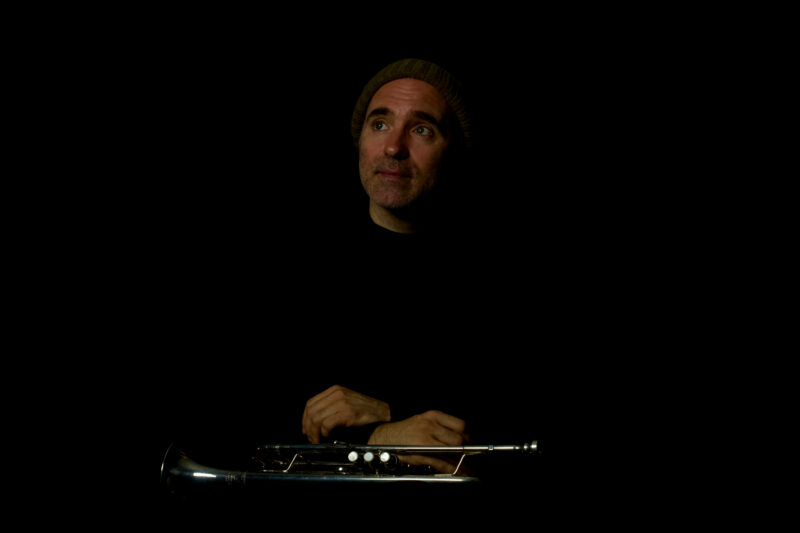
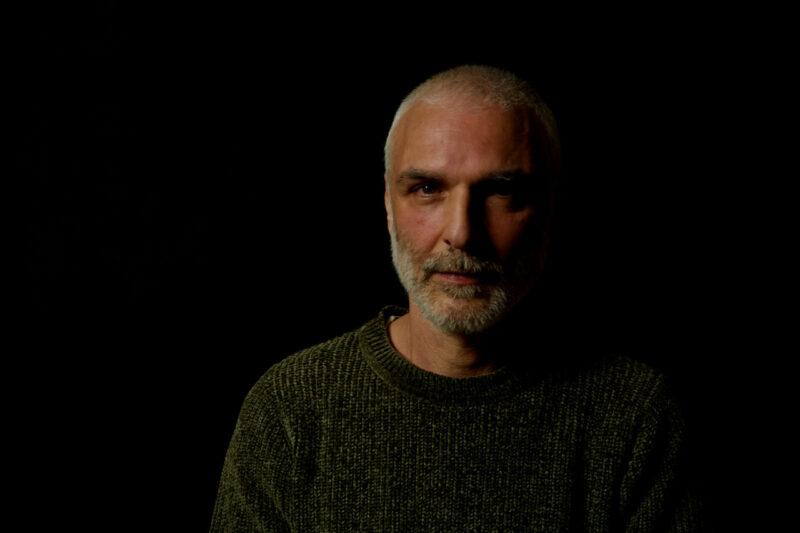
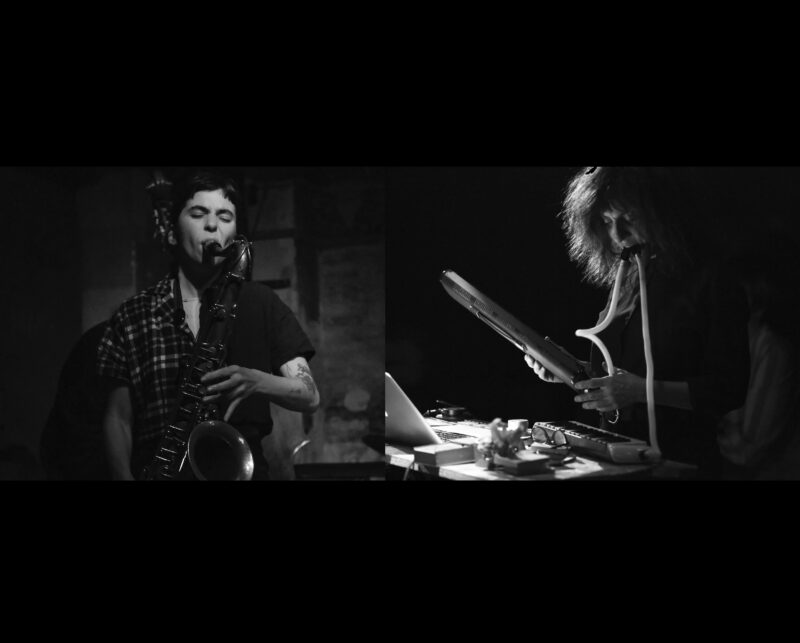
Emilia Viktoria Lomakova: piano, cello, voice
Mia Bodet: violin, piano, voice
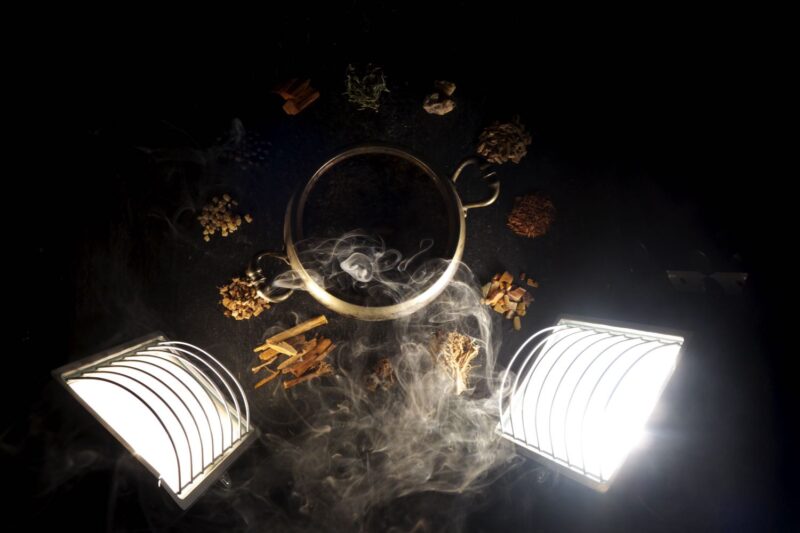
Incense: pine, spruce
PANDA Platforma, Kulturbrauerei, Knaackstr. 97, 10435 Berlin

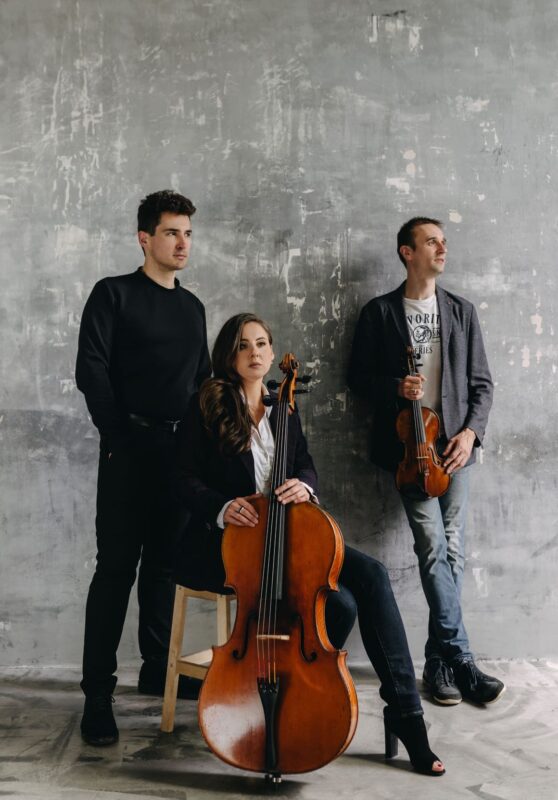
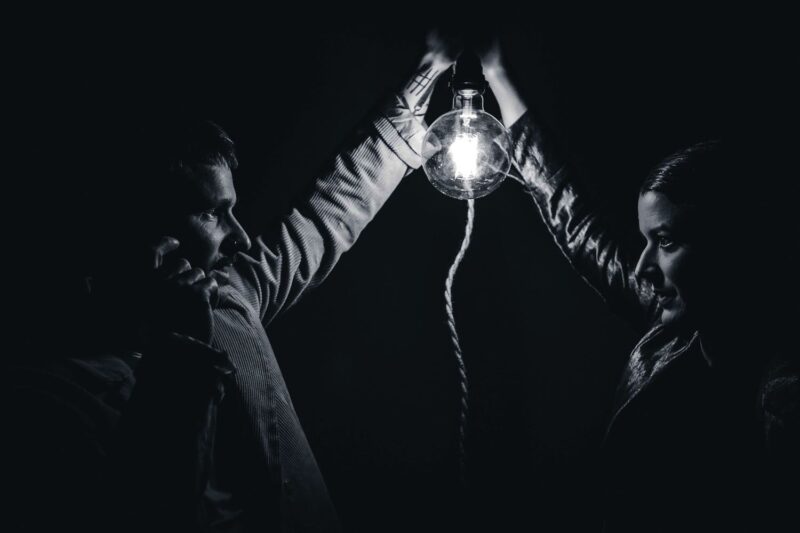
Two musicians, two ancient resins, one immersive journey. Mia Bodet (violin, piano, performance) and Emilia Viktoria Janeil Lomakova (cello, piano, voice, composition) invite you into the heart of the forest — through music and fragrance. In this unique concert experience, the clear, purifying scent of spruce resin and the fresh, invigorating aroma of pine resin will rise together with live improvisations and composed works. Strings and voices weave through the smoke, echoing the breath of ancient trees, the stillness of woodland clearings, and the wild, untamed pulse of nature. Let your senses be guided by sound and scent — into the depth of the woods, and into yourself.
This event is not recommended for people sensitive to smoke.
Artists

Photo by Geert Maciejewski
Emilia Viktoria Lomakova — piano, cello, voice
My name is Emilia Viktoria Janeil Lomakova and I was born in Odessa, Ukraine. Music is my passion and life's purpose, which takes many forms in my musicianship: on the cello, piano, double bass, guitar, and with voice. In recent years, composing has become my main outlet of expression. My greatest influences in life have been my education at the music school in Odessa and the encounters and work with many wonderful artists who have accompanied, inspired, and challenged me. Love and life itself, for me, is the source of creation in which I am allowed to participate, and which I continually turn into music. At present, I am working on my opera, which I have been composing for six years and which is based on Dante Alighieri's Divine Comedy.

Photo by Fabio Dondero
Mia Bodet — violin, piano, voice
Mia Bodet (*1990) is a violinist, pianist, and performer who composes and improvises music for theater and film projects. At the age of 14, she was admitted to the Paris Conservatoire and briefly studied at an academic university in Tokyo, before performing as a guest musician with renowned French orchestras, with whom she toured across Europe and Asia. Since 2015, she has been performing in collaboration with directors, dancers, and choreographers in projects at the Deutsche Oper, the Staatsoper Berlin, and Opera Lab Berlin. She has been a member of the Solistenensemble Kaleidoskop since 2020. Since 2014, she has been coaching, researching, and studying somatic and alternative psychological modalities.
Plants

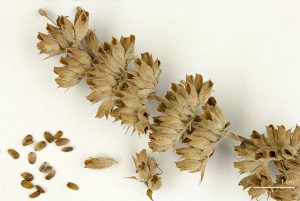
Pine
The pine (Pinus) is an evergreen coniferous tree in the family Pinaceae. It is widespread across the Northern Hemisphere and characterises dry, sandy, or rocky landscapes. Its needle-like leaves grow in clusters of two, three, or five, depending on the species. Pines can grow very old and reach heights of up to 40 metres. Their resin-rich wood and distinctive, often umbrella-shaped crown make them one of the best-known forest tree species in Europe.
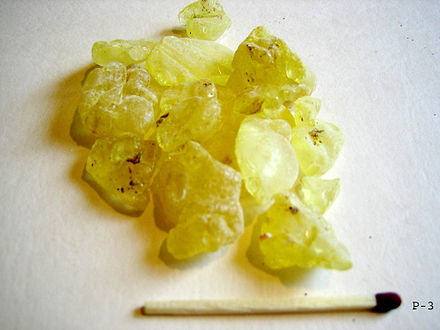
Pine resin is the dried, golden-yellow to brownish secretion that the pine exudes when its bark is injured, as a protective measure. When burned as incense, it releases a clear, fresh, resinous-woody scent with slightly citrusy notes. It purifies the air, has an invigorating and refreshing effect, and is traditionally used for space cleansing, purification rituals, and strengthening the breath. In shamanic practice, it is seen as a connecting element between earth and sky. It is burned in small pieces on charcoal discs, often blended with other resins like frankincense or herbs like sage.

Spruce
The spruce (Picea) is an evergreen coniferous tree in the family Pinaceae. It is native to the cool to temperate zones of the Northern Hemisphere and characterises the boreal forests of Scandinavia, Russia, and the Alpine regions. Its needle-like, four-sided leaves grow individually around the branch. Spruces can reach heights of over 50 metres and live for several hundred years. Their straight trunks and conical crowns make them one of the most economically important forest trees in Europe.
Spruce resin is the dried, light to golden-yellow secretion that the spruce exudes when its bark is injured, in order to seal wounds and protect against pests. When burned as incense, it releases a fresh, pure, resinous-balsamic scent with slightly sweet and citrusy notes. It has a clarifying, refreshing, and invigorating effect on the mind and breath. Traditionally, it is used for purification rituals, for improving the air in sickrooms, and for strengthening one's inner centre. In folk medicine, it is also considered expectorant for respiratory complaints. It is burned in small pieces on charcoal discs, often blended with other resins or herbs such as juniper or sage.
Incense of Music 76/ Nilles, Simon, Miron
Incense of Music 76
A multisensory concert – Friday, 16 October 2026, 8 pm
AJ Nilles: viola
Grégoire Simon: viola
Yodfat Miron: viola
Incense: Frankincense from Yemen, White Sage
PANDA Platforma in der Kulturbrauerei, Knaackstr. 97, 10435 Berlin
The "Incense of Music" series combines acoustic experience with olfactory perception. For this concert, two essences will be burned, each opening its own geographical and spiritual space.
This event is not recommended to people sensitive to smoke.
Under the Voice is a composed improvisation for three violas, in which the instruments are partially muted with a metal damper. This subtle intervention alters each viola's resonance, enhancing its internal vibrations and selectively filtering the sound spectrum. The result is a palette of timbres that evoke electronic textures, yet remain entirely acoustic. Through this transformation, Under the Voice unveils poetic soundscapes and the fragile presence of unheard voices. Originally conceived as a solo work by Grégoire Simon, the trio version, developed together with Yodfat Miron and Allan Niles through a shared creative process, opens new possibilities in which the strict formal shape allows for spontaneous interactions and unexpected sonic encounters.
Artists

Photo by Stefano di Puma
AJ Nilles — viola
AJ Nilles is a violist and producer born in Chicago and based in Berlin. He started playing viola at a very young age and attended the Juilliard School in New York, receiving a Bachelor of Music in 2011. Shortly after he moved to California to join the San Diego Symphony. In 2015 AJ moved to Berlin to join the Berlin Philharmonic as a tutti violist. Since his move to Germany, he started releasing music of his own which he describes as "electro-acoustic Artpop" under the moniker "Ayjay Nils".

Photo by Ulla C. Binder
Grégoire Simon — viola
Grégoire Simon works between Berlin and Paris as a performer (viola and violin), producer, and composer. After studying violin and viola, he was chosen in 2012 by Pierre Boulez to take the solo viola position in the prestigious Ensemble Intercontemporain (Paris), where he played for four seasons, notably performing as a soloist in Gérard Grisey's Prologue and Hugues Dufourt's viola concerto at the Paris Philharmonie / Cité de la Musique. At the same time, he developed an activity as a composer and electronic music producer. As one half of the duos Yes Sœur! and Valmon, respectively with Alexandre Bouvier and Paul Valikoski, Grégoire Simon has produced original music for contemporary dance performances, collaborating with choreographers such as Milla Koistinen, Eric Minh-Cuong Castain (Cie Shonen), and Alessandro Sciarroni. Their works have been performed at venues and festivals including the Biennale de Lyon, Tanz im August Festival, Festival d'Automne, and Radialsystem Berlin. With his hybrid Berlin-based project SUGAR, Grégoire Simon builds bridges between chamber music and pop music, with original creations presented at the Wien Modern Festival and at the Rotersalon of the Volksbühne in Berlin (part of the Incense of Music series). Since 2020, Grégoire Simon has received various composition commissions, with works performed by Ensemble Flashback (Perpignan), Solistenensemble Kaleidoskop, Zafraan Ensemble, and the Andromeda Mega Express Orchestra (Berlin). Grégoire Simon is a member of the Trickster Orchestra and a regular guest of the Solistenensemble Kaleidoskop Berlin.

Photo by Fabio Dondero
Yodfat Miron — viola
The violist and performance artist Yodfat Miron was born into an Israeli-Yemeni family of musicians. She was a multiple scholarship holder of the America Israel Foundation and played as solo viola in the West Eastern Divan Orchestra under Daniel Barenboim. After completing her instrumental studies in Tel Aviv and Berlin, she founded the Miron-Quartett in 2003. Since 2013 she has been a permanent member of the Berlin settled Solistenensemble Kaleidoskop, in the framework of which she was able to develop as a crossover artist between acting and instrumental performance. In 2016 she embodied Joseph Beuys in Tom Patchett's and Georg Nussbaumer's play "Jeder Hase ein Künstler. Eine Beuys Fabel". In 2017 and 2018 she appeared as Theodor W. Adorno in Clara Gervais's melodrama „Über den Fetischcharakter in der Musik und die Regression des Hörens". She recently acted and performed in the premiere of Ulrike Ruf's innovative concert production "Viola Solo".
Plants

Frankincense
The frankincense tree, Boswellia sacra, grows under extreme conditions in the dry, rocky regions of the Arabian Peninsula and the Horn of Africa. Its resin is obtained by making a deliberate incision in the bark. The milky sap that seeps out hardens in the air into glassy, yellowish tears. Yemeni frankincense is considered one of the purest and most aromatic in the world. Its scent is resinous, citrusy-warm, and slightly balsamic. Since antiquity, frankincense has been used as an offering, a medicine, and an incense – it opens the breath, calms the mind, and is seen as a bridge between the earthly and the divine.

White Sage
White sage is an evergreen perennial shrub in the mint family, native to the dry coastal mountains and desert regions of Southern California and Baja California. Its silvery-white, hairy leaves store water and reflect sunlight – a perfect adaptation to aridity. The plant can grow up to 1.5 meters tall and produces long, white to pale lavender flower spikes that attract bees and hummingbirds. For Indigenous tribes such as the Chumash, Cahuilla, and Tongva, white sage is a sacred plant. When burned, it ritually cleanses spaces, objects, and people. Its scent is herbaceous, camphor-like, and slightly sweet – clarifying, focusing, and grounding.
Incense of Music 75/ Hoppe, Soyza, Despotakis
Incense of Music 75
A multisensory concert – Friday, 18 September 2026, 8 pm
Stand at the Edge of Life and Leap into the Unknown
Yannis Despotakis: drums, sruti box, voice
The Thirteen Months
David Soyza: vibraphone
Lisa Hoppe: double bass, voice, composition, concept
Incense: Rosemary, Lavender
PANDA Platforma in der Kulturbrauerei, Knaackstr. 97, 10435 Berlin
Ancient roots and pure improvisation – Yannis Despotakis leaps into the unknown. Then David Soyza and Lisa Hoppe reinterpret Erich Kästner's The Thirteen Months – time, nature, and urban longing, refracted through sound and scent. The "Incense of Music" series combines acoustic experience with olfactory perception. During the concert, two essences will be burned, each opening its own geographical and spiritual space.
This event is not recommended for people sensitive to smoke.
Stand at the Edge of Life and Leap into the Unknown
A sonic journey across the tiny blue dot we call home – through the prism of ancient traditions and pure improvisation, with drum and voice as host, companion, and liberator.
The Thirteen Months
Year after year passes, and suddenly it's your birthday again. Christmas again, New Year's Eve again, summer holidays again. Nature repeats itself, constant and quiet, every twelve months. Or is it thirteen, if we trust the moon? As a "city dweller for city dwellers," Erich Kästner wrote thirteen poems about the months, expressing not only his longing for a lost connection to nature but also the unyielding persistence of time. Some things remain, even as everything changes. Where do we stand today with Kästner's observations of city and nature? Amid climate change, in the shadow of other wars, other discourses? Do we find a connection to our own cyclical being?
Artists

Yannis Despotakis — drums, sruti box, voice
Yannis Despotakis. Born (naturally) in Athens, Greece. His roots lie in the triangle connecting Piraeus, Crete, and Istanbul (also known as Constantinople). From a young age he showed great enthusiasm for hitting and hammering all kinds of surfaces, after discovering a pair of chopsticks in his mother's kitchen. He has received workshops and lessons from many remarkable people, each of whom has played a catalyzing role in his ongoing path of self-discovery. He always tries — and mostly succeeds — not to be forced into doing things he doesn't want to do. He feels his soul stays healthy by figuring out what he truly wants, because that IS it. He believes one of the things that has radically helped his psychosynthesis is his engagement with traditional Mongolian overtone singing (also known as Khoomei) over the past twelve years, as it cleanses and crystallizes all inner energy channels (also known as chakras). He cooks every day, and very well. In 2007 he met the remarkable Hayden Chisholm (NZ), and the fall down the rabbit hole began. Since 2009, Hayden and Yiannis have worked intensively together. The flame still burns, and the rabbit hole keeps getting deeper.

David Soyza — vibraphone
David Soyza (vibraphone, composition, voice) was born in 1994 in Hall in Tirol and grew up in Dornbirn, Austria. He gained his first musical experience in various choirs and orchestras, including under Oskar Egle and Guntram Simma. During his school years, he had the opportunity to receive a broad musical foundation through lessons and workshops with Florian King, Herbert Walser-Breuß, Wolfgang Lindner, Flip Philipp, Peter Madsen, Charly Bonat, and Didi Konzett — a foundation that shaped his musical path. After graduating from the music-focused Gymnasium in Feldkirch, he began his Bachelor's studies at the Nuremberg University of Music in October 2014 under Roland Neffe. Alongside his main subject, David also studied with Klaus Graf, Steffen Schorn, Silke Straub, and Reinette van Zijtveld-Lustig. Among many workshops and private lessons with various teachers, an Erasmus semester with Jeffery Davis in Porto and a three-day workshop with Sullivan Fortner were especially inspiring and formative for his artistic development. He completed his artistic-pedagogical studies in Nuremberg in summer 2019. Since October 2019, he has studied at the Jazz Institute Berlin under Julius Heise. In autumn 2017, David received the DAAD Prize from the Nuremberg University of Music. He was also awarded the Vorarlberg Cultural Prize in the Jazz category together with Veronika Morscher, Fabio Devigili, Andreas Broger, Benjamin Omerzell, Johannes Bär, and Martin Grabher. In December 2019, David received the Patho Foundation's music education prize — unique in Germany — for outstanding achievement in his studies at the Nuremberg University of Music. David lives in Berlin and works as an instrumentalist, composer, and singer on various projects in Germany and Austria.

Photo by Marjola Rukaj
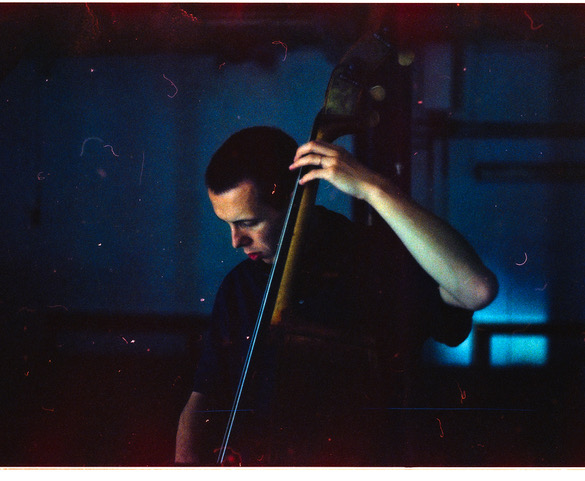
Lisa Hoppe — double bass, voice, composition, concept
Lisa Hoppe is a double bassist, composer, and improviser based in Berlin. Her musical work spans a wide range of genres and non-genres: between free improvisation, jazz in all its forms, modern chamber music, and chanson, she constantly seeks to place the melodic qualities of the double bass in a contemporary context. She writes for music theatre and works with various projects in Germany and Switzerland. Her album "Faking An Imperfect Utopia" with her band YSOP was nominated for the German Jazz Prize in 2024.
Plants

Rosemary
Rosemary (Salvia rosmarinus, formerly Rosmarinus officinalis) is an evergreen, strongly fragrant shrub in the mint family. Native to the Mediterranean region, it has needle-like, leathery leaves that are dark green on top and whitish-felted underneath. It blooms from spring to summer in delicate shades of blue, violet, or white. Rosemary thrives in sunny, dry locations and can grow up to two meters tall.
Dried and burned as incense, rosemary releases a resinous, herbaceous scent with a slightly camphor-like note. It purifies the space, clears the mind, and supports concentration and inner strength. In traditional incense practice, it is used for cleansing rituals, protection, and to strengthen memory. It is usually burned as loose leaves or blended with other herbs on charcoal.

Lavender
Lavender (Lavandula angustifolia, also known as true lavender) is an evergreen, strongly fragrant sub-shrub in the mint family. It originates from the dry, sunny regions around the Mediterranean. Its narrow, grey-green leaves are softly felted, and from June to August it blooms in characteristic spike-shaped flower heads in shades of violet, blue, or pink. Lavender grows to about 30–60 centimeters tall and attracts bees and butterflies.
Dried lavender flowers release a sweet, floral, calming scent with balsamic undertones when burned. As incense, lavender has a balancing, relaxing, sleep-promoting effect. It is traditionally used for stress, restlessness, and headaches, and is said to soothe the soul and dispel negative thoughts. The dried flower spikes are burned alone or blended with other herbs on charcoal — it's also popular as a scented sachet.
Incense of Music 74/ Dahlgren, Hart, Puntin
Incense of Music 74
Soft Landing Option
A multisensory concert – Friday, 12 June 2026, 8 pm
Chris Dahlgren: viola da gamba
Jim Hart: vibraphone & marimba
Claudio Puntin: contralto clarinet, bass clarinet, clarinet
Incense: White sage, Aralia racemosa
PANDA Platforma in der Kulturbrauerei, Knaackstr. 97, 10435 Berlin
An evening where the ancient and the avant-garde converge. Chris Dahlgren on viola da gamba, Jim Hart on vibraphone & marimba, and Claudio Puntin on clarinets weave a tapestry of sound. The air carries the cleansing scent of White Sage and the woodland aroma of Aralia racemosa.
This event is not recommended to people sensitive to smoke.

Photo by Fabio Dondero
A soft landing in the infinity of possibilities. Behind this lies the idea that tradition means not the preservation but the development of things, so that it can transform its merits into services. The sound fusion of this carefully selected combination of instruments—viola da gamba, clarinets, and vibraphone—captures several centuries of European music-making and instrumental art in an audible and tangible way. Origin and present come alive in the hands of this composers' band. The three musicians are united by a polystylistic understanding of music and lifelong improvisational and compositional experience in dealing with musical forms of expression and organization. In this way, they have created and continue to create an ever-growing and changing collection of works. Together, they create far more than the sum of three artistic individuals. These time-dissolving forms of planning generate a reality that will have a lasting impact on the future.

Photo by Fabio Dondero
Artists
Claudio Puntin — clarinets
Claudio Puntin (*13.10.1965) Improvisor, Clarinetist, Composer, Goldsmith, Painter, Performer. The sensuality and soulfulness of improvising people have inspired Claudio Puntin since his first musical steps. He has retained his playful instinct, turning his clarinet into his keyboard, his drums, and his sound processor, and creating works for orchestras, choirs, ensembles, and electronics. Together with improvisers from all continents, he creates music and art that allows us to participate in the eternal artistic present through images and sound. Through his playing, he reminds us that we are all sensual and social beings who enjoy creativity in order to be together in health, peace and soulfulness.
R. Chris Dahlgren — viola da gamba
R. Chris Dahlgren (*13.11.1961) Multi-Instrumentalist, Composer, Singer, Performer. "If I would attempt to state a credo for my path as a musician, an artist and a person it would go something like this: I'd try to emphasize, along with following one's own instinct and bliss, keeping a beginner's mind, a step-by-step mind, a here and now mind and an openness to life's inevitable changes. I was improvising before I knew what improvising meant – freedom and form are yin and yang and intertwining eternally, so don't emphasize one over the other. I don't want to fit into anybody's shoebox and least of all into a shoebox of my own making."
Jim Hart — vibraphone & marimba
Jim Hart (*1.6.1978) Vibraphone, Marimba, Drums, Percussion. Jim Hart is a British vibraphonist and drummer whose music thrives on curiosity, openness and creative range. After nearly 20 years in London he relocated to Alsace, France in 2014. He has released ten albums as a leader and moves fluidly between projects that stretch from intimate duos to adventurous cross-border collaborations and large ensembles. His versatility has brought him to the stage with artists at the highest level from around the world. Hart also shares his craft as a teacher at several conservatoires across Europe as well as running a choir in his local community.
Incense

White Sage
White sage is an evergreen perennial shrub native to the southwestern United States and northwestern Mexico, specifically the coastal sage scrub habitats of Southern California and Baja California. It typically grows 1.3 to 1.5 meters tall and wide, with whitish evergreen leaves that are densely covered in hairs containing aromatic oils. When rubbed, the leaves release a strong, distinctive fragrance. The plant produces tall flower stalks with white to pale lavender flowers that are highly attractive to bees, hence the species name apiana.
As incense, white sage is traditionally used by Indigenous peoples of North America for purification ceremonies and spiritual practices. The dried leaves are typically bundled into smudge sticks and burned, producing a highly aromatic, resinous, and penetrating spicy scent. The smoke is believed to have cleansing properties, clearing negative energy from spaces and promoting mental clarity and relaxation. The herbaceous, woody, and slightly sweet fragrance makes it popular for meditation, yoga, and creating sacred spaces.

Aralia racemosa
Aralia racemosa, commonly known as American spikenard, is a herbaceous perennial plant in the ginseng family native to eastern North America. It typically grows 1 to 1.5 meters tall, sometimes reaching up to 3 meters, with erect, branched stems that are dark maroon to almost black in color. The plant produces very large, two to three times compound leaves that can reach up to 75 centimeters in length. The small white to greenish-white flowers form large, upright panicles, blooming from June to August.
As incense, Aralia racemosa is valued for the aromatic properties of its root, which has a complex, spicy, and earthy fragrance with notes reminiscent of licorice or sarsaparilla. The aroma is described as warm, mildly sweet, and slightly pungent, creating a calming and grounding atmosphere. The root can be burned on charcoal as a loose incense or gently heated on a warmer to release its aromatic compounds. The plant should not be used during pregnancy.
Incense of Music 73/ Taylor, Chartrand, Alcàcer
Incense of Music 73
Gamba, liuto e controtenore
A multisensory concert – Friday, 8 May 2026, 8 pm
Michael Taylor: countertenor
Vanessa Chartrand: viola da gamba
Pedro Alcàcer Doria: lute
Incense: Artemisia vulgaris, Mentha arvensis
PANDA Platforma in der Kulturbrauerei, Knaackstr. 97, 10435 Berlin
Immerse yourself in Early Music and new senses. An intimate concert with Michael Taylor (countertenor), Vanessa Chartrand (viola da gamba), and Pedro Alcàcer Doria (lute). Accompanied by a fragrant composition of Artemisia (mugwort) and Mentha arvensis (field mint).
This event is not recommended to people sensitive to smoke.
Artists
Michael Taylor — countertenor
Acclaimed by critics for his "great virtuosity", "vocal radiance" and "outstanding voice", Michael Taylor has performed leading roles in operas around the world ranging from the baroque to the modern era. The young Canadian countertenor Michael Taylor picked up his first instrument, the violin, at age three. Despite an (arguably Sherlock Holmesian) enthusiasm for Bach's solo partitas and the Devil's Trill, he soon discovered his true instrument of choice when he began his vocal training as a treble with St. Michael's Choir School at age nine, where he was to sing more or less every day for the next ten years. After a brief intermission in which he completed a degree in Physics and Neuroscience at McGill University, Michael took up further vocal studies in Germany with a focus on opera performance and early music under the tutelage of Jeanne Piland and some of Europe's most talented Early Music specialists, including Andreas Scholl, Sara Mingardo and Michael Hofstetter. He is a prize-winner of the Gürel International Singing Competition in Istanbul and the International Voice Competition Kammeroper Schloss Rheinsberg in Germany, as well as a grant-holder of the Jacqueline Desmarais Foundation for Young Canadian Opera Singers. Highlights of his wide-ranging operatic repertoire include Oberon in Britten's "A Midsummernight's Dream" in Norfolk (2013), Goffredo in Handel's "Rinaldo" at the State Theatre Mainz (2014), Corindo in Cesti's "Orontea" at the Hamburg State Opera (2014), Liscione in Scarlatti's "La Dirindina" with L'Arte del Mondo (2014/15), Adriano in Pergolesi's "Adriano in Siria" (2015) and Alceste in Hasse's "Demetrio" (2016) with Opera Settecento, Artemis in Henze's "Phaedra" at the Halle Opera (2015), Ariel in Purcell's "The Tempest" with Montreal Baroque, Argone in Handel's "Sosarme" and Ormonte in Handel's "Elpidia" at the Handel Festival Halle (2016), a revival of Porpora's "L'Agrippina" with the Barber Opera (2017), two new chamber operas for the Biennale di Venezia (2017), Sciarrino's "Luci mie traditrici" at the Ukraine National Opera (2018) and his hometown operatic debut with Opera Atelier in Monteverdi's "Il ritorno d'Ulisse in patria" (2018). Also highly sought-after in concert and oratorio, he performs regularly with exceptional ensembles worldwide, including Handel's "Messiah" with the Grammy-nominated Trinity Choir at the Lincoln Center New York (2012) and with the Juno-award-winning ensemble L'Harmonie des Saisons (2017), Bach's St. Matthew Passion with the Telemann Baroque Orchestra at Izumi Hall in Osaka (2015) and at the Maison Symphonique de Montreal (2018) and a series of Bach cantatas with Montreal Baroque now available on the Atma Classique label. Michael is a core member of Berlin's Solistenensemble Phønix16, specialising in the performance of contemporary and experimental vocal works; he has appeared in several major festivals, including MaerzMusik and Ultraschall Berlin, performing works by Ferneyhough, Xenakis, Stockhausen, Grisey and Vivier as well as new works by Pryzbylsky, Bumsteinas and Fure. As founder and co-director of the baroque ensemble "The Dansant", his debut album "To Die, To Sleep", featuring opera arias by Handel, Vivaldi and Graun accompanied on period instruments, is available.

Photo by Fabio Dondero
Vanessa Chartrand — viola da gamba
Berlin-based Canadian conductor Vanessa Chartrand is a 2020 Opera Awards Foundation bursary recipient and scholarship holder from the Royal Philharmonic Society of London. From her rich background as a classical singer and viola da Gamba player, her conducting encompasses symphonic works, contemporary music, baroque music and opera. Up-coming highlights of the season 25/26, include Vanessa's debuts with the Berliner Symphoniker at Berlin Philharmonie in a program of Kodaly, Vaugh-Williams, Dukas, and Gerschwin's piano concerto. It will also be the premiere of Dear IRIA, a new film by Finnish Director Janna Kyllästinen, for which she has composed the music. In recent seasons, Chartrand has worked with orchestras such as the Danish Philharmonic, Orchestre National d'Auvergne, Dubrovnik Symphony Orchestra, the Kiev Symphony orchestra, Chamber Orchestra of Cascais, London's Chroma Ensemble, Ensemble UnitedBerlin, Zafrann Ensemble, Mosaik Ensemble, and Phoenix16. Vanessa was Vladimir Jurowski's assistant at the London Royal Opera House's in a production of Jenufa, and with the Berlin Rundfunk Symphony Orchestra for 2 years. She conducts a wide range of repertoire from the baroque to the contemporary; Debussy, Stravinsky, Bartok, Haydn, Zemlinksy, Mendelssohn and is a pioneer of new music. She has performed both as a singer and conductor at the most important festivals of new music in Germany: MärzMusik, MIKROMUSIK Festival for Experimental music and sound art, ULTRASCHALL Festival, Documenta 14, Ruhrfestspielhaus Recklinghausen, and Duisburger Akzente. She also premiered composer Lisa Bielawa's Mauer Broadcast for double choruses, ensemble and soloist for the Fall of the Berlin wall celebration. A passionate opera conductor, Chartrand gained many years of stage experience; first as an opera singer (Carmen, Hermia, Cesare, Dorabella, Cherubino, Charlotte to name a few) but also as a viola da Gamba player, conducting from the continuo works such as Orlando, Monteverdi's Orfeo, and The Fairy Queen. She has worked with small opera companies in Berlin conducting Don Giovanni, Les Contes d'Hoffmann, Carmen, L'Elisir d'amore, and Le Nozze di Figaro. As a composer, Vanessa has received many recognition for her works both on stage and on screen. Some highlights of her work include GAIA-Cyborg Oper nominated for best production of 2021 by Nachtkritik. Her latest soundtrack, A Body like mine, documentary by Maja Classen, won many prizes, including Best German Documentary at DOC.BERLIN 2023. Vanessa's music is known for her remarkable emotional depth, which lends itself to a sense of openness and breathability. Across a wide variety of genres, she explores sounds, textures, and movements. Her music is deeply moving and tends towards minimalism, focusing on the core of an emotion in its rawest form. In 2018 she founded OpusXX Orchestra, a chamber orchestra based in Berlin, which has been applauded for its rich sound and unique repertoire, shading a light on forgotten female composers, and pioneering new works by women composers. Vanessa was born in Québec, Canada. Where after graduating with honours from McGill University in voice, she attended a Master's degree in viola da Gamba at the Université de Montréal before moving to Germany to pursue her operatic studies with Ks. Jeanne Piland. Vanessa counts among her conducting mentors Vladimir Jurowski and Jessica Cottis. She has worked as well with Luigi Gaggero, Hervé Niquet, Jay Bernfeld, Skip Sempé, Alexander Schmalcz, Michael McMahon, Falk Struckmann, and Xenia Meijer.

Photo by Fabio Dondero
Pedro Alcàcer Doria — lute
Born in 1982 in Mexico City, Pedro Alcàcer Doria began his musical education at an early age under the influence of his father, the Catalan jazz musician Francesc Alcàcer, and was born into a creative family. He studied jazz guitar with Francisco Lelo de la Rea and immediately began learning classical guitar and composition with Hector Ramos. He completed his studies in classical guitar at the renowned "Escuela Nacional de Música-UNAM" and continued his studies with renowned teachers such as Isabelle Villei, Eloy Cruz, and Antonio Corona, specializing in Renaissance and Baroque repertoire. In 2006, he moved to Barcelona, Spain, where he obtained the "Berufstitel" for Renaissance and Baroque plucked instruments at the Conservatory of Girona under the renowned teacher Xavier Diaz-Latorre. He then continued his studies at the University of the Arts in Bremen, where he studied lute with Joachim Held and Lee Santana and earned his degree. As a passionate musician, he continued his instrumental improvement with Evangelina Mascardi in Italy while working intensively as a soloist and continuo player. He has worked with important conductors such as Gabriel Garrido, Alessandro di Marchi, Marco Mencoboni, Paolo Faldi, Riccardo Doni, Horacio Franco, Cristoph Hammer, Carlos Aranzay, Gerhard Oppel, Burak Özdemir, and others, and has performed at prestigious festivals and forums in Italy, Germany, Spain, France, Czech Republic, Belgium, Netherlands, Brazil, and Mexico. He currently lives in Berlin and collaborates with various realities of early music in Europe.
Incense

Artemisia vulgaris (Mugwort)
Artemisia vulgaris, commonly known as mugwort, is a tall, herbaceous perennial plant belonging to the daisy family. It typically grows 60 to 180 cm tall, with erect, grooved stems that often have a reddish-purplish tinge. The leaves are dark green on top, densely covered with white woolly hairs underneath, deeply lobed or pinnately divided, and have a distinct aromatic scent when crushed.
As an incense, mugwort has a long history of traditional use in spiritual and medicinal practices. The dried leaves and flowering tops are burned for their aromatic smoke, which has an earthy, bitter, and slightly pungent scent with sage-like notes. It is perhaps most renowned as a "dream herb" or oneirogen, traditionally used before sleep to promote vivid and lucid dreaming. Due to its thujone content, mugwort should not be used during pregnancy.

Mentha arvensis (Field Mint)
Mentha arvensis, commonly known as corn mint, field mint, or wild mint, is a herbaceous perennial plant in the mint family. It typically grows 10 to 60 cm tall, with erect or ascending stems that are square in cross-section and often branched. The small flowers are lilac, pale purple, or whitish, growing in dense whorls in the leaf axils.
As an incense, Mentha arvensis is valued for its strong, fresh, minty, and herbaceous fragrance, derived from its high essential oil content, particularly menthol. The sharp, cooling aroma is known for its purifying and clarifying properties. Caution is advised as the essential oil is potent; it should be used in moderation, avoided during pregnancy, and kept away from young children.

Photo by Fabio Dondero
Incense of Music 72/ Kühne, Möller, Kalima
Incense of Music 72
Skin, Metal and Wood
A multisensory concert – Friday, 10 April 2026, 8 pm
Almut Kühne: vocal improvisations
Wieland Möller: drums and gongs
Kalle Kalima: guitar
Incense: Sandal, Styrax, Diptam
PANDA Platforma in der Kulturbrauerei, Knaackstr. 97, 10435 Berlin
A concert for the ears and the air. Witness three singular artists in solo performances: Kalle Kalima's genre-defying guitar, Almut Kühne's breathtaking vocal artistry, and Wieland Möller's immersive world of drums and gongs. The atmosphere is charged with the sacred scents of Sandal, Styrax, and Diptam.
For guests who are particularly sensitive to smoke, this event is not recommended.
Artists

Photo by Falk Weiß
Kalle Kalima — guitar
Kalle Kalima (b. 1973 in Helsinki, Finland) has worked with trumpeters Tomasz Stanko and Leo Wadada Smith, sax players Juhani Aaltonen, Anthony Braxton, Frank Gratkowski and Mikko Innanen, trombonist Conny Bauer, bass players Greg Cohen, Sirone and Chris Jennings, guitarist Marc Ducret, composers Michael Wertmüller and Simon Stockhausen, pianist Jason Moran, drummers Jim Black and Tony Allen and singers Andreas Schaerer, Jelena Kuljic, Theresa Kronthaler, Claron Macfadden, Linda Sharrock as well as with Ensemble Resonanz, B'Rock, NDR Big Band and Jazzanova DJs. Kalima has been working intensively with the Swiss virtuoso vocalist Andreas Schaerer in recent years. They released "Evolution" (ACT) with Tim Lefebvre in 2023 and toured in trio and duo. Further new releases in 2024 are "Halogen" (We Jazz) by Lampen (duo with drummer Tatu Rönkkö) and "Ilmonique" (Tyxart Records) by duo with pianist Achim Kaufmann. The album "Flying like Eagles" with Knut Reiersrud on guitar, Jim Black on drums and Phil Donkin on bass was released in 2019 and the record release concert was in the Philharmonie of Berlin. Kalima's Trio "Long Winding Road" with bass player Greg Cohen (Tom Waits, Ornette Coleman) and Max Andrzejewski was touring in 2016 with the "High Noon" album (ACT). The group Klima Kalima with Oliver Steidle and Oliver Potratz won "Neuer Deutscher Jazzpreis" in 2008 and has released five albums. Kalima is a member of "A Novel of Anomaly" (with Andreas Schaerer, drummer Lucas Niggli and accordionist Luciano Biondini). Kalima is a member of ROKC quartet (album ROWK) with Ronny Graupe (gtr), Oli Steidle (drs) and Chris Pitsiokes (sax). The trio "Johnny La Marama" with Eric Schaefer (drs) and Chris Dahlgren (bs) has released 4 albums and has collaborated with Novoflot Opera company. Kalima received the "Ted Curson" prize of Pori jazz festival (FI) in 2016. He is a member of the group "Kuu" with Christian Lillinger, Jelena Kuljic and Frank Möbus. Kalima is a professor of jazz guitar at the university of Lucerne since 2017.

Photo by Fabio Dondero
Almut Kühne — vocal improvisations
Almut Kühne (born in 1983 in Dresden) is a German jazz singer, composer, and performer of contemporary music. Kühne, who comes from an artistic family, began taking piano lessons at the age of seven. At sixteen, she started vocal training. She studied until 2008 in the jazz program at the Berlin University of the Arts "Hanns Eisler". In 2005, Kühne was a member of the Berlin Youth Jazz Orchestra under the direction of Nicolai Thärichen, with whom she participated in the World Forum of Sacred Music in Los Angeles. She performed with Georg Graewe's ensemble sonic fiction at the Nickelsdorf Konfrontationen and the Total Music Meeting. Together with Johanna Borchert, Antonis Anissegos, and video artists Benjamin Schindler and Markus Glandt, she runs the project Dowland Waters. Kühne has released two albums under her own name on Unit Records.

Photo by Claude Hofer
Wieland Möller — drums and gongs
Wieland Möller is a Berlin based drummer, sound artist and performer in the fields of jazz, improvised music and contemporary dance. He studied at the Rotterdams Conservatory, Rhythmic Conservatory Copenhagen and Berklee College of Music and in New York. He has been a scholar of the Berklee College of Music, Goethe Institution Germany and GVL. Wieland is the founder of the Akvariet Trio. He has performed at the Buenos Aires Jazz Festival, Jazz International Rotterdam Festival and among others, and has toured Germany, The Netherlands, Spain, Portugal, Argentina and Iceland. He has worked with Kazuhisa Uchihashi, Markus Stockhausen, Klaas Hekman, Tobias Delius, Julyen Hamilton, Ingo Reulecke, Okwui Okpokwasili and other collaborators.
Incense

Sandalwood
Sandalwood refers to a genus of about 25 species of slow-growing trees and shrubs. They are hemiparasitic, meaning they attach their roots to other plants to obtain water and nutrients, though they produce their own energy through photosynthesis. The value of the tree lies in its heartwood, the dense inner part of the trunk and roots. It takes about 15 to 30 years for the heartwood to develop its potent aromatic oil.
As an incense, sandalwood is one of the oldest and most revered scents in the world, used for over 4,000 years in religious and spiritual practices. The scent profile is universally described as warm, soft, rich, creamy and woody, with subtle notes of sweet musk. Sandalwood incense is fundamental in Hinduism, Buddhism and other traditions for meditation, prayers and funerals.

Styrax
Styrax is a genus of about 130 species of large shrubs or small trees in the family Styracaceae. The most notable characteristic of the genus is the resin obtained from the bark of certain species, which has been used for centuries as incense and in medicine.
As an incense, Styrax refers to the fragrant resin, known as benzoin or storax. The resin is harvested by making incisions in the bark, from which a fragrant balsam exudes and hardens into reddish-brown tears or lumps. Benzoin resin has a warm, sweet, vanilla-like aroma and is used as a fixative in perfumery, as well as incense for purification and spiritual practices.

Dittany
Dittany is a perennial herbaceous plant that typically grows 40 to 120 centimeters tall. It has pinnate leaves that smell strongly of lemon and citrus when rubbed. On hot, windless days, the released flammable vapors can be ignited with a flame, which burns off instantly without harming the plant — giving the plant its common names such as "burning bush" or "gas plant."
As an incense, dittany is valued for its fresh, spicy, and slightly citrusy aroma. The scent is described as harmonizing, cleansing, and clarifying. It has a long history of traditional use in spiritual ceremonies and rituals for its protective and purifying properties.
More Videos
Incense of Music 71/ Biłat + Jasinska, Jermyn
Incense of Music 71
A multisensory concert – Friday, 27 March 2026, 8 pm
Julia Biłat: cello
Zuza Jasinska: vocal, effects
Simon Jermyn: bass guitar
Incense: Eucalyptus, Dittany
PANDA Platforma in der Kulturbrauerei, Knaackstr. 97, 10435 Berlin
Join us for a unique sensory experience that brings together two distinct musical voices for a special double set. Julia Biłat expands the cello solo format, creating emotional and intense musical structures shaped by cello, body, voice, and movement. Her work moves between improvisation, composition, and performance, where sound and performative presence become inseparable. Zuza Jasińska & Simon Jermyn present a dialogue of voice and bass. Zuza, a vocalist and composer, blends folk-pop intimacy with jazz inflection and the fearless spirit of experimental improv. Her evocative voice is met by Simon's intricate and sensitive bass work, creating a sound that is both delicate and powerful. A carefully selected, curated incense blend will accompany the auditory journey and deepen the evening's atmosphere with its botanical aromas.
This event is not recommended to people sensitive to smoke.
Artists

Julia Biłat — cello
Julia Biłat - classically trained cellist, improviser and composer, lives in Berlin and moves across classical, jazz, performance and experimental scenes. She performs with Stegreif.Orchestra, Camila Nebbia's The Hanged One, and Fabiana Striffler's Archiotic Quintet. She has composed and co-directed productions for Stegreif.Orchestra (most recently #bechange Hildegard von Bingen, 2022/23). Her solo work integrates improvisation, composition, and performance using cello, body and voice. Performances include Butohpolis Festival (Warsaw), Into The Open (Berlin), and Intermittenze (Catania).

Zuza Jasinska — vocal, effects
"I am a vocalist based in Berlin, Germany. I compose and sing music like folk-pop, jazz, and experimental improv. I was raised in Poland, in a city called Toruń, nestled by the Vistula River and famous for its gingerbread. There's a moment caught on camera from when I was just a little bean—my mom turning to my dad and saying, "I'm telling you, she'll be singing." And here we are. I shaped my style by mimicking the sounds around me—it got so out of hand that I started calling myself a chameleon. Copy, paste, repeat. I loved it. Today, I sound more like me. I stopped copying, and it turned out pretty well. For now, that's it. I'll add more later."

Simon Jermyn — bass guitar
Simon Jermyn is an Irish guitarist and electric bassist based in Berlin, after 11 years in NYC. He leads his own band, Obsany, and is a member of many more. He has worked with musicians including Jim Black, Aaron Parks, John Zorn, Chris Speed, Gerald Cleaver, Chris Lightcap, Anna Webber and many others. He holds a PhD from Ulster University in Northern Ireland and has performed at venues and festivals around the U.S. and Europe, including the Village Vanguard.
Incense

Eucalyptus
Eucalyptus, originally native to the forests of Australia, is a distinctive, fast-growing, and evergreen tree. It is cultivated worldwide in warm regions and is particularly known for its long, leathery, and often sickle-shaped leaves, which are rich in essential oils. These oils not only give the plant its unmistakably fresh, camphor-like scent but are also the reason for its versatile uses.
As incense, the dried leaves of eucalyptus release their powerful effect when smoldering. As they burn, a clear, invigorating, and minty fragrance unfolds. Traditionally, burning eucalyptus is believed to have a strong purifying and clarifying effect on the air and atmosphere of a space. Due to its potent effect, only a small amount should be burned at a time, and this should be done in well-ventilated spaces. The smoke can be irritating for people with asthma, young children, or pets, so special caution is advised.

Dittany
Dittany, also known as the "Burning Bush" or "Gas Plant," is an impressive, rare, and protected perennial plant native to warm, limestone-rich regions of Southern and Central Europe. Botanically, it belongs to the rue family (Rutaceae). It is characterized by its upright, glandular flower spikes in pink or white and its feathery, citrus-scented leaves. The entire plant is rich in essential oils, which on hot summer nights can form a cloud-like, flammable atmosphere around the plant—giving rise to its biblically inspired name, "Burning Bush."
As incense, dittany is a highly traditional but now rarely used and protected plant. In the past, primarily the dried and crushed roots and seeds were used for smudging. The smoke has an intensely aromatic, spicy-bitter scent, with a clearer, lemony to camphor-like note compared to its more famous relative, frankincense. Since antiquity, dittany has been regarded as a powerfully protective and cleansing incense.
Incense of Music 70/ Notte, Nussbaumer
Incense of Music 70
A multisensory concert – Friday, 27 February 2026, 8 pm
Sophie Notte: cello, voice, performance
Georg Nussbaumer: composition, performance
Incense: propolis, peony
PANDA Platforma in der Kulturbrauerei, Knaackstr. 97, 10435 Berlin
A collaboration of Berlin based cellist Sophie Notte (cello/performance) and Austrian artist Georg Nussbaumer (composition/performance/installation): on the formation and decay of harmonies – flies and hair – echoes of music from the past – tiny cows and a dragon – egg – caterpillar (larva) – pupa – butterfly (imago) – pair – flock – swarm... and back to egg. A diptych (with side panels) consisting of two chamber music compositions for violoncello and other sound sources, based on major 19th-century compositions. However, these are not arrangements; rather, the originals are melted down and thus become formless material for new creations, while retaining their tone, their 'smell'. In both pieces, the cello is a central carrier of unfolding arches and vaults, within which—expanded in dimension by enveloping sonic and installation-based elements—further spaces of association open up. An alchemical process with an open outcome. Goldless and ephemeral.
For guests who are particularly sensitive to smoke, this event is not recommended.
Artists

Photo by F. Dondero
Sophie Notte — cello, voice, performance
Sophie Notte (*1991) is a cellist and performer. She grew up in Trier and studied cello in Saarbrücken, Berlin and Rostock. She now lives in Berlin and has been a permanent member of Solistenensemble Kaleidoskop since 2020, with which she feels deeply connected. Over the past few years, she has collaborated with artists and composers such as Achim Freyer, Georg Nussbaumer, Pol Pi, Wojciech Blecharz, François Sarhan, and Stefan Streich, and has performed at various festivals and venues, including Musiktheatertage Wien, MAERZ Musik, Musikinstallationen Nürnberg, Donaufestival, Athens Epidaurus Festival, Burgtheater Wien, Kampnagel, Berlinische Galerie, Auditorio de Tenerife, and Centre Pompidou. Besides working with Kaleidoskop, she is currently involved in a production of Schubert's Winterreise arranged for three female performers and directed by Achim Freyer, as well as in a cello duo formation with Mathis Mayr focusing on contemporary repertoire.

Photo by Peter Putz
Georg Nussbaumer — composition, performance
Georg Nussbaumer (*1964) lives in Vienna and is regarded as a virtuoso "Gesamtkunstwerker" whose works are located between composition, installation art, performance and theatre. Large-format scenic works, which constitute multi-layered pictorial sound spaces and combine thematic and motivic stylistic elements to form large holistic structures, are juxtaposed with reduced sound installations or even non-sounding processes, which often deal with music, its history and effect and ultimately with its production. He works with highly specialized performers and musicians just as naturally as with an audience getting drunk or chewing gum, with archers, freedivers, a motorcycle club or hundreds of singers from rural amateur choirs. His work is shown internationally at festivals, theatres and exhibitions such as Donaueschingen Music Festival, Steirischer Herbst, Maerzmusik, soundscape Vilnius, Ring Festival Los Angeles, Opera Dagen Rotterdam, Teatr-e Shahr Tehran, Beethovenfest Bonn, and many more. For the European Capital of Culture Bad Ischl 2024, he realized projects with choirs, shooters, marching bands, and a bell-laden railway carriage.
The compositions were supported by: Austrian Federal Ministry for Housing, Arts, Culture, Media and Sport · City of Vienna Culture · SKE-fonds
Incense

Propolis
Propolis, often termed "bee glue," is a remarkable natural substance with a long history beyond the hive. It is a complex resinous mixture that honeybees produce by combining gathered plant resins and saps—primarily from tree buds like poplar and conifer—with their own enzymes and beeswax. This sticky, antimicrobial compound is used to seal cracks, sterilize the hive interior, and mummify intruders, acting as the colony's chemical immune system.
The scent of burning propolis is profound, complex, and evocative. Its primary character is richly resinous, balsamic, and woody, with a foundational note reminiscent of poplar buds, storax, and warm honey. Upon heating, it releases a smoky, slightly pungent quality, layered with subtle hints of vanilla, cinnamon, and a faint medicinal sharpness. For burning, it is best to use a charcoal disc or an electric incense warmer; only a small piece is needed, as the fragrance is potent.

Peony
The peony (Paeonia) is an impressive, long-lived perennial, best known for its large, opulent, and often fragrant blooms. For millennia, it has been a symbol of wealth, honor, feminine beauty, and healing in many cultures. When used as incense, it is traditionally the dried and crushed root, or more rarely the petals, that are burned.
The smoke releases a floral-spicy, earthy, and slightly sweet fragrance profile, with subtle peppery or minty nuances and a woody depth. This meditative and warm scent is considered balancing, calming, and protective. In European folk magic, peony was burned to ward off evil spirits and for protection, while it is also associated with healing, self-love, and sensual openness.
Incense of Music 69/ Younes, Hamedi
Incense of Music 69
Echoes from Mesopotamia
A multisensory concert – Friday, 30 January 2026, 8 pm
Mevan Younes: buzuq
Elham Hamedi: kamancheh
Incense: Myrrh, Lavender
PANDA Platforma in der Kulturbrauerei, Knaackstr. 97, 10435 Berlin

A musical dialogue. Prepare for a musical journey to the cradle of civilization, where the spirit of ancient Mesopotamia is channeled through the strings of two master musicians. Mevan Younes on the buzuq and Elham Hamedi on the kamancheh engage in a profound dialogue, exploring the vast emotional landscape of Kurdish and Mesopotamian heritage. The evening begins with the resonant, metallic pluck of the buzuq. Mevan Younes coaxes intricate, rhythmic patterns from its long neck, each note buzzing with a vibrant, earthy energy. His playing is both percussive and melodic, building complex architectures of sound that recall the sun-baked landscapes and resilient spirit of its people. Then the voice of the kamancheh enters. Held upright and bowed with profound sensitivity by Elham Hamedi, its sound is the evening's response to the buzuq's day — a soaring, weeping melody that seems to touch the very soul. Elham coaxes microtones and delicate ornaments from its strings, navigating the intricate pathways of Kurdish maqams with breathtaking precision. Together, they do not merely play in unison; they converse. They argue, they mourn, they celebrate.
A note on the atmosphere: enhancing this auditory journey, a subtle fragrance lingers in the air — the sacred, resinous depth of myrrh echoing the buzuq's ancient roots, and the ethereal, herbal calm of lavender mirroring the kamancheh's soulful cry.
Artists

Mevan Younes — buzuq
Born in the multicultural city of Al-Hasaka in northern Syria, Mevan Younes has specialized in a traditional oriental instrument: the buzuq. His musical education began at the age of seven under his father, through whom he first learned mainly Kurdish music. He later continued his training at the Damascus Higher Institute of Music, completing his studies in 2011 under Professor Askar Ali Akbar — during which time he also began working as a buzuq teacher. Mevan is a member of the Syrian Arab National Orchestra and has appeared at numerous events, including the Morgenland Festival in Osnabrück and the Roskilde Festival in Denmark. International engagements have taken him to countries including Turkey, Tunisia, Ghana, Kurdistan, Denmark, France, and Germany. Since 2015 Mevan Younes has lived in the greater Berlin area, where he continues his musical development and remains active in various bands and ensembles, including the Ugarit Trio and the Berlin Orient Ensemble.

Elham Hamedi — kamancheh
Elham Hamedi (b. 1987, Mahabad) is a Kurdish musician, singer, and composer specializing in the Persian kamancheh. She studied classical Persian music at the University of Art in Tehran and later taught at the Diyarbakir Academy of Music. Since 2020 she has been studying composition at the Barenboim-Said Akademie in Berlin under Stefan Winkler and Arnulf Herrmann. Her performances as both an instrumentalist and singer have taken her to Malaysia, the Middle East, Russia, and Europe, including a recent appearance in Oslo and a live RBB broadcast from Berlin's Luisenkirche. In 2019 she received second prize in the ISAM Composition Competition, and in 2024 she presented a widely acclaimed solo recital at the Ostheimer Organ Festival.
Incense

Myrrh
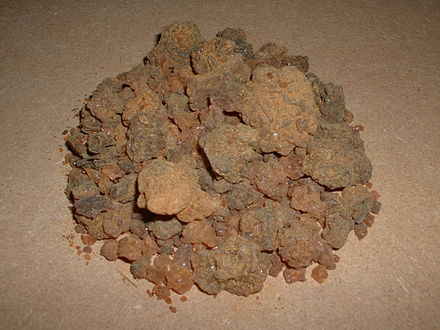
Myrrh comes from small, thorny trees of the genus Commiphora, native to the dry, arid regions of Northeast Africa and the Middle East — particularly Somalia, Yemen, and Ethiopia. The treasured resin is not the wood or sap, but a fragrant gum that naturally oozes from the bark to heal wounds. Harvesters make deliberate cuts to encourage more of this valuable secretion, which hardens into tear-shaped, reddish-brown granules over several weeks.
Myrrh has been traded across the ancient world for over 4,000 years, carried along the same incense routes that connected Arabia, Egypt, and the Mediterranean. The Egyptians used it in embalming and temple rites; it was burned as an offering in Jewish, early Christian, and Islamic traditions alike, and appears in the Bible as one of the three gifts brought to the infant Jesus, alongside gold and frankincense. In classical Greece and Rome it was valued as both perfume and medicine, believed to guard against infection and soothe wounds. Its association with mourning and embalming has given it a lasting symbolic weight — myrrh is the incense of transitions, endings, and sacred solemnity.
When burned, myrrh releases a rich, complex aroma that is simultaneously earthy, bittersweet, and slightly medicinal. Unlike floral scents, it provides a profound, grounding base note, still used today for meditation, temple ceremonies, and moments that call for gravity and stillness rather than lightness.

Lavender
Lavender (Lavandula angustifolia, also known as true lavender) is an evergreen, strongly fragrant sub-shrub in the mint family, native to the dry, sunny regions around the Mediterranean. Its narrow, grey-green leaves are softly felted, and from June to August it blooms in characteristic spike-shaped flower heads in shades of violet, blue, or pink, growing to about 30–60 centimetres tall.
The name lavender likely derives from the Latin lavare, "to wash" — the Romans scented their bathwater with it, and it later became a staple of monastery gardens across medieval Europe, grown as much for medicine as for fragrance. It was carried in small sachets to ward off plague-bearing insects, strewn on floors to freshen homes, and used by herbalists for centuries as a remedy for headaches, nerves, and sleeplessness. In folk traditions across Europe, lavender was also considered a plant of protection, tucked into linens and cradles to guard against bad dreams and negative influence.
Dried lavender flowers release a sweet, floral, calming scent with balsamic undertones when burned. Its smoke is lighter and airier than resinous incenses, traditionally used for stress, restlessness, and headaches, and still burned today to soothe the mind and support restful sleep.
Incense of Music 68/ Bart, Friedman, Hoppe
Incense of Music 68
A multisensory concert – Saturday, 22 November 2025, 8 pm
Danielle Friedman: piano
Ariel Bart: harmonica
Lisa Hoppe: double bass
Incense: Birch, Rosemary
PANDA Platforma in der Kulturbrauerei, Knaackstr. 97, 10435 Berlin
Prepare for an evening of captivating soundscapes and aromatic immersion as three exceptional musicians grace the stage at Panda Platforma for a unique multisensory concert. Harmonica player and composer Ariel Bart, pianist Danielle Friedman, and double bassist Lisa Hoppe come together to create an unforgettable musical journey, enhanced by the subtle scents of birch and rosemary. Ariel Bart is known for redefining the chromatic harmonica, blending jazz with Middle Eastern influences. Danielle Friedman navigates the spaces between jazz, classical music, and lyrical free improvisation. Lisa Hoppe, a composer and improviser on the double bass, brings a wide spectrum of musical language to her performances, ranging from free improvisation and jazz to modern chamber music.
Artists

Photo by Meidan Gil Arush
Ariel Bart — harmonica
Ariel Bart is a harmonica player and composer, currently based in Berlin. She has made the chromatic harmonica her primary focus, developing a distinctive voice through her compositions. Her debut album, In Between (spring 2021, Ropeadope Records), introduced her innovative sound, which she further expanded in her second release, Documentaries (Ropeadope Records).

Photo by David Beecroft
Danielle Friedman — piano
Danielle Friedman is an Israeli pianist, composer, and improviser based in Berlin. Her music flows between jazz, classical, and lyrical as well as rhythmic free improvisation, riddled with imagination. She studied at The Center For Jazz Studies in Tel Aviv, and received a full scholarship to finish her Bachelor's in Fine Arts at The New School for Jazz and Contemporary Music in New York.

Photo by Marjola Rukaj
Lisa Hoppe — double bass
Lisa Hoppe is a double bassist, composer, and improviser based in Berlin. Her musical work spans a wide range of genres and non-genres: between free improvisation, jazz in all its forms, modern chamber music, and chanson, she constantly seeks to place the melodic qualities of the double bass in a contemporary context. She writes for music theatre and works with various projects in Germany and Switzerland. Her album "Faking An Imperfect Utopia" with her band YSOP was nominated for the German Jazz Prize in 2024.
Incense

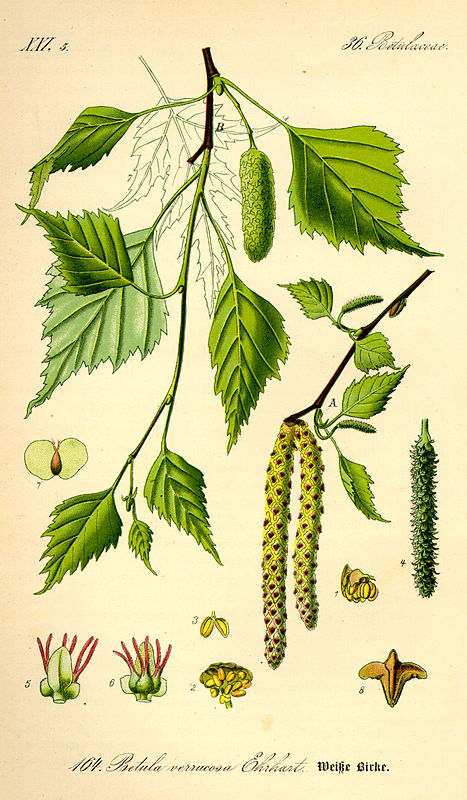
Birch
The birch (genus Betula) is a deciduous tree instantly recognizable by its striking, luminous white bark. Its name derives from an ancient root word for "bright," capturing the shimmering quality of a bark that often peels in thin, paper-like layers on younger trees. As a resilient pioneer species, birch is one of the first trees to establish itself on disturbed or barren ground, and one of the earliest to unfurl its small, delicate leaves each spring.
Across Slavic and Scandinavian traditions, birch has long marked the turning of the seasons: its flexible branches were bound into bundles used in the Russian banya to invigorate skin and circulation, and a freshly cut birch maypole traditionally announced the arrival of spring in many parts of Europe. It also appears in folklore as the material of the witch's broom and as a recurring symbol of cleansing and renewal — a tree associated, again and again, with crossing thresholds.
When burned as incense, birch bark, wood, or leaves release a fresh, woody, and subtly sweet fragrance that is both calming and uplifting. Its smoke is traditionally believed to hold strong purifying properties, clearing away stagnant, negative energy and making space for something new. A birch burning is thought to awaken the spirit, foster creativity, and provide courage for fresh starts.

Rosemary
Rosemary is a perennial evergreen shrub native to the dry, rocky coastal areas of the Mediterranean. Its scientific name, Salvia rosmarinus, translates to "dew of the sea," a poetic nod to its habitat. Its needle-like leaves are dark green and glossy on top, with a distinctive silvery-white, fuzzy underside, releasing a potent fragrance whenever they're brushed or crushed.
Since antiquity, rosemary has been tied to memory — Greek students wore garlands of it while studying, believing it sharpened recall, a tradition still echoed in Shakespeare's Hamlet, where Ophelia says: "There's rosemary, that's for remembrance." In medieval Europe it was carried at weddings as a sign of fidelity and placed at funerals as a token of remembrance, and a sprig was often hung over doorways in the belief that it kept illness and misfortune at bay.
As incense, rosemary is valued for its powerful cleansing and invigorating properties. When burned, it produces a robust, clean, camphoraceous scent — a refreshing, pine-like aroma underpinned by earthy, woody, and slightly peppery tones. It is traditionally used to clear a space of negative energy, sharpen mental clarity, and ward off fatigue of mind and spirit.
Incense of Music 67/ Yannick Rafalimanana
Incense of Music 67
A multisensory concert – Friday, 24 October 2025, 8 pm
Yannick Rafalimanana: piano
Incense: Agarwood (Oud), Cypress
PANDA Platforma in der Kulturbrauerei, Knaackstr. 97, 10435 Berlin
Program: works by Debussy, Rachmaninov, Dessau, Čiurlionis, Satie

Arnold Böcklin – "Die Heimkehr" (1887)
Experience an immersive evening with acclaimed French pianist Yannick Rafalimanana in Panda Platforma's "Incense of Music" series. As his celebrated interpretations fill the room, projections of paintings by great masters will illuminate the stage. This unique concert creates a total sensory experience, enhanced by the subtle aroma of curated incense. Join us for a powerful dialogue between music and art — a journey where sound, sight, and scent merge into one.
Artists

Photo by Neda Navaee
Yannick Rafalimanana — piano
French pianist Yannick Rafalimanana has developed an international concert career as a recitalist and chamber musician. Recent performances have taken him to halls all over the world, including the Berlin Philharmonie, the Elbphilharmonie Hamburg, Wigmore Hall, Konzerthaus Berlin, Köln Philharmonie, the Vienna Konzerthaus, the Shanghai Symphony Orchestra Chamber Hall, and the Kennedy Center in Washington. He has made chamber music with countless artists, including Kim Kashkashian, Steven Isserlis, Noah Bendix-Balgley, Arnold Steinhardt, and Itzhak Perlman. As a soloist, he has appeared with the Berlin Konzerthaus Orchestra, the Orchestre CNR de Lille, Orchestre Impromptu, and the Ensemble Parisien, under the batons of Péter Eötvös, Maxime Pascal, Jean Deroyer, Lucie Leguay and Zolt Nagy. Yannick regularly appears at summer festivals including the Perlman Music Program, the Great Lakes Chamber Music Festival, and Schleswig-Holstein Musikfestival. He is the winner of numerous awards, including the Borromeo Quartet Guest Artist Award and the Brest Piano Competition. As first prize winner of the 2012 Tufts/New England Conservatory Soloist Competition, he made his U.S. concerto debut in Symphony Hall Boston with the Boston Pops Orchestra. Born in Lille, he studied at the Conservatory of Lille and later at the Paris Conservatoire, earning first prizes in piano, chamber music, and collaborative piano under teachers including Bruno Rigutto, Michael Levinas, and Jean-Claude Pennetier. He then moved to Boston, earning a graduate diploma and a master of music in chamber music at the New England Conservatory under Vivian Weilerstein. He taught chamber music at the Folkwang University of Arts in Essen from 2015 to 2018. In 2022 he launched "Yannick's Salon," a concert series in his Berlin neighbourhood bringing chamber music masterpieces to the local audience of Weissensee.

Raphael – "Lo Sposalizio della Vergine"
Incense

Agarwood (Oud)
Agarwood does not come from a specific tree species but from the genus Aquilaria, native to the rainforests of Southeast Asia. What makes it remarkable isn't the tree itself, but a mysterious defence process within its heartwood: when the tree is stressed by a particular mould, injury, or insect infestation, it responds by producing a dark, dense, resin-saturated wood — and it is precisely this transformed wood that becomes prized agarwood. Since the process can take decades and wild populations of many Aquilaria species are now endangered, naturally matured agarwood ranks among the rarest and most expensive natural materials in the world.
For millennia, agarwood has been burned in religious ceremonies across Buddhism, Hinduism, and Islam, believed to purify the air, calm the mind, and open a connection to the spiritual world. It has also long been closely tied to wealth and status — given as a treasured gift between rulers, central to courtly fragrance culture across the Middle East, and, to this day, the prized base note of "oud" perfumes.
Burned, agarwood releases an exceptionally layered aroma — deep, woody, and aged, with notes of honey, amber, and leather, and a faint, almost animalic undertone. It is typically burned as small wood chips on charcoal, its scent unfolding slowly and in shifting facets over time.

Cypress
Cypress refers to several conifer species in the Cupressaceae family, most famously the slender, columnar Mediterranean cypress. It grows in rocky, well-drained soils across temperate regions and is a defining presence in the landscapes of Southern Europe, the Middle East, and North Africa. Its durable, rot-resistant wood has historically made it a prized building material for ships, furniture, and sacred architecture.
Because of its longevity — some trees live over a thousand years — and its evergreen nature, cypress has been a symbol of immortality and mourning since antiquity. It still shapes cemeteries and sacred sites across the Mediterranean and the Islamic world today, where its quiet, upright form has for centuries stood as an image of remembrance and passage between worlds.
Burned as incense, cypress releases a fresh, resinous-woody scent reminiscent of a coniferous forest after rain — clear, grounding, and never heavy. Its smoke is traditionally used to cleanse spaces, support meditation, and mark ceremonies of remembrance, offering a quiet sense of solace and stillness.
Incense of Music 66/ Artem Yasynskyy
Incense of Music 66
A multisensory concert – Friday, 12 September 2025, 8 pm
Artem Yasynskyy: piano
Incense: Grapefruit, Dammar
PANDA Platforma in der Kulturbrauerei, Knaackstr. 97, 10435 Berlin
Program: works by John Cage, Valentin Silvestrov, Alexander Scriabin, Maurice Ravel
Panda Platforma is proud to present a unique concert experience that transcends the traditional recital. On September 12th, acclaimed pianist Artem Yasynskyy takes the audience on an immersive journey through the works of John Cage, Valentyn Silvestrov, Maurice Ravel, and Alexander Scriabin. This is more than just a concert; it is an exploration of synesthesia, where senses merge and influence one another. As Yasynskyy navigates the atmospheric soundscapes of Silvestrov and the mystical harmonies of Scriabin, the air will be filled with the bright, uplifting scent of grapefruit incense. The sharp, citrusy aroma is chosen to provide a vibrant counterpoint to the impressionistic colors of Ravel and a moment of clarity within the conceptual spaces of Cage.
Artists

Artem Yasynskyy — piano
Artem Yasynskyy was born in 1988 in Donetsk, Ukraine. He gave his first concert at the age of eight. He graduated with honors in piano from the Prokofiev State Music College in Donetsk, during which time he achieved numerous competition successes. Since 2010, he has been residing in Bremen, where he completed both a postgraduate and a master's program at the University of the Arts Bremen. Starting from 2015, Artem has been teaching piano as a lecturer at the University of the Arts Bremen. In the summer of 2021, Artem won the 2nd Prize and five additional awards at the Sydney International Piano Competition. He is also the recipient of the Gold Medal at the Cincinnati World Piano Competition in Ohio, USA. He has received awards in prestigious international piano competitions such as the Gina Bachauer Piano Competition in Salt Lake City, the Sendai International Music Competition in Japan, the Gian Battista Viotti International Piano Competition in Vercelli, and the Horowitz International Piano Competition in Kyiv. Artem has performed with orchestras including the Utah Symphony, the Cincinnati Symphony Orchestra, the Calgary Philharmonic Orchestra, the National Orchestra of Ukraine, the Kharkiv Philharmonic Orchestra, the Kyiv National Philharmonic Orchestra, and the Sendai Philharmonic Orchestra. In 2016, Artem performed a solo recital at Carnegie Hall in New York.

Incense

Grapefruit
The grapefruit (Citrus × paradisi) is a subtropical citrus tree known for its large, sour to semi-sweet fruit. It is an evergreen hybrid with glossy, dark green leaves and large, fragrant white flowers. The fruit's peel, ranging from yellow to reddish-pink, is rich in essential oils, and it is from this peel that its characteristic fragrance is drawn.
Unlike many other incense plants, grapefruit carries no millennia-old ritual tradition: it emerged only in the 18th century as an accidental cross between a pomelo and a sweet orange in Barbados, spreading from there through the Caribbean and Florida to become one of the world's major citrus fruits. Its use as incense and in aromatherapy is correspondingly recent — a product of modern wellness culture's search for fresh, energizing scents.
As incense, grapefruit is powerfully uplifting and clarifying. Its vibrant, zesty aroma combines a sharp, tangy sweetness with a slightly bitter, green undertone from the peel. It is excellent for purifying the atmosphere, dispelling heavy or stagnant energy, and sharpening the mind — ideal for work, creative sessions, or starting the day with focus and positivity.

Dammar
Dammar resin is harvested from large tropical rainforest trees, most notably in the genera Shorea, Hopea, and Canarium, native to Southeast Asia, particularly Indonesia and Malaysia. The resin exudes from the bark as a protective response to injury and hardens into pale yellowish to nearly translucent tears or lumps — unlike many other resins, it barely darkens with age, which may be the source of its name, thought to derive from a Malay word meaning "light" or "torch."
Beyond its use as incense, dammar has historically served as a raw material for varnishes and lacquers, and remains valued today in art conservation, where its clarity and protective qualities are used to seal paintings and wooden objects. Across Southeast Asia, burning dammar has long been part of cleansing rituals intended to clear the atmosphere and invite positive energy.
Burned, dammar releases a bright, citrusy scent with notes of lemon and lime, underscored by a warm, faintly vanilla-like sweetness and a clean, resinous undertone that recalls fresh sap rather than deep, aged wood. It is considered a "lighter" resin compared to frankincense or myrrh, and blends well with other resins to add a bright top note to more complex compositions.
Incense of Music 65/ Gordoa, Thieke, Vorfeld, Kakaliagou
Incense of Music 65
A multisensory concert – Friday, 4 July 2025, 8 pm
Michael Thieke: clarinet
Elena Kakaliagou: French horn
Michael Vorfeld: percussion
Emilio Gordoa: vibraphone
Incense: Priprioca, White Sage
PANDA Platforma in der Kulturbrauerei, Knaackstr. 97, 10435 Berlin
Experience a unique convergence of sound and scent featuring Michael Thieke (clarinet), Elena Kakaliagou (French horn), Michael Vorfeld (percussion), and Emilio Gordoa (vibraphone). As these master improvisers weave intricate and exploratory soundscapes, the air will be gently suffused with the earthy, grounding aroma of burning Cyperus articulatus (Piri-Piri). This ancient plant, known for its traditional use in clearing and connecting, will provide an olfactory dimension to the concert.

This ensemble immerses itself in the intimate world of sound and adventure music, seeking to break through its own patterns in order to flood the listener with the fascination of the unpredictable. The quartet — Kakaliagou-Thieke-Vorfeld-Gordoa — was founded in Berlin in 2015 and consists of four active musicians from the European experimental and improvised music scene.
Artists
Michael Thieke — clarinet
Michael Thieke is a Berlin-based clarinetist, composer, and performer equally at home across a broad range of musical environments, such as experimental song forms, collectively composing projects, improvising collectives, and music on the fringes of jazz. He explores the minutiae of sound, timbre and noise, with a particular interest in microtonality and related sound phenomena. He has a preference for long-term collaborations and collective work, including The International Nothing, Voutchkova/Thieke Duo, The Pitch, Der lange Schatten, Splitter Orchester, and The Clarinet Trio.
Elena Kakaliagou — French horn
Elena Kakaliagou is a Greek-Austrian French horn player based in Berlin. Her work is deeply rooted in contemporary classical music, experimental sound, and free improvisation. Kakaliagou is renowned for her exploration of extended techniques on the horn, pushing the instrument's conventional boundaries to create a vast palette of sounds, from delicate whispers and multiphonics to raw, textural noises. She is a core member of several prominent ensembles, including the brass trio Zinc & Copper and the renowned new music ensemble zeitkratzer.
Michael Vorfeld — percussion
Michael Vorfeld is a musician and media artist who plays percussion and self-designed string instruments and realizes electroacoustic sound pieces. He works in the field of experimental, improvised music and sound art, realizing installations and performances with light and sound, and working with photography and film. Based in Berlin, his activities include numerous concerts, performances and exhibitions across Europe, America, Asia and Australia.
Emilio Gordoa — vibraphone
Emilio Gordoa is a Mexican sound artist, percussionist, and composer whose work focuses on sound and performance as primary means of expression. Based in Berlin since 2012, his projects include solo and ensemble performances, sound installations, and compositions for film, theater and dance. He has collaborated with artists including Jérôme Noetinger, Yuko Kaseki, Burkhard Beins, and John Butcher. He founded the WildSonic platform for experimental music and is artistic director of the FILEC Festival in Mexico.
Incense

Cyperus Articulatus (Piri-Piri / Priprioca)
Cyperus articulatus, also known as Piri-Piri, Priprioca, or jointed flatsedge, is a plant species from the sedge family. It is widespread across tropical and subtropical regions worldwide, typically growing in moist areas, along riverbanks, or in swamps. Its slender, round, distinctly jointed stems — from which its name "articulatus" derives — are its most characteristic feature.
The plant, particularly its rhizomes, has a long tradition in the folk medicine of various cultures, especially in South America and Africa, where fever-reducing, digestive-aiding, and calming properties are attributed to it. In shamanic contexts, particularly in the Amazon region, Piri-Piri is used to deepen the connection to nature, plant spirits, or the spiritual world, and to promote grounding. In some traditions it is also used for love spells or to strengthen relationships, often in combination with other plants.
For incense purposes, the dried rhizomes are what matter most, often traded as "Piri-Piri roots." When burned, they release an earthy, woody, slightly spicy, and sometimes faintly sweet fragrance, often perceived as calming and centering. Traditionally, Piri-Piri is used for energetic cleansing rituals to free spaces or people of negative energy, said to build a protective aura and support concentration during meditation and ritual.

White Sage
White sage is an evergreen perennial shrub native to the southwestern United States and northwestern Mexico, particularly the coastal sage scrub habitats of Southern California and Baja California. It typically grows 1.3 to 1.5 metres tall, with whitish-green, evergreen leaves densely covered in fine hairs that hold aromatic oils — an adaptation to the aridity of its habitat.
For numerous Indigenous peoples of California, including the Chumash, Cahuilla, and Tongva, white sage has been a sacred plant for generations, used in purification ceremonies and spiritual practice. In recent decades, growing commercial demand has led to overharvesting of wild populations, prompting many Indigenous communities and conservationists to ask that only cultivated — not wild-harvested — plants be used, and that the plant be treated with respect.
The dried leaves are traditionally bundled into smudge sticks and burned, releasing a strongly aromatic, herbaceous, camphor-like scent with a faint sweetness. Its smoke is believed to have cleansing properties, clearing negative energy from a space and promoting mental clarity and relaxation.
Incense of Music 64 - The Donavazi Project
Incense of Music 64
Donavazi Project
A multisensory concert – Friday, 13 June 2025, 8 pm
Mazyar Younesi: piano, voice
Rouzbeh Fadavi: drums
Incense: Boswellia
PANDA Platforma in der Kulturbrauerei, Knaackstr. 97, 10435 Berlin
Join us for an immersive evening where sound and scent merge into a unique artistic journey. The Donavazi Project from Iran brings a contemporary approach to Persian musical traditions, weaving intricate piano and drum compositions that transcend time and place. This special concert will be enhanced by the ancient aroma of Boswellia incense, creating a deep sensory connection between music, space, and perception.
This event is not recommended for people who are sensitive to smoke.
The Donavazi Project
The Donavazi Project was established in 2021 by Mazyar Younesi, a pianist, and Rouzbeh Fadavi, a drummer. The project travels over the melody, structure, and various motifs of Iranian music using the piano and drums. These instruments have a broad sonic range and versatile coloring capabilities, allowing for a new approach to performing and interpreting Iranian music.
Chahargahi
In the Radif music of Iran, each Dastgah and Avaz is characterized by features that convey a unique atmosphere and ambiance to the listener. The Dastgah-e Chahargah comprises four main "Gāhs" or maqams: Daramad, Hesār, Zābol, and Mokhālef. The album "Chahargahi" is a collection of personal interpretations of the Dastgah-e Chahargah, following the principles of Iranian chamber music while expanding the emotional dimensions of Chahargah.
Artists

Mazyar Younesi — piano, voice
Mazyar Younesi is an Iranian pianist, composer, conductor, and singer. He began his musical journey by learning the tombak and later taught himself the setar, studying the Radif of Iranian music. He chose piano as his primary instrument and completed his M.A. in composition at the University of Tehran. Since 2008, Mazyar Younesi has been involved with the Austrian Cultural Forum, and has served as artistic director and conductor of the Iran-Austria Symphony Orchestra (AISO) since 2014. He composes music for numerous films, series, and animations.

Rouzbeh Fadavi — drums
Rouzbeh Fadavi, composer, rhythm designer, and drummer, began his musical journey at 17 with the guitar but ultimately chose the drums as his primary instrument. He graduated in architecture and has participated in numerous projects as a composer and drummer, including Diminished Quartet, Tenor Trio, and Zaffron Collective. He has also composed music for theater and participated in various international music festivals.
Roshanak Rafani — guest, percussion (Daf, Tombak)
Roshanak Rafani, born 1994 in Iran, is a multi-dimensional Berlin-based percussionist. Her diverse background in both Iranian and classical music has enabled her to transcend conventional genre boundaries. Specializing in instruments such as Daf and Tombak, she has showcased her talents internationally, including with the Mahbanoo Ensemble. A graduate of percussion performance from the Barenboim-Said Akademie in Berlin, she has extensive experience performing with orchestras such as the Austro-Iranian Symphony Orchestra (AISO), Junge Philharmonie Berlin, and the West-Eastern Divan Orchestra under Daniel Barenboim.
Incense

Boswellia (Frankincense)
Frankincense, also known as olibanum, is the aromatic resin of trees in the genus Boswellia — small, deciduous trees that grow in the arid, rocky regions of the Arabian Peninsula and the Horn of Africa, particularly Oman, Yemen, and Somalia. The resin is harvested through deliberate incisions in the bark; the milky sap that seeps out hardens in the air into glassy, yellowish-brown tears.
Frankincense is one of humanity's oldest trade goods, carried for millennia along the legendary Incense Route from southern Arabia to the Mediterranean. It was used in ancient Egypt for temple rites and embalming, is named in the Bible as one of the three gifts brought by the Magi to the infant Jesus, and remains central to Christian, Jewish, Islamic, and Hindu ceremony today — a scent that has been equated with rising prayer for thousands of years.
Burned, frankincense releases a rich, earthy aroma with citrusy and spicy nuances. It is still believed to have calming, meditation-enhancing properties, valued as much in mindfulness and meditation practice today as it has long been in traditional religious ceremony.
More Videos
Incense of Music 63 - CÀLÓR
Incense of Music 63
CÀLÓR
A multisensory concert – Friday, 9 May 2025, 8 pm
Camilla Battaglia: voice, electronics
Julius Windisch: piano, keys
Lisa Hoppe: double bass
Lukas Akintaya: drums
Incense: Breuzinho, Maritime Pine Resin
PANDA Platforma in der Kulturbrauerei, Knaackstr. 97, 10435 Berlin
Experience CÀLÓR: a multisensory concert like no other. Step into a world where sound, scent, texture, and emotion merge into one another. CÀLÓR, an ensemble of visionary musicians, invites you to a unique multisensory concert — a fusion of jazz, electronics, and immersive storytelling designed to awaken your senses. Through a dynamic interplay of acoustic and electronic soundscapes, CÀLÓR creates an immersive journey in which music becomes something to feel, see, and experience intensely, not merely hear.

Artists

Photo by
Camilla Battaglia — voice, electronics
Camilla Battaglia – singer and composer, born 1990, has her musical roots in jazz, which she grew up with and has since expanded through many other influences. In 2010 she released her first album as a singer. In 2012 she completed her philosophy studies at the Università Statale di Milano and immediately enrolled at Siena Jazz University, graduating with top honors in jazz voice in 2016. That same year she began the EUJam European Master Program, studying at the Rhythmic Music Conservatory Copenhagen, the JIB in Berlin, and the Conservatorium van Amsterdam, completing it in 2018 with a master's in contemporary composition. She has released two albums as a composer ("Tomorrow" 2016 and "EMIT" 2018) and collaborated with international artists including David Binney, Ambrose Akinmusire, and Gianluca Petrella. In 2019 she presented her project for voice and live electronics, Perpetual Possibility, first in Florence, later developing it further in Berlin and Modena with light artist Martin Mayer.

Photo by David Mesa
Julius Windisch — piano, keys
Julius Windisch is a German jazz and improvisation musician (piano, synthesizer, composition), raised in Offenburg. He studied from 2014 to 2017 at the Bern University of the Arts under Django Bates and Colin Vallon, followed by a master's program at the Rhythmic Music Conservatory Copenhagen, the Jazz Institute Berlin, and the Conservatorium van Amsterdam. With his quartet he released the album "Chaos" on Hout Records in 2020. "Pros and Cons" followed on Double Moon Records in 2021. He also formed a trio with Leif Berger and Simon Jermyn, expanded with cellist Elisabeth Coudoux, recording the album "Live at Loft" (2022). With his band Immerweiter he released "In Its Own Pace" on Boomslang Records in 2023.

Photo by
Lisa Hoppe — double bass
Lisa Hoppe (b. 1988 in Rotenburg/Wümme) is a German jazz musician (double bass, also electric bass, composition). She began studying jazz double bass at the Bremen University of the Arts before completing her bachelor's (2013) and master's (2015) in Bern from 2012 onward. From 2017 she explored the New York City scene, and now lives in Berlin. Since 2014 she has been part of the chamber trio Esche, with whom she released three records. In 2018 she founded her own band Third Reality, whose debut album "The Mighty Unlikely" received positive reviews. With the trio Me&Mobi she was a 2015 finalist for the ZKB Jazzpreis, and her quintet Ysop was awarded the BeJazz TransNational grant in 2022.

Photo by
Lukas Akintaya — drums
Lukas Akintaya (b. 1991 in Lüneburg, Germany) is a German jazz musician, composer, creative producer, and educator, known for his dynamic presence in the European-American improvised music scene. He studied at the University of the Arts Bremen and, from 2013, at the Jazz Institute Berlin under Prof. John Hollenbeck, Jim Black, and Greg Cohen, earning his bachelor's degree in 2017. Supported by a DAAD scholarship, he completed his Master of Music at New York University from 2018 to 2020. In 2013 he co-founded the Holon Trio with Povel Widestrand and Mathias Højgaard Jensen, which received the European Burghauser Young Jazz Prize in 2015. In 2019 he launched his project HUES, whose debut album was released on Skirl Records in 2021.
Incense

Breuzinho
Breuzinho, also known as breu branco, is a natural resin from the tree Protium heptaphyllum, native to the Amazon rainforest. When the bark is wounded, a sticky, pale resin seeps out and hardens in the air into firm, aromatic lumps.
Indigenous peoples and traditional healers across Amazonia have used breuzinho for centuries in cleansing rituals, believed to clear negative energy and deepen meditation. It was traditionally also valued for its expectorant properties, easing breathing and soothing the respiratory system — a use it shares with other Amazonian resins like copal.
Burned, breuzinho releases a rich, earthy, faintly citrusy fragrance with balsamic and woody undertones — some describe it as a blend of pine, frankincense, and vanilla. Its calming scent is said to reduce stress, sharpen concentration, and lift the mood, which is why it is often compared to frankincense and copal.

Maritime Pine Resin (Pinus Pinaster)
The maritime pine, also called cluster pine, is native to the Mediterranean region, particularly Southern Europe, Western Asia, and parts of North Africa. It is a tall, evergreen tree with long, paired needles and thick, reddish-brown bark, thriving in sandy, dry coastal soils and remarkably resistant to drought.
For centuries, maritime pine resin was tapped along Mediterranean coastlines and processed into turpentine and pitch — essential materials for shipbuilding, waterproofing, and traditional craft. In Mediterranean folk medicine, the essential oils drawn from its needles and resin have long been used to support respiratory health.
As incense, pine resin releases a warm, clear, resinous-woody scent that immediately recalls sun-drenched pine forests. Its smoke is traditionally associated with cleansing and grounding, considered invigorating for both mind and breath — a simple, uncomplicated fragrance that carries the Mediterranean pine forest into the room.
Incense of Music 62/ Alcàcer, Dahlgren
Incense of Music 62
A multisensory concert – Friday, 4 April 2025, 8 pm
Pedro Alcàcer Doria: theorbo, lute
Chris Dahlgren: viola da gamba
Incense: Labdanum, Galbanum
PANDA Platforma in der Kulturbrauerei, Knaackstr. 97, 10435 Berlin
Join us for a unique multisensory concert, where sound and scent intertwine to transport you to another time. Two masterful musicians will weave an intimate tapestry of sound, filling the space with the warmth of historical strings and the lingering fragrance of ancient resins.
"A Different Shape of Viol" is a set of original compositions for solo bass viola da gamba that break away from the Baroque sound and style mostly associated with the instrument. The listener is offered a new and fresh approach to this instrument's enchanting sound that brings the past, present, and future together.
Artists

Chris Dahlgren — viola da gamba
Chris Dahlgren (b. 1961 in New York City) is an American jazz bassist and polyinstrumentalist. Dahlgren, who grew up in Denver, played the cello as a child before switching to the bass. He studied jazz at the University of Cincinnati College-Conservatory of Music until 1986 and composition and experimental music at Wesleyan University until 2003, studying with Anthony Braxton, Alvin Lucier, and Christian Wolff. He also took composition lessons with La Monte Young and double bass lessons with Dave Holland, Barry Green, and François Rabbath. He performed as a sideman with musicians such as Joe Lovano, Charles Tolliver, Red Rodney, and Herb Ellis and toured with the folk-rock group Over the Rhine. In 1996, he released his debut album "Slow Commotion." Since 1998, he has been a member of the Jazz Mandolin Project. Since 2003, he has been teaching ensemble playing at the Hochschule für Musik "Hanns Eisler" in Berlin.

Pedro Alcàcer Doria — theorbo, lute
Born in 1982 in Mexico City, Pedro Alcàcer Doria began his musical education at an early age under the influence of his father, the Catalan jazz musician Francesc Alcàcer. He studied jazz guitar with Francisco Lelo de la Rea and then classical guitar and composition with Hector Ramos. He completed his studies in classical guitar at the "Escuela Nacional de Música-UNAM" and specialized in Renaissance and Baroque repertoire under teachers such as Isabelle Villei, Eloy Cruz, and Antonio Corona. In 2006, he obtained the "Berufstitel" for Renaissance and Baroque plucked instruments at the Conservatory of Girona under Xavier Diaz-Latorre. He then studied lute at the University of the Arts in Bremen under Joachim Held and Lee Santana. He has worked with important conductors including Gabriel Garrido and Horacio Franco and has performed at prestigious festivals in Italy, Germany, Spain, and beyond. He currently lives in Berlin.
Incense

Labdanum
Labdanum is a fragrant resin derived from the leaves and twigs of Cistus ladanifer and Cistus creticus, two rockrose species native to the western and eastern Mediterranean respectively. During the hot summer months, the sticky leaves of these shrubs exude a resinous substance that was traditionally combed out of the coats of grazing goats and sheep — one of the more unusual harvesting methods in the history of incense.
Labdanum has been valued since antiquity — in perfumery, in medicine, where it was prized for its antiseptic and expectorant properties, and as incense in spiritual rituals for its calming, grounding effect. Because of its resemblance to ambergris, rarely used today for conservation reasons, labdanum remains one of the most important ingredients in perfumery for creating warm, amber-toned accords in oriental and chypre compositions.
Burned, labdanum develops a deep, amber-like scent with warm, balsamic, and slightly sweet undertones — notes of earth, leather, honey, dried fruit, smoky vanilla, and musk give it a distinctive, mysterious character.

Galbanum
Galbanum is the resin of Ferula gummosa, a tall perennial plant in the carrot family, native to the mountainous regions of Iran and Central Asia. Incisions made in the roots and lower stem release a milky sap that hardens into a yellowish-brown, gum-like resin.
Galbanum ranks among the oldest known incense materials, named in the Book of Exodus as one of the sacred ingredients of the Ketoret incense burned in the Temple of Jerusalem. It was also used in ancient Egypt and in Greco-Roman medicine, valued both as a remedy and as a component of ritual incense.
Unlike many sweet or resinous incenses, galbanum releases a sharp, green, almost bitter-herbaceous scent with hints of freshly cut grass, pine needles, and a faintly musky depth. This unusual, unmistakably "green" note makes it a prized top note in perfumery, and it has traditionally been associated with protection and energetic cleansing.
Incense of Music 61 - Striffler, Buder
Incense of Music 61
A multisensory concert – Saturday, 1 March 2025, 8 pm
Fabiana Striffler: violin, voice
Hannes Buder: cello, voice, electronics
Incense: Juniper
PANDA Platforma in der Kulturbrauerei, Knaackstr. 97, 10435 Berlin
Join us for a concert with two exceptional artists and a classic of incense burning — juniper. Don't miss this night of unique, genre-defying sound, where jazz, avant-garde, and classical influences come together in an intimate performance.
Tonight we burn two juniper harvests of the same species, drawn from two very different Mediterranean landscapes: one from the sun-scorched scrubland of Sardinia, the other from the wind-swept heights of Mallorca. The same shrub, yet shaped by coastal salt and mountain rock, each harvest carries the character of its place — the Sardinian juniper a little more herbal and wild, the Mallorcan drier and more resinous-piny.
For guests who are particularly sensitive to smoke, this event is not recommended.
Artists

Photo by Fabio Dondero
Fabiana Striffler — violin, voice
Fabiana Striffler is a musician (violin, vocals, composition) who moves between jazz and avant-folk. In 2022 she was nominated for the German Jazz Award for her music, and in 2021 she was awarded the German Jazz Award as part of the Andromeda Mega Express Orchestra. In 2024, she released her fourth album with Paris-based cellist Karsten Hochapfel, "La Plume Du Dimanche" (Wopela), as well as the single "Konferenzverschaltung" for synthesizer and strings (Traumton). In 2023 and 2024, she released six more albums in collaboration with other artists. Residencies and scholarships have taken her to New York, Paris, Glasgow, and Tallahassee. She received the Elsa Neumann Scholarship for her modern and improvising string quartet and was sponsored by the Yehudi Menuhin Association for six years. She grew up in Italy and lived temporarily in Spain and France.
fabianastriffler.com · Instagram

Photo by jigfree
Hannes Buder — cello, voice, electronics
Hannes Buder is a cellist, guitarist, and composer. He feels connected to the artists of Art Brut, Abstract Expressionism, and Minimal Music, developing his own compositions and sound worlds using cello, electric guitar, and his voice. His last solo albums were "changes II" (2015 on Umlaut Records) and "outside words" (2021 on Laaps Records). For over 20 years, Buder has regularly collaborated with dancers and theater ensembles, which is strongly reflected in the physicality of his playing. The album "Your Dramatic Joy" appeared in 2023 in collaboration with Ernesto Rodrigues and others.
hannesbuder.de · New Album · Instagram
Incense

Juniper
Common juniper is a hardy, often low-growing conifer with the largest natural range of any woody plant on earth — spanning from the Arctic down through temperate mountain regions of North America, Europe and Asia. Its needle-like leaves grow in whorls of three, and its berry-like, blue-black cones take around eighteen months to ripen. The slow-growing, dense wood is prized for its pleasant scent and decorative grain.
Burned as incense, juniper gives off a clear, resinous-fresh scent with a faint, berry-like sweetness — invigorating yet grounding. Across much of Northern and Central Europe, juniper smoke has traditionally been used to cleanse spaces and ward off negative influences, a use closely related to frankincense that earned it the folk name "German sandarac".
Incense of Music 60/ The Clarinet Trio
Incense of Music 60
The Clarinet Trio
A multisensory concert – Friday, 7 February 2025, 8 pm
Gebhard Ullmann: bass clarinet
Jürgen Kupke: clarinet
Michael Thieke: clarinet, alto clarinet
Incense: Okoumé Resin, Siberian Pine Resin
PANDA Platforma in der Kulturbrauerei, Knaackstr. 97, 10435 Berlin
We are thrilled to present the Clarinet Trio as part of the Incense of Music concert series. For over 25 years, this groundbreaking ensemble has captivated audiences worldwide with their unique instrumentation — three clarinets, pure and unadulterated. Let yourself be enchanted by the magical sounds of the Clarinet Trio as the air fills with the warm, balsamic aromas of okoumé resin and the spicy freshness of Siberian pine resin.
For guests who are particularly sensitive to smoke, this event is not recommended.

Probably the most striking aspect of the Clarinet Trio's music is the instrumentation: three clarinets, pure. No strings, no piano, no percussion. A trio in the classical sense, without concessions to entertainment knick-knacks. The three musicians create music of strong atmospheric density. Single, long-lasting tones appear from nowhere. The Clarinet Trio has for 25 years been considered one of the leading woodwind ensembles worldwide. In 2022, for its 25th anniversary, the Clarinet Trio released its sixth CD, "Transformations and Further Passages" — German jazz compositions from the 1950s and 60s, featuring music by Albert Mangelsdorff, Karl Berger, and Rolf and Joachim Kühn, among others.

Photo by Barthelmes
Artists
Gebhard Ullmann — bass clarinet
Gebhard Ullmann (b. 2 November 1957 in Bad Godesberg) is a German jazz musician, multi-instrumentalist (bass clarinet, saxophones, flutes), and composer. He began with recorder as a child, studied flute and saxophone in Hamburg from 1976 alongside a degree in medicine, and moved to Berlin in 1983 to work as a professional musician. Since then he has released around 70 albums as bandleader, co-leader, or composer for labels including Soul Note, Leo Records, Between the Lines, and Clean Feed. He has toured across Europe, Africa, the Middle East, Asia, and the Americas, and has split his time between Berlin and New York City. His many projects include Conference Call, Das Kondensat, the quartet mikroPULS, and The Clarinet Trio, which he co-founded with Jürgen Kupke and Michael Thieke in 1998.
Jürgen Kupke — clarinet
Jürgen Kupke (b. 1960 in the Vogtland region) is a German clarinetist. He studied clarinet at the Hochschule für Musik "Hanns Eisler" Berlin from 1977 to 1981, then served as solo clarinetist at the Theater der Stadt Brandenburg until 1987, followed by four years as saxophonist and clarinetist at the small stage "Das Ei" at Berlin's Friedrichstadtpalast. Since 1992 he has worked freelance as a studio and theatre musician, including for the Deutsches Theater Berlin, the Berliner Ensemble, and the Maxim Gorki Theater. Regarded as one of Berlin's most versatile clarinetists, he moves fluidly between classical music, jazz, and free improvisation. In 1998 he co-founded The Clarinet Trio with Gebhard Ullmann and Michael Thieke, and he also teaches at a Berlin music school.
Michael Thieke — clarinet, alto clarinet
Michael Thieke is a Berlin-based clarinetist, composer, and performer equally at home across a broad range of musical environments, such as experimental song forms, collectively composing projects, improvising collectives, and music on the fringes of jazz. He explores the minutiae of sound, timbre and noise, with a particular interest in microtonality and related sound phenomena. He has a preference for long-term collaborations and collective work, including The International Nothing, Voutchkova/Thieke Duo, The Pitch, Der lange Schatten, Splitter Orchester, and The Clarinet Trio.
Incense

Okoumé Resin
Okoumé resin comes from the okoumé tree (Aucoumea klaineana), a tall tree native to the rainforests of West and Central Africa, particularly Gabon and Cameroon. One of its distinctive traits: the solid resin turns liquid again when heated — a property that sets it apart from many other tree resins.
Unlike classic incense resins such as frankincense or myrrh, okoumé resin's history is primarily an industrial one: it has traditionally been used to seal wood surfaces and in the production of paints and coatings, and the light, durable okoumé wood itself remains an important material in Central African boat- and aircraft-building to this day. Only more recently has the resin, thanks to its mild, balsamic scent, found its way into incense blends.
Burned, okoumé resin releases a gentle, warm, faintly balsamic scent — more understated and less intense than many other tropical resins, but pleasantly unobtrusive. It works well in blends with stronger resins, contributing a soft, rounded base note.

Siberian Pine Resin
This resin comes from the Siberian pine (Pinus sibirica), a hardy conifer that grows across the frozen regions of Siberia, long valued there for its durable wood and fragrant resin.
In Siberian and Russian folk medicine, the resin has for generations been a staple of the home remedy cabinet — worked into salves and tinctures for respiratory complaints, coughs, and colds, and prized for its anti-inflammatory and antibacterial properties. Much like birch branches in the Russian banya, Siberian pine resin held a firm place in traditional Siberian cleansing and healing rituals.
As incense, Siberian pine resin releases a warm, resinous, faintly sweet pine scent believed to have a calming effect on the nervous system and to promote restful sleep. Its pleasant, forest-like character makes it a popular addition to incense blends and aromatherapy products for relaxation.
Incense of Music 59 - Downes/ Stefansson/ Buck
Incense of Music 59
A multisensory concert – Saturday, 11 January 2025, 8 pm
Kit Downes: piano
Thorbjørn Silas Stefansson: bass
Tony Buck: drums
Incense: Elemi, Dammar
PANDA Platforma in der Kulturbrauerei, Knaackstr. 97, 10435 Berlin
Experience an unforgettable evening of experimental jazz as Kit Downes (piano), Thorbjørn Silas Stefansson (bass), and Tony Buck (drums) come together for an intimate and atmospheric performance at Panda Platforma. These three internationally renowned musicians will guide you through an immersive sonic journey, blending intricate improvisations with deep, meditative soundscapes.
This event is not recommended for people who are sensitive to smoke.
Artists

Photo by Alex Bonney
Kit Downes — piano
Kit Downes is a BBC Jazz Award winning, Mercury Music Award nominated solo recording artist for ECM Records. He has toured the world playing piano, church organ, and harmonium with his own bands ("ENEMY", "Troyka" and "Elt") as well as with artists such as Squarepusher, Bill Frisell, "Empirical", Andrew Cyrille, Sofia Jernberg, Benny Greb, Mica Levi, and Sam Amidon. Kit performs solo pipe organ and solo piano concerts, and also collaborates with violinist Aidan O'Rourke, drummer Seb Rochford, and in the organ trio "Deadeye". He has written commissions for the Cheltenham Music Festival, the London Contemporary Orchestra, and the Cologne Philharmonie, and has given solo organ concerts at the Elbphilharmonie Hamburg, the Royal Albert Hall London, and the BBC Proms. He holds a fellowship at the Royal Academy of Music in London, where he himself studied and now teaches. His ECM records "Obsidian", "Dreamlife of Debris", and "Vermillion" have been released to much critical acclaim.
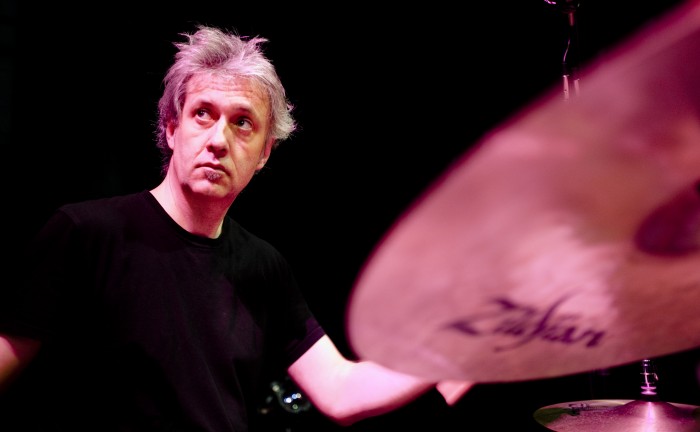
Photo by Holimage
Tony Buck — drums
Tony Buck is regarded as one of Australia's most creative and adventurous exports, with vast experience across the globe. As a drummer, percussionist, improviser, guitarist, video maker, and producer, he has been involved in a highly diverse array of projects but is probably best known around the world as a member of the trio "The Necks". Apart from The Necks, he has played, toured, or recorded with Jon Rose, Otomo Yoshihide, John Zorn, Phil Minton, Evan Parker, Lee Ranaldo, and many others. Following studies in Australia, he spent time in Japan, where he formed "Peril" with Otomo Yoshihide, before relocating to Europe in the mid-nineties. He also creates video works for use with live music performance and has had pieces shown in Tokyo, Belfast, Berlin, New York, and Sydney. Current projects include "Spill" with Magda Mayas, the New York-based trio "Glacial", and a long-standing duo with Axel Dörner.

Photo by Magnus Munk Tækker
Thorbjørn Silas Stefansson — bass
Thorbjørn Stefansson, a renowned double bassist and composer, is widely recognized as a versatile artist within the European improvised music scene. He is an integral part of both the Danish and German jazz scenes and has collaborated with numerous national and international artists. Thorbjørn is involved in several projects and released the debut album with the trio Dream Big Fish in 2024. Other releases include "Sun Ark" (2024) and "Nissen Mosh – Precious" (2022). In 2021 he received the JIB Jazz Prize for "Outstanding Soloist". Thorbjørn has toured in Denmark, Germany, Switzerland, the Netherlands, and the USA, performing at internationally acclaimed jazz festivals.
Incense

Elemi
Elemi is a fragrant resin obtained from trees of the Canarium genus, native to tropical regions, particularly the Philippines and other parts of Southeast Asia. When the bark is wounded, a soft, sticky resin seeps out, gradually hardening in the air.
Elemi has been used for centuries in perfumes, incense, and traditional medicine. In ancient times it served, much like myrrh and frankincense, as an ingredient in ointments and embalming practices, and across much of Southeast Asia it remains part of traditional healing to this day.
Burned, elemi releases a fresh, lemony, and slightly spicy scent with balsamic undertones, often described as both uplifting and calming — ideal for rituals or meditation. Its soft, sticky texture makes it especially well suited to incense making, where its rich, grounding aroma creates a soothing, spiritual atmosphere.

Dammar
Dammar resin is harvested from large tropical rainforest trees, most notably in the genera Shorea, Hopea, and Canarium, native to Southeast Asia, particularly Indonesia and Malaysia. The resin exudes from the bark as a protective response to injury and hardens into pale yellowish to nearly translucent tears or lumps — unlike many other resins, it barely darkens with age, which may be the source of its name, thought to derive from a Malay word meaning "light" or "torch."
Beyond its use as incense, dammar has historically served as a raw material for varnishes and lacquers, and remains valued today in art conservation, where its clarity and protective qualities are used to seal paintings and wooden objects. Across Southeast Asia, burning dammar has long been part of cleansing rituals intended to clear the atmosphere and invite positive energy.
Burned, dammar releases a bright, citrusy scent with notes of lemon and lime, underscored by a warm, faintly vanilla-like sweetness and a clean, resinous undertone that recalls fresh sap rather than deep, aged wood. It is considered a "lighter" resin compared to frankincense or myrrh, and blends well with other resins to add a bright top note to more complex compositions.
Incense of Music 58 - Lyatoshynsky Trio
Incense of Music 58
Lyatoshynsky Trio
A multisensory concert – Saturday, 30 November 2024, 8 pm
Mykhaylo Zakharov: violin
Artem Yasynskyy: piano
Susanne Szambelan: cello
Incense: Birch, Nard
PANDA Platforma in der Kulturbrauerei, Knaackstr. 97, 10435 Berlin
Program: Yevhen Stankovych – Trio for violin, cello and piano "Epilogy"; Felix Mendelssohn Bartholdy – Piano Trio No. 1 in D minor, op. 49; Astor Piazzolla – Las Cuatro Estaciones Porteñas
Join us for a multisensory concert at Panda Platforma and experience classical music like never before in this unique setting. The Lyatoshynsky Trio will perform an evocative program, accompanied by the earthy aromas of birch and the soothing essence of nard, creating a calming and spiritually enriching atmosphere.
For guests who are particularly sensitive to smoke, this event is not recommended.

Artists
Lyatoshynsky Trio
Lyatoshynsky Trio was founded in 2019 by winners and laureates of prestigious international competitions. The trio focuses on performing prominent works of chamber music, particularly by Ukrainian composers, and aims to disseminate unknown or rarely performed works. Their wide-ranging repertoire spans from contemporary music to works by Boris Lyatoshynsky, Valentyn Sylvestrov, Myroslav Skoryk, Beethoven, and Mendelssohn. Their debut performance at the Konzerthaus in Vienna, featuring the world premiere of Myroslav Skoryk's Piano Trio, was a great success. The trio has performed internationally, including at the Opéra Comique in Paris, the Lviv National Philharmonic, and the National Philharmonic of Ukraine in Kyiv. In 2020 the trio recorded its debut album, featuring two piano trios by Borys Lyatoshynsky, which was broadcast on BBC Radio 3, among others.
Mykhaylo Zakharov — violin
Mykhaylo Zakharov was born in Kharkiv, Ukraine. In 2005, he began his studies at the Graz University of Music in Austria with Prof. Boris Kuschnir, from which he graduated with honors. He is an active chamber musician and has performed with renowned musicians such as Boris Kuschnir, Julian Rachlin, Nikolai Znaider, and Gérard Caussé in many countries of the world. As a soloist, he has performed with the National Symphony Orchestra of Ukraine, the Kharkiv Philharmonic Orchestra, and the Dubrovnik Symphony Orchestra. Mykhaylo has been awarded prizes from the "International Music Festival" Bled, the International Beethoven Competition St. Pölten, and the Fidelio Competition Vienna. He is the founder of the Lyatoshynsky Trio.
Artem Yasynskyy — piano
Artem Yasynskyy was born in 1988 in Donetsk, Ukraine. He gave his first concert at the age of eight. He graduated with honors in piano from the Prokofiev State Music College in Donetsk, during which time he achieved numerous competition successes. Since 2010, he has been residing in Bremen, where he completed both a postgraduate and a master's program at the University of the Arts Bremen. Starting from 2015, Artem has been teaching piano as a lecturer at the University of the Arts Bremen. In the summer of 2021, Artem won the 2nd Prize and five additional awards at the Sydney International Piano Competition. He is also the recipient of the Gold Medal at the Cincinnati World Piano Competition in Ohio, USA. He has received awards in prestigious international piano competitions such as the Gina Bachauer Piano Competition in Salt Lake City, the Sendai International Music Competition in Japan, the Gian Battista Viotti International Piano Competition in Vercelli, and the Horowitz International Piano Competition in Kyiv. Artem has performed with orchestras including the Utah Symphony, the Cincinnati Symphony Orchestra, the Calgary Philharmonic Orchestra, the National Orchestra of Ukraine, the Kharkiv Philharmonic Orchestra, the Kyiv National Philharmonic Orchestra, and the Sendai Philharmonic Orchestra. In 2016, Artem performed a solo recital at Carnegie Hall in New York.
Susanne Szambelan — cello
"Flawless intonation, fine mastery of colors and dynamics, nobility of tone and intimacy of expression unite" — with those words, Pizzicato Magazine describes Susanne's debut album, released in 2013 on the Polish label DUX, featuring Dvořák's Cello Concerto. Polish cellist Susanne Szambelan was born in New York in 1993 and grew up in Poznań, Poland. At the age of 15 she made her debut with the Kaunas City Symphony Orchestra, leading to numerous solo performances throughout Europe. In 2014 Susanne moved to Berlin, where she completed her Bachelor's and Master's degrees at the Hochschule für Musik "Hanns Eisler" under Prof. Stephan Forck and Prof. Claudio Bohorquez. Her passion for chamber music has led to collaborations with Daniel Hope, Boris Brovtsyn, and the Vogler Quartett, as well as frequent performances with the Karajan Academy of the Berlin Philharmonic. She plays a cello by Jean-Baptiste Vuillaume and is based in Berlin.

Incense

Birch
The birch (genus Betula) is a deciduous tree instantly recognizable by its striking, luminous white bark. Its name derives from an ancient root word for "bright," capturing the shimmering quality of a bark that often peels in thin, paper-like layers on younger trees. As a resilient pioneer species, birch is one of the first trees to establish itself on disturbed or barren ground, and one of the earliest to unfurl its small, delicate leaves each spring.
Across Slavic and Scandinavian traditions, birch has long marked the turning of the seasons: its flexible branches were bound into bundles used in the Russian banya to invigorate skin and circulation, and a freshly cut birch maypole traditionally announced the arrival of spring in many parts of Europe. It also appears in folklore as the material of the witch's broom and as a recurring symbol of cleansing and renewal — a tree associated, again and again, with crossing thresholds.
When burned as incense, birch bark, wood, or leaves release a fresh, woody, and subtly sweet fragrance that is both calming and uplifting. Its smoke is traditionally believed to hold strong purifying properties, clearing away stagnant, negative energy and making space for something new. A birch burning is thought to awaken the spirit, foster creativity, and provide courage for fresh starts.

Nard (Spikenard)
Nard, also known as spikenard (Nardostachys jatamansi), is a flowering plant native to the Himalayan regions of India, Nepal, and China. Its fragrant essential oil is extracted from the roots and rhizomes of the plant, which grows at high altitude.
For thousands of years, nard has been considered highly precious, used above all in religious ceremonies across the Middle East and the Mediterranean. It is mentioned in numerous historical texts, including the Bible, where it served for anointing and as a symbol of luxury and devotion. In Ayurvedic and traditional Tibetan medicine, nard has long been used to relieve stress, anxiety, and insomnia, as well as to treat digestive and skin ailments.
Burned, nard releases a strong, earthy, musky aroma with sweet, woody undertones. Its calming, soothing character has long made it a treasured incense for moments of stillness and inward reflection.
Incense of Music 57 - Anissegos, Bacikin
Incense of Music 57
PANDOMIMA
A multisensory concert – Thursday, 24 October 2024, 8 pm
Damir Bačikin: trumpet
Antonis Anissegos: piano
Incense: Laurel, Kyphi
PANDA Platforma in der Kulturbrauerei, Knaackstr. 97, 10435 Berlin
You are cordially invited to PANDOMIMA with Damir and Antonis, a unique synthesis of contemporary music, modern jazz, and Slavic sounds. Experience melodies that are both memorable and infinite, in an evening filled with diverse musical influences that transcend boundaries. This multisensory event will feature incense burning during the concert, adding laurel and kyphi to the immersive atmosphere, blending the aromatic richness of ancient rituals with the refreshing essence of victory and purification.
For guests who are particularly sensitive to smoke, this event is not recommended.
Artists

Photo by Fabio Dondero
Damir Bačikin — trumpet
Damir Bačikin has firmly established himself as a versatile and accomplished trumpet player in Berlin. With a career spanning over 25 years, he captivates audiences with his unique and recognizable sound. Originally from Serbia, Damir is a two-time winner of the Serbian national trumpet competition. In 2005, he moved to Berlin to study under Professor William Forman at the "Hanns Eisler" Institute. Damir has been a prominent figure in the field of new music for over 15 years, collaborating with composers such as Helmut Lachenmann, Vinko Globokar, and György Kurtág. Playing as a member of the ensemble Unitedberlin since 2009, he has performed over 100 concerts under the artistic direction of Vladimir Jurowski. His latest solo debut on Deutschlandradio Kultur in late 2023 received high praise for his rendition of Ligeti's "Mysteries of the Macabre." In spring 2024, Damir won the trumpet audition for the Symphonic Wind Orchestra of the Bundespolizei Berlin.

Photo by Fabio Dondero
Antonis Anissegos — piano
Antonis Anissegos, based since 1998 in Berlin, works as a composer, pianist (interpreter/improviser), and electronic musician (alias "unu"). In 2024 he started the trio Air, Bee & Tree, as well as the duo aNo with vocalist Alex Nowitz. His current projects include Trio IAMA, ΣΩΜΑ, and Card Castle. He has collaborated with the Berliner Ensemble, the Neuköllner Oper, and Novoflot, and has been a frequent guest of Ensemble Adapter since 2015. Since 2006 he has performed with butoh dancer Yuko Kaseki as the duo KAYA. He began playing piano at the age of seven, studied at the State Conservatory of Thessaloniki, the Ferenc Liszt Academy in Budapest, and composition in Vienna and Cologne, before graduating from the Berlin University of the Arts (UdK). His compositions have been performed by Ensemble Modern and Ensemble Mosaik, among others, and he appears on over 60 recordings mainly in the field of contemporary creative music.
Incense

Laurel (Laurus Nobilis)
Bay laurel is an evergreen shrub or small tree native to the Mediterranean, capable of reaching up to ten metres in height. Its glossy, leathery dark-green leaves carry a bold, spicy aroma and contain essential oils with anti-inflammatory properties.
In ancient Greece, laurel was sacred to the god Apollo, and wreaths woven from its branches crowned the victors of athletic and poetic competitions — a tradition that still echoes today in the word "baccalaureate" (literally, "laurel berry"). In the Bible, laurel is often an emblem of prosperity and fame, and in Christian tradition it symbolizes the resurrection of Christ.
Burned as incense, laurel gives off a warm, spicy-resinous scent with a faint, sweet sharpness. The dried leaves are traditionally burned to energetically clear a space and create a focused, ceremonial atmosphere — a scent associated with clarity and a certain sense of dignity.

Kyphi
Kyphi is not a single plant but an ancient Egyptian incense blend made from numerous aromatic ingredients — resins such as myrrh and frankincense, various herbs, spices, and oils, sometimes wine, honey, and floral elements. The mixture was prepared as a paste and shaped into cones or sticks.
Kyphi was burned in ancient Egyptian temples during religious ceremonies and was considered purifying and sacred — a scent meant to forge a connection between the senses and the divine. Its exact composition varied over the centuries and across regions, but the incense remained a fixture of both temple worship and daily life, valued for its pleasing aroma and its perceived health benefits.
Burned, kyphi releases a rich, complex aroma — at once sweet and earthy, evoking a sense of calm and spiritual elevation. To this day, kyphi stands as a symbol of ancient Egyptian spirituality and the close bond between scent, meditation, and healing.
(Deutsch) Incense of Music 56/ Filippou, Lucaciu
Incense of Music 56
A multisensory concert – Friday, 7 September 2024, 8 pm
Evi Filippou: vibraphone
Robert Lucaciu: double bass
Zuza Jasinska: voice
Incense: Frankincense from Somalia and Oman
PANDA Platforma in der Kulturbrauerei, Knaackstr. 97, 10435 Berlin
We are thrilled to announce a unique and immersive concert experience featuring the exceptional talents of Evi Filippou on vibraphone and Robert Lucaciu on double bass. This special event will be enhanced by the evocative fragrances of frankincense from Somalia and Oman, creating an exquisite multisensory journey. Tonight, two varieties of frankincense are burned side by side, from two of the world's most significant regions of origin — each with its own distinct character.
This event is not recommended for people who are sensitive to smoke.
Frankincense from Somalia
Frankincense from Oman

Photo by Leon Maria Plecity
Incense appeals to one of the most neglected senses of modern times: the olfactory. It affects the human spirit, shapes its perception, and opens new experiences. These qualities suggest combining this ancient art, present in every culture, with music in a synesthetic project between listening and smelling, intensifying the experience. 54 concerts, 91 musicians, 13 locations, wood, resin, bark, roots, leaves, and flowers from 65 different plants. Until now.

Artists
Evi Filippou & Robert Lucaciu
The dynamic collaboration between the Greek vibraphonist and the German-Romanian double bass player has birthed an artistic partnership that defies the constraints of rigid genre categorizations. Their musical journey draws on a wide range of sources, from the intricate compositions of 20th- and 21st-century classical music to the spirited rhythms of jazz and evocative tales woven within folklore traditions. The intertwining of their unique backgrounds results in an exquisite tapestry of sound, where the vibrancy of Balkan heritage converges with the cosmopolitan influence of contemporary European musical landscapes. The duo's exploration resonates with a shared pursuit of personal expression — an auditory experience that is both timeless and contemporary.

Photo by Leon Maria Plecity
Incense

Boswellia (Frankincense)
Frankincense, also known as olibanum, is the aromatic resin of trees in the genus Boswellia — small, deciduous trees that grow in the arid, rocky regions of the Arabian Peninsula and the Horn of Africa, particularly Oman, Yemen, and Somalia. The resin is harvested through deliberate incisions in the bark; the milky sap that seeps out hardens in the air into glassy, yellowish-brown tears.
Frankincense is one of humanity's oldest trade goods, carried for millennia along the legendary Incense Route from southern Arabia to the Mediterranean. It was used in ancient Egypt for temple rites and embalming, is named in the Bible as one of the three gifts brought by the Magi to the infant Jesus, and remains central to Christian, Jewish, Islamic, and Hindu ceremony today.
Burned, frankincense releases a rich, earthy aroma with citrusy and spicy nuances. It is still believed to have calming, meditation-enhancing properties, valued as much in mindfulness and meditation practice today as it has long been in traditional religious ceremony.
Incense of Music 55 - Rondo Projects Edition Berlin No. 2
Incense of Music 55
Rondo Projects — Edition Berlin No. 1
A multisensory concert – Friday, 24 May 2024, 8 pm
Ehsan Sadigh: guitar
Mazyar Younesi: piano, voice
Roshanak Rafani: percussion
Niki Yaghmaee: viola
Golsana Shenasaei: cello
Ruben Staub: clarinet, bass clarinet
Incense: Mastic, Galbanum
PANDA Platforma in der Kulturbrauerei, Knaackstr. 97, 10435 Berlin
In its 55th concert, Incense of Music presents a musical project by Iranian musicians and their international collaborators. Rondo Projects takes its name as a testament to a series of collaborative musical endeavors initiated by Ehsan Sadigh, an accomplished composer and guitarist, and Mazyar Younesi, a versatile composer and pianist. Together with the multifaceted percussionist Roshanak Rafani, they began their musical journey in October 2023 in Berlin. Each edition of Rondo Projects sees the trio collaborating with diverse musicians and instrumentalists — for this Edition Berlin No. 1, with viola player Niki Yaghmaee, cellist Golsana Shenasaei, and clarinetist Ruben Staub. The music of Rondo Projects reflects the lived musical experience of its members, placing significant emphasis on improvisation both within the composition process and on stage.
For guests who are particularly sensitive to smoke, this event is not recommended.
Galbanum
Mastic
Mastic

Artists
Ehsan Sadigh — guitar
Ehsan Sadigh, born 1980 in Iran, is an accomplished Montreal-based artist specializing in guitar and composition. He is a well-established composer, renowned for his contributions to film scores and ensemble performances. Ehsan is the founder and leader of Quartet Diminished, a contemporary jazz band with three albums published by Hermes Records. Collaborating with musicians such as Colin Bass, Tony Levin, and Markus Reuter, an upcoming album is set for release by MoonJune Records in 2024. As an individual composer and performer, he has collaborated on various albums, including "AX," published by Discordian Records, alongside Spanish drummer Vasco Trilla and Barcelona-based saxophonist Liba Villavecchia.
Mazyar Younesi — piano, voice
Mazyar Younesi is an Iranian pianist, composer, conductor, and singer. His musical journey began with learning the tombak. He later taught himself the setar, studying the Radif of Iranian music. He chose piano as his primary instrument and completed his M.A. in composition at the University of Tehran. Since 2008, Mazyar Younesi has been involved with the Austrian Cultural Forum, and has served as artistic director and conductor of the Iran-Austria Symphony Orchestra (AISO) since 2014. He composes music for numerous films, series, and animations.
Roshanak Rafani — percussion
Roshanak Rafani, born 1994 in Iran, is a multi-dimensional Berlin-based percussionist. Her diverse background in both Iranian and classical music has enabled her to transcend conventional genre boundaries. Specializing in instruments such as Daf and Tombak, she has showcased her talents internationally, including with the Mahbanoo Ensemble. A graduate of percussion performance from the Barenboim-Said Akademie in Berlin, she has extensive experience performing with orchestras such as the Austro-Iranian Symphony Orchestra (AISO), Junge Philharmonie Berlin, and the West-Eastern Divan Orchestra under Daniel Barenboim.
Niki Yaghmaee — viola
Golsana Shenasaei — cello
Ruben Staub — clarinet, bass clarinet
Incense

Mastic
Mastic, also known as mastiha, is a resin from the mastic tree (Pistacia lentiscus), an evergreen shrub found across the Mediterranean, though the resin from the Greek island of Chios is especially renowned. Incisions in the bark release a clear sap that hardens in the air into brittle, pale yellow tears.
On Chios, mastic has been harvested since antiquity and was known in ancient Greece and Rome as a chewing gum and flavoring agent. Traditional Chios mastic harvesting today holds protected designation of origin status within the EU. Over the centuries, the resin also found wide use in traditional medicine, including for digestive support.
As incense, mastic gives off a sweet, woody fragrance with subtle hints of pine and citrus — often described as refreshing and uplifting. It is traditionally used in religious ceremonies, meditation, and aromatherapy, believed to promote relaxation, reduce stress, and enhance focus.

Galbanum
Galbanum is the resin of Ferula gummosa, a tall perennial plant in the carrot family, native to the mountainous regions of Iran and Central Asia. Incisions made in the roots and lower stem release a milky sap that hardens into a yellowish-brown, gum-like resin.
Galbanum ranks among the oldest known incense materials, named in the Book of Exodus as one of the sacred ingredients of the Ketoret incense burned in the Temple of Jerusalem. It was also used in ancient Egypt and in Greco-Roman medicine, valued both as a remedy and as a component of ritual incense.
Unlike many sweet or resinous incenses, galbanum releases a sharp, green, almost bitter-herbaceous scent with hints of freshly cut grass, pine needles, and a faintly musky depth. This unusual, unmistakably "green" note makes it a prized top note in perfumery, and it has traditionally been associated with protection and energetic cleansing.
Incense of Music Nr. 54/ Hayden Chisholm Quartet
Incense of Music 54
Chisholm's Kinetic Chain
A multisensory concert – Friday, 17 May 2024, 8 pm
Hayden Chisholm: saxophone
Achim Kaufmann: piano
Petter Eldh: bass
Jonas Burgwinkel: drums
Incense: Myrrh, Rosebay
PANDA Platforma in der Kulturbrauerei, Knaackstr. 97, 10435 Berlin
Hayden Chisholm, a masterful saxophonist and composer, brings a unique blend of influences to his music, transcending traditional boundaries to create an immersive sonic experience. Drawing inspiration from jazz, classical, folk, and world music traditions, Chisholm's compositions are marked by their depth, emotional resonance, and exquisite craftsmanship. As the protagonist of the 54th concert of the "Incense of Music" series, Chisholm and his quartet promise an evening of musical enchantment like no other. The scent of myrrh and rosebay accompanies the music, adding an extra layer of sensory delight to every note.
For guests who are particularly sensitive to smoke, this event is not recommended.
Artists
Hayden Chisholm — saxophone
Born in Auckland and raised in New Plymouth, Hayden Chisholm has risen to become one of Europe's most distinctive and innovative voices on the saxophone. Encouraged by his parents, he began piano at the age of eight and clarinet two years later, with his first saxophone experience coming in local school and Dixieland bands. At seventeen he moved to Switzerland and soon began his music studies in Germany. After studying in Cologne on a DAAD scholarship, he continued his musical studies in Japan and India. His compositions have been recorded by BBC and WDR radio, and he has toured extensively worldwide as a soloist. He has created music for installations by artist Rebecca Horn and composed music for the acclaimed film "Moon Mirror Journey." He is credited with developing a new microtonal language for saxophone in the mid-1990s, and in 2011 he launched the Moontower Foundation Music Edition.
Achim Kaufmann — piano
Achim Kaufmann (b. 1962 in Aachen) grew up in a musical family — his mother a piano teacher, his father a conductor. From 1984 he studied at the Cologne music conservatory under Frank Wunsch and Rainer Brüninghaus, followed by postgraduate study at the Banff Centre for the Arts in Canada with Dave Holland, Steve Coleman, Muhal Richard Abrams, George Lewis, and Richie Beirach, as well as private lessons with Steve Lacy in Paris. His long-standing projects include the piano trio grünen (with Christian Lillinger and Robert Landfermann), a duo with Amsterdam-based clarinetist Michael Moore, and the improvising trio Kaufmann/Gratkowski/de Joode. He received the SWR Jazz Prize in 2001 and the Albert Mangelsdorff Prize in 2015. Since 2018 he has held a professorship for jazz piano and ensemble at the Franz Liszt School of Music Weimar and lives in Berlin.
Petter Eldh — bass
Frans Petter Eldh (b. 19 September 1983 in Gothenburg) is a Swedish jazz bassist who worked predominantly in Denmark before settling in Berlin in 2009. He grew up in a family of artists — his mother is accordionist Kiki Eldh. He began playing guitar at eight, switched to double bass three years later, and turned to jazz at thirteen under the influence of Charlie Parker. He studied at Uddevalla Musikhochschule (1999–2002) and the Skurup Jazz School (2002–2004) before completing his master's at the Rhythmic Music Conservatory Copenhagen in 2009. Eldh works with artists including Django Bates, the trio Punkt.Vrt.Plastik (with Kaja Draksler and Christian Lillinger), and numerous other projects such as Amok Amor and Koma Saxo. He received the German Jazz Prize in 2022.
Jonas Burgwinkel — drums
Jonas Burgwinkel (b. 1981 in Aachen) is a German drummer working in creative jazz. At seventeen he began his studies at the Maastricht Conservatory, followed by a one-year scholarship at Berklee College of Music in Boston and drum studies at the Cologne University of Music, completed in 2009, including lessons with Jamey Haddad and Ralph Peterson. Since 2006 he has played in the Pablo Held Trio with Robert Landfermann and Pablo Held, and in 2009 was a founding member of the Cologne jazz collective KLAENG. He has toured every continent, performing with artists including John Scofield, Chris Potter, Lee Konitz, and Dave Liebman. Burgwinkel received the ECHO Jazz Award 2012 for best drummer, as well as the WDR and SWR Jazz Prizes, and has been professor of jazz drums at the Cologne University of Music and Dance since 2011.
Incense

Myrrh
Myrrh comes from small, thorny trees of the genus Commiphora, native to the dry, arid regions of Northeast Africa and the Middle East — particularly Somalia, Yemen, and Ethiopia. The treasured resin is not the wood or sap, but a fragrant gum that naturally oozes from the bark to heal wounds. Harvesters make deliberate cuts to encourage more of this valuable secretion, which hardens into tear-shaped, reddish-brown granules over several weeks.
Myrrh has been traded across the ancient world for over 4,000 years, carried along the same incense routes that connected Arabia, Egypt, and the Mediterranean. The Egyptians used it in embalming and temple rites; it was burned as an offering in Jewish, early Christian, and Islamic traditions alike, and appears in the Bible as one of the three gifts brought to the infant Jesus, alongside gold and frankincense.
When burned, myrrh releases a rich, complex aroma that is simultaneously earthy, bittersweet, and slightly medicinal. Unlike floral scents, it provides a profound, grounding base note, still used today for meditation, temple ceremonies, and moments that call for gravity and stillness rather than lightness.

Rosebay (Caucasian Rhododendron)
The Caucasian rhododendron (Rhododendron caucasicum) is an evergreen shrub with leathery, dark green leaves and large, bell-shaped flower clusters, growing in the mountain forests of the Caucasus at altitudes above 2,000 metres.
Across the mountain regions of Asia and the Caucasus, rhododendron has long been associated with the grandeur of high-altitude landscapes and with rituals honoring nature. Its use as incense is far less widespread than classic resins, which makes it a rarer, more distinctive choice.
Burned, rosebay releases a delicate, sweet, floral scent with a faint spiciness, reminiscent of fresh blossoms in a garden. Its aroma is associated with purity, beauty, and spiritual renewal, creating an atmosphere of quiet, flowering delicacy.
Incense of Music Nr. 53 - Nebbia, Parkins
Incense of Music 53
A multisensory concert – Friday, 9 February 2023, 8 pm
Andrea Parkins: electronically processed accordion, amplified objects, laptop electronics
Camila Nebbia: tenor saxophone
Incense: Copal, Juniper
PANDA Platforma in der Kulturbrauerei, Knaackstr. 97, 10435 Berlin
Incense of Music is back with a highly experimental concert by a trio with Camila Nebbia, Andrea Parkins, and a surprise guest. Parkins & Nebbia, both Berlin-based musicians, perform with a surprise guest at a concert of free improvised music. Performing for the first time live, their music is characterized by its boundless exploration and experimentation.
For guests who are particularly sensitive to smoke, this event is not recommended.
Juniper
Copal

Artists
Andrea Parkins — electronically processed accordion, amplified objects, laptop electronics
Born in Pittsburgh, USA, Andrea Parkins now lives in Berlin. She is an electroacoustic musician, composer, and sound artist who engages with interactive electronics as a compositional and performative process. Working with an array of sonic materials — electronically processed accordion, custom-built software, amplified objects, and electronic feedback — her performances and installations explore connections between body, materiality, sound, and space. She has collaborated with artists such as Ute Wassermann, Magda Mayas, George E. Lewis, Nels Cline, and The Necks. Her work has been presented at venues including the Whitney Museum of American Art, Café Oto, Kunsthalle Basel, and Musée d'Art Moderne et Contemporain Strasbourg, and at festivals including NEXT/Bratislava, Cyberfest/St. Petersburg, and Music Unlimited/Wels. She has held residencies at the Rauschenberg Residency in Florida and Elektronmusikstudion (EMS) Stockholm, among others. In 2022–2023 she was a fellow of the Berlin Artistic Research Grant Programme.
Camila Nebbia — tenor saxophone
Camila Nebbia is a saxophonist, composer, improviser, visual artist, curator, and educator. From Buenos Aires and now based in Berlin, she has released several albums as bandleader and solo performer, including "Aura" (ears&eyes records, 2020), "Corre el río de la memoria" (ramble records, 2021), and "Una ofrenda a la ausencia" (Relative Pitch Records, 2023). She has played and recorded with numerous international artists, including Patrick Shiroishi, Tom Rainey, and Susana Santos Silva. She is co-creator and curator of the interdisciplinary concert series "La Jaula se ha vuelto pájaro y se ha volado" and the festival "Guillotina Fest," and runs the independent label "Disfigured Rivers" based in Berlin. She has performed at festivals including Winter Jazz Fest NYC, Buenos Aires Jazz Festival, and Ultima Oslo. She studied classical saxophone at the "Astor Piazzolla" Conservatory, jazz at the "Manuel de Falla" Conservatory, and the CoPeCo master's program across institutions in Estonia, Sweden, France, and Germany.
Incense

Copal
Copal refers to the tree resin of several tropical species, most notably of the genus Protium, harvested across Central and South America. It forms as a sticky secretion where the bark is wounded and hardens in the air into lumps of varying colour and texture — from pale, amber-like gold copal to milky-white or greenish variants, depending on the species and region.
In Mesoamerica, copal has been used for ceremonial burning since pre-Columbian times and remains a central part of spiritual practice for many indigenous communities across Central America today — from cleansing rituals to large ceremonial burners, known as sahumerios, in which the resin is burned in significant quantities.
Burned as incense, copal releases a bright, resinous-sweet scent with citrus and faintly woodland notes, noticeably fresher than heavier resins like frankincense.

Juniper
Common juniper is a hardy, often low-growing conifer with the largest natural range of any woody plant on earth — spanning from the Arctic down through temperate mountain regions of North America, Europe and Asia. Its needle-like leaves grow in whorls of three, and its berry-like, blue-black cones take around eighteen months to ripen. The slow-growing, dense wood is prized for its pleasant scent and decorative grain.
Burned as incense, juniper gives off a clear, resinous-fresh scent with a faint, berry-like sweetness — invigorating yet grounding. Across much of Northern and Central Europe, juniper smoke has traditionally been used to cleanse spaces and ward off negative influences, a use closely related to frankincense that earned it the folk name "German sandarac".
Incense of Music Nr. 52 - Shilkloper, Minami
Incense of Music 52
A multisensory concert (stream) – Saturday, 27 November 2021, 6 pm
Arkady Shilkloper: French horn, didgeridoo
Kenji Minami: drums
Incense: White Sage
Private location, Lychener Strasse, Berlin
Due to the corona problematic, Incense of Music is proposing in this difficult time concerts of a rather private nature via stream. Kenji Minami, drummer from Japan, met the Russian horn virtuoso Arkady Shilkloper for an improvised jam session. We prepared the room with white sage.

Artists
Arkady Shilkloper — French horn, didgeridoo
Arkady Shilkloper (born 17 October 1956) is a Russian multi-instrumentalist — horn, alphorn, flugelhorn — and composer now based in Germany. Born in Moscow, he began playing alto horn at the age of six. After two years of military service, he studied at the Moscow Gnessin Institute from 1976 to 1981, joining the orchestra of the Bolshoi Theatre at the same time. Since 1988 he has collaborated with pianist Mikhail Alperin, and since 1990, together with Sergey Starostin, as the Moscow Art Trio. He has performed with Lionel Hampton, Lew Soloff, and the Vienna Art Orchestra, among others, and released five solo albums. Since 1994 he has been a member of the ensemble "Pago Libre." Shilkloper is widely regarded as one of the musicians who helped shape extended playing techniques for both French horn and alphorn.
Kenji Minami — drums
Kenji Minami is a Berlin-based Japanese drummer who redefines the boundaries of musical expression as an experimental improvisation musician. His drumming avoids regular rhythm and fixed patterns, instead combining vibrations meant to resonate with the mind and body of the listener — an approach he describes as "Zen drumming." Minami has performed at venues including artloft.berlin, where he gave a musical performance as part of an exhibition opening in 2019. His practice explores the relationship between sound and silence, and awareness of the present moment.
Incense

White Sage
White sage is an evergreen perennial shrub native to the southwestern United States and northwestern Mexico, particularly the coastal sage scrub habitats of Southern California and Baja California. It typically grows 1.3 to 1.5 metres tall, with whitish-green, evergreen leaves densely covered in fine hairs that hold aromatic oils — an adaptation to the aridity of its habitat.
For numerous Indigenous peoples of California, including the Chumash, Cahuilla, and Tongva, white sage has been a sacred plant for generations, used in purification ceremonies and spiritual practice. In recent decades, growing commercial demand has led to overharvesting of wild populations, prompting many Indigenous communities and conservationists to ask that only cultivated — not wild-harvested — plants be used, and that the plant be treated with respect.
The dried leaves are traditionally bundled into smudge sticks and burned, releasing a strongly aromatic, herbaceous, camphor-like scent with a faint sweetness. Its smoke is believed to have cleansing properties, clearing negative energy from a space and promoting mental clarity and relaxation.
Incense of Music 51, Rafalimanana: Debussy
Incense of Music 51
Yannick and Friends — Episode 4
A multisensory livestream concert – Saturday, 26 June 2021, 8 pm
Yannick Rafalimanana: piano
Incense: Palo Santo
Livestream concert
Welcome to the fourth episode of the series "Yannick and Friends." For this edition, Yannick Rafalimanana was pleased to introduce the Berlin-based project "Incense of Music" as co-host — the pair's very first digital collaboration. For this special occasion, Yannick selected piano works by Debussy, those ever-inspiring impressionist masterpieces that transport listeners to the most remote corners of the imagination. The program was performed on a historical 1896 Bechstein piano, while the room was incensed with Palo Santo by Fabio Dondero and Dominik Breider. The concert was professionally recorded to offer a full audiovisual experience at home.

Photo by Fabio Dondero
Artists
Yannick Rafalimanana — piano
French pianist Yannick Rafalimanana has developed an international concert career as a recitalist and chamber musician. Recent performances have taken him to halls all over the world, including the Berlin Philharmonie, the Elbphilharmonie Hamburg, Wigmore Hall, Konzerthaus Berlin, Köln Philharmonie, the Vienna Konzerthaus, the Shanghai Symphony Orchestra Chamber Hall, and the Kennedy Center in Washington. He has made chamber music with countless artists, including Kim Kashkashian, Steven Isserlis, Noah Bendix-Balgley, Arnold Steinhardt, and Itzhak Perlman. Born in Lille, he studied at the Conservatory of Lille and later the Paris Conservatoire, before earning his graduate diploma at the New England Conservatory in Boston under Vivian Weilerstein. He taught chamber music at the Folkwang University of Arts in Essen from 2015 to 2018. In 2022 he launched "Yannick's Salon," a concert series in his Berlin neighbourhood.
Incense

Palo Santo
Palo Santo — Spanish for "holy wood" — comes from the tree Bursera graveolens, native to the dry coastal forests of Ecuador, Peru, and neighbouring regions of South America. Its aromatic wood is traditionally never cut from a living tree, but collected only years after the tree has died naturally, once the resin has fully developed within the wood.
The Inca and other pre-Columbian cultures of South America already used Palo Santo for spiritual cleansing rituals, to ward off negative energy, and in traditional medicine. In recent years, sharply rising global demand — driven by its spread through wellness and incense practices worldwide — has raised sustainability concerns much like those surrounding white sage.
Burned, Palo Santo releases a warm, sweet, woody scent with notes of pine, mint, and citrus. It is traditionally burned as sticks or shavings, believed to dispel negative energy and promote calm, clarity, and creativity.
Incense of Music 49 - Dhalgren in Duo STREAMING
Incense of Music 49
Dhalgren in Duo — Songs from a Dystopian Utopia
A multisensory concert – Friday, 30 May 2020, 8 pm
Chris Dahlgren: vocals, guitar, viola da gamba, composition
Evi Filippou: voice, vibraphone, drums
Incense: Laurel
Streaming from PANDA Theater in der Kulturbrauerei, Knaackstr. 97, 10435 Berlin
The virus brings new challenges: no audience at the concerts, video and audio streaming instead of the live experience. But how does it work with scents and incense in the virtual world? We're finding out.
Chris Dahlgren (voice, guitar, viola da gamba, baglama) and Evi Filippou (voice, vibraphone, drums) performed songs from the new album "Songs From A Dystopian Utopia" in a live simulcast from PANDA Theater. Normally performing as a four- or five-piece band, in this reduced duo formation Dahlgren and Filippou dig into the intimate corners and landscapes of Dahlgren's songs, which are truly cross-genre and impossible to categorize.
The album is a suite about dystopias and utopias, about abysses and unexplored corners of the self — and at the same time an album about Berlin. Dahlgren was influenced by older science fiction works such as Aldous Huxley's "Brave New World" and the novels of brothers Arkady and Boris Strugatsky. Music journalist Wolf Kampmann described the album as a descent from Berlin's nocturnal surface into a darker, subterranean world full of cobwebs and hidden beauty — ultimately more utopia than dystopia.

Artists
Chris Dahlgren — vocals, guitar, viola da gamba, composition
Chris Dahlgren (b. 1961 in New York City) is an American jazz bassist and polyinstrumentalist. Dahlgren, who grew up in Denver, played the cello as a child before switching to the bass. He studied jazz at the University of Cincinnati College-Conservatory of Music until 1986 and composition and experimental music at Wesleyan University until 2003, studying with Anthony Braxton, Alvin Lucier, and Christian Wolff. He performed as a sideman with musicians such as Joe Lovano, Charles Tolliver, and Herb Ellis. In Berlin he quickly became a creative driving force in the scene, including in the bands Johnny La Marama and Lexicon, as well as alongside Gebhard Ullmann. He later moved increasingly toward songwriting, singing, and guitar, founding the band Dhalgren, named after Samuel Delany's dystopian novel of the same name. Since 2003, he has been teaching ensemble playing at the Hochschule für Musik "Hanns Eisler" in Berlin.
Evi Filippou — voice, vibraphone, drums
Evi Filippou is a vibraphonist and percussionist with experience in chamber music as well. As a member of the band Dhalgren, she contributed to their second album, "Songs From A Dystopian Utopia" (2020), released on Boomslang Records.
Incense

Laurel (Laurus Nobilis)
Bay laurel is an evergreen shrub or small tree native to the Mediterranean, capable of reaching up to ten metres in height. Its glossy, leathery dark-green leaves carry a bold, spicy aroma and contain essential oils with anti-inflammatory properties.
In ancient Greece, laurel was sacred to the god Apollo, and wreaths woven from its branches crowned the victors of athletic and poetic competitions — a tradition that still echoes today in the word "baccalaureate" (literally, "laurel berry"). In the Bible, laurel is often an emblem of prosperity and fame, and in Christian tradition it symbolizes the resurrection of Christ.
Burned as incense, laurel gives off a warm, spicy-resinous scent with a faint, sweet sharpness. The dried leaves are traditionally burned to energetically clear a space and create a focused, ceremonial atmosphere — a scent associated with clarity and a certain sense of dignity.
More Videos
Incense of Music 48 - Chisholm, Tschabaschwili
Incense of Music Nr. 48
A multisensorial concert – Thursday, 5th March 2020, 8 p.m.
Hayden Chisholm, saxophone. Meri Tschabaschwili, piano – Fabio Dondero and Dominik Breider (Incense burning): eucalyptus and lemongrass.
PANDA Theater in der Kulturbrauerei, Knaackstr. 97, 10435 Berlin

Incense of Music 48/ Chisholm, Tschabaschwili
Incense of Music 48
A multisensory concert – Thursday, 5 March 2020, 8 pm
Hayden Chisholm: saxophone
Meri Tschabaschwili: piano
Incense: Eucalyptus, Lemongrass
PANDA Theater in der Kulturbrauerei, Knaackstr. 97, 10435 Berlin
An evening bringing together two very different musical languages: the searching, microtonal sound world of saxophonist Hayden Chisholm and the virtuosic playing of Meri Tschabaschwili, deeply rooted in the Russian piano tradition. Between improvisation and composition, between Eastern contemplation and pianistic precision, a soundscape emerges of meditative searching and quiet intensity — an atmosphere not unlike the contemplative, inward-turning piano world of Gurdjieff. The evening is accompanied by the fresh, clarifying scents of eucalyptus and lemongrass, immersing the room in an alert, open clarity.

Artists
Hayden Chisholm — saxophone
Born in Auckland and raised in New Plymouth, Hayden Chisholm has risen to become one of Europe's most distinctive and innovative voices on the saxophone. Encouraged by his parents, he began piano at the age of eight and clarinet two years later, with his first saxophone experience coming in local school and Dixieland bands. At seventeen he moved to Switzerland and soon began his music studies in Germany. After studying in Cologne on a DAAD scholarship, he continued his musical studies in Japan and India. His compositions have been recorded by BBC and WDR radio, and he has toured extensively worldwide as a soloist. He has created music for installations by artist Rebecca Horn and composed music for the acclaimed film "Moon Mirror Journey." He is credited with developing a new microtonal language for saxophone in the mid-1990s, and in 2011 he launched the Moontower Foundation Music Edition.
Meri Tschabaschwili — piano
Meri Tschabaschwili was born on 16 October 1985 in Tbilisi, Georgia. She began playing piano by ear and composing her own music at the age of five, and gave her first solo concert in Germany at the age of seven. From 1994 to 2005 she lived and studied in St. Petersburg, first at the specialized music school and later at the conservatory under Prof. Oleg Malov. During this time she gave regular piano recitals, performed as a soloist with orchestras, and won numerous competitions, including the international piano duo competition "Brother and Sister" in 1996 and first prize at the International Rachmaninoff Piano Competition in 1997. In 1998 she won the Borodin Piano Competition and was awarded the "Prometheus Star" of the city of St. Petersburg. Since 2005 she has lived in Germany, continuing her studies at the Cologne University of Music under Prof. Vasily Lobanov and Prof. Andreas Frölich. In 2007 she became a scholarship holder of the Yehudi Menuhin Foundation "Live Music Now," and in 2013 of the Villa Musica Foundation. Meri Tschabaschwili performs as a soloist with orchestras including the Junge Philharmonie Köln and has appeared regularly at the "Amadeo" and "Euriade" festivals since 2008. Her concert tours have taken her across Europe and as far as China.
Incense

Eucalyptus
Eucalyptus is a genus of evergreen trees native to Australia, where it comprises several hundred species. Characteristic features include rapid growth, often smooth, peeling bark, and narrow, leathery leaves rich in essential oils.
For Aboriginal Australians, eucalyptus has long been part of traditional medicine, its leaves used to treat wounds, fever, and respiratory ailments. In the 19th century the tree spread to Europe and other continents, where its oil quickly gained importance in folk medicine and, later, industrial aromatherapy.
Burned as incense, eucalyptus releases a sharp, penetratingly fresh, camphor-like scent that seems to open the airways instantly. It is traditionally used to purify the air of a room, clear the mind, and support focused, alert thinking.

Lemongrass
Lemongrass (Cymbopogon citratus) is a tall, clumping grass with narrow, tapering leaves, native to the tropical regions of South and Southeast Asia. Its leaves and stalks contain citral, the essential oil responsible for the plant's characteristic citrus fragrance.
In Southeast Asian cuisine, particularly Thai and Vietnamese cooking, lemongrass has been an essential ingredient for centuries. It also plays an important role in the traditional medicine of South and Southeast Asia and in Ayurveda, used to support digestion and calm the mind. Only more recently has the plant also spread worldwide as an incense and aromatherapy material.
Burned, lemongrass releases a fresh, sharp citrus scent that is invigorating and uplifting. It is valued for freshening a space, clearing the mind, and creating an alert, focused atmosphere.
Incense of Music 47 - Joolaee, Uskov
Incense of Music 47
A multisensory concert – Saturday, 8 February 2020, 8 pm
Misagh Joolaee: kamancheh
Andrei Uskov: guitar
Incense: Cacao, Vanilla
PANDA Theater in der Kulturbrauerei, Knaackstr. 97, 10435 Berlin
We look forward to the second event of the year, a double concert by two virtuosos on very different instruments: Misagh Joolaee, kamancheh, and Andrei Uskov, guitar. A contrasting evening, harmonious in composition. It is accompanied by the warm, sweet scents of cacao and vanilla — two plants with shared roots in Mesoamerica, whose earthy sweetness lends the evening an enveloping, comforting depth.

Artists

Misagh Joolaee — kamancheh
Born in Mashhad in 1983 and raised in the northern Iranian province of Mazandaran, Misagh Joolaee began playing the violin at the age of eight. Within five years he completed learning the Persian classical repertoire "Radif." At 13 he won the Fadjr music competition in Iran, and studied setar, tar, and especially kamancheh with various Iranian masters, followed by training in piano and violin in European classical music. In 2009 he founded the ensemble "AAVAAN," performing his own compositions, and won the "Creole – Global Music" competition in Germany in 2010. In 2015 he founded the Flamenco-Persian ensemble "Chachipen" with musicians from Andalusia, Spain. In 2011 he also founded an Anatolian-Persian duo with Turkish baglama master Levent Özdemir. In 2014 he performed as kamancheh soloist in a performance of Avet Terterian's 5th Symphony with the Braunschweig State Orchestra. He worked as a lecturer at the World Music Faculty of the University of Hildesheim from 2011 to 2014, and completed his master's degree in electrical engineering at Leibniz Universität Hannover in 2015.
Andrei Uskov — guitar
Andrei Uskov is a guitarist from Belarus.
Incense

Cacao
The cacao tree (Theobroma cacao) is a small, evergreen tree native to the rainforests of the Amazon basin. Its large pods grow directly from the trunk and older branches, containing cacao beans surrounded by sweet, white pulp.
For the Maya and Aztecs, cacao was a sacred plant — its botanical name, Theobroma, means "food of the gods" in Greek. The beans were prepared into a bitter, spiced drink consumed during ritual ceremonies, weddings, and offerings; the beans themselves even served at times as a form of currency.
Burned as incense, cacao releases a warm, earthy, chocolatey aroma with a faint, slightly bitter depth. It is said to have a heart-opening, grounding effect, and remains used today in modern cacao ceremonies to support centering and emotional openness.

Vanilla
Vanilla (Vanilla planifolia) is a climbing orchid vine native to Mexico — the only orchid genus cultivated worldwide for consumption. Its long pods, the vanilla beans, form only after labor-intensive hand-pollination of the flowers, followed by a weeks-long curing and drying process.
Vanilla was first cultivated by the Totonac people of Mexico, and later adopted by the Aztecs, who used it to flavor their cacao drink. Spanish conquistadors brought vanilla to Europe, where it quickly became a prized luxury. Today, most of the world's production comes from Madagascar.
Burned, vanilla releases a sweet, warm scent with creamy undertones. It is credited with a calming, comforting effect — a scent believed to ease stress and create a cozy, inviting atmosphere.
More Videos
Incense of Music 46 - Faber, Sawada, Strasfogel, Notte / Rajab
Incense of Music 46
A multisensory concert – Friday, 24 January 2020, 8 pm
First set — String Quartet (Kaleidoskop Ensemble):
Anna Faber: violin
Mari Sawada: violin
Daniella Strasfogel: viola
Sophie Notte: cello
Second set:
Ziad Rajab: oud, voice
Incense: Cypress, Orange Blossom
PANDA Theater in der Kulturbrauerei, Knaackstr. 97, 10435 Berlin
Program, first set: Maja Ratkje – "to F" (for cello solo, 2011); Synne Skouen – "...à travers les paroles" (for violin solo, 2007); Cecilie Ore – "Lex temporis" (for string quartet, 1992); Jane Birkin – "Lost Song," after Peer Gynt Suite No. 2, op. 55, in an arrangement by Serge Gainsbourg and Grégoire Simon
2020 has started and we are proud to announce the next event in our series. On 24 January we present a double concert in two sets: first a string quartet (Anna Faber, Mari Sawada, Daniella Strasfogel, Sophie Notte), then Ziad Rajab (oud and voice) — a program ranging from contemporary Scandinavian music to Arabic maqams. We are particularly happy to welcome four artists of the Kaleidoskop Ensemble to our series and to re-host Ziad Rajab, after our beautiful experience at concert 39 in October 2019, for another magical night. The evening is accompanied by the scents of cypress and orange blossom.
Artists

Sophie Notte — cello
Sophie Notte studied cello with Konstantin Heidrich in Berlin and Valentin Radutiu and Natalie Clein in Rostock. Previously she was a junior student with Ulrich Voss at the Saarbrücken University of Music. She received valuable chamber music impulses from members of the Artemis Quartet, Mathieu Herzog, Valentin Erben, and Konrad Elser, among others. She was a scholarship holder of the Richard Wagner Association and won 2nd prize at the Alice Samter Chamber Music Competition. She gained orchestral experience in the WDR Funkhausorchester, the Junge Deutsche Philharmonie, and as a member and principal of the Bundesjugendorchester under conductors such as Simon Rattle, Kurt Masur, and Kirill Petrenko. Sophie Notte now lives in Berlin as a freelance musician, has played several times with the soloist ensemble Kaleidoskop, and also works as a cello teacher.

Anna Faber — violin
Anna Faber, who grew up near Lake Constance, studied with Nora Chastain, Ana Chumachenco, and David Takeno, graduating with distinction in 2005. She lived in London for a longer period, working with ensembles such as the Britten Sinfonia, the Chamber Orchestra of Europe, and Ensemble Modern. In addition to her work as principal at the Basel Chamber Orchestra, she is a member of the soloist ensemble Kaleidoskop in Berlin, where she has lived for over ten years. Since then she has worked with artists including Sasha Waltz, Laurent Chetouane, and Susanne Kennedy & Georg Nussbaumer, and has performed as a musician and performer at festivals including the Sydney Festival, Wien Modern, Hitzacker, the Donaueschinger Musiktage, the Holland Festival, and the Ruhrtriennale. When she's not playing violin, she sings, dances, and occasionally unpacks the old accordion.

Mari Sawada — violin
Mari Sawada was born and grew up in Essen. At the age of four she started playing the violin with her mother; later Prof. Keiko Wataya became her teacher and an important mentor. Her path took her from Utrecht via Aachen to Berlin, where she has lived since. Since 2007 she has played primarily with the soloist ensemble Kaleidoskop in Berlin, with whom she feels deeply connected. Other formative figures in her musical life include Charles André Linale, Michael Vaiman, Joyce Tan, and especially her family.

Daniella Strasfogel — viola
Daniella Strasfogel is a violinist, violin teacher, and performer based in Berlin. She is a founding member of the soloist ensemble Kaleidoskop in Berlin. In 2018 she initiated the audience talk series "The Artist Talk!" as part of Kaleidoskop's activities, striving for exchange between artists and audience. That same year she also founded LOUDsoft, born from the impulse to create multidimensional music experiences for and with families.
Ziad Rajab — oud, voice
Ziad Rajab was born in Aleppo, Syria, to a Syrian mother and a Palestinian father. Both his mother and grandmother played the oud, and it was from them that he received his first lessons. He later studied under Bahjat Durmosh and the eminent Arab music theorist (maqam) Rashid al-Sufi. He made his professional debut in 1983 with Sabab al-Arube, a group affiliated with the Aleppo Fine Arts Association. Since 1988 he has made his home in Thessaloniki, Greece, pursuing his own musical path and performing at WOMAD (2002), the Samothraki World Music Festival (2005), and the Thessaloniki State Conservatory, among others. He has performed internationally at the Helsinki Festival (1993), the Moers Festival in Germany (2015), and further international stages. He has collaborated with numerous musicians, including Ross Daly, Yorgos Dalaras, and Haig Yazdjian, and has released several albums of his own compositions, including "Mawjet Tarab" (2000). Since 1994, Ziad Rajab has also made and repaired ouds in his own workshop, and offers oud lessons for beginners and advanced players alike.

Pieter Bruegel the Elder – "The Alchemist" (1558), engraving by Philipp Galle
Incense

Cypress
Cypress refers to several conifer species in the Cupressaceae family, most famously the slender, columnar Mediterranean cypress. It grows in rocky, well-drained soils across temperate regions and is a defining presence in the landscapes of Southern Europe, the Middle East, and North Africa. Its durable, rot-resistant wood has historically made it a prized building material for ships, furniture, and sacred architecture.
Because of its longevity — some trees live over a thousand years — and its evergreen nature, cypress has been a symbol of immortality and mourning since antiquity. It still shapes cemeteries and sacred sites across the Mediterranean and the Islamic world today, where its quiet, upright form has for centuries stood as an image of remembrance and passage between worlds.
Burned as incense, cypress releases a fresh, resinous-woody scent reminiscent of a coniferous forest after rain — clear, grounding, and never heavy. Its smoke is traditionally used to cleanse spaces, support meditation, and mark ceremonies of remembrance, offering a quiet sense of solace and stillness.

Orange Blossom
Orange blossom comes from the flowers of the orange tree (Citrus sinensis or Citrus aurantium) — small, waxy white flowers with an intensely sweet fragrance, blooming in spring on evergreen trees native to Asia that have spread across the Mediterranean over centuries.
Across many Mediterranean and Middle Eastern cultures, orange blossom water has long been a staple of the kitchen, from Middle Eastern pastries to French and Spanish desserts. In Mediterranean wedding tradition, orange blossom was also long seen as a symbol of purity and fertility, adorning bridal bouquets. Distilled, it yields the precious neroli oil, named after an Italian princess of Nerola, prized in perfumery since the 17th century.
Burned, orange blossom releases a delicate, sweet-floral scent with a faint citrus freshness. It is said to have a both invigorating and calming effect, associated with feelings of joy, purity, and new beginnings.
Incense of Music 45 - card castle trio
Incense of Music 45
Card Castle Trio
A multisensory concert – Thursday, 12 December 2019, 8 pm
Antonis Anissegos: piano
Mike Majkowski: bass
Christian Marien: drums
Incense: Grapefruit, Rosemary
PANDA Theater in der Kulturbrauerei, Knaackstr. 97, 10435 Berlin
We are pleased to present on December 12th a very special concert with experimental music: Card Castle is a piano trio, starting right after the end of the Mayan calendar. The trio's name is an anagram of Kurt Vonnegut's title of the novel "Cat's Cradle" from 1963, which describes the end of our civilization by dropping the bomb "ice-nine." The evening is accompanied by the scent of grapefruit and rosemary.
For people who are sensitive to smoke, this concert is not recommended.
Artists

Antonis Anissegos — piano
Antonis Anissegos, based since 1998 in Berlin, works as a composer, pianist (interpreter/improviser), and electronic musician (alias "unu"). His current projects include Trio IAMA, ΣΩΜΑ, and Card Castle (with Mike Majkowski and Christian Marien). He has collaborated with the Berliner Ensemble, the Neuköllner Oper, and Novoflot, and has been a frequent guest of Ensemble Adapter since 2015. Since 2006 he has performed with butoh dancer Yuko Kaseki as the duo KAYA. He began playing piano at the age of seven, studied at the State Conservatory of Thessaloniki, the Ferenc Liszt Academy in Budapest, and composition in Vienna and Cologne, before graduating from the Berlin University of the Arts (UdK). His compositions have been performed by Ensemble Modern and Ensemble Mosaik, among others, and he appears on over 60 recordings mainly in the field of contemporary creative music.
Christian Marien — drums
Christian Marien (b. 1975, Münster) is at home across a broad range of musical environments, combining melodic phrasing with an intelligent sense of abstraction, formal awareness with improvisatory instinct, as well as sound expertise with deeply rooted grooves. Preparations and objects applied to his drum set organically enhance the musical situation. Marien studied music in Amsterdam and Berlin, where he has resided since 2000. As a central figure in the Berlin jazz and improvised music scene, he co-leads collaborative projects including Superimpose, The Astronomical Unit, and I Am Three. He is also a regular member of numerous other groups such as Z-Country Paradise and the Hannes Zerbe Jazz Orchester, and frequently shares the stage with musicians such as Frank Gratkowski, Sofia Jernberg, and Gebhard Ullmann.

Mike Majkowski — bass
Born in 1983, Mike Majkowski is a double bassist from Sydney, Australia. He began his musical activities as a jazz bassist, performing with the likes of Mike Nock, Bob Mintzer, and Vince Jones. Since then, he has developed an active interest in exploratory and experimental music, and is a long-time devotee of the improvised music community in Sydney, where he frequently collaborates with Jim Denley, Jon Rose, and Chris Abrahams. He is a founding member of the Splinter Orchestra, a large-scale electro-acoustic improvisational ensemble that began in 2002. Current projects include the piano/bass/drums trio ROIL (with Chris Abrahams and James Waples) and his own work as a soloist. His debut solo album "Ink On Paper" was released by Portuguese label Creative Sources in late 2009.
Incense

Grapefruit
The grapefruit (Citrus × paradisi) is a subtropical citrus tree known for its large, sour to semi-sweet fruit. It is an evergreen hybrid with glossy, dark green leaves and
Incense of Music 44 - Voutchkova, Zerang
Incense of Music 44
A multisensory concert – Tuesday, 10 December 2019, 8 pm
Biliana Voutchkova: violin
Michael Zerang: percussion
Incense: Oakmoss, Elder
Studio Rainer Spehl, Brunnenstrasse 152, 2. Hinterhof, 10115 Berlin
After their first performance in Chicago in 2016, the duo has played at a number of occasions and recorded their first album, which will be released in 2020. Using reduced vocabulary in a highly unusual and original manner, the duo creates an intimate world of symbiotic sound.

Photo by Photomusix / C. Marx
Artists
Biliana Voutchkova — violin
Bulgarian violinist Biliana Voutchkova lives and works in Berlin as a soloist and with renowned ensembles such as Solistenensemble Kaleidoskop, the Splitter Orchestra, zeitkratzer, Ensemble Modern, and the Voutchkova/Thieke duo. She is a dynamic and thoroughly engaged performer, composer, and improviser with a truly personal musical language. Her work spans the widest possible range of music, sound, and movement, and her interests lead into various multidisciplinary collaborations. Recent projects include solo tours in Colombia, Chile, the USA, Australia, Japan, Korea, and Taiwan, curation of her own DARA String Festival, and long-durational performances at the Sammlung Hoffmann Berlin. Biliana is a recent recipient of the Composition Stipend from the Berlin Senate and grants from INM Berlin, Musikfonds, and the Trust for Mutual Understanding, New York. Music magazine FreiStil described her as "courageous, uncompromising, ultimately successful."

Photo by Photomusix / C. Marx
Michael Zerang — percussion
Michael Zerang was born in Chicago, Illinois, and is a first-generation American of Assyrian descent. He has been a professional musician, composer, and producer since 1976, focusing extensively on improvised music, free jazz, contemporary composition, puppet theater, experimental theater, and international musical forms. As a percussionist, composer, and collaborator, Zerang has over one hundred titles in his discography and has toured to 35 countries since 1981. Beginning in 2004, Zerang began working with musicians in the Middle East, traveling to perform, teach, and study in Yemen, Lebanon, Egypt, Syria, Turkey, and Morocco, among others. From 2007, he performed over 100 concerts in Poland, mostly in collaboration with Polish musicians. Michael founded the Link's Hall Performance Series in Chicago in 1985, serving as artistic director until 1989 and producing over 300 concerts. He has received three Joseph Jefferson Awards for Original Music Composition in Theater, in collaboration with Redmoon Theater. Michael has taught as a guest artist at the School of the Art Institute of Chicago and Northwestern University, and continues to hold workshops in improvisational music and percussion technique.

Vincent van Gogh – "Poplars near Nuenen"
Incense

Oakmoss
Oakmoss (Evernia prunastri) is, strictly speaking, not a plant at all but a lichen — a symbiosis of fungus and algae — growing as grey-green, branching tufts on the bark of oaks and other deciduous trees across the temperate forests of Europe.
Oakmoss ranks among the oldest and most significant materials in perfumery, already appearing in ancient Egyptian fragrance recipes. Since François Coty created his landmark scent "Chypre" in 1917, oakmoss has been the namesake heart of the entire chypre family of perfumes. Traditionally, it was harvested chiefly from the oak forests of the former Yugoslavia and France.
Burned as incense, oakmoss releases a deep, earthy, mossy-woody scent with a damp, almost leathery note — reminiscent of a forest floor after rain. It has a strongly grounding effect, associated with connection to ancient forests and deep rootedness.

Elder
The elder (Sambucus nigra) is a small, deciduous tree or shrub native across much of Europe. In early summer it bears creamy-white, flat-topped flower clusters, followed in autumn by dark purple-to-black berries.
Few plants are as deeply woven into European folklore, particularly Germanic and Nordic tradition, as the elder. It was considered a protective tree, believed to be inhabited by the "Elder Mother" — traditionally, one asked the tree's permission before pruning it, for fear of provoking her anger. Its flowers and berries have been used in folk medicine for centuries against colds, and remain valued today for supporting the immune system.
Burned as incense, elder releases a sweet, delicate, floral scent when the flowers are used, or a deeper, fruitier note from the berries or wood. In old Germanic belief, it was associated with protection, connection to ancestral spirits, and the threshold between worlds.
Incense of Music 43 - SUGAR and friends
Incense of Music 43
SUGAR and friends: Opoponax
A multisensory concert – Thursday, 28 November 2019, 8 pm
First part:
Grégoire Simon: viola, electronics
Second part — SUGAR and friends:
Isabelle Klemt: cello
David Eggert: cello
Ole Brolin: electronics
Grégoire Simon: viola, electronics
Incense: Lemon, Opoponax
PANDA Theater in der Kulturbrauerei, Knaackstr. 97, 10435 Berlin
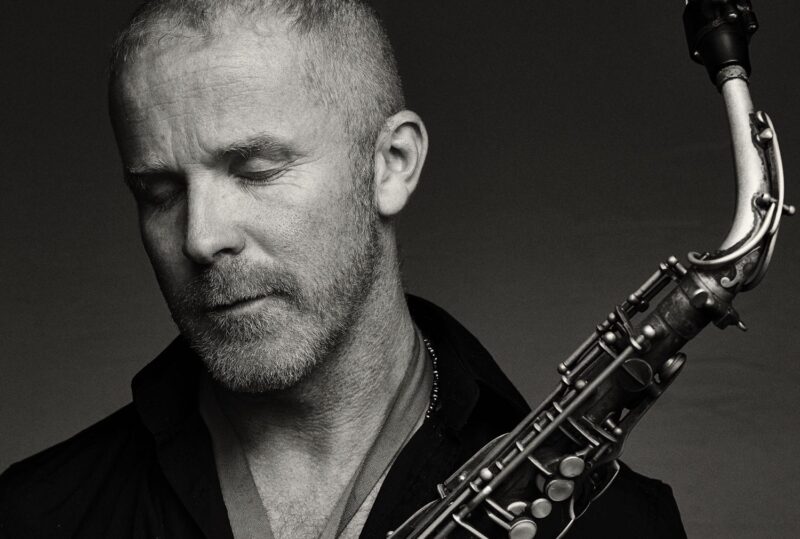
We have the great pleasure to announce another highlight in the series Incense of Music: SUGAR and friends will contribute to a very special evening divided into two sets, between strings and electronics. Lemon and opoponax will be the scents of choice. Highest pleasure guaranteed.
Artists

Grégoire Simon — viola, electronics
Grégoire Simon works between Berlin and Paris as a performer (viola and violin), producer, and composer. After studying violin and viola, he was chosen in 2012 by Pierre Boulez to take the solo viola position in the prestigious Ensemble Intercontemporain (Paris), where he played for four seasons, notably performing as a soloist at the Paris Philharmonie. Since 2015 he has been a regular guest solo violist at the Bavarian Radio Symphony Orchestra in Munich. As one half of the duo Yes Sœur! (with Alexandre Bouvier), he produces electronic compositions for stage productions, particularly for contemporary dance. With his hybrid Berlin-based project SUGAR, Grégoire Simon builds bridges between chamber music and pop music, with original creations presented at the Wien Modern Festival and at the Rotersalon of the Volksbühne in Berlin.

David Eggert — cello
Canadian cellist David Eggert was raised in a musical family, playing string quartet and singing in choirs from an early age. He studied in Edmonton with Tanya Prochazka, in Boston with Lawrence Lesser, in Montreal with Matt Haimovitz, in Salzburg with Clemens Hagen, and in Basel with Rainer Schmidt. David Eggert won first prizes at the 2008 international cello competition Antonio Janigro in Zagreb, the Grand Prize at the 2006 Eckhardt-Gramatté Competition for Canadian music, and the 2014 Domnick cello prize for new music in Stuttgart. He has since performed as a soloist and chamber musician in countries around the world, from St. Petersburg and Istanbul to Boston and Vienna. Since 2015 he has taught cello, contemporary music, and chamber music at the Hochschule der Künste in Bern. He is also active in musical theater, electro-acoustic improvisation, historically informed performance practice, and microtonal research, and plays viola da gamba.
![]()
Isabelle Klemt — cello
Isabelle Klemt was born in 1985 in Filderstadt and lives in Berlin. She received her cello training at the UdK Berlin and the HKB Bern, complemented by chamber music study in the class of the Artemis Quartet and various masterclasses. Tours have taken her to Japan, China, Korea, Brazil, Bolivia, Chile, and many European countries. Beyond various radio plays and film scores, she has appeared on CD recordings including with The Notwist and Agnes Obel. Since 2009 she has performed as a duo with French chansonnier Antoine Villoutreix, and since 2008 she has been cellist of the Andromeda Mega Express Orchestra. In 2011 she also received a one-year engagement with the Bern Symphony Orchestra.

Ole Brolin — electronics
Ole Brolin is a Swedish musician and sound artist based in Berlin. He is a sound designer for various projects with the Solistenensemble Kaleidoskop and explores experimental music and folk song using homemade electronics, sine waves, and white noise. He has been part of various constellations, performances, and installations at venues including the Schinkel Pavillon, the Ruhrtriennale, and the Sammlung Hoffmann. In 2018 he composed the music for "Erschlägt die Armen" at the Residenztheater Munich.
Incense

Lemon
The lemon (Citrus limon) is a small evergreen tree in the rue family, believed to have originated in the Assam region of northeastern India as a natural hybrid between bitter orange and citron. Its glossy, oval fruits ripen into their characteristic bright yellow.
Carried along ancient trade routes, the lemon first reached Persia and the Arab world, where it was cultivated as an ornamental plant in early Islamic gardens from the 10th century onward, before spreading across the Mediterranean between 1000 and 1150. Significant European cultivation began in Genoa in the mid-15th century. Christopher Columbus brought lemon seeds to the New World in 1493, and centuries later, lemon juice played a central role in James Lind's pioneering experiments on preventing scurvy among sailors.
Burned as incense, lemon gives off a bright, sharp, unmistakably fresh citrus scent. It is strongly invigorating and purifying, promoting mental clarity, and is valued for freshening a space and creating an alert, optimistic atmosphere.

Opoponax
Opoponax is a gum resin — a mixture of water-soluble gum and alcohol-soluble resin — today obtained primarily from Commiphora guidottii, a tree related to frankincense and myrrh, native to the arid regions of East Africa, particularly Somalia and Ethiopia. In perfumery it is often called "sweet myrrh" or bisabol myrrh.
The name opoponax derives from Ancient Greek, roughly meaning "juice of the all-healer" — a reference to the legendary healing plant Panaces, already described by classical authors such as Pliny and Dioscorides in their medical writings, though its botanical identity remains uncertain to this day. The modern opoponax of perfumery differs from this ancient plant, but continues to carry its storied name.
Burned, opoponax releases a warm, sweet, balsamic-spicy scent, related to myrrh but softer and sweeter in character. It is associated with comfort, warmth, and a gentle, enveloping depth.

Bartolomeo Bimbi – "Melagoli, cedri e limoni" (1715)
Incense of Music 42 - SUGAR play Slow
Incense of Music 42
SUGAR play Slow, feat. Yannick Rafalimanana
A multisensory concert – Thursday, 7 November 2019, 8 pm
Grégoire Simon: violin, synthesizer
Yannick Rafalimanana: piano
Ole Brolin: sound design, electronics
Incense: Petitgrain, Oud
PANDA Theater in der Kulturbrauerei, Knaackstr. 97, 10435 Berlin
Part 1 — Music for violin/viola and piano: G. Ligeti – Hora Lunga for viola solo; B. Bartók – Sonata for violin and piano No. 2, Molto Moderato; F. Schubert – Fantasie for violin and piano (excerpts); J. S. Bach – Sonata for viola da gamba and piano in G Major; I. Stravinsky – Élégie for viola solo; A. Webern – Pieces for violin and piano; M. Feldman – Viola in My Life for viola and piano
Part 2 — Music for piano and synthesizer: O. Messiaen – Regard de la Vierge for piano; C. Debussy – Des pas sur la neige; O. Messiaen – Le Banquet Céleste; C. Debussy – La Cathédrale engloutie; O. Messiaen – Louange à l'éternité de Jésus
Artists
Grégoire Simon — violin, synthesizer
Grégoire Simon works between Berlin and Paris as a performer (viola and violin), producer, and composer. After studying violin and viola, he was chosen in 2012 by Pierre Boulez to take the solo viola position in the prestigious Ensemble Intercontemporain (Paris), where he played for four seasons, notably performing as a soloist at the Paris Philharmonie. Since 2015 he has been a regular guest solo violist at the Bavarian Radio Symphony Orchestra in Munich. As one half of the duo Yes Sœur! (with Alexandre Bouvier), he produces electronic compositions for stage productions, particularly for contemporary dance. With his hybrid Berlin-based project SUGAR, Grégoire Simon builds bridges between chamber music and pop music, with original creations presented at the Wien Modern Festival and at the Rotersalon of the Volksbühne in Berlin.
Yannick Rafalimanana — piano
French pianist Yannick Rafalimanana has developed an international concert career as a recitalist and chamber musician. Recent performances have taken him to halls all over the world, including the Berlin Philharmonie, the Elbphilharmonie Hamburg, Wigmore Hall, Konzerthaus Berlin, Köln Philharmonie, the Vienna Konzerthaus, the Shanghai Symphony Orchestra Chamber Hall, and the Kennedy Center in Washington. He has made chamber music with countless artists, including Kim Kashkashian, Steven Isserlis, Noah Bendix-Balgley, Arnold Steinhardt, and Itzhak Perlman. Born in Lille, he studied at the Conservatory of Lille and later the Paris Conservatoire, before earning his graduate diploma at the New England Conservatory in Boston under Vivian Weilerstein. He taught chamber music at the Folkwang University of Arts in Essen from 2015 to 2018. In 2022 he launched "Yannick's Salon," a concert series in his Berlin neighbourhood.
Ole Brolin — sound design, electronics
Ole Brolin is a Swedish musician and sound artist based in Berlin. He is a sound designer for various projects with the Solistenensemble Kaleidoskop and explores experimental music and folk song using homemade electronics, sine waves, and white noise. He has been part of various constellations, performances, and installations at venues including the Schinkel Pavillon, the Ruhrtriennale, and the Sammlung Hoffmann. In 2018 he composed the music for "Erschlägt die Armen" at the Residenztheater Munich.
Incense

Petitgrain
Petitgrain is an essential oil obtained through steam distillation of the leaves and green twigs of the bitter orange tree (Citrus aurantium ssp. amara). Unlike neroli oil, distilled from the blossoms of the same tree, or bitter orange oil, pressed from the fruit's rind, petitgrain comes exclusively from the green foliage. Its main production regions today are Paraguay and France.
The name derives from the French "petit grain" — "little grain" — referring to an older distillation method that used the tree's small, unripe fruits, before the current practice of distilling leaves and twigs instead took over. In the perfumery of the southern French town of Grasse, petitgrain has long been valued as a more economical alternative to precious neroli oil, with a related but distinct character of its own.
Burned as incense, petitgrain releases a green, woody-orange scent with a subtle, slightly bitter freshness — more restrained and less sweetly floral than neroli, but more grounding. It is valued for its balanced interplay of calm and clarity, and is used in modern aromatherapy for stress relief without a sedating effect.

Agarwood (Oud)
Agarwood does not come from a specific tree species but from the genus Aquilaria, native to the rainforests of Southeast Asia. What makes it remarkable isn't the tree itself, but a mysterious defence process within its heartwood: when the tree is stressed by a particular mould, injury, or insect infestation, it responds by producing a dark, dense, resin-saturated wood — and it is precisely this transformed wood that becomes prized agarwood. Since the process can take decades and wild populations of many Aquilaria species are now endangered, naturally matured agarwood ranks among the rarest and most expensive natural materials in the world.
For millennia, agarwood has been burned in religious ceremonies across Buddhism, Hinduism, and Islam, believed to purify the air, calm the mind, and open a connection to the spiritual world. It has also long been closely tied to wealth and status — given as a treasured gift between rulers, central to courtly fragrance culture across the Middle East, and, to this day, the prized base note of "oud" perfumes.
Burned, agarwood releases an exceptionally layered aroma — deep, woody, and aged, with notes of honey, amber, and leather, and a faint, almost animalic undertone. It is typically burned as small wood chips on charcoal, its scent unfolding slowly and in shifting facets over time.
Incense of Music Festival at Pandatheater
Solos and Mixtures, Incense of Music 39-41
A multisensorial festival from 10th to 12th of October
We have the big pleasure to announce a very special music and incense festival happening from 10th to 12th October (Thursday to Saturday) at Pandatheater in Berlin Prenzlauer Berg. In three evenings we will experience twelve great artists from all around the world playing mostly solo concerts of various nature and style. We will listen to European and Arabic classical, to jazz, experimental and free improvised music. Additionally we will burn incense mixtures specially conceived for the occasion. Each mixture will contain eight different fragrances. A multisensorial challenge of highest ambition. For guests who are particularly sensitive to smoke, this event is not recommended.
Incense of Music 38 - Braun/ Eftychidou, Bräumer, Klewer
Incense of Music 38
A multisensory concert – Thursday, 26 September 2019, 8 pm
Arne Braun: guitar
Sofia Eftychidou: bass
Simon Bräumer: drums
Pascal Klewer: trumpet
Incense: Orange, Styrax
PANDA Theater in der Kulturbrauerei, Knaackstr. 97, 10435 Berlin

Artists
Arne Braun — guitar
Arne Braun, born 1995 in Jakobstad, Finland, is a Finnish musician with the electric guitar as his main instrument. He lives in Berlin where he is active on the scene in various bands and projects, playing both in Berlin and other cities around Germany. Besides Germany and Finland, where he regularly performs, he has also played in Iceland, France, Sweden, Italy, and the Netherlands. Notable festivals he has performed at include the Reykjavik Jazz Festival, Umbria Jazz Festival, Pori Jazz Festival, and MaerzMusik. He recently graduated from the Jazz Institute Berlin (UdK/Hanns Eisler), where during his studies he received lessons from Greg Cohen, Kurt Rosenwinkel, Kalle Kalima, Chris Dahlgren, Jim Black, John Hollenbeck, Marc Muellbauer, and more. In the last five years he has had the opportunity to play and perform with some of his favourite musicians, including Morgan Ågren, Jim Black, Pat Mastelotto, Greg Cohen, and many more.
Sofia Eftychidou — bass
Sofia Eftychidou (b. 21 September 1994) is a Greek bass player living in Cologne, Germany. She was born in Volos, Greece, where she took her first musical steps starting out with the piano at age 10. Later, at age 14, she picked up the electric bass, and a few years later she started playing the double bass. She first studied classical music under the guidance of Vassilis Papavassiliou in Athens and soon started playing in orchestras and ensembles. When she turned 18, she moved to Berlin, where she decided she wanted to play jazz and started taking lessons with bassist Marc Muellbauer. After three years, she moved to Cologne to study at the Hochschule für Musik und Tanz Köln under the guidance of Dieter Manderscheid and Jonas Burgwinkel. In addition to her trio "Bräumer/Klewer/Eftychidou," she plays in different projects which has led her to perform at numerous European venues.
Simon Bräumer — drums
Simon Bräumer was born in 1997 and raised in a musical family in the Odenwald region of Germany. At six years old, he started playing drums. Jazz played an important role for him from early on. He played his first jazz gigs at 12, shortly after which he began to participate in projects of the Hessen State Youth Jazz Orchestra, which led him to play tours in Latvia, Lithuania, Canada, and China, as well as being on stage with Grammy Award-winning singer Dee Dee Bridgewater. Simon Bräumer studies jazz at the Hochschule für Musik und Tanz Köln with Michael Küttner and Jonas Burgwinkel, and at the Guildhall School of Music and Drama in London with James Maddren and Tom Farmer. He is a sideman in different jazz combos and the drummer of Pascal Klewer's Big Band.
Pascal Klewer — trumpet
Pascal Klewer, born 1997 in Groß-Gerau, Germany, started picking up the trumpet at the age of 8. After a focus on classical music, he started concentrating on jazz at the age of 13. Since 2014 he has been a member of the Youth Jazz Orchestra of the State of Hessen, and since 2018 a member of the German National Youth Jazz Orchestra. He has played in numerous ensembles including the Klassische Philharmonie Bonn, several youth jazz orchestras, the Cologne Contemporary Jazz Orchestra, the Subway Jazz Orchestra, Shaikh9, and several other bands. He has toured all over Europe, China, Canada, and Bolivia and performed at renowned venues such as the Elbphilharmonie Hamburg, Philharmonie Köln, and Konzerthaus Köln, as well as playing with Grammy Award-winning musicians such as Dee Dee Bridgewater, Dianne Schuur, and Randy Brecker. In 2015 he moved to Cologne to study at the Hochschule für Musik und Tanz with Andy Haderer, Jürgen Friedrich, and Niels Klein. As a leader, his main projects are the German-Greek trio Bräumer/Klewer/Eftychidou (co-leader), as well as his own Big Band, the Pascal Klewer Bigband. With his own Big Band, he curates a concert series in Cologne, bringing together renowned artists such as Peter Brötzmann or Kit Downes with his own big band and his own compositions.
Incense

Orange
The orange (Citrus sinensis) is the fruit tree believed to have originated in Southeast Asia or southern China as a natural hybrid between pomelo and mandarin. It bears glossy, evergreen leaves and the familiar round, orange fruit, whose fragrant peel provides the incense material.
Carried along the trade routes of Arab merchants and later the Crusaders, the orange had reached the Mediterranean by medieval times. Across numerous cultures it remains associated with prosperity and good fortune — in Chinese New Year tradition, for instance, oranges are given as gifts, symbolizing gold and success. Its peel, rich in bright essential oils, has long enjoyed wide culinary and medicinal use.
Burned as incense, orange releases a bright, cheerful, sweet-citrus scent. It is invigorating and energizing without the sharp bitterness of grapefruit, and is associated with joy, warmth, and abundance — often used to counter low mood and create a welcoming atmosphere.

Styrax
Styrax, also known as storax, is the resin of the Oriental sweetgum (Liquidambar orientalis), a small, deciduous tree native to southwestern Turkey. When the bark is wounded, a thick, greyish-brown balsam seeps out and is traded as resin.
Styrax has been traded across the Mediterranean and the Near East since antiquity, already described by classical authors such as Dioscorides and Pliny as a medicinal and ceremonial incense. Historically, it was a staple ingredient of church incense blends across Christian, Jewish, and Islamic traditions, and has been valued as a fixative in perfumery for centuries.
Burned as incense, styrax releases a warm, sweet, balsamic, vanilla-like scent with a leathery, amber-like depth. It is associated with grounding, comfort, and spiritual centering, and is often blended with other resins to lend lasting warmth and sweetness to a composition.
Incense of Music 37 - Schroeteler
Incense of Music 37
Music For Possibilities (Drum Solo)
A multisensory concert – Friday, 30 August 2019, 8 pm
Daniel Schröteler: drums (solo)
Incense: Aralia Racemosa, Galbanum
PANDA Theater in der Kulturbrauerei, Knaackstr. 97, 10435 Berlin
After summer vacations, Incense of Music is back, having the pleasure to present Daniel Schröteler with "Music For Possibilities" (drum solo). Spontaneously, Daniel takes this opportunity to present sketches and settings for solo drums. We will burn Aralia racemosa and galbanum in two different sets.
Artists

Daniel Schröteler — drums
Daniel Schröteler (born 17 August 1974 in Düren) is a German jazz drummer. Given his first drum kit at the age of five, he studied jazz at the Hogeschool voor de Kunsten (ArtEZ) in Arnhem from 1990 to 1997. From 2000 he taught drums and rhythm at Johannes Gutenberg University Mainz, also teaching in Arnhem from 2002 to 2003. Since 2003 he has worked as a freelance musician. Schröteler is a member of various bands, including the Christian Weidner Trio, the Henning Berg Quartet, the Werner Neumann Quartet, the Matthias Haus Ensembles, and the groups Supdiver (with Niels Klein, Frank Wingold, and Dietmar Fuhr), TITZ (led by Christoph Titz), and Talking Jazz (with Till Brönner, Dieter Ilg, Charlie Mariano, and Martin Sasse). He has also worked in a duo with Antonis Anissegos, with Hayden Chisholm's The Inflictor, and with Marla Glen. With Philipp Gropper, Philip Zoubek, and Petter Eldh he formed the band Tau. Since 2016 he has been part of Tobias Christl's Wilderer. He has performed at jazz festivals in Germany, including Leverkusener Jazztage and Moers Festival, as well as in Maastricht, Bilbao, and Benoni (South Africa), and toured the Netherlands, Spain, and Africa on behalf of the Goethe-Institut.
Incense

Aralia Racemosa
Aralia racemosa, also known as American spikenard, is a large-leaved perennial herb native to the woodlands of eastern and central North America. It has a thick, aromatic root system, large compound leaves, and inconspicuous greenish-white flower clusters.
The root has long been used by various Indigenous peoples of North America in traditional medicine, for respiratory ailments, wound treatment, and as a general tonic. Early European settlers also used it as a substitute for true spikenard and for sarsaparilla in herbal tonics.
Burned as incense, the root of Aralia racemosa releases a warm, earthy, faintly sweet-spicy scent. It is grounding and calming, associated in Indigenous traditions with healing and protection.

Galbanum
Galbanum is the resin of Ferula gummosa, a tall perennial plant in the carrot family, native to the mountainous regions of Iran and Central Asia. Incisions made in the roots and lower stem release a milky sap that hardens into a yellowish-brown, gum-like resin.
Galbanum ranks among the oldest known incense materials, named in the Book of Exodus as one of the sacred ingredients of the Ketoret incense burned in the Temple of Jerusalem. The medieval scholar Rashi interpreted galbanum's bitter character within that blend as a deliberate reminder of unrepentant sinners. It was also used in ancient Egypt and in Greco-Roman medicine, including by Hippocrates and Pliny. In modern perfumery, galbanum helped define the "green" fragrance family from the mid-20th century onward, and remains a component of well-known scents such as Chanel No. 19 and Guerlain's Vol de Nuit.
Unlike many sweet or resinous incenses, galbanum releases a sharp, green, almost bitter-herbaceous scent with hints of freshly cut grass, parsley, pine needles, pepper, and a faintly musky, powdery depth. This unusual, unmistakably "green" note makes it a prized top note in perfumery, and it has traditionally been associated with protection and energetic cleansing.
Incense of Music 36 - BassX3
Incense of Music 36
BassX3
A multisensory concert – Wednesday, 12 June 2019, 8 pm
Gebhard Ullmann: bass clarinet, bass flute
Chris Dahlgren: double bass
Christian Weber: double bass
Incense: Lavender, Myrrh
Ausland, Lychener Strasse 60, 10437 Berlin
We are extremely proud to present for Incense of Music No. 36 BassX3, a worldwide unique trio located on the lower end of the tonal range of improvised chamber music. All three are well-known improvisers and composers, and their first CD, entitled "bassX3," was released on Drimala Records in 2005. So, time for a little bit of jazz and a lot of freedom. We are helping with lavender and myrrh — "I arose to open for my beloved, and my hands dripped with myrrh" (Song of Solomon 5:5).
Artists

Photo by Oli Potratz
Gebhard Ullmann — bass clarinet, bass flute
Gebhard Ullmann (b. 2 November 1957 in Bad Godesberg) is a German saxophonist (tenor and soprano), bass clarinetist, bass flutist, and composer. He studied medicine and music in Hamburg and moved to Berlin in 1983. Since then he has recorded more than 50 CDs as a leader or co-leader for prestigious labels such as Soul Note (Italy), Leo Records (UK), Between The Lines (Germany), CIMP (USA), NotTwo Records (Poland), Clean Feed (Portugal), and Unit Records (Switzerland). For many years he has been considered one of the leading figures in both the Berlin and international music scenes, receiving numerous awards including the Julius Hemphill Composition Award in two categories (1999), the Deutsche Phonoakademie award (1983), one of the first SWF Jazz Awards (1987), and the first Berlin Jazz Award (2017). Since 2005 he has appeared regularly in the Downbeat Critics Poll, in 2015 for the first time in three categories. He has toured throughout Europe, Africa, the Middle East, Canada, New Zealand, the USA, Southeast Asia, Mexico, and China, performing at most of the world's most prestigious jazz festivals. His working bands include Basement Research, the cooperative band Conference Call, the Clarinet Trio (with Jürgen Kupke and Michael Thieke), BassX3 (with Chris Dahlgren and Clayton Thomas), the Berlin quartet Gulf of Berlin, and his duo with vocalist Almut Kühne, as well as The Chicago Plan. From the mid-1990s he held a teaching post for saxophone and ensemble playing at the University of Music "Hanns Eisler" in Berlin for over ten years. Since 2014 he has headed the German Jazz Musicians' Union.

Chris Dahlgren — double bass
Chris Dahlgren was born in New York, NY, on 13 November 1961. He began with music on the cello at the age of six, and later switched to the bass. His earliest experiments with improvisation on the cello brought upon him the wrath of his elementary school music teacher, who shouted, "Get out of here, Dahlgren — you will never be a musician!" He received his BM in Jazz Studies from the Cincinnati Conservatory of Music (1986) and an MA in Composition/Experimental Music from Wesleyan University (2003). Chris studied composition with La Monte Young, Anthony Braxton, Alvin Lucier, and Christian Wolff, and studied bass with Barry Green, François Rabbath, and Dave Holland, among others. During the mid-1980s, as the in-house bassist of the Blue Wisp Jazz Club in Cincinnati, Ohio, Chris had the opportunity to learn about jazz music directly from some of the greatest American masters, such as Herb Ellis, Red Rodney, John von Ohlen, Art Lande, Charles Tolliver, and Joe Lovano. During this time he also established himself as a composer and unique voice on the bass, co-founding the band Ekimi and the music label Krysdahlark. In 1993, Chris moved back to his native New York, and for eleven years was actively performing and recording with his own bands (Slow Commotion, Best Intentions) as well as others' on the Downtown scene. From 2001 to 2009 he was a regular member of ensembles led by the seminal avant-garde composer and woodwinds player Anthony Braxton. Since 2004, he has been living in Berlin, Germany, performing, composing, and collaborating with significant European musicians, composers, and artists. In 2006 Chris began to play the viola da gamba, and has since introduced this instrument into the field of improvised music. In 2008, he formed his band LEXICON, whose debut recording was released on the Jazzwerkstatt label in March 2010. Since 2003, Chris has taught and coached ensembles in Berlin at the Musikhochschule Hanns Eisler and the Jazz Institut Berlin. He has received numerous grants and awards in music composition from the National Endowment for the Arts, the Ohio Arts Council, and the Headlands Arts Center (USA), as well as commissions from private individuals and organizations.

Photo by Juan-Carlos Hernández
Christian Weber — double bass
Christian Weber is a Swiss double bassist who has toured extensively across Europe, the Middle East, Asia, and North America — including Switzerland, Austria, Germany, England, Ireland, Poland, Israel, China, Taiwan, Belgium, Italy, Slovenia, Kuwait, Croatia, the Czech Republic, the Netherlands, Serbia, Spain, Japan, Russia, the USA, and Canada. He is a fixture of the European improvised music scene, having worked with an impressively long list of internationally renowned musicians, including Han Bennink, John Butcher, Michael Griener, Charlotte Hug, Peter Kowald, Rudi Mahall, Phil Minton, Evan Parker, Irène Schweizer, Elliott Sharp, Otomo Yoshihide, Michael Zerang, and Nate Wooley.
Incense

Lavender
Lavender (Lavandula angustifolia, also known as true lavender) is an evergreen, strongly fragrant sub-shrub in the mint family. It originates from the dry, sunny regions around the Mediterranean. Its narrow, grey-green leaves are softly felted, and from June to August it blooms in characteristic spike-shaped flower heads in shades of violet, blue, or pink. Lavender grows to about 30–60 centimeters tall and attracts bees and butterflies.
The name lavender likely derives from the Latin lavare, "to wash" — the Romans scented their bathwater with it, and prized it highly: in Roman times, a pound of lavender flowers could cost as much as a month's wages for a farm laborer. It later became a staple of monastery gardens across medieval Europe, grown as much for medicine as for fragrance. It was carried in small sachets to ward off plague-bearing insects, strewn on floors to freshen homes, and used by herbalists for centuries as a remedy for headaches, nerves, and sleeplessness. In folk traditions across Europe, lavender was also considered a plant of protection, tucked into linens and cradles to guard against bad dreams and negative influence.
Dried lavender flowers release a sweet, floral, calming scent with balsamic undertones when burned. Its smoke is lighter and airier than resinous incenses, traditionally used for stress, restlessness, and headaches, and still burned today to soothe the mind and support restful sleep.

Myrrh
Myrrh comes from small, thorny trees of the genus Commiphora, native to the dry, arid regions of Northeast Africa and the Middle East — particularly Somalia, Yemen, and Ethiopia. The treasured resin is not the wood or sap, but a fragrant gum that naturally oozes from the bark to heal wounds. Harvesters make deliberate cuts to encourage more of this valuable secretion, which hardens into tear-shaped, reddish-brown granules over several weeks.
Myrrh has been traded across the ancient world for over 4,000 years, carried along the same incense routes that connected Arabia, Egypt, and the Mediterranean. As early as the 5th Dynasty, the Egyptian pharaoh Sahure commissioned one of the earliest recorded expeditions to the land of Punt in the Horn of Africa specifically to bring back large quantities of myrrh and frankincense. The Egyptians used it in embalming and temple rites; it was burned as an offering in Jewish, early Christian, and Islamic traditions alike, and appears in the Bible as one of the three gifts brought to the infant Jesus, alongside gold and frankincense. The New Testament also records that Jesus was offered wine mixed with myrrh before the crucifixion, and that his body was wrapped in a mixture of myrrh and aloes after his death.
When burned, myrrh releases a rich, complex aroma that is simultaneously earthy, bittersweet, and slightly medicinal. Unlike floral scents, it provides a profound, grounding base note, still used today for meditation, temple ceremonies, and moments that call for gravity and stillness rather than lightness.
Incense of Music 35 - Kakaliagou, Schmoliner
Incense of Music 35
Kakaliagou/Schmoliner — Nabelóse
A multisensory concert – Sunday, 12 May 2019, 5 pm
Ingrid Schmoliner: piano, voice
Elena Kakaliagou: French horn, voice
Incense: Juniper, Cedrus Deodara
Salon Dreiklang, Paul-Robeson-Strasse 47, 10439 Berlin
"Whispering, Drones, Witches and a Funeral March…" Song cycle. New and old. Greece & Austria. Deep sea. Deep mountains. Welcome.
As an offspring of the trio PARA, the duo Kakaliagou/Schmoliner presents the LP "Nabelóse," a composed song circle based on folk tunes and tales from Greece and the Alpine area, interspersed with extended techniques on the piano, the horn, and voice. The album was composed during their time together as artists in residence in St. Johann in Tirol and was released in March 2017 by Berlin's Corvo Records, followed by successful concerts in places like Ausland Berlin, Tonhalle Hannover, and Bunker Ulmenwall Bielefeld. The duo's music also features in the documentary film "Araf" by Didem Pekün, which was nominated at various festivals in 2018 and 2019. Additionally, we will burn juniper and Cedrus deodara.
Artists

Photo by Thomas Plattner
Ingrid Schmoliner — piano, voice
Austrian musician, composer, and pedagogue Ingrid Schmoliner performs in various international and interdisciplinary projects. She is the founder of the Raum_4 concert series and curates the New_Adits Festival for Contemporary Music in Carinthia. Schmoliner distinctively expands the tonal language of current avant-garde music with her striking piano preparations and the multilayered combinations of her compositional patterns.

Photo by Thomas Plattner
Elena Kakaliagou — French horn, voice
Elena Margarita Kakaliagou is a Greek-Austrian French horn player and performer, currently based in Berlin. Starting out with piano lessons, she moved on to the French horn at the age of 18. After completing her studies in Athens with Vangelis Skouras, she continued her education at KUG-Graz under the teaching of Hector McDonald. Instructed by Erja Joukamo-Ampuja, Elena obtained her Master's degree from Sibelius Academy in 2010 in French horn and chamber music. During her career, Elena has received scholarships from Klangforum, Impuls Academy, and Ensemble Modern, with teachers including Mike Svoboda and Bill Forman. Elena's field of specialization is free improvised and contemporary music, alongside classical chamber music. She has performed premieres with ensembles including Ensemble Linea, Schallfeld, and KNM Berlin at festivals such as Ultraschall Berlin, MaerzMusik, Randspiele, Musica Nova (Finland), Lá-bas (Finland), Musica (France), Warsaw Autumn, New Adits (Austria), Ultima (New York), Kaleidophon (Austria), and Sound Live Tokyo. She has worked with individual artists including Riikka Innanen, Phill Niblock, James Andean, Ingrid Schmoliner, Katharina Klement, CC Hennix, Robin Hayward, Simon Martin, Matias Guerra, and Thomas Noll. Elena is co-founder of the Helsinki-based Rank Ensemble, the Austrian trio PARA, the duo Kakaliagou/Schmoliner, and the duo Guerra/Kakaliagou, and is a member of Zinc & Copper, zeitkratzer, and the ensemble of CC Hennix.
Incense

Juniper
Common juniper is a hardy, often low-growing conifer with the largest natural range of any woody plant on earth — spanning from the Arctic down through temperate mountain regions of North America, Europe and Asia. Its needle-like leaves grow in whorls of three, and its berry-like, blue-black cones take around eighteen months to ripen. The slow-growing, dense wood is prized for its pleasant scent and decorative grain.
Across much of Northern and Central Europe, juniper smoke has traditionally been used to cleanse spaces and ward off negative influences, a use closely related to frankincense that earned it the folk name "German sandarac." In Kashubian tradition in northern Poland, boys have traditionally chased girls on Easter Monday, gently whipping their legs with juniper twigs to bring them good fortune in love. The tart, blue-black cones, known as juniper berries, still flavor meats and gin today — the word "gin" itself derives from an Old French word for juniper.
Burned as incense, juniper gives off a clear, resinous-fresh scent with a faint, berry-like sweetness — invigorating yet grounding.

Cedrus Deodara
Cedrus deodara, also known as the Himalayan cedar, is a large, evergreen conifer native to the western Himalayas — eastern Afghanistan, northern Pakistan and northern India, and Tibet and western Nepal — occurring at altitudes of 1,500 to 3,200 metres. It is the tallest-growing of the true cedars, reaching 40 to 50 metres, exceptionally up to 60 metres, with a conic crown of level branches and characteristically drooping branchlets. Its wood is particularly fragrant and resin-rich.
Its Sanskrit name, "devadaru" — a compound of deva, "god," and daru, "wood" — means "wood of the gods." In Hinduism the tree is considered sacred, referenced in numerous legends and associated with Shiva. Thanks to its insect- and rot-resistant, aromatic wood, it was used for centuries in the construction of temples and sacred buildings across the Himalayan region. Its essential oil has also long been used in Ayurvedic medicine.
Burned as incense, Cedrus deodara releases a warm, woody, sweet-balsamic scent, related to common cedarwood but softer in character. It is associated with spiritual grounding, meditation, and the creation of sacred space, and remains part of Hindu and Buddhist ritual practice across the Himalayas today.
Incense of Music 34 - Younes, Hlal, Nasser
Incense of Music 34
A multisensory concert – Friday, 3 May 2019, 8 pm
Mohannad Nasser: oud
Mevan Younes: buzuq
Ayman Hlal: violin
Incense: Laurel, Dammar
PANDA Theater in der Kulturbrauerei, Knaackstr. 97, 10435 Berlin
It is a special honor for us to present at Incense of Music 34 the trio Younes (buzuq) / Nasser (oud) / Hlal (violin). We will burn laurel and dammar for the occasion.
For people who are sensitive to smoke, this event is not recommended.
Artists
Mohannad Nasser — oud
Syrian oud player and composer Mohannad Nasser has developed into an innovative musician through years of experience performing. His compositions have been described by audiences as "delicate, cheerful, and magical." His deep desire to share his conception of music led him to complete his master's project, "Contemporary today, Heritage tomorrow," at the renowned Berklee College of Music. At Berklee, Mohannad performed the piece "Mediterranean Sundance" with internationally acclaimed guitarist Al Di Meola. His musical vision is rooted in traditional Arabic music with a strong flavor of Oriental heritage. Mohannad's journey with the oud began during his studies at the Higher Institute of Music in Damascus, where he deepened his knowledge of traditional Oriental music while also exploring classical Western music. Over the course of his career, he expanded the oud's possibilities by adapting it to various musical styles, including classical music, jazz, Brazilian music, and flamenco. In 2015, like most Syrian artists, Mohannad faced harsh, daily danger due to the conflict in Syria and moved to Lebanon, where he became a music educator. He was trained by several international organizations offering music lessons to refugee children — an experience that inspired him to encourage the next generation of musicians to find their own voice. In 2017 Mohannad released the debut album of his Oumi Ensemble, "Imaginary Dance," and launched his solo project "L'Oud Whispers." He has received several prizes at international oud competitions and performs his music around the world.

Mevan Younes — buzuq
Born in the multicultural city of Al-Hasaka in northern Syria, Mevan Younes has specialized in a traditional oriental instrument: the buzuq. His musical education began at the age of seven under his father, through whom he first learned mainly Kurdish music. He later continued his training at the Damascus Higher Institute of Music, completing his studies in 2011 under Professor Askar Ali Akbar — during which time he also began working as a buzuq teacher. Mevan is a member of the Syrian Arab National Orchestra and has appeared at numerous events, including the Morgenland Festival in Osnabrück and the Roskilde Festival in Denmark. International engagements have taken him to countries including Turkey, Tunisia, Ghana, Kurdistan, Denmark, France, and Germany. Since 2015 Mevan Younes has lived in the greater Berlin area, where he continues his musical development and remains active in various bands and ensembles, including the Ugarit Trio and the Berlin Orient Ensemble.
Ayman Hlal — violin
Ayman Hlal is a violinist and composer. He studied music education at Al-Baath University in Homs, Syria. He experiments with a wide variety of musical styles, including Oriental music, flamenco, and jazz. He plays with various orchestras and bands, including "Orphe" (Orient-world music) and Azulio (flamenco music), and served as concertmaster of the Nai Orchestra in Vienna.
Incense

Laurel (Laurus Nobilis)
Bay laurel is an evergreen shrub or small tree native to the Mediterranean, capable of reaching up to ten metres in height. Its glossy, leathery dark-green leaves carry a bold, spicy aroma and contain essential oils with anti-inflammatory properties.
In ancient Greece, laurel was sacred to the god Apollo. According to legend, the nymph Daphne was transformed into a laurel bush by her father, the river god Peneus, to escape Apollo's pursuit — Apollo then wore a wreath of laurel branches in mourning for his unrequited love. Wreaths woven from its branches went on to crown the victors of athletic and poetic competitions, and victorious Roman generals entered the city crowned with a laurel wreath (corona triumphalis); Roman emperors later adopted the same symbol. The tradition still echoes today — in the English title "poet laureate," in Germany's highest sporting honor, the Silbernes Lorbeerblatt (Silver Laurel Leaf), and in the Laureus World Sports Awards. In the Bible, laurel is often an emblem of prosperity and fame, and in Christian tradition it symbolizes the resurrection of Christ.
Burned as incense, laurel gives off a warm, spicy-resinous scent with a faint, sweet sharpness. The dried leaves are traditionally burned to energetically clear a space and create a focused, ceremonial atmosphere — a scent associated with clarity and a certain sense of dignity.

Dammar
Dammar resin is harvested from large tropical rainforest trees, most notably in the genera Shorea, Hopea, and Canarium, native to Southeast Asia, particularly India, Indonesia, Malaysia, the Philippines, and Papua New Guinea. The tree Shorea wiesneri is considered its most important source, though numerous other species yield the resin too, ranging in colour from clear and pale yellow to the dark, blackish-grey Sumatra dammar. The resin exudes from the bark as a protective response to injury and hardens into tears or lumps with a characteristically glassy, shell-like fracture — unlike many other resins, it barely darkens with age, which may be the source of its name, thought to derive from a Malay word meaning "tear," "light," or "torch."
Beyond its use as incense, dammar has historically served as a raw material for varnishes and lacquers, and remains valued today in art conservation, where its clarity and protective qualities are used to seal paintings and wooden objects. Across Southeast Asia, burning dammar has long been part of cleansing rituals intended to clear the atmosphere and invite positive energy.
Burned, dammar releases a bright, citrusy scent with notes of lemon and lime, underscored by a warm, faintly vanilla-like sweetness and a clean, resinous undertone that recalls fresh sap rather than deep, aged wood. It is considered a "lighter" resin compared to frankincense or myrrh, and blends well with other resins to add a bright top note to more complex compositions.
Incense of Music 33 - Manlio Maresca Manual for Errors
Incense of Music 33
Manlio Maresca & Manual for Errors Quartet
A multisensory concert – Friday, 19 April 2019, 8 pm
Manlio Maresca: guitar
Eldar Tsalikov: alto sax
Igor Spallati: double bass
Ugo Alunni: drums
Incense: Peumus Boldus, Sandalwood
PANDA Theater in der Kulturbrauerei, Knaackstr. 97, 10435 Berlin
Incense of Music No. 33 brings an Italian jazz guitarist and his band inspired by errors together with scents from Chile and Australia, boldo and sandalwood. Idea global, location is Pandatheater, an evening for the senses. For guests who are particularly sensitive to smoke, this event is not recommended.
Glorification of errors is the basis for Manlio Maresca's Berlin band, which acclaims refined musical wrongness. The Italian guitar player leads Manual for Errors, a project featuring Eldar Tsalikov (alto sax), Igor Spallati (double bass), and Ugo Alunni (drums). The compositional area he works in lets the margin of error be the foundation of a revolutionary creative discovery. Extemporary musical inspirations rule an accurate research of a "sound mistake" within a well-defined jazz structure.

Artists
Manlio Maresca — guitar
Manlio Maresca, born in 1977 near Rome, founded the band Neo in 2001 and later Squartet, touring throughout Europe with both. In 2010 he toured the United States with Neo, recording the album "Neoclassico" at Electrical Audio Studio in Chicago with sound engineer Steve Albini (Shellac, Pixies, Nirvana). He collaborated with Steve Piccolo in 2006, and with Joe Lally from 2008 to 2015. In 2012 he founded the trio Andymusic, which first accompanied poet and actor Remo Remotti and in 2016 performed at the Torino Jazz Fringe Festival, Fano Jazz by the Sea, and Urbino Jazz Festival, among others. In 2013 he joined Massimo Nunzi's Orchestra Operaia, collaborating with guests including Gabriele Coen, Fabrizio Bosso, Javier Girotto, Niccolò Fabi, Paolo Fresu, and Greg Hutchinson. A glorification of error sits at the heart of his album "Hardcore Chamber Music" (2016, Auand Records) with the quintet Manual For Errors. In 2017/18 Manlio moved to Berlin and began collaborating with musicians from the local scene, including Igor Spallati, Ugo Alunni, Eldar Tsalikov, and Mikaele Pellegrino, developing his solo project "Manual for Errors Panic Solo." In 2019 he performed with James Chance and the Contortions and toured Europe.
Eldar Tsalikov — alto sax
Eldar Tsalikov (b. 1993 in Rostov-on-Don, Russia) grew up in a musical family and began learning saxophone at age eight at the Kim Nazaretov Children's Jazz School. In 2011 he moved to Berlin, beginning his studies at the Jazz Institut Berlin under Peter Weniger, Greg Cohen, and John Hollenbeck, adding clarinet as a second instrument; he graduated with a master's in arranging and composition in 2018. Tsalikov has won several international competitions, including the 4th International Jazz Competition in St. Petersburg, the International Jazz Festival of Ukraine in Kyiv, and the 8th International Jazz Competition in Odesa, as well as the JIB Jazz Prize in 2014. He has worked with musicians including Greg Cohen, Joey Baron, Laurie Anderson, Elias Stemeseder, and Anna Webber, and also leads his own gypsy swing group, "Eldar Tsalikov FO'tet."
Igor Spallati — double bass
Igor Spallati (b. 16 August 1985) grew up in Perugia and began his musical education on the clarinet, before discovering electric bass and eventually the double bass. At 19 he deepened his classical double bass studies under Silvio Bruni (2005–2009) and completed his classical training as a private student at the Istituto Musicale "Briccialdi" in Terni, before leaving a program at the Walter Stauffer Academy in Cremona under Franco Petracchi to be accepted at the Jazz Institut Berlin in 2010. There he studied with Greg Cohen, John Hollenbeck, Kurt Rosenwinkel, and David Friedman, graduating in 2014. In 2011 he became the first-ever winner of the Savoy Award of Excellence. He has worked with major figures including Joe Chambers, Billy Hart, Nasheet Waits, Jorge Rossy, Fred Hersch, Ambrose Akinmusire, Pietro Tonolo, Gabriele Mirabassi, Dado Moroni, and Joe Hisaishi, and is a member of the Rosen Quintett.
Ugo Alunni — drums
Ugo Alunni is a drummer from Perugia, Italy. He attended the Conservatorio di Musica "Francesco Morlacchi" in Perugia (2000–2004), after which he moved to New York for further studies at the Collective School of Music (2005–2006). He has been living in Berlin since 2010, where he studied at the Jazz Institut Berlin under John Hollenbeck, Kurt Rosenwinkel, Greg Cohen, and David Friedman, graduating in 2016. He has played with musicians including Rossano Emili, the Perugia Jazz Orchestra, Pietro Tonolo, Joe Chambers, Dan Kinzelman, Alessandro Lanzoni, Elias Stemeseder, Phil Donkin, Uli Kempendorff, and Julia Hülsmann.
Incense

Peumus Boldus (Boldo)
Peumus boldus, commonly known as boldo, is the sole species in the genus Peumus, part of the family Monimiaceae. The tree is endemic to central Chile, occurring between 33° and 40° southern latitude, where it forms a characteristic part of the region's sclerophyllous forest alongside other native trees. Its leaves carry a strong, woody, slightly bitter flavor and a camphor-like aroma.
Boldo is a staple of folk medicine across much of South America — Chile, Argentina, Bolivia, Peru, Paraguay, Uruguay, and Brazil — used in both urban and rural households. The leaves are used similarly to bay leaves in cooking and are commonly added to yerba mate or other teas to moderate their flavor; many families keep a boldo plant at home for this purpose.
Burned as incense, boldo releases a woody, camphor-like, slightly bitter scent. It is traditionally associated with inner clarity and calm, in keeping with its long history as a gentle folk remedy across South America.

Sandalwood
Sandalwood refers to the heavy, yellow, fine-grained wood of several tree species in the genus Santalum. Unlike most aromatic woods, it retains its fragrance for decades. The trees are hemiparasitic — related to European mistletoe — and require at least 15 years to develop commercially valuable, fragrance-rich heartwood. The best-known species are Indian sandalwood (Santalum album) and Australian sandalwood (Santalum spicatum), native to India, Nepal, Sri Lanka, Australia, Indonesia, and other Pacific regions.
Sandalwood ranks among the most sacred substances across numerous world religions. In Hinduism and Ayurveda it is considered holy and associated with Shiva and the goddess Lakshmi; ground into a paste (chandanam), it is central to rituals, temple worship, and meditation, and is applied to devotees' foreheads and necks. In Jainism, sandalwood paste accompanies daily worship and cremation ceremonies. In Buddhism its scent is believed to support alertness during meditation and is among the most popular incense offered to the Buddha, a use echoed in Chinese, Japanese, and Korean traditions. Zoroastrians place sandalwood twigs into the sacred fire of their temples to keep it burning.
Burned, sandalwood releases a soft, warm, creamy, woody scent of great persistence. It has been prized as a perfumery fixative for centuries, and across many spiritual traditions is considered a means of drawing the mind closer to the divine.
Incense of Music 32 - Oscar Bohórquez
Incense of Music 32
A multisensory concert – Friday, 12 April 2019, 8 pm
Oscar Bohórquez: violin
Incense: Artemisia Vulgaris, Hawkweed
PANDA Theater in der Kulturbrauerei, Knaackstr. 97, 10435 Berlin
The sonatas and partitas for solo violin (BWV 1001–1006) are a set of six works composed by Johann Sebastian Bach — three sonatas da chiesa in four movements, and three partitas in dance-form movements. The set was completed by 1720 but was not published until 1802 by Nikolaus Simrock in Bonn, and even after publication remained largely ignored until the celebrated violinist Joseph Joachim began performing the works. Today, Bach's Sonatas and Partitas are an essential part of the violin repertoire. We are very proud to present Oscar Bohórquez, who will perform three of the sonatas from this set on his Giovanni Battista Guadagnini "Grande Dame" violin from 1770. We accompany his musical journey burning Artemisia vulgaris and hawkweed.
For guests who are particularly sensitive to smoke, this event is not recommended.
Artists

Oscar Bohórquez — violin
Oscar Bohórquez studied at the Curtis Institute of Music in Philadelphia with Professor Aaron Rosand from 1998 to 2002, and at the University of Music in Vienna with Professor Günter Pichler of the Alban Berg Quartett from 2002 to 2008. Since then, concert tours have taken him to major venues throughout Germany such as the Hamburg Elbphilharmonie, the Bonn Beethovenhalle, the Frankfurt Alte Oper, the Stuttgart Liederhalle, the Leipzig Gewandhaus, and the Berlin Philharmonie. In recent years Oscar Bohórquez has appeared at the Frankfurt Alte Oper with chief conductor Sebastian Weigle of the Museumsorchester, at the Nuremberg Meistersingerhalle with the Nuremberg Symphony under Alexander Shelley, as well as on numerous Latin American concert tours of Peru, Uruguay, Chile, Argentina, Mexico, and Brazil, including Bartók's 2nd violin concerto and the concertos of Tchaikovsky, Brahms, and Mendelssohn. Solo and chamber music activities have also taken him throughout Europe, the US, and Latin America, including the New York "Strad for Lunch" concert series, the "Música em Trancoso" festival in Brazil, the Kronberg Festival, and the Winnenden Chamber Music Festival in Germany. Alongside his brother, cellist Claudio Bohórquez, and pianist Gustavo Beytelmann, Oscar has formed the Patagonia Express Trio, with whom he recorded the "Tribute to Piazzolla" album, featuring works by Piazzolla, Ellington, and Beytelmann. Oscar Bohórquez plays a Giovanni Battista Guadagnini "Grande Dame" violin from 1770, previously owned by Günter Pichler of the Alban Berg Quartet, and a Dominique Peccatte bow from 1845.
Incense

Artemisia Vulgaris (Mugwort)
Artemisia vulgaris, commonly known as mugwort — also called felon herb, wild wormwood, sailor's tobacco, or St. John's plant — is a tall, herbaceous perennial with a woody root, growing 1 to 2 metres tall. It is native to temperate Europe, Asia, North Africa, and Alaska.
Mugwort takes its name from the Greek goddess Artemis and is deeply rooted in both Western and Eastern herbal tradition. It is said to enhance dreaming, both in natural sleep and in shamanic journeying, and has traditionally been used as a warding herb to banish negative energies. In many European folk traditions, particularly around St. John's Eve, mugwort garlands were worn or the plant was burned to drive away evil spirits; it was also carried as a protective companion for travelers, earning it the folk name "sailor's tobacco."
Burned as incense, mugwort releases an earthy, slightly bitter, sage-like herbaceous scent. It remains closely associated with
Incense of Music 31 - Chris Dahlgren Band
Incense of Music 31
A multisensory concert – Friday, 15 March 2019, 8 pm
Chris Dahlgren: vocals, guitar, viola da gamba, composition
Evi Filippou: percussion, background vocals
Arne Braun: electric guitar
Sidney Werner: bass, background vocals
Incense: Elemi, White Sage
Ausland, Lychener Strasse 60, 10437 Berlin
Incense of Music, a series focused on highest musical quality, continues its intimate and multi-sensory journey into the unknown, presenting the music and songs of Chris Dahlgren, supported by his band — Evi Filippou on percussion and background vocals, Arne Braun on electric guitar, and Sidney Werner on bass. Between idiosyncratic songwriting and improvisational freedom, an evening unfolds that brings Dahlgren's distinctive sound world vividly to life. Of course, in conjunction with smoked scent molecules from two selected plants: elemi and white sage. It will be an amazing evening.
For guests who are particularly sensitive to smoke, this event is not recommended.
Artists

Chris Dahlgren — vocals, guitar, viola da gamba, composition
Chris Dahlgren was born in New York, NY, on 13 November 1961. He began with music on the cello at the age of six, and later switched to the bass. His earliest experiments with improvisation on the cello brought upon him the wrath of his elementary school music teacher, who shouted, "Get out of here, Dahlgren — you will never be a musician!" He received his BM in Jazz Studies from the Cincinnati Conservatory of Music (1986) and an MA in Composition/Experimental Music from Wesleyan University (2003). Chris studied composition with La Monte Young, Anthony Braxton, Alvin Lucier, and Christian Wolff, and studied bass with Barry Green, François Rabbath, and Dave Holland, among others. During the mid-1980s, as the in-house bassist of the Blue Wisp Jazz Club in Cincinnati, Ohio, Chris had the opportunity to learn about jazz music directly from some of the greatest American masters, such as Herb Ellis, Red Rodney, John von Ohlen, Art Lande, Charles Tolliver, and Joe Lovano. During this time he also established himself as a composer and unique voice on the bass, co-founding the band Ekimi and the music label Krysdahlark. In 1993, Chris moved back to his native New York, and for eleven years was actively performing and recording with his own bands (Slow Commotion, Best Intentions) as well as others' on the Downtown scene. From 2001 to 2009 he was a regular member of ensembles led by the seminal avant-garde composer and woodwinds player Anthony Braxton. Since 2004, he has been living in Berlin, Germany, performing, composing, and collaborating with significant European musicians, composers, and artists. In 2006 Chris began to play the viola da gamba, and has since introduced this instrument into the field of improvised music. In 2008, he formed his band LEXICON, whose debut recording was released on the Jazzwerkstatt label in March 2010. Since 2003, Chris has taught and coached ensembles in Berlin at the Musikhochschule Hanns Eisler and the Jazz Institut Berlin. He has received numerous grants and awards in music composition from the National Endowment for the Arts, the Ohio Arts Council, and the Headlands Arts Center (USA), as well as commissions from private individuals and organizations.

Evi Filippou — percussion, background vocals
Evi Filippou (GR, b. 1993) started taking percussion lessons at the age of seven. In 2009 she gave her first recitals in Athens with a scholarship from the Friends of Music. Two years later, she graduated with a first prize and moved to Berlin to begin her Bachelor's studies at the Hochschule für Musik Hanns Eisler. She has performed with, among others, the Bolshoi Ballet Orchestra, the Cyprus Symphony Orchestra, and the Orchestra of Konzerthaus Berlin. Evi is a founding member of Opera Lab Berlin, an independent ensemble specializing in music theater, with which she premiered a piece by Salvatore Sciarrino at the Staatsoper Berlin. In 2015 she played a solo concert in the series "Welcome Young Artists!" in Athens. Together with saxophonist Hayden Chisholm, she founded a duo playing both contemporary and original compositions; they perform around the world and released their duo album "Blowslap." Evi also plays in many pop, jazz, and theater projects.

Arne Braun — electric guitar
Arne Braun, born 1995 in Jakobstad, Finland, is a Finnish musician with the electric guitar as his main instrument. He lives in Berlin where he is active on the scene in various bands and projects, playing both in Berlin and other cities around Germany. Besides Germany and Finland, where he regularly performs, he has also played in Iceland, France, Sweden, Italy, and the Netherlands. Notable festivals he has performed at include the Reykjavik Jazz Festival, Umbria Jazz Festival, Pori Jazz Festival, and MaerzMusik. He recently graduated from the Jazz Institute Berlin (UdK/Hanns Eisler), where during his studies he received lessons from Greg Cohen, Kurt Rosenwinkel, Kalle Kalima, Chris Dahlgren, Jim Black, John Hollenbeck, Marc Muellbauer, and more. In the last five years he has had the opportunity to play and perform with some of his favourite musicians, including Morgan Ågren, Jim Black, Pat Mastelotto, Greg Cohen, and many more.

Sidney Werner — bass, background vocals
Incense

Elemi
Elemi is the resin of Canarium luzonicum, a tropical evergreen tree in the family Burseraceae — the same family that produces frankincense and myrrh. The genus Canarium comprises around 100 tropical and subtropical tree species, distributed from West Africa across South and Southeast Asia to the Pacific islands; the trees can reach 40 to 50 metres in height. Incisions in the bark release a soft, pale yellow, honey-like resin, from which the essential elemi oil is steam-distilled.
The name elemi is thought to derive from an Arabic phrase meaning "as above, so below" — a nod to the hermetic principle, said to reflect the resin's sublime effect on mood and spirit. Elemi has long been used in traditional medicine across Southeast Asia and in ancient Egypt, including in embalming. In European pharmacy it was for centuries a valued ingredient in wound-healing balms and salves, and remains used in herbal medicine today for bronchitis, catarrh, persistent coughing, and skincare. Commercially, the resin is also used in varnishes, lacquers, and certain printing inks.
Burned as incense, elemi releases a fresh, sharp, citrusy-resinous scent with hints of pine needles — brighter and more lemon-like than classic frankincense. It is associated with mental clarity and an invigorating, refreshing effect.

White Sage
White sage (Salvia apiana), also known as bee sage or sacred sage, is an evergreen perennial shrub native to the southwestern United States and northwestern Mexico, particularly the coastal sage scrub habitats of Southern California and Baja California, along the western edges of the Mojave and Sonoran deserts. It typically grows 1.3 to 1.5 metres tall, with whitish-green, evergreen leaves densely covered in fine hairs that hold aromatic oils — an adaptation to the aridity of its habitat. In spring, several flower stalks, sometimes pinkish, rise above the foliage bearing white to pale lavender flowers that strongly attract bees — hence the species name "apiana." The plant grows on dry slopes in coastal sage scrub, chaparral, and yellow-pine forests up to roughly 1,500 metres in elevation.
For numerous Indigenous peoples of California, white sage has been a sacred plant for generations, known by its own name in each language — qaashil (Luiseño), shlhtaay (Kumeyaay), kasiile (Tongva), we'wey (Chumash), and qas'ily (Cahuilla), among others. Its seeds were a main ingredient of pinole, a traditional staple food; the Cahuilla harvested large quantities, mixing them with wheat flour and sugar for gruel or biscuits, while the Chumash and other tribes also ate the leaves and stems. Some tribes used the seeds to remove foreign objects from the eye, while Cahuilla women brewed a root tea for strength and healing after childbirth. The leaves have also long been burned by many Indigenous peoples in purification ceremonies and spiritual practice. In recent decades, growing commercial demand has led to overharvesting of wild populations, prompting many Indigenous communities and conservationists to ask that only cultivated — not wild-harvested — plants be used, and that the plant be treated with respect.
The dried leaves are traditionally bundled into smudge sticks and burned, releasing a strongly aromatic, herbaceous, camphor-like scent with a faint sweetness. Its smoke is believed to have cleansing properties, clearing negative energy from a space and promoting mental clarity and relaxation.
More Videos
Incense of Music 30 - Anissegos, Dahlgren
Incense of Music 30
A multisensory concert – Friday, 16 November 2018, 7 pm
Antonis Anissegos: piano
Chris Dahlgren: viola da gamba
Incense: Myrrh, Frankincense
Salon Dreiklang, Paul-Robeson-Strasse 47, 10439 Berlin
Two musicians, two very different instruments, one shared sound world: Antonis Anissegos on piano and Chris Dahlgren on viola da gamba meet for Incense of Music No. 30 in an intimate dialogue between contemporary composition and free improvisation. In the small, personal setting of Salon Dreiklang, an evening of particular closeness unfolds, accompanied by the warm, grounding scent of myrrh and frankincense — two of the oldest and most precious incense materials in human history.
For guests who are particularly sensitive to smoke, this event is not recommended.
Artists

Antonis Anissegos — piano
Antonis Anissegos, based since 1998 in Berlin, works as a composer, pianist (interpreter/improviser), and electronic musician (alias "unu"). His current projects include Trio IAMA, ΣΩΜΑ, and Card Castle (with Mike Majkowski and Christian Marien). He has collaborated with the Berliner Ensemble, the Neuköllner Oper, and Novoflot, and has been a frequent guest of Ensemble Adapter since 2015. Since 2006 he has performed with butoh dancer Yuko Kaseki as the duo KAYA. He began playing piano at the age of seven, studied at the State Conservatory of Thessaloniki, the Ferenc Liszt Academy in Budapest, and composition in Vienna and Cologne, before graduating from the Berlin University of the Arts (UdK). His compositions have been performed by Ensemble Modern and Ensemble Mosaik, among others, and he appears on over 60 recordings mainly in the field of contemporary creative music.

Chris Dahlgren — viola da gamba
Chris Dahlgren was born in New York, NY, on 13 November 1961. He began with music on the cello at the age of six, and later switched to the bass. His earliest experiments with improvisation on the cello brought upon him the wrath of his elementary school music teacher, who shouted, "Get out of here, Dahlgren — you will never be a musician!" He received his BM in Jazz Studies from the Cincinnati Conservatory of Music (1986) and an MA in Composition/Experimental Music from Wesleyan University (2003). Chris studied composition with La Monte Young, Anthony Braxton, Alvin Lucier, and Christian Wolff, and studied bass with Barry Green, François Rabbath, and Dave Holland, among others. During the mid-1980s, as the in-house bassist of the Blue Wisp Jazz Club in Cincinnati, Ohio, Chris had the opportunity to learn about jazz music directly from some of the greatest American masters, such as Herb Ellis, Red Rodney, John von Ohlen, Art Lande, Charles Tolliver, and Joe Lovano. During this time he also established himself as a composer and unique voice on the bass, co-founding the band Ekimi and the music label Krysdahlark. In 1993, Chris moved back to his native New York, and for eleven years was actively performing and recording with his own bands (Slow Commotion, Best Intentions) as well as others' on the Downtown scene. From 2001 to 2009 he was a regular member of ensembles led by the seminal avant-garde composer and woodwinds player Anthony Braxton. Since 2004, he has been living in Berlin, Germany, performing, composing, and collaborating with significant European musicians, composers, and artists. In 2006 Chris began to play the viola da gamba, and has since introduced this instrument into the field of improvised music. In 2008, he formed his band LEXICON, whose debut recording was released on the Jazzwerkstatt label in March 2010. Since 2003, Chris has taught and coached ensembles in Berlin at the Musikhochschule Hanns Eisler and the Jazz Institut Berlin. He has received numerous grants and awards in music composition from the National Endowment for the Arts, the Ohio Arts Council, and the Headlands Arts Center (USA), as well as commissions from private individuals and organizations.
Incense

Myrrh
Myrrh comes from small, thorny trees of the genus Commiphora, native to the dry, arid regions of Northeast Africa and the Middle East — particularly Somalia, Yemen, and Ethiopia. The treasured resin is not the wood or sap, but a fragrant gum that naturally oozes from the bark to heal wounds. Harvesters make deliberate cuts to encourage more of this valuable secretion, which hardens into tear-shaped, reddish-brown granules over several weeks.
Myrrh has been traded across the ancient world for over 4,000 years, carried along the same incense routes that connected Arabia, Egypt, and the Mediterranean. As early as the 5th Dynasty, the Egyptian pharaoh Sahure commissioned one of the earliest recorded expeditions to the land of Punt in the Horn of Africa specifically to bring back large quantities of myrrh and frankincense. The Egyptians used it in embalming and temple rites; it was burned as an offering in Jewish, early Christian, and Islamic traditions alike, and appears in the Bible as one of the three gifts brought to the infant Jesus, alongside gold and frankincense. The New Testament also records that Jesus was offered wine mixed with myrrh before the crucifixion, and that his body was wrapped in a mixture of myrrh and aloes after his death.
When burned, myrrh releases a rich, complex aroma that is simultaneously earthy, bittersweet, and slightly medicinal. Unlike floral scents, it provides a profound, grounding base note, still used today for meditation, temple ceremonies, and moments that call for gravity and stillness rather than lightness.

Frankincense
Frankincense comes from small, deciduous trees of the genus Boswellia, growing in the arid regions of Somalia, Yemen, Oman, and other parts of the Horn of Africa, as well as the Arabian Peninsula and India. Incisions in the bark release a milky sap that hardens in the air into aromatic, tear-shaped resin lumps, known as "frankincense tears."
Frankincense ranks among the oldest and most precious incense materials in human history, traded for over 5,000 years along the legendary Incense Route connecting Arabia to the Mediterranean. It played a central role in the religious rites of ancient Egypt and Mesopotamia, as well as in Judaism, Christianity, and Islam — appearing in the New Testament as one of the three gifts brought to the infant Jesus. For centuries it was so highly prized that its value matched that of gold.
Burned as incense, frankincense releases a warm, resinous scent with subtle notes of citrus and pine. It is regarded by many as the archetypal incense material, still associated today with purification, prayer, and the creation of sacred space across numerous religious traditions worldwide.
Incense of Music 29 - Shahhosseini, Flaig
Incense of Music 29
A multisensory concert – Tuesday, 16 October 2018, 7:30 pm
Yasamin Shahhosseini: oud
Sebastian Flaig: percussion
Incense: Grapefruit, Galbanum
LouLou – meeting place for old and new neighbours, Lübecker Strasse 21, 10559 Berlin-Moabit
It is a special joy that the Incense of Music series, which stands for communication, intercultural exchange, shared experience, and openness, is invited on 16 October 2018 to perform in the rooms of Café LouLou (special thanks to Mariana Karkoutly) — a meeting place for new (refugee) and long-standing neighbours in Berlin-Moabit. For this occasion, we present the Iranian oud player Yasamin Shahhosseini and the German percussionist Sebastian Flaig, for an evening of traditional and contemporary music from Persia. We will burn grapefruit and galbanum for the occasion.
Incense of Music is an olfactory concert series in which exquisite incense is burned simultaneously with the music being performed. Sound and scent interpenetrate synaesthetically, interacting in ways that sharpen listeners' and musicians' sensory focus and support a shared state of awareness.
Guests who are particularly sensitive to smoke are advised against attending this event.

Shahhosseini and Flaig
Artists
Yasamin Shahhosseini — oud
Yasamin Shahhosseini was born on 4 November 1992 in Tehran. She completed her studies at the Tehran Music School, where she began learning oud, and went on to study traditional Persian music at the University of Tehran. Yasamin has played with various music groups, including the New Music Orchestra and Meta X (conducted by Alireza Mashayekhi), Paliz, Avaye Tehran, Derang, Tree Ouds (led by Shahram Gholami), and Mahbang. She has contributed to several albums and recorded her own oud solo album, "Gahan," released in Tehran in 2015. She researches the development of the Persian radif, with a particular focus on Urmawi's "Kitab al-Adwar" (13th-century Baghdad), and has won numerous oud prizes. Yasamin currently works with the research group "Pouyesh," which investigates various topics in Persian music and publishes numerous articles in Tehran.
Sebastian Flaig — percussion
Sebastian Flaig, from Freiburg, studied ethnic percussion, jazz drum set, and composition at the Hochschule für Musik in Leipzig. To deepen his knowledge of oriental percussion, he lived for a year in Istanbul, studying with various masters, including darbuka virtuoso Misirli Ahmet. He learned Persian percussion with Behnam Samani and Majid Khaladj. His stylistic range spans oriental music, jazz, and experimental music through to early music, performing in ensembles including the Taner Akyol Trio, with Maya Youssef, Pain Perdu, the KalhorFlaig Duo, Susan Weinert, Ensemble Resonanz, the Lautten Compagney Berlin, and the Musikwerkstatt Köln. In 2017, Maya Youssef's CD "Syrian Dreams" received the German Record Critics' Award. Sebastian has performed as a soloist with the Staatsorchester Braunschweig, the Hamburg Symphony, and the Mittelsächsische Philharmonie, as well as in various dance and theatre productions, including at the Komische Oper. He served as musical director at the Stadttheater Freiburg, Theater Erlangen, and the Bauhaus Dessau. In new music, he has premiered works as a soloist by composers Ali Gorji, Taner Akyol, Volker Staub, and Chen Zheng-Wen. He has composed music for documentary films and theatre productions, and has toured Lebanon, Syria, Turkey, Bulgaria, and South America, among other regions.
Incense

Galbanum
Galbanum is the resin of Ferula galbaniflua (or Ferula erubescens), a member of the giant fennel family that grows chiefly in Persia and regions east of the Aral Sea. Today, the resin is harvested primarily in the mountains of northern Iran — around 80 tonnes annually — and contains a water-soluble gum fraction, alcohol-soluble resins, and essential oil.

Galbanum was traditionally traded through the ports of the Levant, though in difficult times trade shifted to centuries-old alternative routes, such as to Kochi on India's Malabar Coast. Kochi became a hub of intercontinental spice and incense trade after a tsunami in 1341 created a natural harbour basin there.

Planta de Cochim, Bocarro, 1635
Following the founding of the Viceroyalty of Portuguese India, galbanum was increasingly shipped between India and Lisbon rather than solely through Levantine Mediterranean ports. While it never ranked among the most coveted and costly Oriental spices such as pepper, cinnamon, clove, or nutmeg, it found wide therapeutic and palliative use in Europe as a so-called "mother resin" — used to relieve menstrual cramps, induce labour, and support postpartum recovery.

Carrack Madre de Deus
The scent of raw galbanum resin is considered rough and earthy; some writers describe it as outright unpleasant. The Babylonian Talmud (Kareithoth 6b) remarks that galbanum has a bad smell, and yet was numbered among the ingredients of the sacred incense. Indeed, galbanum is an equal component of the holy incense offering ("Ketoret") recipe recorded in the Book of Exodus (30:34). According to legend, the torch of Prometheus was fashioned from the woody stalk of a related giant fennel, and Pliny claimed in his Natural History that galbanum, mixed with hogweed, could kill venomous snakes by touch alone.

Portuguese Armada

Pedro Álvares Cabral

Galbanum reveals its full depth only when burned or blended into perfume, where it appears as a vivid, "green" top note or as an earthy base note alongside musk or pine — found in fragrances including Chanel No. 19, Guerlain's Vol de Nuit, and Balmain's Vent Vert.

Grapefruit
The grapefruit (Citrus × paradisi) is a subtropical citrus tree believed to have originated in Southeast Asia or southern China as a natural hybrid between pomelo and mandarin. It bears glossy, evergreen leaves and the familiar round, orange fruit, whose fragrant peel provides the incense material.

Carried along the trade routes of Arab merchants and later the Crusaders, the orange had reached the Mediterranean by medieval times, and remains associated across many cultures with prosperity and good fortune. The grapefruit itself emerged only around 1750, likely on Barbados, as a spontaneous cross between pomelo and orange, reaching Florida in 1823 and entering commercial cultivation there from 1875. Its varieties fall broadly into white-fleshed and red-fleshed types — the latter tracing back to the American Ruby Red variety, patented in 1929, from which later selections such as Rio Red and Star Ruby emerged with even deeper red colouring. The fruit known commercially as Sweetie, botanically Oroblanco, is a 1958 Californian cross between pomelo and grapefruit.
Burned as incense, grapefruit releases a bright, cheerful, sweet-citrus scent. It is invigorating and energizing, and is associated with joy, warmth, and abundance — often used to counter low mood and create a welcoming atmosphere.
Incense of Music 28 - Mazterfly
Incense of Music 28
Mazterfly
A multisensory concert – Sunday, 14 October 2018, 9 pm
Berni Ramon: electronics
Tim Brosig: sax
Special Guest: Chris Whitley
Incense: Damiana, Abelmoschus
Ausland, Lychener Strasse 60, 10437 Berlin
Incense of Music is hosted for the first time at Ausland and presents Mazterfly, an electro-acoustic duo from Spain and Germany. We expect calm and less calm sounds, a free improvisation by two artists who perform experimental music, jazz, reggae, and much more on a multi-layered level, from meditative to party. For this we will, as always, burn a pair of plants — this time damiana and abelmoschus.
Incense of Music is an olfactory concert series where exquisite incense is burned simultaneously with the music. Sounds and smells interpenetrate synaesthetically, interacting in a way that enhances the sensory focus of the listeners and musicians and supports a shared state of awareness.
For guests who are particularly sensitive to smoke, this event is not recommended.

Mazterfly
Artists
Berni Ramon — electronics
Berni Ramon, born in 1983 in Barcelona, tried piano as a child and then alto sax, but never studied music formally — he was always drawn to improvising rather than practising what a teacher assigned. He found his way into electronic music through listening to The Prodigy and Fatboy Slim, and in 1998 began producing with the PC software "Rebirth" and hardware drum machines such as the legendary Yamaha RM1x. From there he dove deep into Barcelona's record shops, always hunting for new vinyl. Berni is heavily influenced by Bob Marley, Fela Kuti, Max Romeo, James Brown, Bobby McFerrin, Miles Davis, and Stevie Wonder, as well as contemporary electronic producers such as Aphex Twin, Amon Tobin, Squarepusher, and Burial, and hip-hop and trip-hop greats including DJ Shadow, Flying Lotus, De La Soul, and J Dilla. The documentary film "Scratch" opened his eyes to underground hip-hop and continues to shape his musical thinking today.

Tim Brosig — sax
Tim Brosig, born in Lübeck in 1974, studied experimental composition techniques. In 1995 he bought a Miles Davis LP and decided, on the strength of it, to learn trumpet — until he realized it was actually John Coltrane's playing on that same record that had captivated him. He has stuck with saxophone ever since, and has never regretted it.
Incense

Damiana
Damiana (Turnera diffusa) is a small, woody shrub in the passionflower family, native to southern Texas, Mexico, Central America, South America, and the Caribbean. It produces small, fragrant yellow flowers from early to late summer, followed by fruit that tastes similar to figs.
Damiana has long been a staple of traditional folk medicine across Mexico and Central America, credited with aphrodisiac and mood-lifting properties. In Mexico it is traditionally made into its own herbal liqueur, and according to some accounts, an early margarita in Baja California was originally prepared with damiana liqueur rather than triple sec. Brewed as a tea, it remains used today for relaxation and mood support.
Burned as incense, damiana releases a warm, herbaceous, faintly sweet, fig-like scent. It is associated with sensuality, relaxation, and emotional warmth, and is traditionally used to create an intimate, unwound atmosphere.

Abelmoschus (Musk Mallow)
Abelmoschus is a genus of about fifteen flowering plant species in the mallow family, native to tropical Africa, Asia, and northern Australia. Formerly classified within Hibiscus, it is now recognized as its own genus. The species most significant for fragrance is Abelmoschus moschatus, the musk mallow, whose seeds — known as ambrette seeds — carry an intensely musky scent.
Ambrette seeds have been valued since antiquity across South and Southeast Asia and the Middle East as a plant-derived substitute for animal musk in perfumery and medicine. In Ayurvedic and Unani medical traditions they have long been prized as a remedy, and in some cultures they were also used to flavor coffee and betel preparations.
Burned as incense, abelmoschus releases a warm, sweet, musky scent with a delicate floral note — reminiscent of animal musk, but entirely plant-derived. Historically it served as an ethical alternative to musk taken from the musk deer, and remains associated today with sensuality and warmth.
Incense of Music 27 - Dahlgren, Bontranger
Incense of Music 27
A multisensory concert – Friday, 22 June 2018, 7 pm
Chris Dahlgren: viola da gamba
Nathan Bontrager: viola da gamba
Incense: Dammar, Calamus
Salon Dreiklang, Paul-Robeson-Strasse 47, 10439 Berlin
Nathan and I will play a wide spectrum of old and new, original compositions for viola da gamba duet. Integrating improvisation with composition was a normal part of the practice of music by the old masters, and we'll be exploring this, as well.
For guests who are particularly sensitive to smoke, this event is not recommended.
Artists

Chris Dahlgren — viola da gamba
Chris Dahlgren was born in New York, NY, on 13 November 1961. He began with music on the cello at the age of six, and later switched to the bass. His earliest experiments with improvisation on the cello brought upon him the wrath of his elementary school music teacher, who shouted, "Get out of here, Dahlgren — you will never be a musician!" He received his BM in Jazz Studies from the Cincinnati Conservatory of Music (1986) and an MA in Composition/Experimental Music from Wesleyan University (2003). Chris studied composition with La Monte Young, Anthony Braxton, Alvin Lucier, and Christian Wolff, and studied bass with Barry Green, François Rabbath, and Dave Holland, among others. During the mid-1980s, as the in-house bassist of the Blue Wisp Jazz Club in Cincinnati, Ohio, Chris had the opportunity to learn about jazz music directly from some of the greatest American masters, such as Herb Ellis, Red Rodney, John von Ohlen, Art Lande, Charles Tolliver, and Joe Lovano. During this time he also established himself as a composer and unique voice on the bass, co-founding the band Ekimi and the music label Krysdahlark. In 1993, Chris moved back to his native New York, and for eleven years was actively performing and recording with his own bands (Slow Commotion, Best Intentions) as well as others' on the Downtown scene. From 2001 to 2009 he was a regular member of ensembles led by the seminal avant-garde composer and woodwinds player Anthony Braxton. Since 2004, he has been living in Berlin, Germany, performing, composing, and collaborating with significant European musicians, composers, and artists. In 2006 Chris began to play the viola da gamba, and has since introduced this instrument into the field of improvised music. In 2008, he formed his band LEXICON, whose debut recording was released on the Jazzwerkstatt label in March 2010. Since 2003, Chris has taught and coached ensembles in Berlin at the Musikhochschule Hanns Eisler and the Jazz Institut Berlin. He has received numerous grants and awards in music composition from the National Endowment for the Arts, the Ohio Arts Council, and the Headlands Arts Center (USA), as well as commissions from private individuals and organizations.

Nathan Bontrager — viola da gamba
Geographic preamble: I live in Cologne, Germany, and play wherever. Like anyone, I am the product of various interests, desires, and experiences. But in this slice of digital real estate I'm concerned with bringing attention to myself as a musician. If you're here, you likely want to know a bit more about me and the kind of things I play. That can be arranged. If you're looking for where I went to school, famous people I studied and played with, and other such platitudes, sorry, you won't find them here. I'm tired of that game and am aiming for something more realistic here.
When I went to graduate school I started introducing myself as Nathan instead of Nate. A pretty arbitrary and laughable attempt to signal some kind of passage to adulthood or whatever. But it stuck, and something did change at that time regarding my seriousness about music. So, in that same sense, now I answer the question of "what do you do?" by saying I'm a musician, not a cellist. Here is a list of instruments I have played in some kind of professional capacity. I'm not trying to look impressive here, but the point is that I like playing a bunch of things and hope to continue to do so. I've ranked them from what I play best to worst (rest assured, things become rapidly funnier and more embarrassing as you travel down the list): cello, viola da gamba, voice, guitar, fiddle, bass, piano, organ, percussion.
What I do as a musician can be fitted, broadly, into three genres: early music, experimental/improvised music (or "free music," as the most excellent Joe Morris has dubbed it), and traditional music. Within early music I am mostly a continuo player, by design. Since I relocated to Germany, I'm looking to start or join an active gamba consort because, in my opinion, it is the greatest contribution given to the musical canon from the 16th–18th centuries. The bulk of my playing falls into the experimental/improvised context. I play in groups that write their own music, and I compose for various instruments — at present, mostly songs for cello and voice. For me, free improvisation was the first time I ever performed without fear and with a feeling of nearly unfettered control of expression with an instrument — a sort of disembodied, abstract spiritual guru for my life as a musician.
I make a real point here of saying traditional music as opposed to folk music. I'm interested in minimally commercialized music with a close connection to the oral tradition. I'm not a dogmatist about how it's played — I find this music to be malleable, though one has to be careful with interpreting it. Each stripe of traditional music possesses key ingredients that give it unique vitality. Lose these and you're left with a flaccid lump of sonic garbage, useful only for the end credits of a corporate documentary on workplace diversity. That's why I play old-time fiddle, bought a kemençe, etc.
I really enjoy teaching people about and how to play music. I used to work at a church. Working with the choir was fantastic, but the most compelling moments involved getting a mass of people who firmly believed they couldn't participate in music to open their mouths and sing together, a cappella. That's perhaps the best summation of the whole thing: music makes things happen in the doing, listening, and creating that has powerful and necessary social implications for our larger lives. Navel-gazing over. If you read this (really?) and have a strong impulse to cough into your hand while saying "bullshit," then I think I've done my job. You'll hopefully like the me that uses sounds and tones, not words, much better.
(from the website nathanbontrager.wordpress.com)
Incense

Dammar
Dammar resin is harvested from large tropical rainforest trees, most notably in the genera Shorea, Hopea, and Canarium, native to Southeast Asia, particularly India, Indonesia, Malaysia, the Philippines, and Papua New Guinea. The tree Shorea wiesneri is considered its most important source, though numerous other species yield the resin too, ranging in colour from clear and pale yellow to the dark, blackish-grey Sumatra dammar. The resin exudes from the bark as a protective response to injury and hardens into tears or lumps with a characteristically glassy, shell-like fracture — unlike many other resins, it barely darkens with age, which may be the source of its name, thought to derive from a Malay word meaning "tear," "light," or "torch."
Beyond its use as incense, dammar has historically served as a raw material for varnishes and lacquers, and remains valued today in art conservation, where its clarity and protective qualities are used to seal paintings and wooden objects. Across Southeast Asia, burning dammar has long been part of cleansing rituals intended to clear the atmosphere and invite positive energy.
Burned, dammar releases a bright, citrusy scent with notes of lemon and lime, underscored by a warm, faintly vanilla-like sweetness and a clean, resinous undertone that recalls fresh sap rather than deep, aged wood. It is considered a "lighter" resin compared to frankincense or myrrh, and blends well with other resins to add a bright top note to more complex compositions.

Calamus (Acorus calamus)
Calamus, also known as sweet flag, is a semi-aquatic perennial marsh plant with sword-shaped leaves and a strongly aromatic rhizome, native to India, central Asia, southern Russia and Siberia, and perhaps Eastern Europe, as well as China and Japan. It was introduced to Western Europe and North America for medicinal purposes and thrives along the edges of ponds, rivers, marshes, and wetlands.
Calamus ranks among the oldest known medicinal and ceremonial plants, already mentioned in the Egyptian Chester Beatty Papyrus VI (around 1300 BC), where it appears as an ingredient in a bandage used to soothe stomach ailments, even though the plant was likely not native to Egypt. Among numerous Indigenous peoples of North America, the root was traditionally chewed to fight fatigue and sharpen mental clarity. In Europe, calamus was often added to wine, and the root remains one of the possible ingredients of absinthe; crystallized, it is known as "German ginger," and its oil has traditionally been used to flavor pipe tobacco. Some scholars also identify calamus with the biblical "kaneh bosem," an ingredient of the sacred anointing oil described in the Book of Exodus (30:23).
Burned as incense, calamus releases a warm, sweetly spicy, woody root scent with a faintly bitter, ginger-like sharpness. It is traditionally associated with mental clarity, protection, and grounding, and used for cleansing as well as strengthening memory and concentration.
Incense of Music 26 - Chisholm, Despotakis, Lubbe
Incense of Music 26
A multisensory concert – Thursday, 31 May 2018, 7 pm
Hayden Chisholm: saxophone, overtone singing
Yannis Despotakis: percussion, overtone singing
Gareth Lubbe: piano, viola, overtone singing
Incense: Palo Santo, Galbanum
Salon Dreiklang, Paul-Robeson-Strasse 47, 10439 Berlin
For the 1st time together on stage, Gareth Lubbe, Hayden Chisholm and Yannis Despotakis (South Africa, New Zealand and Greece — viola/overtone singing, alto sax/overtone singing, percussion/overtone singing) unite their sentiments in order to deliver a global sonic meditation for one night only. All are welcome.
For guests who are particularly sensitive to smoke, this event is not recommended.
Artists

Hayden Chisholm — saxophone, overtone singing
Hayden grew up in New Plymouth, New Zealand. His wide-ranging multi-instrumental and compositional studies, together with a taste for travel, took him early on to institutions in Switzerland, Greece, India, Yugoslavia, and Japan, before he completed his saxophone studies under Frank Gratkowski at the Cologne University of Music. Through his close association with Nils Wogram's Root 70, he became a local figure of far-reaching influence there during the 1990s. From 1995 he toured India, Europe, Africa, and Latin America, including with pianist John Taylor. Since 2002, Chisholm has collaborated with action artist Rebecca Horn and composed the music for the documentary "Moon Mirror Journey." As a saxophonist, clarinetist, and keyboardist, he has also contributed to albums and concerts by Sebastian Gramss' Underkarl, Antonis Anissegos, David Sylvian, Burnt Friedman, Jaki Liebezeit, and Lula Pena. Chisholm appears as a protagonist in the documentary "Sound of Heimat – Deutschland singt" (2012) by Arne Birkenstock and Jan Tengeler. In 2013 he was awarded the SWR Jazz Prize for his "unique sound aesthetic." In 2015 and 2016, Hayden released two 13-part CD box sets summarizing his body of work to date as a musician and composer. He is credited with developing a new microtonal language for saxophone in the 1990s, and in 2011 he launched the Moontower Foundation Music Edition.

Photo by Fabio Dondero
Yannis Despotakis — percussion, overtone singing
Born (naturally) in Athens, Greece. His origins lay inside the triangle that unites Piraeus, Crete, and Istanbul (a.k.a. Konstantinoupoli). From a very young age he showed that he had great appeal with hitting and banging all kinds of surfaces, by discovering a pair of chopsticks in his mother's kitchen. He has received clinics and lessons from many remarkable human beings, each one playing a catalytic role in his so-far course of discovering his true self. He is always trying and most of the time he manages not to be forced to do things he doesn't want to do. He feels his soul is healthy by finding what he truly wants, because that IS. He believes that one of the things that has radically helped his psychosynthesis is getting involved for the past 12 years with traditional Mongolian singing (a.k.a. overtone singing — Khoomei), because it purifies and crystallizes all the inner energy channels (a.k.a. chakras). He cooks every day, and very well. In 2007 he met the remarkable Hayden Chisholm (NZL), and the fall inside the rabbit hole began. Since 2009, Hayden and Yannis have worked closely together. The flame is still rocking and the rabbit hole gets deeper and deeper.

Gareth Lubbe — piano, viola, overtone singing
Gareth Lubbe, born in Johannesburg, South Africa, began his musical education on piano and violin at the age of four. Five years later he made his orchestral debut as a violinist in Johannesburg, followed by numerous prizes at regional and national competitions. Still during his youth in South Africa, Gareth also learned to play a range of instruments virtuosically, laying the foundation for his remarkable abilities as an overtone singer and improviser. From 1995 to 2001 he studied violin at the Cologne University of Music and chamber music with the Alban Berg Quartet, before continuing with viola studies under Barbara Westphal at the Lübeck University of Music. In 2006 and 2007, Gareth Lubbe was principal violist of the Royal Flemish Philharmonic in Antwerp under Philippe Herreweghe, before moving to Leipzig, where he was appointed principal violist of the Gewandhaus Orchestra. In April 2013, Gareth was appointed professor of viola at the Folkwang University of the Arts in Essen. He continues to perform internationally as a soloist, chamber musician, and celebrated overtone singer.
Incense

Palo Santo
Palo Santo — Spanish for "holy wood" — comes from the tree Bursera graveolens, native to the dry coastal forests of Ecuador, Peru, and neighbouring regions of South America. Its aromatic wood is traditionally never cut from a living tree, but collected only years after the tree has died naturally, once the resin has fully developed within the wood.
The Inca and other pre-Columbian cultures of South America already used Palo Santo for spiritual cleansing rituals, to ward off negative energy, and in traditional medicine. In recent years, sharply rising global demand — driven by its spread through wellness and incense practices worldwide — has raised sustainability concerns much like those surrounding white sage.
Burned, Palo Santo releases a warm, sweet, woody scent with notes of pine, mint, and citrus. It is traditionally burned as sticks or shavings, believed to dispel negative energy and promote calm, clarity, and creativity.

Galbanum
Galbanum is the resin of Ferula galbaniflua (or Ferula erubescens), a member of the giant fennel family that grows chiefly in Persia and regions east of the Aral Sea. Today, the resin is harvested primarily in the mountains of northern Iran — around 80 tonnes annually — and contains a water-soluble gum fraction, alcohol-soluble resins, and essential oil.
Galbanum ranks among the oldest known incense materials, named in the Book of Exodus as one of the sacred ingredients of the Ketoret incense burned in the Temple of Jerusalem. The medieval scholar Rashi interpreted galbanum's bitter character within that blend as a deliberate reminder of unrepentant sinners. According to legend, the torch of Prometheus was also fashioned from the woody stalk of a related giant fennel. It was likewise used in ancient Egypt and in Greco-Roman medicine, including by Hippocrates and Pliny. In modern perfumery, galbanum helped define the "green" fragrance family from the mid-20th century onward, and remains a component of well-known scents such as Chanel No. 19 and Guerlain's Vol de Nuit.
Unlike many sweet or resinous incenses, galbanum releases a sharp, green, almost bitter-herbaceous scent with hints of freshly cut grass, parsley, pine needles, pepper, and a faintly musky, powdery depth. This unusual, unmistakably "green" note makes it a prized top note in perfumery, and it has traditionally been associated with protection and energetic cleansing.
Incense of Music 25 - Bellanova, Flaig
Incense of Music 25
Trommel und Wind
A multisensory concert – Saturday, 21 April 2018, 7 pm
Valentina Bellanova: ney, recorders
Sebastian Flaig: percussion
Incense: Frankincense, Labdanum
Salon Dreiklang, Paul-Robeson-Strasse 47, 10439 Berlin
Incense of Music 25 celebrates a quarter century of concerts, presenting for the occasion sounds, scents, and suggestions from the millennia-old relationship and tension between Orient and Occident. The duo "Trommel und Wind" ("Drum and Wind," Valentina Bellanova and Sebastian Flaig) undertakes a journey connecting medieval and contemporary, north and south, Arabic, Turkish, Italian, Greek, and German traditions. Frankincense and labdanum will be burned for the occasion — storied treasures of humanity's olfactory imagination.
For guests who are particularly sensitive to smoke, this event is not recommended.
Artists

Valentina Bellanova — ney, recorders
Valentina Bellanova was born in Florence, where she studied musicology and humanities at the University of Florence, as well as recorder at the Florence Conservatory. She came to Germany for further studies in Artistic Training and the Soloist Class at the University of Music, Drama and Media in Hanover, moving permanently to Berlin in early 2014. For several years, Valentina has been deeply involved with classical Turkish and Arab music. She plays both Turkish and Arabic ney as well as zurna, a Turkish folk instrument. She studied ney and modal music with teachers including Ross Daly, Ömer Erdogdular, and Kudsi Erguner, and recorder and early music with David Bellugi and Federico Maria Sardelli in Italy and Prof. Dr. Ulrich Thieme at the HMTM Hanover. With ney and zurna, she performs regularly in theatre productions, including as a soloist at the Landestheater Thüringen, at NDR Hanover, at the Kulturforum Frankfurt (Oder), at the Komische Oper Berlin, at HAU Theater Berlin, and at Staatstheater Braunschweig. She also performs regularly with several music projects: Berlin Oriental Group, Babylon Orchestra, Nawa Ensemble Berlin, Concerto Foscari (an international early music ensemble), Wedding Orchestra for Middle East Music, and the duo Winds and Percussion with Sebastian Flaig. She is also active in editorial work, having published the first edition of the recorder concertos by Neapolitan composer Nicola Fiorenza (published by Girolamo). Beyond her work as a freelance musician, she has taught recorder at German music schools for over ten years, with students ranging from age four to eighteen as well as adults.

Photo by Luca Stravalacci
Sebastian Flaig — percussion
Sebastian Flaig, from Freiburg, studied ethnic percussion and jazz drum set at the Hochschule für Musik Leipzig under Alexander Bauer, Axel Schüler, and Heinrich Köbberling. To deepen his knowledge of oriental percussion, he lived for a year in Istanbul, studying with various masters, including darbuka virtuoso Misirli Ahmet. He learned Persian percussion with Behnam Samani. His stylistic range spans oriental music, jazz, and contemporary music through to early music, performing in ensembles including the Taner Akyol Trio, with Maya Youssef, Pain Perdu, the KalhorFlaig Duo, Susan Weinert, Ensemble Adapter, the Lautten Compagney Berlin, and the Musikwerkstatt Köln. Sebastian has performed as a soloist with the Staatsorchester Braunschweig, the Hamburg Symphony, and the Mittelsächsische Philharmonie, as well as in various dance and theatre productions, including at the Komische Oper, the Stadttheater Freiburg, and the Bauhaus Dessau. In 2018 he won the German Record Critics' Award for ethnic music with Maya Youssef for "Syrian Dreams." He has composed music for documentary films and theatre productions, and has toured Lebanon, Syria, Turkey, Bulgaria, and South America, among other regions.
Incense

Frankincense
Frankincense comes from small, deciduous trees of the genus Boswellia, growing in the arid regions of Somalia, Yemen, Oman, and other parts of the Horn of Africa, as well as the Arabian Peninsula and India. Incisions in the bark release a milky sap that hardens in the air into aromatic, tear-shaped resin lumps, known as "frankincense tears." The ancient Egyptians called these resin pearls the "sweat of the gods." More than 82% of the world's frankincense production still comes from Somalia today.
Frankincense ranks among the oldest and most precious incense materials in human history, traded for over 5,000 years along the legendary Incense Route connecting Arabia to the Mediterranean. It played a central role in the religious rites of ancient Egypt and Mesopotamia, as well as in Judaism, Christianity, and Islam — appearing in the New Testament as one of the three gifts brought to the infant Jesus. For centuries it was so highly prized that its value matched that of gold.
Burned as incense, frankincense releases a warm, resinous scent with subtle notes of citrus and pine. It is regarded by many as the archetypal incense material, still associated today with purification, prayer, and the creation of sacred space across numerous religious traditions worldwide.

Boswellia sacra in Dhofar

Trade routes through Nabataean territory

Hieronymus Bosch – "The Garden of Earthly Delights" (detail)

Fra Bartolomeo – "The Incarnation with Six Saints" (1515)

Labdanum
Labdanum is a resin obtained across the Mediterranean from various species of rockrose (Cistus), an independent plant family unrelated to true roses. In summer, an oily resin exudes from the leaves and twigs under the heat of the sun, as though the plant were sweating. Today, most labdanum comes from the gum rockrose (Cistus ladanifer), which produces significantly more resin than other species. In antiquity, the resin of the Cretan rockrose (Cistus creticus) was chiefly used; the Greek scholar Dioscorides described how shepherds drove their goats through dense rockrose thickets, later combing the sticky resin lumps out of the animals' fur and beards — a harvesting method still practiced in Crete into modern times, using leather straps in place of ropes.
The name labdanum derives from the Syro-Phoenician word "ladan," meaning "sticky herb." Already in ancient Egypt its sweet, animalic scent was highly prized, forming part of the famous incense blend "Kyphi." For centuries it also served as a remedy and was considered one of antiquity's most coveted aphrodisiacs.
Burned as incense, labdanum releases a warm, sweet, leathery, animalic scent with a subtle, honey-like depth. In perfumery it remains widely used as a substitute for ambergris, though burned as incense it develops an entirely distinctive character of its own.

Bordado de Castelo Branco

Herbal of Dioscorides, Syrian painter
Incense of Music 24 - Anissegos, Karl
Incense of Music 24
A multisensory concert – Friday, 23 February 2018, 7 pm
Antonis Anissegos: piano
Kay Karl: gongs
Incense: Sweetgrass, Guaiacum
Salon Dreiklang, Paul-Robeson-Strasse 47, 10439 Berlin
Incense of Music No. 24 follows its own tradition, once again presenting artists of world class for another intimate, multisensory journey into the unknown. The series, focused on the highest musical quality, shies away from no experiment in its small yet grandiosely ambitious rituals: on 23 February, at Natascha Osterkorn's Salon Dreiklang, the gong vibrations of Kay Karl will meet the sounds of Greek pianist, composer, and electronic musician Antonis Anissegos — accompanied, of course, by the smoked scent molecules of two selected plants: sweetgrass and guaiacum.
For guests who are particularly sensitive to smoke, this event is not recommended.
Artists

Antonis Anissegos — piano
Antonis Anissegos, based since 1998 in Berlin, works as a composer, pianist (interpreter/improviser), and electronic musician (alias "unu"). His current projects include Trio IAMA, ΣΩΜΑ, and Card Castle (with Mike Majkowski and Christian Marien). He has collaborated with the Berliner Ensemble, the Neuköllner Oper, and Novoflot, and has been a frequent guest of Ensemble Adapter since 2015. Since 2006 he has performed with butoh dancer Yuko Kaseki as the duo KAYA. He began playing piano at the age of seven, studied at the State Conservatory of Thessaloniki, the Ferenc Liszt Academy in Budapest, and composition in Vienna and Cologne, before graduating from the Berlin University of the Arts (UdK). His compositions have been performed by Ensemble Modern and Ensemble Mosaik, among others, and he appears on over 60 recordings mainly in the field of contemporary creative music.

Kay Karl — gongs
GONG SOUND HEALING ARTS is the path that has unfolded before me for years from my individual work with the gongs, without my ever having asked for it. Rebellious by nature, my school years spent in a Bavarian Benedictine monastery were, even in hindsight, a waste of time. Adolescent years, which could have been better spent cultivating joy and individual creative power, fell victim to the (ultimately unsuccessful) attempt to be folded into the battalions of standardized, cheerfully smiling, and spiritless church-tax payers. Of inestimable value, however, was the repeated admonition of one of my teachers there, Father Franziskus, who always knew how to look beyond the obvious: "Why? Always ask why!"
Nearly 30 years ago I began practising Kundalini Yoga, and it slowly dawned on me that having direction and intention in life might offer more inner satisfaction than the effort of working through society's recommended milestones. And honestly, I never managed to walk that path of study, marriage, house, security, and guaranteed pension anyway. My first experience of a gong meditation was traumatic in nature. An overwhelming force thundered over me without warning. Minutes in which it was, for me, a matter of sheer survival released me into the relief of having gotten away once more, and into the certainty that I never wanted to repeat this experience. And there it was again, the question: Why? And more precisely: What is missing?
Over the years, life offered me small clues toward the answer. Hitchhiking on a Croatian island whose name I simply cannot recall, I ended up in the car of Don Conreaux, the Grand Master of the Gongs. Less impressed by the improbability of this encounter than by Don's kind and peaceful presence, I learned playing techniques from him over the following years — gong yoga, gong pujas, gong baths, gong concerts, workshop facilitation — and developed a sense for the subtle wisdoms and in-between worlds of gong vibrations.
I value the subtle transformative power of gong frequencies. Gongs, played with friendly and peaceful intent, support freedom and one's own expressive power in indescribable ways. In such playing, both the gong player and the recipient of the gong vibrations find a sense of being accepted and being allowed to be touched. Gongs can be played in many different ways, and I consider it essential to make no claim to exclusive correctness. As varied as the facets of this universe are, so too are human needs, states of lack, and desires for growth. I approach the richness of gong vibrations in an undogmatic way: it is a pleasure for me to work with musicians of the most diverse genres, with dancers, and equally with bodyworkers of the most diverse healing methods.
I play for people in individual one-on-one settings and offer gong sound baths for groups. Together with my partner Tomas Adel, we guide gong nights that leave a lasting impression on participants and on us as players alike. It is a very special concern of mine to give my gong students a free and joyful way of engaging with gong vibrations, one that involves their own voice and body. I use the gongs as an exceptionally valuable support for the unfolding of one's own, individual being. This work is a contribution to more peace and joy on our unique planet. The valuable question I continue to enjoy asking, again and again, remains: Why?
Incense

Sweetgrass
Sweetgrass (Hierochloe odorata) is a perennial grass with thin stems reaching 20 to 50 centimetres in height, scattered across much of Europe, Asia, and North America, favouring damp meadows and riverbanks. Its scientific name means "sacred grass" — from the Greek hierós, "sacred," and chloé, "grass." The lower part of its leaves in particular carries an intense aroma reminiscent of sweet woodruff and vanilla.
In parts of Prussia, the grass was dedicated to the Virgin Mary and strewn before church doors on feast days, which its German name references. In North America, where it is known as sweetgrass, it ranks among the four sacred medicines for numerous Indigenous peoples — alongside tobacco, sage, and cedar — and is traditionally burned in purification ceremonies. In Europe, it also flavours spirits such as the Polish vodka Żubrówka, as well as perfumes and tobacco.
Burned as incense, sweetgrass releases a sweet, warm, hay-like scent with a delicate note of vanilla. It is traditionally associated with cleansing, healing, and inviting positive energy, and in many traditions is considered a gentle close to an incense ceremony.

Guaiacum
Guaiacum is a genus of six to eight tree and shrub species native to tropical and subtropical America, known for their exceptionally hard, dense, resin-rich wood. Guaiacum officinale, known as "lignum vitae" — "wood of life" — is native to the Antilles and the northern coast of South America, bearing blue flowers on an evergreen tree reaching up to twelve metres.
In Maya culture, decoctions of the wood were used to treat syphilis, a practice later adopted by Spanish colonizers from the Indigenous population of Santo Domingo and first documented in writing in 1526. In 18th-century Europe, guaiacum wood was regarded as a promising cure-all, becoming known in German as "Pockholz" ("pox-wood"), reflecting a popular, never medically substantiated belief that it could also cure smallpox. As one of the hardest known woods, it was used for centuries in shipbuilding, for bearings, pulley blocks, and other heavily stressed mechanical parts.
Burned as incense, guaiacum releases a warm, balsamic, faintly sweet-medicinal resinous scent. Given its long history as a remedy, it remains associated today with healing and protection.
Incense of Music 23 – Shilkloper, Butterbrot
Incense of Music 23
The Forest of Symbols
A multisensory concert – Saturday, 13 January 2018, 8 pm
Arkady Shilkloper: French horn, flugelhorn, alphorn, conch shell horn
Alexandra Goloborodko & Aleksandra Yurieva-Civjane (International Cultural Project Butterbrot): concept, installation, and performance
Incense: Nordmann Fir, Spruce Resin
Vinogradov Galerie, Chodowieckistrasse 25, 10405 Berlin
Incense of Music enters the new year daring something new. The concert on 13 January takes place as a collaboration between the International Cultural Project Butterbrot and Incense of Music. The Christmas tree has become a projection screen for the upheavals of our holiday and consumer culture. For the performance "The Forest of Symbols," discarded trees collected from the street are reused — an image illustrating the shadow side of the fir's glorification. At the centre of the evening stands a spatial installation by Aleksandra Yurieva-Civjane and Alexandra Goloborodko, built for the so-called Old Russian New Year at the Galerie Vinogradov. The multisensory performance opens with a set by Arkady Shilkloper (French horn, flugelhorn). The artists interact with the audience through diverse media — video projections, light effects, audio recordings, aromatic essences, and instrumental music. The following day, everyone is warmly invited to view the exhibition, drink tea, and find shared inspiration for the year ahead.
For guests who are particularly sensitive to smoke, this event is not recommended.
Artists

Arkady Shilkloper — French horn, flugelhorn, alphorn, conch shell horn
Arkady Shilkloper, a multi-instrumentalist (French horn, flugelhorn, alphorn, and others), was formerly a member of the Bolshoi Orchestra and the Moscow Philharmonic. He turned toward jazz in the early 1980s and, in 1990, co-founded the Moscow Art Trio together with Mikhail Alperin and Sergey Starostin. He has performed and recorded with, among others, the Vienna Art Orchestra, Rabih Abou-Khalil, Sergey Letov, Elvin Jones, Christian Muthspiel, Vadim Neselovsky, and Sergey Nakariakov. Shilkloper regularly appears as a soloist with orchestras and lives in Berlin.
International Cultural Project Butterbrot
International Cultural Project Butterbrot is an initiative by curators Alexandra Goloborodko and Aleksandra Yurieva-Civjane. Founded in 2009, the project focuses on young contemporary art, intercultural exchange, knowledge transfer, and German-Russian relations. The curators are particularly concerned with a multidisciplinary, context-driven approach to current issues, viewing contemporary art in direct interaction with other disciplines. Deliberately, the project sets no fixed event formats — instead, particular formats and themes emerge from one another through the work on each individual project. Collaboration with diverse institutions, curators, and, not least, the public gives rise to new networks, themes, and questions, which in turn generate new dynamics and energies extending far beyond each project's own timeframe.
Alexandra Goloborodko
Alexandra Goloborodko lives and works in Berlin. She studied graphic design and cultural studies in Moscow and is a graduate of the Russian State University for the Humanities (RGGU) as well as the International Academy of Business and Administration's Institute for Advertising and Design. Since 2014 she has studied at the Institute for Art in Context at UdK Berlin (Master's programme Art in Context). Since 2005 she has been active as an artist and curator on art projects in Moscow and Berlin, including collaborations with Kunstquartier Bethanien Berlin, Design Fabrik Flakon Moscow, and ACUD Kunsthaus Berlin. She also works in cultural education, organizing and facilitating artistic education programmes for young people, including at Dissens – Pädagogik für Kunst im Kontext e.V.
Aleksandra Yurieva-Civjane
Aleksandra Yurieva-Civjane (b. 1983) was born in Riga, lived in Moscow from 1986, and has lived in Berlin since 2003. She studied psychology at the Moscow Pedagogical Institute MOSPI and psychology and media and cultural studies at Heinrich Heine University Düsseldorf. In 2011 she attended the course "Exhibition Organization / Curating" at UdK Berlin. Since 2009, Aleksandra has worked as an independent curator with galleries and arts and cultural institutions, including Galerie Seitz & Partner Berlin, the Kulturamt Neukölln Berlin, and the Goethe-Institut Moscow. She currently lives in Düsseldorf.
Incense

Nordmann Fir
The Nordmann fir (Abies nordmanniana) is a majestic, straight-trunked, evergreen conifer in the pine family, capable of reaching heights of 40 to 60 metres and ages of up to 500 years. It is native to the western Caucasus and the Eastern Pontic Mountains — in Georgia, Russia, northeastern Turkey, and Azerbaijan — and was named in 1842 after the Finnish biologist Alexander von Nordmann, who discovered it in the Caucasus in 1835.
Today the Nordmann fir is the most widely used Christmas tree species worldwide; the leading producer is Denmark, with a stock of around 100 million trees, roughly 5 million of which are exported each year. As a symbol of the festive season, and just as readily cast aside on the street once it ends, the fir embodies both sides of winter celebration — its warmth and its wastefulness.
Burned as incense, fir resin releases a fresh, resinous, green, needle-like scent. It is associated with renewal, the turning of the year, and the immediate presence of the forest, evoking a clear, wintry woodland atmosphere.

Spruce Resin
Norway spruce (Picea abies) is the only spruce species native to Central Europe, popularly — though mistakenly — known in German as "Rottanne" ("red fir") for its scaly, reddish-brown bark. It is an evergreen, single-trunked tree with a conical crown, typically reaching 20 to 60 metres in height, and is widespread across the boreal conifer belt and mountain forests of Eurasia and North America.
Wounds in the bark release a sticky resin that has long been used for sealing, as incense, and in folk medicine. In Central Europe, spruce is considered forestry's "bread tree," supplying wood for paper, construction, and furniture. Its Latin name, picea, likely derives from the Indo-European root for "pitch, resin" — a linguistic echo of its fragrant, sticky sap.
Burned as incense, spruce resin releases a warm, balsamic, resinous forest scent with a subtle, sweet depth. It is associated with grounding, clarity, and the quiet strength of the conifer forest.
Incense of Music 22 - Dahlgren, Filippou, Puntin
Incense of Music 22
DHALGREN
An olfactory concert – Friday, 15 December 2017, 7 pm
Chris Dahlgren: guitar, bass, viola da gamba, voice
Evi Filippou: vibraphone
Claudio Puntin: clarinet, bass clarinet
Incense: Petitgrain, Neroli
Salon Dreiklang, Paul-Robeson-Strasse 47, 10439 Berlin
Here we go again: Incense of Music returns, this time at Natascha Osterkorn's Salon Dreiklang in Prenzlauer Berg. Exceptional American double bassist Chris Dahlgren presents his new record as singer, guitarist, and viola da gamba player. He is accompanied — and inspired to spontaneous improvisation — by Greek percussionist Evi Filippou on vibraphone and Swiss clarinetist Claudio Puntin. Musically speaking, an evening of superlatives.
And this time, we're burning incense differently. Across our previous 21 concerts, we always used a bowl and hot coal, sometimes lighting bundles, to burn nearly 40 different plants from around the world — root to blossom — producing a smoke rich in essential oils with demonstrably positive effects on people. This is a practice tested over thousands of years and an indispensable part of every culture.
This time is different because the room itself is special — relatively small, intimate, and cozy. Given the circumstances, we're forgoing open flame and instead using the advantages of modern technology. An ultrasonic aroma diffuser from Japan will take on the task, vaporizing essential oils into the room. Although we're no longer handling the "true," individual plant material with embers, smoke, and ash, this has decisive advantages: many plants — some of them celebrated highlights of perfumery — yield only modest results when their solid components are burned: lots of smoke for perhaps the faintest hint of a note. Their distilled oil is an entirely different matter.
We'll begin with petitgrain, followed in the second half by the same plant's scent in another form: neroli. An evening, then, dedicated to the orange — or rather, to the orange tree, which has far more to offer than its juicy fruit. Two scents from the same tree, utterly different, utterly related.
For guests who are particularly sensitive to smoke, this event is not recommended.
Artists

Photo by Fabio Dondero
Chris Dahlgren — guitar, bass, viola da gamba, voice
Chris Dahlgren was born in New York, NY, on 13 November 1961. He began with music on the cello at the age of six, and later switched to the bass. His earliest experiments with improvisation on the cello brought upon him the wrath of his elementary school music teacher, who shouted, "Get out of here, Dahlgren — you will never be a musician!" He received his BM in Jazz Studies from the Cincinnati Conservatory of Music (1986) and an MA in Composition/Experimental Music from Wesleyan University (2003). Chris studied composition with La Monte Young, Anthony Braxton, Alvin Lucier, and Christian Wolff, and studied bass with Barry Green, François Rabbath, and Dave Holland, among others. During the mid-1980s, as the in-house bassist of the Blue Wisp Jazz Club in Cincinnati, Ohio, Chris had the opportunity to learn about jazz music directly from some of the greatest American masters, such as Herb Ellis, Red Rodney, John von Ohlen, Art Lande, Charles Tolliver, and Joe Lovano. During this time he also established himself as a composer and unique voice on the bass, co-founding the band Ekimi and the music label Krysdahlark. In 1993, Chris moved back to his native New York, and for eleven years was actively performing and recording with his own bands (Slow Commotion, Best Intentions) as well as others' on the Downtown scene. From 2001 to 2009 he was a regular member of ensembles led by the seminal avant-garde composer and woodwinds player Anthony Braxton. Since 2004, he has been living in Berlin, Germany, performing, composing, and collaborating with significant European musicians, composers, and artists. In 2006 Chris began to play the viola da gamba, and has since introduced this instrument into the field of improvised music. In 2008, he formed his band LEXICON, whose debut recording was released on the Jazzwerkstatt label in March 2010. Since 2003, Chris has taught and coached ensembles in Berlin at the Musikhochschule Hanns Eisler and the Jazz Institut Berlin. He has received numerous grants and awards in music composition from the National Endowment for the Arts, the Ohio Arts Council, and the Headlands Arts Center (USA), as well as commissions from private individuals and organizations.

Photo by Fabio Dondero
Evi Filippou — vibraphone
Evi Filippou (GR, b. 1993) started taking percussion lessons at the age of seven. In 2009 she gave her first recitals in Athens with a scholarship from the Friends of Music. Two years later, she graduated with a first prize and moved to Berlin to begin her Bachelor's studies at the Hochschule für Musik Hanns Eisler. She has performed with, among others, the Bolshoi Ballet Orchestra, the Cyprus Symphony Orchestra, and the Orchestra of Konzerthaus Berlin. Evi is a founding member of Opera Lab Berlin, an independent ensemble specializing in music theater, with which she premiered a piece by Salvatore Sciarrino at the Staatsoper Berlin. In 2015 she played a solo concert in the series "Welcome Young Artists!" in Athens. Together with saxophonist Hayden Chisholm, she founded a duo playing both contemporary and original compositions; they perform around the world and released their duo album "Blowslap." Evi also plays in many pop, jazz, and theater projects.

Claudio Puntin — clarinet, bass clarinet
As a young man, Claudio Puntin played folk music on harmonica with his brother and father at farm festivals in Italy's Friuli region. At age nine he began playing clarinet. From 1981 to 1985, he trained as a goldsmith at the Lucerne School of Jewelry Design, receiving the Prix Golay Buchel for jewelry and design in 1985. From 1987 to 1993 he studied clarinet, bass clarinet, jazz, and contemporary music in Cologne and Rotterdam, regularly attending masterclasses with Sergiu Celibidache, whom he cites as one of his most important teachers. He founded various ensembles, including the Schorn Puntin Duo (with Steffen Schorn), with which he toured worldwide from 1990 to 2013, as well as groups such as Quipu, the Claudio Puntin Trio (with Anders Jormin and Miroslav Tadić), "Essence of North" with Icelandic violinist Gerdur Gunnarsdóttir, the World Clarinet Quartet, and the "Balkan Clarinet Summit." As a composer and producer, he created music for radio plays, films, theatre, and exhibitions, including "Measuring the World" (Daniel Kehlmann) and "My Name Is Red" (Orhan Pamuk), and appeared as a soloist on film scores including "Beyond Silence." His concert suite "AROMA," for clarinet, bass clarinet, electronics, and orchestra, was premiered in 2016 by Finnish conductor Osmo Vänskä with the Minnesota Orchestra, with Puntin himself as soloist. In 2011 he founded the electro-acoustic trio Ambiq with Samuel Rohrer and Max Loderbauer, which has collaborated with artists including Ricardo Villalobos. Puntin taught at the Cologne University of Music from 1998 to 2008 and jazz clarinet at the JIB at UdK Berlin from 2009 to 2013, gives international masterclasses, and has received numerous awards, including the first WDR Jazz Prize in 2004. Since 2013 he has served as composer in residence and artistic director of the Tonspuren Festival in Irsee.
Incense

Petitgrain
Petitgrain is a colorless to yellowish essential oil obtained by steam distillation from the leaves, twigs, and unripe green fruit of the bitter orange (Citrus aurantium). Its name — French for "small grain" — refers to its original extraction method from the plant's small, unripe green fruits. Its principal growing regions today are Paraguay and France.
Although distilled from the same botanical species as neroli and bitter orange oil, petitgrain carries an entirely distinct aroma: while neroli comes from the flowers and bitter orange oil is typically cold-pressed from the fruit's peel, petitgrain derives solely from the leaves and twigs. Its greenish, woody orange scent is widely used in perfumery and is a classic component of eau de cologne.
Used as a heart note, petitgrain lends compositions a fresh, faintly bitter green quality. It is associated with clarity and balance, and is valued in aromatherapy for calming nervous tension.

Neroli
Neroli is an essential oil obtained through steam distillation of bitter orange blossoms — a tonne of flowers yields only around one kilogram of oil. The bitter orange trees grown for neroli production today are found mainly in the Maghreb states of Tunisia, Morocco, and Algeria, as well as in Spain and the Caribbean.
According to legend, the name neroli traces back to the Italian princess Anna Maria Orsini de la Trémoille, Princess of Nerola, who in the 17th century loved this scent above all others, dabbing it onto her gloves and into her bathwater.
Neroli unfolds a delicate floral, fresh, sweet, and radiant scent profile, used as a heart note in perfumery. In aromatherapy it is valued for its simultaneously relaxing and uplifting effect — not to be confused with orange peel oil, which is a different product entirely.
More Videos
Incense of Music 21 - People of the Wind/ Filippou
Incense of Music 21
People of the Wind
An olfactory concert – Friday, 13 October 2017, 7 pm
James Wylie: saxophone
Fausto Sierakowski: saxophone
Alexandros Rizopoulos: percussion
Evi Filippou: percussion
Incense: Sandalwood, Incense Cedar
Biergarten Jockel, Ratiborstrasse 14c, 10999 Berlin
We are pleased to announce Incense of Music No. 21 — this time at Biergarten Jockel in Kreuzberg. A double bill featuring wonderful artists bringing together music from Southern Europe and the Middle East with jazz improvisation: the trio People of the Wind meets percussionist Evi Filippou for an evening spanning traditional sound worlds and free improvisation. As always, we will burn excellent plants for the occasion — this time sandalwood and American incense cedar.
For guests who are particularly sensitive to smoke, this event is not recommended.

Artists
People of the Wind
Saxophonists Fausto Sierakowski (France) and James Wylie (New Zealand), together with percussionist Alexandros Rizopoulos (Greece), founded the trio People of the Wind in Thessaloniki in 2016 to interpret the musical traditions of the Balkans and the Middle East on their primary instrument, the saxophone. Adapting Eastern musical languages to a Western instrument such as the saxophone is the fruit of their passion for these sound worlds. Fascinated by this music and its traditional societies, the musicians pose a question through their arrangements: what role does music play in our respective cultures? With an ever-evolving repertoire, this concert focuses on music inspired by the traditional duo of daouli (percussion) and zurna (conical oboe) — an instrumentation found in ceremonial contexts from Greece to Iran. This repertoire aims not only to present arrangements of traditional pieces, but also to reinterpret other traditional melodies and original compositions with this instrumentation, in the hope of confronting, enriching, and renewing their own musical heritage.
James Wylie — saxophone
James Wylie grew up in Wellington and studied jazz saxophone at the New England Conservatory in Boston until 2010, before moving to Berlin in 2011. He has performed with, among others, Anthony Coleman, Gunther Schuller, Hayden Chisholm, Max Andrzejewski, Thimios Atzakas, Antonis Anissegos, Michalis Siganidis, Elias Stemeseder, Sam Rivers, Wayne Shorter, Jonathan Crayford, Matthias Bauer, Jorrit Dijkstra, Anna Webber, Bob Moses, and Cecil McBee, and has contributed to several CD recordings. Since 2012 he has lived in Thessaloniki, where he studies the music of Greece, Iran, Turkey, and the Middle East; he also plays lyra and the Iranian kamancheh. With the Ziad Rajab Trio, he performed at the Moers Festival and the Salzburg Jazz Festival in 2015. In Rome, he performed at the Errichetta Festival in 2016 with his own ensemble, Lost Cities, for which he composes the music.
Fausto Sierakowski — saxophone
Fausto Sierakowski was born in Paris, grew up in Rome, and studied Contemporary Improvisation at the New England Conservatory from 2010, before moving to Berlin in 2014. He has performed with, among others, Matt Moran, Anthony Coleman, Joe Morris, Tom Rainey, Satoshi Takeishi, Hayden Chisholm, and Axel Dörner, and has contributed to several studio recordings. Since 2016 he has studied classical Ottoman music with Evgenios Voulgaris in Greece. He also remains a co-organizer of the Errichetta Festival in Rome.
Alexandros Rizopoulos — percussion
Alexandros Rizopoulos (b. 1982, Ioannina, Greece) is a Greek drummer and percussionist. He studied with Zohar Fresco, Nikos Vargiamidis, Elias Papadopoulos, and Sokratis Sinopoulos at the University of Macedonia in Thessaloniki. Alongside his academic training, he has studied and performed with renowned families of traditional musicians from across Greece. With his own projects — including Motel Selenik, Motivasyon, Alenti Trio, Zurlia Trio, Marakaibo, and Lizeta Kalimeri — he has performed in Turkey, Spain, Serbia, Italy, the Netherlands, France, Hungary, Brazil, and at Greece's most important concert venues.

Evi Filippou — percussion
Evi Filippou (GR, b. 1993) started taking percussion lessons at the age of seven. In 2009 she gave her first recitals in Athens with a scholarship from the Friends of Music. Two years later, she graduated with a first prize and moved to Berlin to begin her Bachelor's studies at the Hochschule für Musik Hanns Eisler. She has performed with, among others, the Bolshoi Ballet Orchestra, the Cyprus Symphony Orchestra, and the Orchestra of Konzerthaus Berlin. Evi is a founding member of Opera Lab Berlin, an independent ensemble specializing in music theater, with which she premiered a piece by Salvatore Sciarrino at the Staatsoper Berlin. In 2015 she played a solo concert in the series "Welcome Young Artists!" in Athens. Together with saxophonist Hayden Chisholm, she founded a duo playing both contemporary and original compositions; they perform around the world and released their duo album "Blowslap." Evi also plays in many pop, jazz, and theater projects.
Incense

Sandalwood
Sandalwood refers to the heavy, yellow, fine-grained wood of several tree species in the genus Santalum. Unlike most aromatic woods, it retains its fragrance for decades. The trees are hemiparasitic — related to European mistletoe — and require at least 15 years to develop commercially valuable, fragrance-rich heartwood. The best-known species are Indian sandalwood (Santalum album) and Australian sandalwood (Santalum spicatum), native to India, Nepal, Sri Lanka, Australia, Indonesia, and other Pacific regions.
Sandalwood ranks among the most sacred substances across numerous world religions. In Hinduism and Ayurveda it is considered holy and associated with Shiva and the goddess Lakshmi; ground into a paste (chandanam), it is central to rituals, temple worship, and meditation, and is applied to devotees' foreheads and necks. In Jainism, sandalwood paste accompanies daily worship and cremation ceremonies. In Buddhism its scent is believed to support alertness during meditation and is among the most popular incense offered to the Buddha, a use echoed in Chinese, Japanese, and Korean traditions. Zoroastrians place sandalwood twigs into the sacred fire of their temples to keep it burning.
Burned, sandalwood releases a soft, warm, creamy, woody scent of great persistence. It has been prized as a perfumery fixative for centuries, and across many spiritual traditions is considered a means of drawing the mind closer to the divine.

Incense Cedar
Incense cedar (Calocedrus decurrens), also known as California incense cedar, is an evergreen conifer native to the US states of California and Oregon, as well as Baja California in Mexico. It stands out for its massive, columnar trunk, thuja-like foliage, and the orange, deeply furrowed bark of older trees; free-standing specimens develop narrow, dense crowns reaching down to the ground. The trees grow to heights of over 60 metres — with an extreme recorded maximum of 69 metres — and can live 300 to 500 years, occasionally reaching as much as 1,000, though they grow comparatively slowly.
In the United States, incense cedar is the primary wood source for pencil manufacturing, prized for its soft, straight grain that sharpens easily. Its aromatic wood was also historically used and valued by Indigenous peoples of California.
Burned as incense, incense cedar releases a warm, woody, resinous scent with a subtle spiciness reminiscent of both cedar and pine. Like other cedars, it is associated with grounding, protection, and cleansing, evoking the fresh atmosphere of a conifer forest.
Incense of Music 20: Thimios Atzakis in Belgrade
Incense of Music 20
An Away Game: Incense of Music at the Dorćol Festival, Belgrade
An olfactory concert – Thursday, 29 June 2017, 8:30 pm
Thimios Atzakas: oud (solo)
Incense: White Sage
Jazz Club "Mihailo Miša Blam", Kralja Petra 71, 11000 Belgrade, Serbia
For the second time, Incense of Music leaves Berlin behind: for Concert No. 20, we travel to Belgrade, joining the Dorćol Festival as guests of the historic Jazz Club "Mihailo Miša Blam" — one of Serbia's oldest jazz venues, situated in the heart of the historic Dorćol district. A genuine away game for our small series, carrying the olfactory concert experience beyond Berlin's city limits. Our guest is Greek oud virtuoso Thimios Atzakas, performing a solo evening accompanied by the scent of white sage.
For guests who are particularly sensitive to smoke, this event is not recommended.
Artists

Thimios Atzakas in Belgrade, 29 June 2017
Thimios Atzakas — oud
Thimios Atzakas was born in 1971 in Thessaloniki. He studied classical guitar with Costas Kotsiolis, Hubert Käppel, and Carlo Marchione, as well as oud and modal music with Ziad Rajab, Behnam Manadjedi, and Ross Daly. He is a graduate of the New Conservatory of Thessaloniki, the Cologne University of Music, and the Leipzig University of Music and Theatre. In 2013, he completed his doctoral thesis at the University of the Aegean on the topic "People of the Wood — The Art of Oud from the Outskirts of the Eastern Music World to Contemporary Greek Urban Culture." From 1998 to 2004 he lived in Berlin. Over the past decade, his artistic focus has been on playing and exploring the oud and modal Middle Eastern musical traditions, as well as composition and improvisation, while remaining active as an interpreter of classical and contemporary music. He founded several ensembles, including the Armos Ensemble, the Tropos Quartet Berlin, and, together with Antonis Anissegos, the ensemble ΣΩΜΑ. Since 2010 he has been a member of Ex Silentio, an ensemble specializing in music of the Middle Ages and Renaissance. Since 2005, he has taught oud and traditional Greek music ensemble playing at the Department of Music Science and Art of the University of Macedonia. Since 2006 he has organized and served as artistic director of the international summer course "Music Village," held annually for two weeks in Agios Lavrentios, Pelion.
Incense

White Sage (Salvia apiana)
White sage (Salvia apiana), also known as bee sage or sacred sage, is an evergreen perennial shrub native to the southwestern United States and northwestern Mexico, particularly the coastal sage scrub habitats of Southern California and Baja California, along the western edges of the Mojave and Sonoran deserts. It typically grows 1.3 to 1.5 metres tall, with whitish-green, evergreen leaves densely covered in fine hairs that hold aromatic oils — an adaptation to the aridity of its habitat. In spring, several flower stalks, sometimes pinkish, rise above the foliage bearing white to pale lavender flowers that strongly attract bees — hence the species name "apiana." The plant grows on dry slopes in coastal sage scrub, chaparral, and yellow-pine forests up to roughly 1,500 metres in elevation.
For numerous Indigenous peoples of California, white sage has been a sacred plant for generations, known by its own name in each language — qaashil (Luiseño), shlhtaay (Kumeyaay), kasiile (Tongva), we'wey (Chumash), and qas'ily (Cahuilla), among others. Its seeds were a main ingredient of pinole, a traditional staple food; the Cahuilla harvested large quantities, mixing them with wheat flour and sugar for gruel or biscuits, while the Chumash and other tribes also ate the leaves and stems. Some tribes used the seeds to remove foreign objects from the eye, while Cahuilla women brewed a root tea for strength and healing after childbirth. The leaves have also long been burned by many Indigenous peoples in purification ceremonies and spiritual practice. In recent decades, growing commercial demand has led to overharvesting of wild populations, prompting many Indigenous communities and conservationists to ask that only cultivated — not wild-harvested — plants be used, and that the plant be treated with respect.
The dried leaves are traditionally bundled into smudge sticks and burned, releasing a strongly aromatic, herbaceous, camphor-like scent with a faint sweetness. Its smoke is believed to have cleansing properties, clearing negative energy from a space and promoting mental clarity and relaxation.
Incense of Music 19 - Beytelmann, Bohórquez & Bohórquez
Incense of Music 19
Tango Argentino
An olfactory concert – Sunday, 18 June 2017, 8 pm (doors 7 pm)
Gustavo Beytelmann: piano
Oscar Bohórquez: violin
Claudio Bohórquez: cello
Incense: Palo Santo, Copal Oro
Roter Salon at the Volksbühne, Rosa-Luxemburg-Platz, 10178 Berlin – Volksbühne link
"If tango does not change, it degenerates into a museum of music and ceases to be a people's music."
For Incense of Music No. 19, we head to the legendary Roter Salon at the Volksbühne to celebrate an evening devoted to tango argentino, with music by Astor Piazzolla and Gustavo Beytelmann. Gustavo Beytelmann is no minor figure here — one of Piazzolla's closest musical collaborators, he toured Europe with Piazzolla's legendary Octeto Electrónico in 1977, and has for decades been among the most influential voices in contemporary tango nuevo. Alongside him perform brothers Oscar and Claudio Bohórquez, two of the most sought-after classical soloists of their generation, whose South American roots and virtuosic training build a rare bridge between the classical concert stage and the soul of tango. For the occasion, we will burn Copal Oro from Guatemala and Palo Santo from Peru.
For guests who are particularly sensitive to smoke, this event is not recommended.
Artists

Photo by Prisca Lobjoy
Gustavo Beytelmann — piano
The tango and jazz pianist was born in 1945 in Venado Tuerto, Argentina, into a music-loving family. His father, a talented violinist, taught him piano from earliest childhood. At 13, Gustavo joined his father's dance orchestra and quickly became a skilled interpreter of tango and other dance music. In 1962 he began studying piano, harmony, and composition at the Institute of Music of the University of Rosario, later continuing his compositional studies with Francisco Kröpfl in Buenos Aires, writing music for film (including "La Mafia," "Quebracho," and "Los Gauchos Judíos") and working as a pianist and arranger for the recording industry. In 1976 he moved to Paris, and in 1977, at Astor Piazzolla's invitation, joined his European tour with the Octeto Electrónico. He subsequently formed the group Tiempo Argentino with fellow exiled Argentine musicians, touring Europe and the Americas with them for over twelve years and establishing his reputation as a maestro of tango argentino. After a period in Rome, composing music for Italian radio, television, and film, he returned to Paris to produce three influential albums with Juan José Mosalini and Patrice Caratini that shaped the development of contemporary tango. From 1993, Gustavo Beytelmann devoted himself increasingly to composition, releasing numerous recordings of his own works, compiling tango classics, and arranging scores, always in search of new connections between traditional and modern improvisatory expression. He served as composer in residence in Dijon (1995, 1998) and Guebwiller (2002, 2003). Since 1996 he has been artistic director of the tango department at the Rotterdam Conservatory, teaching at the universities of Seattle and Bellingham (USA), and since 2005 at the Monaco Music Academy.

Photo by Gina Gorny
Claudio Bohórquez — cello
Born in Germany, of Peruvian-Uruguayan descent and based in Berlin, this cellist ranks among the most sought-after musicians of his instrument worldwide. In 2000 he brought himself to international attention by winning both the Pablo Casals Competition at the Kronberg Academy and the Geneva International Music Competition. His solo career has since taken him to concert stages across Europe, North and South America, and Asia. Since 2003, Claudio Bohórquez has held a professorship in cello, first at the Stuttgart University of Music and, since 2016, at the Hochschule für Musik Hanns Eisler in Berlin. He has performed with the German radio orchestras, the Staatskapelle Dresden, the Gewandhaus Orchestra Leipzig, the Vienna Symphony, the Orchestre de Paris, the Orchestre Philharmonique de Radio France, the Czech Philharmonic, the Russian National Orchestra, and the Warsaw Philharmonic, with the NHK Symphony Orchestra and Tokyo Philharmonic Orchestra in Japan, and with the Boston Symphony, Chicago Symphony, Cleveland Orchestra, and Philadelphia Orchestra in the United States. Conductors he has worked with include Daniel Barenboim, Christoph Eschenbach, Sir Neville Marriner, Krzysztof Penderecki, and David Zinman. In the 2014/15 season he appeared with the National Symphony Orchestra under Christoph Eschenbach in Washington and the Los Angeles Philharmonic under Charles Dutoit; in 2015/16 he undertook two tours of Japan. Claudio Bohórquez plays a cello by G. B. Rogeri (c. 1690), provided to him by the Landeskreditbank Baden-Württemberg.

Oscar Bohórquez — violin
Oscar Bohórquez studied at the Curtis Institute of Music in Philadelphia with Professor Aaron Rosand from 1998 to 2002, and at the University of Music in Vienna with Professor Günter Pichler of the Alban Berg Quartett from 2002 to 2008. Christoph Eschenbach described him as "one of the most promising young violinists... his outstanding technique, musical depth, and charisma are extraordinary." In September 2009, Oscar Bohórquez made his solo debut with the London Philharmonic Orchestra; a solo album featuring works by Piazzolla, Bertold Hummel, and Ysaÿe was released at the same time. As a chamber musician he has performed with Boris Pergamenschikov, Julius Berger, Markus Groh, and Gustavo Beytelmann, among others. With his brother, cellist Claudio Bohórquez, he recorded the album "Seduced" in 2011. Concert tours have taken him to the Elbphilharmonie Hamburg, the Beethovenhalle Bonn, the Frankfurt Alte Oper, the Stuttgart Liederhalle, the Leipzig Gewandhaus, the Berlin Philharmonie, and throughout Latin America, the US, and China, under conductors including Sebastian Weigle, Alexander Shelley, Francesco La Vecchia, Miguel Harth-Bedoya, and Carlos Miguel Prieto. In 2012 he began collaborating with the Paris-based AlmaViva Ensemble, specializing in Latin American chamber music, for which he made recordings. Together with his brother Claudio and pianist Gustavo Beytelmann, Oscar forms the Patagonia Express Trio. He currently resides in Paris, São Paulo, and Karlsruhe, and plays the legendary "Grande Dame" violin by Giovanni Battista Guadagnini (1770).
Incense

Copal Oro
Copal is the collective term for aromatic tree resins from Mesoamerica, obtained mainly from various Bursera species — close relatives of frankincense and myrrh. "Copal Oro," or "golden copal," refers to the finest, palest, and most transparent grade of the resin, particularly prized from Guatemala.
The Maya and Aztecs used copal in religious ceremonies as early as pre-Columbian times; it was considered "food of the gods" and burned in temple rituals. To this day, copal remains central to Indigenous spiritual practice in Guatemala and Mexico, used in Day of the Dead ceremonies and purification rituals.
Burned as incense, Copal Oro releases a bright, sweet, pine-like resinous scent with delicate citrus notes. It is considered a lighter, more delicate counterpart to darker copal grades, and is traditionally associated with purification and connection to ancestors and spirits.

Palo Santo
Palo Santo — Spanish for "holy wood" — comes from the tree Bursera graveolens, native to the dry coastal forests of Ecuador, Peru, and neighbouring regions of South America. Its aromatic wood is traditionally never cut from a living tree, but collected only years after the tree has died naturally, once the resin has fully developed within the wood.
The Inca and other pre-Columbian cultures of South America already used Palo Santo for spiritual cleansing rituals, to ward off negative energy, and in traditional medicine. In recent years, sharply rising global demand — driven by its spread through wellness and incense practices worldwide — has raised sustainability concerns much like those surrounding white sage.
Burned, Palo Santo releases a warm, sweet, woody scent with notes of pine, mint, and citrus. It is traditionally burned as sticks or shavings, believed to dispel negative energy and promote calm, clarity, and creativity.
Incense of Music 18 - Damaskus Berlin, Ugarit Trio bei Zeig Dich!
Incense of Music 18
Ugarit — Syrian Classical Music Meets Baroque Cello
An olfactory concert – Saturday, 27 May 2017, 1 pm
Damaskus-Berlin: Nabil Hilaneh (oud), Maria Magdalena Wiesmaier (cello)
Ugarit Trio: Nabil Hilaneh (oud), Mevan Younes (buzuq), Mohamad Fityan (nay, kawala), George Saade (percussion, guest)
Incense: Juniper, Frankincense
St. Elisabethkirche, Berlin Mitte — closing day of "Zeig Dich!", Evangelischer Kirchentag 2017
Closing "Zeig Dich!" ("Show Yourself!") at the 2017 German Protestant Kirchentag, Incense of Music appears one final time at St. Elisabethkirche in Berlin Mitte with "Ugarit" — a programme spanning humanity's oldest surviving written musical notation through to the present day. While the Ugarit Trio focuses on new and old music from Syria, the duo Damaskus-Berlin, with its own compositions, builds a bridge between Arabic and European music. The evening moves through solos, duos, and trios, beginning with the earliest notations from the ancient city of Ugarit, through European baroque, to new compositions and free improvisation. For the occasion, we will burn juniper and frankincense.
This evening's programme:
J. S. Bach, Prelude in C Major, BWV 1009, for solo cello
Ugarit, Ugarit Trio
Hijaz Kar, Damaskus-Berlin
Nay solo improvisation, Mohamad Fityan
Teufels Tanz, Ugarit Trio
Nawa Ather, Damaskus-Berlin
Buzuq solo improvisation, Mevan Younes
Ghazala, Ugarit Trio
Oud solo improvisation, Nabil Hilaneh
Tahmil Hijaz, Damaskus-Berlin and Ugarit Trio
For guests who are particularly sensitive to smoke, this event is not recommended.


Artists
Nabil Hilaneh — oud
Nabil Hilaneh is a Syrian oud player based in Berlin, performing both in the duo Damaskus-Berlin and in the Ugarit Trio. Together with the other members of the Ugarit Trio, he studied at the Higher Institute of Music in Damascus before beginning to tour internationally as one of the leading representatives of Syrian music. With the duo Damaskus-Berlin, he brings together Arabic and European musical traditions in original compositions.
Maria Magdalena Wiesmaier — cello
Maria Magdalena Wiesmaier is a German cellist who, together with oud player Nabil Hilaneh, forms the duo Damaskus-Berlin. In her own compositions, she seeks the connection between the Arabic musical tradition of the oud and the European cello repertoire — from baroque music to contemporary new works.
Mevan Younes — buzuq
Mevan Younes was born in 1990 in Damascus, Syria, and began playing the buzuq at the age of twelve. He studied at the Higher Institute of Music in Damascus and was a member of several notable ensembles, including the Syrian National Ensemble for Arabic Music. A student of masters such as Ahmad Al Khatib and Mohanad Nasser, he developed his own distinctive style that blends traditional Syrian music with contemporary influences. Since arriving in Berlin in 2015, he has been an active part of the local music scene, performing regularly with various ensembles that weave together Arabic and Western musical traditions.
Mohamad Fityan — nay, kawala
Mohamad Fityan (b. 1 August 1984 in Aleppo, Syria) is a Syrian musician and composer known for his exceptional mastery of the nay and kawala. He studied under Mohamad Kassas and Berj Kassis, completing his studies at the Higher Institute of Music in Damascus in 2009/2010. As early as 2002 and 2003, he was honoured as best nay player and best conductor respectively at the Contest of Syrian Youth Musicians, and in 2005 he became the first nay soloist to perform at the opening concert of the Syrian Jazz Big Band Orchestra in the Citadel of Damascus. Until 2013, he was a soloist with the Syrian Arabic Music Orchestra and the Syrian Jazz Big Band. In 2014, Fityan fled the civil war in his homeland and came to Berlin, where he has lived and worked ever since. He has performed with numerous international orchestras, including the Berlin Symphony Orchestra, the Brussels Jazz Orchestra, and the Sarband Ensemble, and in 2016 founded his own band, "Fityan," with three German musicians, releasing their debut EP "Oriental Space." Alongside his concert work, Fityan is also active as a music teacher and, in 2016, wrote the first trilingual teaching curriculum for nay and kawala.
George Saade — percussion (guest)
George Saade joins as guest percussionist with the Ugarit Trio, accompanying on Arabic percussion the fusion of traditional Syrian music with contemporary composition.
Incense

Juniper
Common juniper (Juniperus communis) is an evergreen coniferous shrub or small tree in the cypress family, boasting the largest natural range of any woody plant in the Northern Hemisphere — spanning North America, Europe, and North Asia. Its sharp, needle-like leaves and distinctive blue-black, berry-like cones make it instantly recognizable.
Juniper ranks among the oldest known incense materials in Europe, burned in antiquity to purify sickrooms and ward off plague. In many European cultures it was considered a protective plant against evil spirits, burned at New Year and other threshold moments of the year. It also played an important role in the traditional medicine of North American Indigenous peoples and in Alpine cultures, used in purification rituals and for disinfection.
Burned as incense, juniper releases a fresh, tart-resinous, faintly woody scent with a forest-like coolness. It is traditionally associated with cleansing, protection, and dispelling negative energy, and is considered a powerful, grounding companion for transitions and new beginnings.

Frankincense
Frankincense comes from small, deciduous trees of the genus Boswellia, growing in the arid regions of Somalia, Yemen, Oman, and other parts of the Horn of Africa, as well as the Arabian Peninsula and India. Incisions in the bark release a milky sap that hardens in the air into aromatic, tear-shaped resin lumps, known as "frankincense tears."
Frankincense ranks among the oldest and most precious incense materials in human history, traded for over 5,000 years along the legendary Incense Route connecting Arabia to the Mediterranean. It played a central role in the religious rites of ancient Egypt and Mesopotamia, as well as in Judaism, Christianity, and Islam — appearing in the New Testament as one of the three gifts brought to the infant Jesus. For centuries it was so highly prized that its value matched that of gold.
Burned as incense, frankincense releases a warm, resinous scent with subtle notes of citrus and pine. It is regarded by many as the archetypal incense material, still associated today with purification, prayer, and the creation of sacred space across numerous religious traditions worldwide.
Incense of Music 17 - Lubbe, Filippou at Zeig Dich!
Incense of Music 17
Ekurhuleni
An olfactory concert – Friday, 26 May 2017, 1 pm
Gareth Lubbe: viola, overtone singing
Evi Filippou: percussion
Incense: Laurel, White Sage
St. Elisabethkirche, Berlin Mitte — as part of "Zeig Dich!" ("Show Yourself!"), Evangelischer Kirchentag 2017
As part of the "Zeig Dich!" ("Show Yourself!") program at the 2017 German Protestant Kirchentag, Incense of Music appears with a special double-duo program at St. Elisabethkirche in Berlin Mitte. The opening piece is "Ekurhuleni": African overtones, classical viola, and Greek rhythms. Folkwang professor, multi-stylist, and sound wanderer Gareth Lubbe guides his viola through every peril and hazard, homeward bound to the heights of Ekurhuleni, a South African "place of peace." He is joined by Greek percussionist Evi Filippou. For the occasion, we will burn laurel and white sage.
For guests who are particularly sensitive to smoke, this event is not recommended.


Artists
Gareth Lubbe — viola, overtone singing
Gareth Lubbe, born in Johannesburg, South Africa, began his musical education on piano and violin at the age of four. Five years later he made his orchestral debut as a violinist in Johannesburg, followed by numerous prizes at regional and national competitions. Still during his youth in South Africa, Gareth also learned to play a range of instruments virtuosically, laying the foundation for his remarkable abilities as an overtone singer and improviser. From 1995 to 2001 he studied violin at the Cologne University of Music and chamber music with the Alban Berg Quartet, before continuing with viola studies under Barbara Westphal at the Lübeck University of Music. In 2006 and 2007, Gareth Lubbe was principal violist of the Royal Flemish Philharmonic in Antwerp under Philippe Herreweghe, before moving to Leipzig, where he was appointed principal violist of the Gewandhaus Orchestra. In April 2013, Gareth was appointed professor of viola at the Folkwang University of the Arts in Essen. He continues to perform internationally as a soloist, chamber musician, and celebrated overtone singer.
Evi Filippou — percussion
Evi Filippou (GR, b. 1993) started taking percussion lessons at the age of seven. In 2009 she gave her first recitals in Athens with a scholarship from the Friends of Music. Two years later, she graduated with a first prize and moved to Berlin to begin her Bachelor's studies at the Hochschule für Musik Hanns Eisler. She has performed with, among others, the Bolshoi Ballet Orchestra, the Cyprus Symphony Orchestra, and the Orchestra of Konzerthaus Berlin. Evi is a founding member of Opera Lab Berlin, an independent ensemble specializing in music theater, with which she premiered a piece by Salvatore Sciarrino at the Staatsoper Berlin. In 2015 she played a solo concert in the series "Welcome Young Artists!" in Athens. Together with saxophonist Hayden Chisholm, she founded a duo playing both contemporary and original compositions; they perform around the world and released their duo album "Blowslap." Evi also plays in many pop, jazz, and theater projects.
Incense

Laurel (Laurus Nobilis)
Bay laurel is an evergreen shrub or small tree native to the Mediterranean, capable of reaching up to ten metres in height. Its glossy, leathery dark-green leaves carry a bold, spicy aroma and contain essential oils with anti-inflammatory properties.
In ancient Greece, laurel was sacred to the god Apollo. According to legend, the nymph Daphne was transformed into a laurel bush by her father, the river god Peneus, to escape Apollo's pursuit — Apollo then wore a wreath of laurel branches in mourning for his unrequited love. Wreaths woven from its branches went on to crown the victors of athletic and poetic competitions, and victorious Roman generals entered the city crowned with a laurel wreath (corona triumphalis); Roman emperors later adopted the same symbol. The tradition still echoes today — in the English title "poet laureate," in Germany's highest sporting honor, the Silbernes Lorbeerblatt (Silver Laurel Leaf), and in the Laureus World Sports Awards. In the Bible, laurel is often an emblem of prosperity and fame, and in Christian tradition it symbolizes the resurrection of Christ.
Burned as incense, laurel gives off a warm, spicy-resinous scent with a faint, sweet sharpness. The dried leaves are traditionally burned to energetically clear a space and create a focused, ceremonial atmosphere — a scent associated with clarity and a certain sense of dignity.

White Sage (Salvia apiana)
White sage (Salvia apiana), also known as bee sage or sacred sage, is an evergreen perennial shrub native to the southwestern United States and northwestern Mexico, particularly the coastal sage scrub habitats of Southern California and Baja California, along the western edges of the Mojave and Sonoran deserts. It typically grows 1.3 to 1.5 metres tall, with whitish-green, evergreen leaves densely covered in fine hairs that hold aromatic oils — an adaptation to the aridity of its habitat. In spring, several flower stalks, sometimes pinkish, rise above the foliage bearing white to pale lavender flowers that strongly attract bees — hence the species name "apiana." The plant grows on dry slopes in coastal sage scrub, chaparral, and yellow-pine forests up to roughly 1,500 metres in elevation.
For numerous Indigenous peoples of California, white sage has been a sacred plant for generations, known by its own name in each language — qaashil (Luiseño), shlhtaay (Kumeyaay), kasiile (Tongva), we'wey (Chumash), and qas'ily (Cahuilla), among others. Its seeds were a main ingredient of pinole, a traditional staple food; the Cahuilla harvested large quantities, mixing them with wheat flour and sugar for gruel or biscuits, while the Chumash and other tribes also ate the leaves and stems. Some tribes used the seeds to remove foreign objects from the eye, while Cahuilla women brewed a root tea for strength and healing after childbirth. The leaves have also long been burned by many Indigenous peoples in purification ceremonies and spiritual practice. In recent decades, growing commercial demand has led to overharvesting of wild populations, prompting many Indigenous communities and conservationists to ask that only cultivated — not wild-harvested — plants be used, and that the plant be treated with respect.
The dried leaves are traditionally bundled into smudge sticks and burned, releasing a strongly aromatic, herbaceous, camphor-like scent with a faint sweetness. Its smoke is believed to have cleansing properties, clearing negative energy from a space and promoting mental clarity and relaxation.
Incense of Music 16 - Elemi Quartett at Zeig Dich!
Incense of Music 16
Love in Numbers — The Elemi Quartet Plays Works by Hayden Chisholm
An olfactory concert – Thursday, 25 May 2017, 4 pm
Christian Weidner: alto sax
Philip Gerschlauer: alto sax
Moritz Köther: alto sax
Bastian Duncker: alto sax
Composition: Hayden Chisholm
Incense: Elemi, Myrrh
St. Elisabethkirche, Berlin Mitte — opening evening of "Zeig Dich!", Evangelischer Kirchentag 2017
Opening "Zeig Dich!" ("Show Yourself!") at the 2017 German Protestant Kirchentag, Incense of Music appears with the Elemi Quartet at St. Elisabethkirche in Berlin Mitte. The quartet — four alto saxophones — performs the work "Love in Numbers" by Hayden Chisholm, along with other pieces by the New Zealand composer, who is deeply engaged with overtones, including a world premiere: "Elegie," composed especially for the occasion. Chisholm himself does not perform this evening, but his sound world of microtonal shifts and floating overtone structures runs through the entire programme. For the occasion, we will burn elemi and myrrh.
Incense of Music is an olfactory concert series in which exquisite incense is burned simultaneously with the music being performed. Sound and scent interpenetrate synaesthetically, interacting in ways that sharpen listeners' and musicians' sensory focus and support a shared spiritual awareness. For in the moment of its extinguishing, the plant passes something on to us. Its essence is carried into the spiritual-physical being of the human, played across to us. Invisible as the tones themselves, the scent molecules stream into us. They communicate with us by changing our mind.
For guests who are particularly sensitive to smoke, this event is not recommended.


Artists
Christian Weidner — alto sax
Christian Weidner (b. 4 March 1976 in Kassel) began playing piano at the age of seven and discovered the alto saxophone and jazz at twelve. Early on, he gained experience with the Hessen State Youth Jazz Orchestra and the German National Youth Jazz Orchestra (BuJazzO). At 18 he was engaged by Gunter Hampel, with whom he worked for eight years until 2002, and also played in the German-French Jazz Ensemble under the direction of Albert Mangelsdorff. In 1996 he won the German national "Jugend jazzt" competition with the Naima Jazz Quintet, which he led. Weidner studied at the Hamburg University of Music and Theatre, as an Erasmus exchange student at the Royal College of Music in Stockholm, and finally at the Hanns Eisler School of Music Berlin, graduating in 2002; his teachers included Jeff Clayton, John Ruocco, Joakim Milder, and Kenny Werner. He has lived in Berlin since 1999 and has since been active in numerous internationally renowned projects, including "Royce" with Simon Stockhausen, Frank Gratkowski's microtonal saxophone quartet "Fo[u]r Alto," the legendary trio "Der Rote Bereich" led by Frank Möbus, and the Robert Landfermann Quintet. Weidner has twice received the Berlin Senate Prize (2001 and 2004) and now holds a professorship at the HMDK Stuttgart.
Philip Gerschlauer — alto sax
Philipp Gerschlauer (b. 30 September 1986 in Lich) began playing saxophone at age seven, inspired by the Muppet Show character Zoot, and added piano lessons at ten. At just 16 he was accepted as a junior student of classical saxophone at the Frankfurt University of Music and Performing Arts, and from 2004 to 2010 was a member of the Hessen State Youth Jazz Orchestra. After studying in Mainz, he moved to the Jazz Institut Berlin in 2009 to study with Peter Weniger, and relocated to New York in 2012 to complete his Master's at New York University with Tony Moreno, Chris Potter, and Stefon Harris. Gerschlauer is considered one of the world's leading microtonal saxophonists, having divided the octave on his instrument into 128 notes. Since 2018 he has also studied church organ, in order to play both instruments simultaneously. Tours have taken him to Russia, Japan, the USA, China, Jordan, Syria, Palestine, Israel, and Lebanon, among other countries. He lives with his family in Berlin.
Moritz Köther — alto sax
Moritz Köther discovered his love of music and the saxophone only at the age of 16 — before that, his time was spent mainly at the skate park. From 2007 to 2009 he studied at the Cologne University of Music and Dance under Frank Haunschild, before continuing at the Jazz Institut Berlin from 2009 to 2013 under Peter Weniger and Kurt Rosenwinkel, graduating with a Bachelor's degree. He is one of the most active figures on the Berlin jazz scene and has played and recorded with musicians including Johnny Griffin, Kurt Rosenwinkel, Till Brönner, and Wanja Slavin. His own projects include the duo Hjortron with Swiss guitarist Anatole Buccella and the band Hypnochrome. He tours internationally, with concerts ranging from the Mercedes-Benz Arena in Berlin to the mayor's office in Singapore.
Bastian Duncker — alto sax
Bastian Duncker was born in 1989 in Kiel, Germany, and plays various wind instruments, primarily alto and baritone saxophone. From 2007 to 2012 he studied at the Jazz Institut Berlin under Peter Weniger, Greg Cohen, and Claudio Puntin. In 2012/2013 he was Artist in Residence with "musicmatters" in Colombo, Sri Lanka. Since 2014 he has been a permanent member of the house band of Berlin record label Philophon and an active part of the Berlin jazz scene. He has performed and recorded with, among others, Stella Chiweshe, Gunter Hampel, Hayden Chisholm, Guy One & the Polyversal Souls, Hailu Mergia, John Hollenbeck, Idris Ackamoor & the Pyramids, and James Wylie. Concert tours and workshops have taken him to Algeria, Ghana, Nigeria, Togo, Benin, Ivory Coast, Mexico, Sri Lanka, and India, among other places.

Hayden Chisholm — composition
Hayden grew up in New Plymouth, New Zealand. His wide-ranging multi-instrumental and compositional studies, together with a taste for travel, took him early on to institutions in Switzerland, Greece, India, Yugoslavia, and Japan, before he completed his saxophone studies under Frank Gratkowski at the Cologne University of Music. Through his close association with Nils Wogram's Root 70, he became a local figure of far-reaching influence there during the 1990s. From 1995 he toured India, Europe, Africa, and Latin America, including with pianist John Taylor. Since 2002, Chisholm has collaborated with action artist Rebecca Horn and composed the music for the documentary "Moon Mirror Journey." Chisholm appears as a protagonist in the documentary "Sound of Heimat – Deutschland singt" (2012) by Arne Birkenstock and Jan Tengeler. In 2013 he was awarded the SWR Jazz Prize for his "unique sound aesthetic." He is credited with developing a new microtonal language for saxophone in the 1990s, and in 2011 he launched the Moontower Foundation Music Edition.
Incense

Elemi
Elemi is the resin of Canarium luzonicum, a tropical evergreen tree in the family Burseraceae — the same family that produces frankincense and myrrh. The genus Canarium comprises around 100 tropical and subtropical tree species, distributed from West Africa across South and Southeast Asia to the Pacific islands; the trees can reach 40 to 50 metres in height. Incisions in the bark release a soft, pale yellow, honey-like resin, from which the essential elemi oil is steam-distilled.
The name elemi is thought to derive from an Arabic phrase meaning "as above, so below" — a nod to the hermetic principle, said to reflect the resin's sublime effect on mood and spirit. Elemi has long been used in traditional medicine across Southeast Asia and in ancient Egypt, including in embalming. In European pharmacy it was for centuries a valued ingredient in wound-healing balms and salves, and remains used in herbal medicine today for bronchitis, catarrh, persistent coughing, and skincare. Commercially, the resin is also used in varnishes, lacquers, and certain printing inks.
Burned as incense, elemi releases a fresh, sharp, citrusy-resinous scent with hints of pine needles — brighter and more lemon-like than classic frankincense. It is associated with mental clarity and an invigorating, refreshing effect.

Myrrh
Myrrh comes from small, thorny trees of the genus Commiphora, native to the dry, arid regions of Northeast Africa and the Middle East — particularly Somalia, Yemen, and Ethiopia. The treasured resin is not the wood or sap, but a fragrant gum that naturally oozes from the bark to heal wounds. Harvesters make deliberate cuts to encourage more of this valuable secretion, which hardens into tear-shaped, reddish-brown granules over several weeks.
Myrrh has been traded across the ancient world for over 4,000 years, carried along the same incense routes that connected Arabia, Egypt, and the Mediterranean. As early as the 5th Dynasty, the Egyptian pharaoh Sahure commissioned one of the earliest recorded expeditions to the land of Punt in the Horn of Africa specifically to bring back large quantities of myrrh and frankincense. The Egyptians used it in embalming and temple rites; it was burned as an offering in Jewish, early Christian, and Islamic traditions alike, and appears in the Bible as one of the three gifts brought to the infant Jesus, alongside gold and frankincense. The New Testament also records that Jesus was offered wine mixed with myrrh before the crucifixion, and that his body was wrapped in a mixture of myrrh and aloes after his death.
When burned, myrrh releases a rich, complex aroma that is simultaneously earthy, bittersweet, and slightly medicinal. Unlike floral scents, it provides a profound, grounding base note, still used today for meditation, temple ceremonies, and moments that call for gravity and stillness rather than lightness.
Incense of Music 15 - YEK: Friedman, Mortazavi
Incense of Music 15
Yek
An olfactory concert – Sunday, 14 May 2017, 8 pm
Burnt Friedman: electronics
Mohammad Reza Mortazavi: tombak
Incense: Rosemary, Opoponax
Palais im Roten Salon, Volksbühne Berlin – Volksbühne link
On 14 May 2017, our series presents Burnt Friedman, one of Germany's most significant electronic musicians, and Mohammad Reza Mortazavi, a legendary tombak player from Iran. This will be their first concert together, and we are very curious to hear their music, and how scent and sound will unite and counterpoint one another. This time, we will burn rosemary from our own garden and opoponax from Iran.
Yek, the motto under which the evening stands, means "one" in Persian.
Damascius (born c. 462, died c. 538 AD), the last head of the Neoplatonic school of Athens, taught the Ineffable, the One-All, and the United as the three foundational concepts of his philosophy. This, however, brought him into conflict with the expanding Christian doctrine of the Eastern Roman Empire, forcing him to flee to Persia. And yet: the connection between the One and the Good was — and remains — one of the founding ideas of Western philosophy. The soul gathers itself, unifies itself, and in doing so brings forth the individual's good in inner harmony with itself. Moreover, modern set theory of the late 19th and 20th centuries, the foundational science of mathematics, builds on the concept of unity in a twofold sense: the concept of the One means both the self-identity of an individual element and "the set of all sets."
For guests who are particularly sensitive to smoke, this event is not recommended.

Burnt Friedman and Mohammad Reza Mortazavi
Artists
Burnt Friedman — electronics
Burnt Friedman (born 1965 in Coburg) looks back on nearly 40 years as one of the most innovative German electronic musicians. Initially enrolled as an art student in Kassel, he began focusing on music from the late 1980s onward. He studied as a postgraduate at the Academy of Media Arts Cologne, and had already begun releasing his studio productions and performing live by 1979. From Cologne, numerous notable musical collaborations followed into the 1990s, including with Jaki Liebezeit, Hayden Chisholm, Root 70, Atom™ (as Flanger), Tim Motzer, and Steve Jansen and David Sylvian (as Nine Horses). In 2000, Friedman founded his own record label, Nonplace, which has released 41 titles to date. Under his solo artist name Burnt Friedman, he worked deliberately against the generalizing prejudices many still held at the time about the authenticity of programmed music. His studio and stage partnership with Jaki Liebezeit, the former drummer of CAN, spanned 15 years; during this time the two musicians developed groundbreaking electro-acoustic music, deliberately distancing themselves from genre-bound formulas of Western European and Anglo-American listener expectations, in pursuit of a universal musical vocabulary.
Mohammad Reza Mortazavi — tombak
Mohammad Reza Mortazavi (born 1978 in Isfahan, Iran) has lived and worked as a musician and composer in Germany for 16 years. He began tombak lessons at the age of six and, at just nine years old, won Iran's most prestigious annual tombak competition. Over the course of his career, he developed more than 30 new striking and fingering techniques, revolutionizing the traditional playing style of the old masters. He has toured and produced with great success worldwide for years, winning over a growing international audience for his instrument and musical culture. Mortazavi performs as a soloist, in chamber settings, and across genres — at major open-air festivals such as Roskilde, WOMAD, and Fusion, on classical concert stages including the Berlin Philharmonie, and at dance, theatre, and sacred concert events. The release concert for his latest album, "Codex," took place at a sold-out Samariterkirche in Berlin.
Incense

Rosemary
Rosemary (Rosmarinus officinalis) is an evergreen, strongly aromatic shrub in the mint family, native to the Mediterranean, where it grows wild on sunny, rocky coastal slopes. Its name derives from the Latin "ros marinus," meaning "dew of the sea" — likely because it thrives along the Mediterranean coast, where salty sea air and fine morning dew settle on its needle-like leaves.
Since antiquity, rosemary has been a symbol of remembrance: Greek students wore sprigs of rosemary in their hair to strengthen memory during examinations, and it was thrown into graves at funerals as a sign that the deceased would not be forgotten. In the Renaissance it became a symbol of fidelity at weddings, and in many European households a sprig was hung over the door for protection against misfortune.
Burned as incense, rosemary releases a fresh, camphor-like, woody-herbaceous scent. It is associated with mental clarity, memory, and cleansing, and is traditionally used to sharpen concentration and clear negative energy from a space.

Opoponax
Opoponax is the gum resin of Opopanax chironium, a member of the carrot family native to the eastern Mediterranean and the Middle East, particularly Iran. The resin is extracted through incisions in the plant's root and hardens in the air into sticky, reddish-brown tears.
The name opoponax comes from the Greek, roughly meaning "juice of the all-heal root" — a nod to its medicinal properties valued since antiquity. Dioscorides and other ancient physicians described its use against cramps, inflammation, and respiratory ailments.
Burned as incense, opoponax releases a warm, balsamic-sweet, faintly animalic scent with earthy undertones. It is valued in perfumery and traditionally associated with warmth, sensual depth, and a grounding, soothing effect.
More Videos
Incense of Music 14 - Sugar & Yes Soeur!
Incense of Music 14
Sugar & Yes Soeur!
An olfactory concert – Monday, 17 April 2017, 8 pm
Alexandre Bouvier: live electronics
Grégoire Simon: live electronics
Boram Lie: cello
David Eggert (guest): cello
Incense: Grapefruit, Galbanum
Palais im Roten Salon, Volksbühne Berlin – Volksbühne link
Sugar and Yes Soeur! are two ensembles from Berlin and Paris experimenting with sounds between pop and classical music. Live and in the studio, they interact with computer-generated and classically instrumental structures. Sugar sees itself as a hybrid psychedelic project between classically inflected chamber music and a pop band. Yes Soeur! focuses on live electronic music and narrative forms; their repertoire ranges from concert performances to danceable club sound. Yes Soeur! are in high demand in the contemporary French dance scene and currently collaborate with various renowned choreographers and dance companies: "Lâche" by Cie 2minimum (2015), "School of Moon" by the company Shonen (2016, Ballet National de Marseille), "Turning" by Alessandro Sciarroni (2016, Opéra de Lyon).
For Incense of Music, Sugar and Yes Soeur! share the stage together for the first time. A diverse, sensory sonic journey awaits. Grapefruit (Citrus paradisi) and galbanum (Ferula erubescens or galbaniflua) will be burned simultaneously with the concert.
For guests who are particularly sensitive to smoke, this event is not recommended.


Artists
Grégoire Simon — live electronics
Grégoire Simon, born in 1986 in Paris, lives and works in Berlin and Paris. He studied violin at the Conservatoire National de Paris (CNSM) and viola at the Berlin University of the Arts. Between 2012 and 2015 he was a member of the Ensemble Intercontemporain Paris. Since 2011 he has played in the Andromeda Mega Express Orchestra. Alongside his work as an instrumentalist, Grégoire Simon experiments as a music producer with his electro-acoustic duo Yes Soeur!.
Boram Lie — cello
Boram Lie, born in Marburg, studied at the Berlin University of the Arts and the Conservatoire de Musique Genève. She is an ensemble member of Solistenensemble Kaleidoskop, and plays in the Brandt Brauer Frick Ensemble and the Sugar Ensemble. She works across various musical-performative fields as a cellist and performer, and is also active as a dramaturge. With Solistenensemble Kaleidoskop, she has worked with artists including Sasha Waltz, Georg Nussbaumer, FC Bergmann, Sabrina Hölzer, and the Andromeda Mega Express Orchestra, and has been invited to numerous renowned festivals, including the Sydney Festival, the Holland Festival, Operadagen Rotterdam, Kunstfest Weimar, and the Donaueschingen Musiktage.
Alexandre Bouvier — live electronics
Alexandre Bouvier is a composer and sound designer from Paris. He teaches as a professor of computer-aided music at the Académie de Pierrefitte-sur-Seine and holds further teaching positions in electroacoustics and computer-assisted composition (CRD Dieppe, CRR Aubervilliers, CRR Paris, University of Technology Rouen). As a DJ and electronic music producer, he collaborates with various artists and ensembles, including Shonen, 2minimum, Gaëtan Brun Picard, Jann Gallois, Cie du point d'assemblage, Mike Sens, Benjamin Kauman, and Joachim Serreau.
David Eggert — cello (guest)
Cellist David Eggert was born in Edmonton, Canada. He won first prizes at the Eckhardt-Gramatté Competition for Canadian music in 2006, the Antonio Janigro International Cello Competition in Zagreb in 2008, and the Domnick Cello Prize for New Music in Stuttgart in 2014. He has performed as a soloist and chamber musician across Europe, North America, and Asia, and has taught at the Bern University of the Arts since 2015. David Eggert is deeply committed to contemporary music and has premiered numerous works, including in collaboration with composers Tristan Murail, Manos Tsangaris, Helmut Lachenmann, Heinz Holliger, and Klaus Huber.
Incense
Incense of Music does not burn incense of animal origin, and we never will — this has always been part of our guiding principles. Unfortunately, we had to set aside this rule for this one concert, and we take pride in our flexibility. For galbanum of almost every kind and quality contains quite a number of so-called "foots," including beetles and other insects caught by the sticky juices of the plant on a dreamy day. They will be, of course, burned along with it …

Galbanum
Galbanum is the resin of Ferula galbaniflua (or Ferula erubescens), a member of the giant fennel family that grows chiefly in Persia and regions east of the Aral Sea. Today, the resin is harvested primarily in the mountains of northern Iran — around 80 tonnes annually — and contains a water-soluble gum fraction, alcohol-soluble resins, and essential oil.

Galbanum was traditionally traded through the ports of the Levant, though in difficult times trade shifted to centuries-old alternative routes, such as to Kochi on India's Malabar Coast. Kochi became a hub of intercontinental spice and incense trade after a tsunami in 1341 created a natural harbour basin there.

Planta de Cochim, Bocarro, 1635
Following the founding of the Viceroyalty of Portuguese India, galbanum was increasingly shipped between India and Lisbon rather than solely through Levantine Mediterranean ports. While it never ranked among the most coveted and costly Oriental spices such as pepper, cinnamon, clove, or nutmeg, it found wide therapeutic and palliative use in Europe as a so-called "mother resin" — used to relieve menstrual cramps, induce labour, and support postpartum recovery.

Carrack Madre de Deus
The scent of raw galbanum resin is considered rough and earthy; some writers describe it as outright unpleasant. The Babylonian Talmud (Kareithoth 6b) remarks that galbanum has a bad smell, and yet was numbered among the ingredients of the sacred incense. Indeed, galbanum is an equal component of the holy incense offering ("Ketoret") recipe recorded in the Book of Exodus (30:34). According to legend, the torch of Prometheus was fashioned from the woody stalk of a related giant fennel, and Pliny claimed in his Natural History that galbanum, mixed with hogweed, could kill venomous snakes by touch alone.

Portuguese Armada

Pedro Álvares Cabral

Galbanum reveals its full depth only when burned or blended into perfume, where it appears as a vivid, "green" top note or as an earthy base note alongside musk or pine — found in fragrances including Chanel No. 19, Guerlain's Vol de Nuit, and Balmain's Vent Vert.

Grapefruit
The grapefruit (Citrus × paradisi) is a subtropical citrus tree believed to have originated in Southeast Asia or southern China as a natural hybrid between pomelo and mandarin. It bears glossy, evergreen leaves and the familiar round, orange fruit, whose fragrant peel provides the incense material.
Carried along the trade routes of Arab merchants and later the Crusaders, the orange had reached the Mediterranean by medieval times, and remains associated across many cultures with prosperity and good fortune. The grapefruit itself emerged only around 1750, likely on Barbados, as a spontaneous cross between pomelo and orange, reaching Florida in 1823 and entering commercial cultivation there from 1875. Its varieties fall broadly into white-fleshed and red-fleshed types — the latter tracing back to the American Ruby Red variety, patented in 1929, from which later selections such as Rio Red and Star Ruby emerged with even deeper red colouring. The fruit known commercially as Sweetie, botanically Oroblanco, is a 1958 Californian cross between pomelo and grapefruit.
Burned as incense, grapefruit releases a bright, cheerful, sweet-citrus scent. It is invigorating and energizing, and is associated with joy, warmth, and abundance — often used to counter low mood and create a welcoming atmosphere.
More Videos
Incense of Music 13 - Shilkloper, Neselovskyi
Incense of Music 13
An olfactory concert – Sunday, 2 April 2017, 9 pm (doors 8 pm)
Arkady Shilkloper: French horn, alphorn, flugelhorn
Vadim Neselovskyi: piano, melodica
Incense: Birch, Amber
Palais im Roten Salon, Volksbühne Berlin – Volksbühne link
Arkady Shilkloper and Vadim Neselovskyi have formed an unusual duo by jazz standards for several years now. Horn and piano — a chamber-music pairing that deliberately forgoes any rhythmic support such as bass or drums — produces a highly distinctive musicality drawing on the most varied influences: European classical music, Russian and Ukrainian folklore, jazz, and much more. The collaboration of these two exceptional artists has already produced two CDs: "Krai" (2013) and "Last Snow" (2014). Birch and amber will be burned simultaneously with the concert.
For guests who are particularly sensitive to smoke, this event is not recommended.

Photo by Fabio Dondero
Artists
Arkady Shilkloper — French horn, alphorn, flugelhorn
Arkady Shilkloper, a multi-instrumentalist (French horn, flugelhorn, alphorn, and others), was formerly a member of the Bolshoi Orchestra and the Moscow Philharmonic. He turned toward jazz in the early 1980s and, in 1990, co-founded the Moscow Art Trio together with Mikhail Alperin and Sergey Starostin. He has performed and recorded with, among others, the Vienna Art Orchestra, Rabih Abou-Khalil, Sergey Letov, Elvin Jones, Christian Muthspiel, Vadim Neselovskyi, and Sergey Nakariakov. Shilkloper regularly appears as a soloist with orchestras and lives in Berlin.
Vadim Neselovskyi — piano, melodica
Vadim Neselovskyi (b. 1977) is a Ukrainian jazz pianist, composer, and university lecturer. He attended the Odessa Conservatory and, in 1995, came to Unna-Massen, Germany, as a Jewish quota refugee, earning his Bachelor's degree at the Detmold University of Music. After completing his diploma at Berklee College of Music, he earned his Master's at the Thelonious Monk Institute in New Orleans. From the mid-2000s he worked with, among others, Gary Burton (Next Generation) and Christian Finger; in 2009, Herbie Hancock and Dee Dee Bridgewater brought him along on a tour of India. In 2007 he released his debut album of original compositions, "Spring Song," featuring Dutch singer Vera Westera. In 2011 he recorded his solo album "Music for September" (Sunnyside Records) in Stamford. In 2013 he played in the trio "Bez Granitz" with Bodek Janke (drums) and Alexander Morsey (bass); in 2014 he toured with Jeff Denson. Neselovskyi is Assistant Professor at Berklee College of Music.
Incense

Birch
Birch (Betula) forms its own plant genus of around 100 species found across the entire Northern Hemisphere — from Europe through Russia and Asia to Japan and North America. Birches are often pioneer plants, thriving on both dry and wet soils, in heathland, on dunes, and in bogs — even on buildings and ruins. Alongside aspen and pine, they were among the first trees to form forests after the last Ice Age.
To this day, birch remains a tree used almost everywhere in both magical and everyday life: as the classic maypole and in Corpus Christi processions, for making brooms and birch tar, as a protective tree marking accident-prone, unlit road bends — since pale birch bark remains visible even in dim light — as a symbol of fertility and an ingredient in medieval sexual-magical practices, and for making antiseptic bread boxes. Xylitol, the sugar derived from birch sap, has seen renewed popularity in dentistry for its cavity-fighting properties; the lower layer of birch bark is even edible and can be prepared like spaghetti. The Brothers Grimm's German Dictionary describes it thus: "The birch is a tree of joy and of grazing shepherds, with whose leaves they adorn themselves, in whose shade they rest, into whose white, soft bark they carve names."
Burned as incense, birch releases a bright, resinous-sweet, faintly smoky scent. It is associated with cleansing, new beginnings, and the strength of the first spring light, long considered a tree of renewal after winter.

Birch forest in Finland

Amber
Amber (from Middle Low German "Börnesteen," meaning "burn-stone") is a fossilized resin originating from an extinct plant species not yet conclusively identified. By far the most common type of amber is succinite, of which an estimated 640,000-plus tonnes still lie in the ground in the Baltic region alone. Aristotle already suspected a botanical origin, though it was not until the mid-18th century that Russian scholar Mikhail Lomonosov provided scientific proof of amber as fossilized tree resin.
For thousands of years, amber was worked into jewelry in the Baltic region or exported as a raw material to the cultures of the Mediterranean; in Egypt, crafted objects of Baltic amber over 6,000 years old have been found, and Emperor Nero consumed it in vast quantities. Through friction, amber becomes electrostatically charged, and was thus used in antiquity to clear dust particles from the air — the ancient Greek word for amber, "ḗlektron," is in fact the origin of our word "electricity," and the Baltic islands from which the old amber roads led south were known in Greece as the "Electrides." Its extraordinary properties — flammability, translucence when polished, electrostatic charge, coloration — made succinite a mythical stone in many cultures: the "gold of the North," the tears of the Heliades, the amber castle of the Lithuanian legend of Jūratė and Kastytis. To this day, much as in India and in Sufi rituals, it continues to be burned as incense for its fragrant essential oils.
Amber also frequently contains inclusions of extinct animal and plant species — roughly 4,500 per tonne in Bitterfeld succinite — which have fired the scientific and poetic imagination from antiquity to "Jurassic Park." The Roman poet Martial wrote of this in his epigram "De ape electro inclusa" ("On a Bee Enclosed in Amber"): "The bee is seen, and shines enclosed in amber, so that she seems preserved in her own nectar. She could not find a nobler tomb to die in, and, dying, may have wished for this alone." Burned as incense, amber releases a warm, resinous-sweet scent with a subtle, faintly animalic depth.

The Amber Room

Amber fishermen and diggers
More Videos
Incense of Music 12 – Archivo Pittoresco: Lula Pena, H. Chisholm
Incense of Music 12
Archivo Pittoresco
An olfactory concert – Tuesday, 14 March 2017, 8 pm
Lula Pena: vocals, guitar
Hayden Chisholm: saxophone
Incense: Lavender, Labdanum
Palais im Roten Salon, Volksbühne Berlin – Volksbühne link
Tonight belongs to Lula Pena, one of the most singular voices in Portuguese fado — or rather, a musician who long ago grew beyond fado altogether. Born in 1974 in Lisbon, Lula began playing guitar at the age of ten and later studied graphic design at the Escola de Artes Visuais António Arroio in her home city. In 1992 she moved to Brussels — a period during which she came to understand that distance, the longing for what is far away, is itself a central element of fado. There, in 1998, her legendary debut album "Phados" appeared on the Belgian label Carbon 7, already earning her the admiration of Caetano Veloso. After returning to Portugal in 2000 and collaborating with Rodrigo Leão on his piece "Pasión," nearly a decade of silence followed before the celebrated album "Troubadour" appeared in 2010. Pena's voice has often been placed somewhere between Tom Waits and Leonard Cohen; her music weaves together fado, flamenco, French chanson, Cape Verdean morna, and Brazilian bossa nova into something entirely her own. She describes her own approach as "wandering borderless and intuitively through different languages and sounds." Her current album, from which tonight's evening takes its title, "Archivo Pittoresco," has only just been released.
Freely fluctuating, Lula finds in her song repertoire and in her musical thoughts an unforced, organic order that answers more to momentary inspiration than to any preconceived plan. She wanders through landscapes, ruins, and asymmetrical fragments of image — sensitively embedded in the shy, distantly meandering pleas, questions, and commentary of Hayden Chisholm's saxophone. We will burn lavender (Lavandula vera) from Italy and labdanum from Greece.
For guests who are particularly sensitive to smoke, this event is not recommended.

Artists
Lula Pena — vocals, guitar
Maria de Lurdes Pena, known as Lula Pena, was born on 15 May 1974 in Lisbon. She began playing guitar at the age of ten and studied graphic design and visual communication at the Escola de Artes Visuais António Arroio in Lisbon. In 1992 she moved to Brussels, where she came to understand that distance is a central element of fado. Her debut album, "Phados," appeared in 1998 on the Belgian label Carbon 7 — a wordplay that strips fado of its "f" while remaining true to its essence. In 2000 she returned to Portugal, and recorded the piece "Pasión" together with Rodrigo Leão. Nearly a decade of silence followed before new recordings appeared in 2010 with the album "Troubadour" — a spare, silence-laden work reducing Portuguese folk music, French chanson, Latin American nueva canción, and Anglo-American pop to their essentials. In October 2014, Pena performed at the WOMEX 14 Official Showcase Selection of the World Music Expo, and in 2016 she appeared at the WOMAD festival. Her voice has often been placed somewhere between Tom Waits and Leonard Cohen; her music weaves fado together with flamenco, French chanson, Cape Verdean morna, and Brazilian bossa nova into a musical language entirely her own. Lula has just released her current album, "Archivo Pittoresco."

Hayden Chisholm — saxophone
Hayden grew up in New Plymouth, New Zealand. His wide-ranging multi-instrumental and compositional studies, together with a taste for travel, took him early on to institutions in Switzerland, Greece, India, Yugoslavia, and Japan, before he completed his saxophone studies under Frank Gratkowski at the Cologne University of Music. From 1995 he toured India, Europe, Africa, and Latin America. In 2013 he was awarded the SWR Jazz Prize for his "unique sound aesthetic." In 2015 and 2016, Hayden released two 13-part CD box sets summarizing his body of work to date as a musician and composer.
Incense

Lavender
True lavender (Lavandula angustifolia, also Lavandula officinalis or Lavandula vera) is a plant species in the mint family, originally native to the coastal regions of the Mediterranean — from Dalmatia and Greece to Tuscany. Its name derives from the Latin "lavare" (to wash), as the aromatic herb was often added to wash water and baths. Benedictine monks introduced the plant north of the Alps; being winter-hardy, it has since naturalized in places such as Jena, Rudolstadt, and Bad Blankenburg in Germany. Its use on the British Isles reaches far back, appearing among the remedies of the Welsh "Physicians of Myddvai" as early as the 13th century — though as a rule, the colder the region, the less fragrant the lavender.
In ancient Rome, lavender was so coveted that a pound of its blossoms cost as much as a farm labourer's monthly wage. True lavender has long been credited with a broad therapeutic range. Gerhard Madaus wrote in his 1938 "Textbook of Biological Remedies": "Lavandula is a mild nervine, particularly favoured for migraine. It is prescribed for neurasthenia, vertigo, nervous palpitations, general nervous agitation, hysteria, cramps, fainting, and insomnia." The herbalist Matthiolus praised lavender in verse as a "precious herb against all cold afflictions of the brain and sinews" — against dizziness, stroke, epilepsy, lethargy, cramp, tremor, and paralysis.
Burned as incense, lavender releases a fresh, floral-herbaceous scent with a subtle, soothing sweetness. It has long been associated with calm, purity, and inner peace, and ranks among the mildest and most approachable of all incense plants.

Labdanum
Labdanum is a resin obtained across the Mediterranean from various species of rockrose (Cistus), an independent plant family unrelated to true roses. In summer, an oily resin exudes from the leaves and twigs under the heat of the sun, as though the plant were sweating. Today, most labdanum comes from the gum rockrose (Cistus ladanifer), which produces significantly more resin than other species. In antiquity, the resin of the Cretan rockrose (Cistus creticus) was chiefly used; the Greek scholar Dioscorides described how shepherds drove their goats through dense rockrose thickets, later combing the sticky resin lumps out of the animals' fur and beards — a harvesting method still practiced in Crete into modern times, using leather straps in place of ropes.
The name labdanum derives from the Syro-Phoenician word "ladan," meaning "sticky herb." Already in ancient Egypt its sweet, animalic scent was highly prized, forming part of the famous incense blend "Kyphi." For centuries it also served as a remedy and was considered one of antiquity's most coveted aphrodisiacs.
Burned as incense, labdanum releases a warm, sweet, leathery, animalic scent with a subtle, honey-like depth. In perfumery it remains widely used as a substitute for ambergris, though burned as incense it develops an entirely distinctive character of its own.
More Videos
Incense of Music 11 - SPELL: Fotinaki, Filippou
Incense of Music 11
Spell
An olfactory concert – Monday, 13 March 2017, 8 pm
Katerina Fotinaki: vocals, guitar
Evi Filippou: percussion
Incense: Greek Cypress, Wormwood
Palais im Roten Salon, Volksbühne Berlin – Volksbühne link
Katerina Fotinaki's performance "Spell" is a kind of exorcistic travel guide between ancient witchcraft and modern neurosis. The celebrated Greek singer-songwriter offers musical-poetic remedies against despair and evil magic. She is accompanied musically by Greek percussionist Evi Filippou. Greek cypress (Cupressus sempervirens) and wormwood (Artemisia absinthium) will be burned simultaneously with the concert.
Compositions by: Katerina Fotinaki, Screaming Jay Hawkins, Leonard Cohen, Violent Femmes, Guillaume de Machaut, Henry Purcell, Georges Aperghis, Manos Hadjidakis, and Mikis Theodorakis. Alongside Orphic hymns and ancient Greek magic spells, Katerina recites texts by Sappho, T. S. Eliot, W. Blake, A. Tennyson, O. Elytis, K. Palamas, and D. Solomos.
For guests who are particularly sensitive to smoke, this event is not recommended.

Poster by Miltos Pantelias
Artists
Katerina Fotinaki — vocals, guitar
Katerina Fotinaki (Greek: Κατερίνα Φωτεινάκη), born in Athens, is a Greek guitarist, singer, and songwriter. She studied classical literature at the University of Athens and vocal technique at the Institute of Vocal Arts under baritone Spyros Sakkas. She was artistic director of several projects in Greece and received numerous awards at composition competitions. In 2006, invited by composer Angélique Ionatos, she moved to Paris, where the two created three different stage programmes together as well as a joint CD/DVD of their duets. Katerina held a scholarship from the Cité des Arts for several years. In December 2011, she won first prize in a national songwriter competition organized by the Alexander S. Onassis Foundation in Athens for her song "To Oniro" ("The Dream"), based on a poem by Dionysios Solomos, launching her solo discography with the album "Tzitzikia" ("Cicadas," Accords Croisés/Harmonia Mundi), for which she set to music the lyrics of contemporary Greek poets such as Odysseas Elytis alongside her own texts. The album was enthusiastically received by the French press (an "fff" rating from Télérama, named 4th best CD of the year by Le Monde in 2014). Alongside Greek music and poetry, Katerina Fotinaki studied contemporary music with composer Bernard Cavanna at the Gennevilliers Conservatory. Since 2014 she has taught at the National Theatre of Northern Greece. The French cultural magazine Les Inrockuptibles wrote of her poetics that she favours the ancient sources that do not separate song and poetry from myth and theatre over the mere beauty of folklore.
Evi Filippou — percussion
Evi Filippou started taking percussion lessons at the age of seven. She has performed with, among others, the Bolshoi Ballet Orchestra, the Cyprus Symphony Orchestra, and the Orchestra of Konzerthaus Berlin. Evi is a founding member of Opera Lab Berlin, an independent ensemble specializing in music theater, with which she premiered a piece by Salvatore Sciarrino at the Staatsoper Berlin. In 2015 she appeared as a soloist in the series "Welcome Young Artists!" in Athens. Together with saxophonist Hayden Chisholm, Evi Filippou recorded the duo album "Blowslap" in 2016.
Incense

Greek Cypress
The Mediterranean cypress (Cupressus sempervirens) — also known as the pencil cypress, true cypress, or mourning cypress — is an evergreen tree in the cypress family. Under favourable conditions it shows remarkable height growth, reaching four to six metres within ten years; it is considered a pioneer species, highly adaptable and drought-resistant, growing on chalk, marl, and clay soils as much as on dry, poor ground. Its original range spans Greece, the Aegean islands, Crete, Cyprus, Syria, Israel, Cilicia, and Lebanon through to southwestern Iran; it was introduced to Italy in antiquity, and later to France and Spain. Cypress is not native to Germany.
Its pleasantly scented, easily worked wood is hard, dense-grained, and highly durable. In antiquity it was used for posts, roof beams, wine presses, tables, and musical instruments, and was so valuable that a cypress plantation was considered a fitting dowry for a daughter. In Assyria it was prized for statues, temple doors, and sarcophagi, as well as wands used in necromancy. Its oil and wood, valued for their antibacterial properties, were also used to combat epidemics. In Ottoman culture, cypress is regarded as the tree of life, and its form still adorns Turkish fountains, gravestones, and prayer rugs.
For the ancient Greeks, it was simultaneously a symbol of grief and of metamorphosis — a meeting point of life and death, of memory and forgetting. According to Orphic tradition, two rivers spring up in the underworld at the foot of a white cypress: to the right, Mnemosyne, the spring of memory; to the left, Lethe, the river of forgetting. A further literary source for this mythologem is the story of Cyparissus, son of the Arcadian hero Telephus and beloved of Apollo, who in youthful hunting passion accidentally killed his own tame stag and, inconsolable over his mistake, was transformed by Apollo into a cypress tree: "When now his blood was wholly spent through ceaseless weeping, his body began to turn to green; the hair that had hung upon his snow-white brow became shaggy foliage, and, stiffened, gazed up at the stars with a narrowing crown. The god sighed with sorrow and said: 'You shall forever be mourned by us, and, near to the grieving, shall mourn others too.'" (Ovid, Metamorphoses; German translation R. Suchier)
The cypress burned this evening was picked in the immediate vicinity of the Temple of Apollo at Delphi. The still-visible ruins, with six re-erected Doric columns, are the remains of the temple completed in 320 BC, seat of the famous Oracle of Delphi, where the Pythia sat in the adyton over a gas-emitting fissure in the earth, falling into trance to pronounce the god's utterances — likely accompanied by the burning of Cupressus sempervirens. The physician Oreibasios is said to have visited the oracle in 362 AD on the orders of Emperor Julian; the Pythia prophesied one final time, announcing the oracle's permanent silence: "Tell the emperor, the ornate hall has fallen to the ground, Phoebus no longer has his house. Nor the prophetic laurel, nor the murmuring spring; the murmuring water too has fallen silent." Delphi, one of the greatest Panhellenic sanctuaries since the 8th century BC, gradually lost its central religious significance, until Emperor Theodosius I banned the Delphic Games as a pagan event in 394 AD.
Burned as incense, cypress releases a clear, resinous-woody scent with a cool, almost balsamic freshness. Even in Christian times it remained an evergreen symbol of longevity and the immortality of the soul, and it remains associated today with comfort, inner calm, and the processing of loss.


Temple of Apollo, Delphi

Wormwood
Common wormwood (Artemisia absinthium L.) is native to the temperate regions of Eurasia and North Africa. It has been cultivated in monastery gardens as a medicinal herb for centuries, though its rather unremarkable appearance means it is often overlooked by hikers. Wormwood typically grows as an herbaceous plant reaching some 40 to 60 centimetres in height, arising from a horizontally growing rhizome from which upright, densely leaved shoots emerge, sometimes woody at the base.
The plant produces highly concentrated bitter compounds, chief among them absinthin; its essential oils contain thujone — familiar from the percentage figures on absinthe bottles, and largely responsible for the drink's both healing and harmful effects. Following the medieval instructions for burning it as incense, as laid out in the Speyer Herbal or by Hildegard of Bingen, avoids the overlaying side effects of alcohol entirely.
In antiquity, wormwood was used medicinally for an extremely wide range of conditions — menstrual complaints, liver and kidney ailments, jaundice, digestive troubles, and much more. The Egyptian Ebers Papyrus (c. 1600 BC), one of humanity's oldest surviving written documents, names wormwood repeatedly as a medico-magical plant ("somi" or "saam"). Greek authors frequently note its Egyptian and Asia Minor-Greek cultural spread: Dioscorides describes its ritual function among the Egyptians, while Theophrastus tells of sheep near the Pontus that lost their gallbladders from grazing on Artemisia. In Greece, wormwood was likely the most important of the Artemisia species dedicated to Artemis, goddess of the hunt and the forest. Artemis, twin sister of Apollo and daughter of Leto, was among the twelve original Olympian deities; as a virginal, nymph-like yet also fertility-bringing figure, she is especially associated with wormwood's use in the medico-mythological realms of menstruation, pregnancy, and childbirth. Yet in her role as protector of young girls, she also takes on ill-omened qualities: she punished the hunter Actaeon by turning him into a stag after he surprised her bathing, whereupon he was torn apart by his own hounds, no longer recognizing him in animal form — linking Artemisia, since antiquity, with spells and curses as well.
Galen of Pergamon, the most important conduit of Greco-Roman herbal knowledge into post-antique Islamic and Christian medicine, ascribed to wormwood the humoral quality of "warm and dry," with bitterness as a secondary quality — an assessment later adopted in the Middle Ages by Hildegard of Bingen, Konrad of Megenberg, and the herbalist Pierre Andrea Mattioli, among others. In Hildegard of Bingen's herbal medicine, wormwood occupies a central place, functioning almost as a classical universal remedy; she and the Speyer Herbal give instructions for wormwood potions, salves, plasters, poultices, and incense, and she further recommends it as an effective remedy against witches and demons. Wormwood became world-famous above all as the principal ingredient of absinthe, the legendary "green fairy" of 19th-century Parisian bohemia. When its use in distilling was restricted in Greece too, early in the last century, it gave a major boost to ouzo — "absinthe without the wormwood" — much as it did for pastis in France.
Burned as incense, wormwood releases a sharp, bitter-herbaceous, faintly camphorous scent. It is traditionally associated with banishing negative energy, protection, and mental clarity.

Herbal of Dioscorides, Syrian painter

Artemis, Delos

Hildegard of Bingen, Liber Divinorum Operum

Albert Gantner, satirical poster against the absinthe ban in Switzerland, Guguss, 1910
Incense of Music 10 – Damaskus-Berlin
Incense of Music 10
Damaskus – Berlin
An olfactory concert – Friday, 24 February 2017, 9 pm (doors 8 pm)
Maria Magdalena Wiesmaier: cello
Nabil Hilaneh: oud
Incense: Linden, Cedrus Libani
Palais im Roten Salon, Volksbühne Berlin – Volksbühne link
Tonight's concert stages an encounter between classical Arabic and Western music. Berlin cellist Maria Magdalena Wiesmaier and Damascus-born oud player Nabil Hilaneh explore, through shared music-making, the possibilities of interaction between their two tonal worlds. Nabil studied in Damascus and Cairo; a major inspiration for him is the Iraqi oud master Munir Bashir, who developed traditional Arabic music in new, meditative, and intense directions. Maria studied in Weimar and London, moving within the Western tradition from the ornamented and — at the time — still-improvised Baroque through to the contemporary music of György Kurtág.
Their joint project "Damaskus-Berlin" brings two distinct cultural and musical horizons face to face: the Arabic musical tradition, based on melody and improvisation using the modulation sequences of the maqamat — the Arabic-Turkish scales — and the classical Western musical tradition, in which major-minor functional tonality gradually emerged from early Baroque polyphony. One system, as is well known, consists of 12 tones; the other employs quarter tones alongside half and whole steps. Out of the tension between these two historically evolved musical traditions, Maria and Nabil forge a shared language. Their pieces are a mixture of improvisation and composition, grounded in the exploration of the individual and combined sound of cello and oud — a dialogue between musical backgrounds and life stories, an original, new, contemporary music. For the occasion, we will burn linden from Germany and Cedrus libani from Syria.
For guests who are particularly sensitive to smoke, this event is not recommended.

Photo by Daniel Biskup
Artists

Jan van Bijlert, "The Concert"
Maria Magdalena Wiesmaier — cello
Maria Magdalena Wiesmaier connects different musical worlds in an extraordinary way, developing her own projects that present classical music in new contexts. Outstanding response from audiences and press met her project "6xBach," in which she performed Johann Sebastian Bach's six solo suites at various architecturally interesting locations across Berlin, as well as at the MDR Musiksommer. Born in Augsburg, Maria Magdalena Wiesmaier received her first cello lessons at the age of six. She studied at the Franz Liszt School of Music in Weimar and in London, where Christopher Bunting (himself a former student of Pablo Casals) and Raphael Wallfisch were her teachers. Alongside solo and chamber music concerts across Europe and Japan, as well as appearances at various festivals, she has maintained a long-standing collaboration with Klaus Maria Brandauer, whom she has accompanied at readings including at the Burgtheater Vienna, the Alte Oper Frankfurt, and the Konzerthaus Berlin.
Nabil Hilaneh — oud
Nabil Hilaneh studied at the Higher Institute of Music Damascus, graduating with distinction. During his studies, he won an international competition for Arabic oud in Lebanon. He furthered his studies with Naseer Shamma and taught at the "House of the Arabic Oud" in Cairo. Nabil Hilaneh has performed in Syria and internationally, and has appeared at various festivals, including the "Festival of the Arabic Oud" in Cairo. Since August 2014, he has lived in Berlin, performing regularly across Europe, both as a soloist and with various ensembles, including the Ugarit Trio and the duo Damaskus-Berlin with cellist Maria Magdalena Wiesmaier.
Incense

Linden
Between June and August, Berlin's various species of linden come into bloom, sending the city into a state of euphoria, or at least a somewhat diminished bad mood. Berlin is home chiefly to small-leaved lime (Tilia cordata), large-leaved lime (Tilia platyphyllos), and common lime (Tilia × europaea); the boulevard "Unter den Linden," however, was planted with silver limes (Tilia tomentosa) from southern Europe. Some 35% of Berlin's street trees are lindens — Berlin-Mitte and Neukölln alone each have 10,000, and Pankow and Charlottenburg-Wilmersdorf 18,000 each. Together, for a few weeks each year, they alter the physical, psychological, and mental state of the city's inhabitants with a concentrated dose of scent molecules.
The linden genus (Tilia) belongs to the mallow family and comprises around 20 to 45 species, growing chiefly in the temperate and subtropical zones of the Northern Hemisphere. Its trunk is highly regenerative; from within it, an old tree sends out roots that, after its death, will give rise to a new crown of leaves. "300 years it comes, 300 years it stands, 300 years it passes," runs the German folk saying — indeed, lindens can live over 1,000 years. Two-thirds of Europe's old lindens stand in Germany, including famous specimens such as the Schenklengsfeld giant linden in Hesse, the dance linden of Effeltrich in Upper Franconia, and the 1,200-year-old linden of Staffelstein in Bavaria. "The spirits whisper louder — the linden breathes deeper shudders into me—," wrote the poet Ludwig Christoph Heinrich Hölty.
In northwestern Germany, many medieval courts of justice stood beneath so-called "Thie-lindens" or "blood lindens," under whose branches the Vehmic courts twice a year passed and carried out their judgments. The linden's rise as a symbol of jurisprudence was decisively advanced by the Anglo-Saxon bishop Boniface and by Charlemagne, who through tree-felling campaigns stripped power from the pagan Germanic oaks and replaced them with Christian-consecrated lindens. Even after the Vehmic courts lost their significance in the 15th century, the court sites, ringed by seven lindens, remained places of social life: in the cooling shade and intoxicating scent of their wide, spreading canopies, assemblies were held, public announcements read, and festivals celebrated. Goethe describes it in "Poetry and Truth": "Feast and holiday gatherings in the countryside, church fairs and markets, with first the solemn assembly of the elders under the village linden, then displaced by the more urgent dancing spirit of the young." The legal phrase "judicium sub tilia" remained in use for a long time; in the 16th century, Elector August of Saxony signed his decrees with the formula "Given beneath the linden." At the Göttingen court linden, the last public execution by sword in northern Germany took place on 20 January 1859; in 1870, the Harz mountains saw the last documented court proceeding held under trees in Germany.
Linden wood was also prized as a material: the famous high altar by Veit Stoss in St. Mary's Church, Kraków (1489), consists of figures carved from 500-year-old linden trunks. An old folk song sings of it thus: "Secretly I have a man, there beneath the linden so wide, there he swore me a solemn oath." Burned as incense, linden releases a delicate, honey-sweet, floral scent. It is associated with community, gathering, and a gentle, soothing warmth.

Reelkirchen, 1,000-year-old linden

Diebold Schilling, village court scene (1513)

Veit Stoss, high altar, St. Mary's Church Kraków (1489), figures carved from 500-year-old linden trunks

Cedrus Libani (Cedar of Lebanon)
The Cedar of Lebanon (Cedrus libani) grows chiefly along the Mediterranean coast of southern and southwestern Anatolia, in Lebanon, where it is the national emblem, and at high elevations of the Jebel Ansariye in Syria. It is an evergreen tree reaching 30 to 50 metres in height and can live over 1,000 years. The largest and oldest cedar in Germany — planted around 1720, with a trunk circumference of 5.20 metres — stands in Weinheim; on Peacock Island, a famous Cedar of Lebanon, brought back by Wilhelm II from the Ottoman Empire, grows not far from an old small-leaved lime known as the "double linden."
Even freshly cut, the wood of the Cedar of Lebanon carries an aromatic scent. In Babylon under Hammurabi and in ancient Egypt, methods were known for extracting essential oil from its heartwood; according to Herodotus and Diodorus, it was used, among other things, for embalming the dead. As the lion was among animals, so the cedar was the "prince of trees." According to biblical symbolism, the crossbeam at the head of Christ's cross was made of cedar wood, with the transverse and foot beams of cypress and olive; in the iconography of the Christian Middle Ages, the cedar is associated with the Mother of God, and to the prophets it symbolized permanence.
Lebanon's original natural range has shrunk today, through overuse, to just 2,000 hectares; already in pre-biblical times, excessive deforestation of the cedar forests occurred for metal extraction at Faynan in Jordan, a practice the prophet Ezekiel warned against. To build his temple, King Solomon is said to have sent tens of thousands of Israelites to Lebanon to assist King Hiram of Tyre with logging; the Phoenicians, Egyptians, and later the Greeks used cedar wood for shipbuilding, and the 67-metre sacrificial ship of Ramesses III was built of Lebanese cedar. Legendary too is the journey of Wenamun to Byblos to procure cedar wood for the barque of Amun-Ra. Thutmose III imported from the Syria-Palestine region (Retenu) the fragrant essence "khor," named on numerous inscriptions, which may in part refer to the scent of Lebanese cedar. The mythical bird Benu, which settles at dusk in the form of a falcon to be reborn at dawn as a heron, is associated with the cedar; in Hellenistic times this bird reappeared as the phoenix, which in old age gathers balsam and frankincense to build its nest, in which it burns itself.
Burned as incense, Cedrus libani releases a warm, resinous-woody scent of great depth. "A precious cedar is growing at the crown prince," wrote the poet Schubart. It has been associated since antiquity with permanence, dignity, and spiritual grandeur.

More Videos
Incense of Music Nr. 9 – DOHA
Incense of Music 9
Doha
An olfactory concert – Monday, 30 January 2017, 8 pm
Gareth Lubbe: viola, overtone singing
Hayden Chisholm: saxophone, overtone singing
Claudio Bohórquez: cello, overtone singing
Incense: Palo Santo, White Sage
Palais im Roten Salon, Volksbühne Berlin – Volksbühne link
The improvisation trio Doha came into being on a spiritual journey in 2004 in Colorado, USA. In the Great Stupa of Dharmakaya at the Shambhala Mountain Center in the Rocky Mountains, they found the right place to unite voices from three continents in a state of meditation. Their shared music-making at the time produced, among other things, a CD recording and a concert tour of the USA. Over the past 13 years, Doha has been quietly nurtured and carried forward among friends, and what was once a Buddhist-shamanic experiment has become an inner, timeless stage that the musicians can still step onto. In this place, everything seems as though improvised: a listening observation of settling processes in the room, while new sounds emerge simultaneously from one's own instrument …
May my hands create beautiful things and my feet take me where I most need to be. The heart will hear with an all listening ear, the voice speak the words needed. May my eyes see the signs and symbols of the earth, my body and space be washed by the fragrant smoke of this plant. The smoke itself carries my calls to the sky in spirals.
(Native American Smudging Prayer)

The Great Stupa of Dharmakaya Which Liberates Upon Seeing
For guests who are particularly sensitive to smoke, this event is not recommended.
Artists

Claudio Bohórquez — cello, overtone singing
Born in Germany, of Peruvian-Uruguayan descent, this cellist ranks among the most sought-after musicians of his instrument. In 2000 he gained worldwide attention by winning both the Pablo Casals Competition at the Kronberg Academy and the Geneva International Music Competition. His solo career has since taken him to the most prestigious concert stages in classical music. Claudio also holds a professorship in cello, first at the Stuttgart University of Music and, since 2016, at the Hochschule für Musik Hanns Eisler in Berlin. Beyond his work with conductors and orchestras at major venues, Claudio Bohórquez always approaches the repertoire of Western high musical culture against the universal, phenomenological backdrop of the simple human need for music itself — an openness toward folk and jazz expression that has also shaped his own playing style. Claudio plays a cello by G. B. Rogeri.

Hayden Chisholm — saxophone, overtone singing
Hayden grew up in New Plymouth, New Zealand. His wide-ranging multi-instrumental and compositional studies, together with a taste for travel, took him early on to institutions in Switzerland, Greece, India, Yugoslavia, and Japan, before he completed his saxophone studies under Frank Gratkowski at the Cologne University of Music. Through his close association with Nils Wogram's Root 70, he became a local figure of far-reaching influence there during the 1990s. From 1995 he toured India, Europe, Africa, and Latin America, including with pianist John Taylor. Since 2002, Chisholm has collaborated with action artist Rebecca Horn and composed the music for the documentary "Moon Mirror Journey." As a saxophonist, clarinetist, and keyboardist, he has also contributed to albums and concerts by Sebastian Gramss' Underkarl, Antonis Anissegos, David Sylvian, Burnt Friedman, Jaki Liebezeit, and Lula Pena. Chisholm appears as a protagonist in the documentary "Sound of Heimat – Deutschland singt" (2012) by Arne Birkenstock and Jan Tengeler. In 2013 he was awarded the SWR Jazz Prize for his "unique sound aesthetic." In 2015 and 2016, Hayden released two 13-part CD box sets summarizing his body of work to date as a musician and composer.

Gareth Lubbe — viola, overtone singing
Gareth Lubbe, born in Johannesburg, South Africa, began his musical education on piano and violin at the age of four. Five years later he made his orchestral debut as a violinist in Johannesburg, followed by numerous prizes at regional and national competitions. Still during his youth in South Africa, Gareth also learned to play a range of instruments virtuosically, laying the foundation for his remarkable abilities as an overtone singer and improviser. From 1995 to 2001 he studied violin at the Cologne University of Music and chamber music with the Alban Berg Quartet, before continuing with viola studies under Barbara Westphal at the Lübeck University of Music. In 2006 and 2007, Gareth Lubbe was principal violist of the Royal Flemish Philharmonic in Antwerp under Philippe Herreweghe, before moving to Leipzig, where he was appointed principal violist of the Gewandhaus Orchestra. In April 2013, Gareth was appointed professor of viola at the Folkwang University of the Arts in Essen. He continues to perform internationally as a soloist, chamber musician, and celebrated overtone singer.
Incense

Palo Santo
Palo Santo is a collective term for various resin-rich woods of Central and South America. Particularly prized were woods of the species Bursera graveolens, growing in Peru and Ecuador. This plant belongs to the torchwood family and is a relative of frankincense and myrrh. It is burned by simply igniting a larger piece of wood with a flame or, particularly in South America, on coals.
Palo Santo is used for cleansing the body and home, including after contact with the sick or deceased. The Inca used it against respiratory and ear infections, burning it also in blends with mate and rhea feathers. Beyond physical cleansing, Bursera graveolens has a psychically stimulating and mildly euphoric effect; as a sacred wood, it is believed to offer protection against witchcraft and evil spirits. Spiritual centres existing even before the classical Inca period — such as Pátzcuaro in Michoacán, Mexico — show evidence of Bursera graveolens incense use. From the Inca and other Indigenous groups, through the criollos of the Spanish colonial caste system, and to this day, Palo Santo is burned to cleanse mala energía. Among the Naporuna in the Amazon lowlands of Ecuador, Palo Santo is used against mal aire, the "sickness of the jumping navel" (see Michael Knapper, "Zwischen mal aire und Malaria — Medizinischer Pluralismus bei den Naporuna im Amazonastiefland von Ecuador," Indiana, 2001).
Palo Santo should not be confused with so-called Peru balsam, Balsamum peruvianum, once used in local hospitals for "sufumigation" (the smoking of a patient), obtained from Myroxylon balsamum var. pereirae — which, despite its name, comes not from Peru but from Central America and Asia. Burned as incense, true Palo Santo releases a warm, sweet, woody scent with notes of pine, mint, and citrus, traditionally used to dispel negative energy and promote calm, clarity, and creativity.

So-called Peru balsam (Balsamum peruvianum)

White Sage
White sage, a plant species in the genus Salvia within the mint family, is also known as Indian sage. It grows chiefly in the southwestern United States and northwestern Mexico, and was traded from there. Many Indigenous peoples of North America — including the Ancestral Puebloan (Anasazi) culture of Utah, Colorado, Arizona, and New Mexico — used white sage to cleanse body and spirit, for instance in sweat lodge ceremonies or before important deliberations, to bring them to the best possible conclusion. To this day, the herb continues to be burned across North America in so-called smudging ceremonies to drive away bad spirits. Its psychotropic effects are chiefly an increase in attention and sensory focus.
With over 800 species worldwide, Salvia is an exceptionally species-rich genus; many were burned or otherwise used as medicinal plants even before antiquity, including several species in Daoist Chinese medicine. Introduced by monks and cultivated in European monastery gardens during the Middle Ages, common sage (Salvia officinalis) became known on this side of the Alps as a culinary herb and remedy. More recently, the species Salvia divinorum, from the Sierra Mazateca in the Mexican state of Oaxaca, also known as Aztec sage, has drawn some notoriety, ranking among the strongly psychoactive sage species with hallucinogenic potential; in low doses, the Mazatec people traditionally transformed this intoxicant into a remedy. Compared to the potent Salvia divinorum, the white sage (Salvia apiana) we burn tonight is comparatively subtle, though depending on the method of application and dosage, it too can produce surprising effects while listening to music.
Burned as incense, white sage releases a strongly aromatic, herbaceous, camphor-like scent with a faintly sweet note, and remains associated today with cleansing, clarity, and the dispelling of negative energy.

Mesa Verde "Cliff Palace," Colorado
The Incense of Music No. 8 - Atzakas, Chisholm, Fotinaki
Incense of Music 8
A multisensory concert – Monday, 22 August 2016, 11 pm
Hayden Chisholm: sax, sruti box, voice
Thimios Atzakas: oud
Katerina Fotinaki: voice, guitar, loops
Incense: Boswellia Sacra, Juniperus communis, Elemi
Arches of Agios Dimitrios, Agios Lavrentios, Greece — during the Music Village Festival – music-village.gr
The 8th concert of the series Incense of Music was held in the beautiful Agios Lavrentios, a village in the green mountains of Pilion, during its annual Music Village festival in the second half of August. A trio of great musicians — Katerina Fotinaki, Thimios Atzakas, and Hayden Chisholm — offered a beautiful musical experience on a warm summer night, accompanied by the scent of incense. What more could you want? Greek television was there too, with the programme "Kontrapounto" on ERT3.

Incense is used for a variety of purposes, including ceremonies in all major religions, and as a means to support spiritual practice, aromatherapy, and meditation, as well as for simple pleasure. Fragrance appeals to the most neglected sense of modern times: the olfactory. Scents affect the human spirit, influence its perception, and open new experiences. These qualities suggest combining this ancient art, present in every culture, with music and visual art — a synaesthetic project between seeing, listening, and smelling, heightening the sensory experience that arises from the convergence of images, scents, and sounds in the brain.
For guests who are particularly sensitive to smoke, this event is not recommended.

Artists
Hayden Chisholm — sax, sruti box, voice
Hayden Chisholm (b. 1975) grew up in New Plymouth, New Zealand. His wide-ranging multi-instrumental and compositional studies, together with a taste for travel, took him early on to institutions in Switzerland, Greece, India, Yugoslavia, and Japan, before he completed his saxophone studies with a DAAD scholarship under Frank Gratkowski at the Cologne University of Music, continuing his studies afterward in Japan and India. Through his close association with Nils Wogram's Root 70, he became a local figure of far-reaching influence there during the 1990s. In 1995 he developed a radically new microtonal system for saxophone, which he called "split scales," unveiled on his debut solo CD "Circe." From 1995 he also toured India, Europe, Africa, and Latin America, including with pianist John Taylor. His compositions have been broadcast by the BBC and WDR, and he has toured and recorded extensively with the likes of Root 70, the WDR Big Band, Musikfabrik Ensemble, and David Sylvian. Since 2002, Chisholm has collaborated with action artist Rebecca Horn, composing music for several of her installations as well as scores for her films, and created the music for the documentary "Moon Mirror Journey." Chisholm appears as a protagonist in the documentary "Sound of Heimat – Deutschland singt" (2012) by Arne Birkenstock and Jan Tengeler. He has taught at universities throughout the world, gives yearly masterclasses in Greece, and curates the annual Plushmusic festival in Cologne and Bremen. In 2013 he was awarded the German SWR Jazz Prize for his "unique sound aesthetic," and released the 13-part CD box set "13 Views of the Heart's Cargo," summarizing his body of work to date as a musician and composer.
haydenchisholm.net, softspeakers.com
Thimios Atzakas — oud
Thimios Atzakas was born in 1971 in Thessaloniki. He studied classical guitar with Costas Kotsiolis, Hubert Käppel, and Carlo Marchione, as well as oud and modal music with Ziad Rajab, Behnam Manadjedi, and Ross Daly. He is a graduate of the New Conservatory of Thessaloniki, the Cologne University of Music, and the Leipzig University of Music and Theatre. In 2013, he completed his doctoral thesis at the University of the Aegean on the topic "People of the Wood — The Art of Oud from the Outskirts of the Eastern Music World to Contemporary Greek Urban Culture." From 1998 to 2004 he lived in Berlin. Over the past decade, his artistic focus has been on playing and exploring the oud and modal Middle Eastern musical traditions, as well as composition and improvisation, while remaining active as an interpreter of classical and contemporary music. He founded several ensembles, including the Armos Ensemble, the Tropos Quartet Berlin, and, together with Antonis Anissegos, the ensemble ΣΩΜΑ. Since 2010 he has been a member of Ex Silentio, an ensemble specializing in music of the Middle Ages and Renaissance. Since 2005, he has taught oud and traditional Greek music ensemble playing at the Department of Music Science and Art of the University of Macedonia. Since 2006 he has organized and served as artistic director of the international summer course "Music Village," held annually for two weeks in Agios Lavrentios, Pelion — the very site of tonight's concert.

Katerina Fotinaki — voice, guitar, loops
Katerina Fotinaki (GR, b. 1979) studied classical literature at the University of Athens and vocal technique at the Institute of Vocal Arts under baritone Spyros Sakkas. She was artistic director of several projects in Greece and received numerous awards at composition competitions. In 2006, invited by composer Angélique Ionatos, she moved to Paris, where the two created three different stage programmes together as well as a joint CD/DVD of their duets. Katerina held a scholarship from the Cité des Arts for several years. In December 2011, she won first prize in a national songwriter competition organized by the Alexander S. Onassis Foundation in Athens for her song "To Oniro," based on a poem by Dionysios Solomos, launching her solo discography with the album "Tzitzikia" (Accords Croisés/Harmonia Mundi), which was enthusiastically received by the French press (an "fff" rating from Télérama, named 4th best CD of the year by Le Monde in 2014). Alongside Greek music and poetry, Katerina Fotinaki studied contemporary music with composer Bernard Cavanna at the Gennevilliers Conservatory. Since 2014 she has taught at the National Theatre of Northern Greece.
Incense

Boswellia Sacra (Frankincense)
Frankincense comes from small, deciduous trees of the genus Boswellia, growing in the arid regions of Somalia, Yemen, Oman, and other parts of the Horn of Africa, as well as the Arabian Peninsula and India. Incisions in the bark release a milky sap that hardens in the air into aromatic, tear-shaped resin lumps, known as "frankincense tears."
Frankincense ranks among the oldest and most precious incense materials in human history, traded for over 5,000 years along the legendary Incense Route connecting Arabia to the Mediterranean. It played a central role in the religious rites of ancient Egypt and Mesopotamia, as well as in Judaism, Christianity, and Islam — appearing in the New Testament as one of the three gifts brought to the infant Jesus. For centuries it was so highly prized that its value matched that of gold.
Burned as incense, frankincense releases a warm, resinous scent with subtle notes of citrus and pine. It is regarded by many as the archetypal incense material, still associated today with purification, prayer, and the creation of sacred space across numerous religious traditions worldwide.

Juniperus communis (Juniper)
Common juniper (Juniperus communis) is an evergreen coniferous shrub or small tree in the cypress family, boasting the largest natural range of any woody plant in the Northern Hemisphere — spanning North America, Europe, and North Asia. Its sharp, needle-like leaves and distinctive blue-black, berry-like cones make it instantly recognizable.
Juniper ranks among the oldest known incense materials in Europe, burned in antiquity to purify sickrooms and ward off plague. In many European cultures it was considered a protective plant against evil spirits, burned at New Year and other threshold moments of the year. It also played an important role in the traditional medicine of North American Indigenous peoples and in Alpine cultures, used in purification rituals and for disinfection.
Burned as incense, juniper releases a fresh, tart-resinous, faintly woody scent with a forest-like coolness. It is traditionally associated with cleansing, protection, and dispelling negative energy, and is considered a powerful, grounding companion for transitions and new beginnings.

Elemi
Elemi is the resin of Canarium luzonicum, a tropical evergreen tree in the family Burseraceae — the same family that produces frankincense and myrrh. The genus Canarium comprises around 100 tropical and subtropical tree species, distributed from West Africa across South and Southeast Asia to the Pacific islands; the trees can reach 40 to 50 metres in height. Incisions in the bark release a soft, pale yellow, honey-like resin, from which the essential elemi oil is steam-distilled.
The name elemi is thought to derive from an Arabic phrase meaning "as above, so below" — a nod to the hermetic principle, said to reflect the resin's sublime effect on mood and spirit. Elemi has long been used in traditional medicine across Southeast Asia and in ancient Egypt, including in embalming. In European pharmacy it was for centuries a valued ingredient in wound-healing balms and salves, and remains used in herbal medicine today for bronchitis, catarrh, persistent coughing, and skincare. Commercially, the resin is also used in varnishes, lacquers, and certain printing inks.
Burned as incense, elemi releases a fresh, sharp, citrusy-resinous scent with hints of pine needles — brighter and more lemon-like than classic frankincense. It is associated with mental clarity and an invigorating, refreshing effect.
The Incense of Music No. 7 - Shilkloper
The Incense of Music No. 7
A multisensory concert – Wednesday, 16 December 2015, 7:30 pm
Arkady Shilkloper: French horn, flugelhorn, alphorn, didgeridoo
Incense: Birch (Russia), Juniperus Communis (Germany)
Circle 1 Berlin – Platform for Art and Culture, Mittenwalderstrasse 47, 10961 Berlin Kreuzberg — circle1berlin.com
The seventh concert of the series "The Incense of Music" is again a big thing: Arkady Shilkloper, one of the world's greatest horn players, interacts in his solo performance with the exhibited artworks by Yinon Avior, Alexandra Baumgartner, Benand Sebastian, Matti Isan Blind, Noa Gur, Ella Littwitz, Ronit Porat, J&K/Janne Schäfer and Kristine Agergaard, Johannes Vogl, Ulrich Vogl and others, and with two exclusive fragrances burnt in different sets. The classical-jazz-worldmusic-folk-and-whatever musician has chosen Russia's national tree, birch, and German juniper for his performance at Circle 1.

Artwork by Giuseppe Centrone
Artists

Photo by Fabio Dondero
Arkady Shilkloper — French horn, flugelhorn, alphorn, didgeridoo
Arkady Shilkloper (born 17 October 1956) is a Russian multi-instrumentalist — horn, alphorn, flugelhorn — and composer now based in Germany. Born in Moscow, he began playing alto horn at the age of six. After two years of military service, he studied at the Moscow Gnessin Institute from 1976 to 1981, joining the orchestra of the Bolshoi Theatre at the same time and beginning his first ventures into jazz. In 1984 he formed a duo with fellow Bolshoi musician, bassist Mikhail Karetnikov, recording the album "Dvizhenie" together. From 1985 to 1989 he played with A. Kirichenko and S. Letov in the trio Tri-O. Since 1988 he has collaborated with pianist Mikhail Alperin, first as a duo and, from 1990, together with Sergey Starostin as the Moscow Art Trio — an ensemble with numerous recordings and international festival appearances to its name. He has performed with Lionel Hampton, Lew Soloff, Elvin Jones, Howard Levy, Louis Sclavis, Christian Muthspiel and the Vienna Art Orchestra, among others, and released five solo albums, including "Hornology" (1995) and "To the Summit and Back" (2007). Since 1994 he has been a member of the ensemble "Pago Libre". In 2004 he premiered the Concerto for Alphorn and Orchestra written for him by Daniel Schnyder at the Menuhin Festival Gstaad. Since 2004 he has also performed as a soloist with the Strasbourg-based VSP Orkestra. In 2015, Jazzahead presented his duo with the young Ukrainian jazz pianist Vadim Neselovskyi. Shilkloper is widely regarded as one of the musicians who helped shape extended playing techniques for both French horn and alphorn.

Photo by Fabio Dondero
Incense

Birch
Birch is a slender, deciduous hardwood tree with distinctive pale, often paper-like peeling bark, found across much of the Northern Hemisphere, from temperate to boreal climates. As one of the first tree species to colonise bare or disturbed ground, it has long been seen as a symbol of new beginnings. Its light, fine-grained wood is used for instruments, veneers, and — thanks to its excellent resonance — speaker cabinets, while its bark is tapped for traditional birch sap.
Burned as incense, birch releases a bright, fresh, faintly green-resinous scent with no heaviness at all. In Celtic tradition, birch stands for growth, renewal and adaptability, and its smoke is still used today to symbolically clear a space or mark the start of something new, unburdened by what came before.

Juniperus Communis (Juniper)
Common juniper is a hardy, often low-growing conifer with the largest natural range of any woody plant on earth — spanning from the Arctic down through temperate mountain regions of North America, Europe and Asia. Its needle-like leaves grow in whorls of three, and its berry-like, blue-black cones take around eighteen months to ripen. The slow-growing, dense wood is prized for its pleasant scent and decorative grain.
Burned as incense, juniper gives off a clear, resinous-fresh scent with a faint, berry-like sweetness — invigorating yet grounding. Across much of Northern and Central Europe, juniper smoke has traditionally been used to cleanse spaces and ward off negative influences, a use closely related to frankincense that earned it the folk name "German sandarac".
The Incense of Music No. 6 - Duo Aletchko
The Incense of Music No. 6
A multisensory concert – Friday, 4 December 2015, 7 pm
Duo Aletchko
Alexey Kochetkov: violin
Christian Varas: guitar
Incense: Copal (Mexico, Peru), Labdanum (Spain)
Circle 1 Berlin – Platform for Art and Culture, Mittenwalderstrasse 47, 10961 Berlin Kreuzberg — circle1berlin.com
In the sixth concert of our series "The Incense of Music" we present the Duo Aletchko: violinist Alexey Kochetkov, born in Russia, and guitarist Christian Varas from Chile. An evening inspired by Balkan, Oriental and Eastern European sounds, blended into a uniquely spirited contemporary style that can easily vary from swinging to swaying, a range between meditation and an orgiastic dance party. The music will interact with the burning of Copal oro (Mexico) / Copal verde (Peru) and Labdanum (Spain), as well as with the gallery's space, in a multisensory meeting with the exhibited artworks of Yinon Avior, Alexandra Baumgartner, Benand Sebastian, Matti Isan Blind, Noa Gur, Ella Littwitz, Ronit Porat, J&K/Janne Schäfer and Kristine Agergaard, Johannes Vogl and Ulrich Vogl.

Artists

Alexey Kochetkov — violin
Russian-born bandleader Alexey Kochetkov was trained at the Smolensk Music College. By 17 he was already travelling with a Russian country band called "The Country Bandists", who came second in the "European World of Bluegrass Festival" in 2003. Leaving the Russian winter behind, Alexey lived and played for a decade in Israel, where he studied at the prestigious Jerusalem Academy of Music and Dance, crafting Klezmer and Arabic melodies into his own modern styling. It was here he was given the nickname 'Aletchko'. As he says himself, it reflects his musical personality as a mixture of east and west. In 2010 Alexey formed his first "La Basta" band and, after touring all over Israel and Europe, decided to settle in Berlin in 2013. He took his nickname Aletchko and formed a band under it, as he believes it embodies the inter-cultural fusion he brings through his music.
Christian Varas — guitar
Christian Varas is a sensual guitar player from Chile. Trained in classical and flamenco guitar, he complements "Aletchko" with passionate strumming and elevated solo parts. Varas brings an extra flavour to the band through his soul-wrenching harmonies and excellent backing parts full of talent and groove.
Incense

Copal
Copal refers to the tree resin of several tropical species, most notably of the genus Protium, harvested across Central and South America as well as parts of Africa and Asia. It forms as a sticky secretion where the bark is wounded and hardens in the air into lumps of varying colour and texture — from pale, amber-like gold copal to milky-white or greenish variants, depending on the species and region.
Burned as incense, copal releases a bright, resinous-sweet scent with citrus and faintly woodland notes, noticeably fresher than heavier resins like frankincense. In Mesoamerica it has been used for ceremonial burning since pre-Columbian times — and remains a central part of spiritual practice for many indigenous communities across Central America today.

Labdanum
Labdanum is a sticky, dark brown resin obtained from various species of rockrose (Cistus ladanifer in the western Mediterranean, Cistus creticus in the east). During the hot summer months, the resinous leaves of these shrubs exude a fragrant substance that was traditionally combed out of the coats of grazing goats and sheep — one of the more unusual harvesting methods in the history of incense.
Burned, labdanum develops a rich, complex scent — warm, amber-like, faintly animalic, and deep, with leathery and musky undertones. Because of its resemblance to ambergris, which is rarely used today for conservation reasons, labdanum remains one of the most important ingredients in perfumery for creating warm, amber-toned accords.
More Videos
Aletchko – Misirlou live
Aletchko – Paganini Klezmer
Aletchko – Balkan live
The Incense of Music No. 5 - Köther, Buccella, Tvedegaard Heim
The Incense of Music No. 5
A multisensory concert – Saturday, 14 November 2015, 7:30 pm
ANITRA – Trio: Moritz Köther (alto saxophone), Anatole Buccella (Fender bass VI), Felix Tvedegaard Heim (drums)
Incense: Lavandula Angustifolia (Italy), Boswellia Rivae (Ethiopia)
Circle 1 Berlin – Platform for Art and Culture, Mittenwalderstrasse 47, 10961 Berlin Kreuzberg — circle1berlin.com
In this fifth concert of The Incense of Music we present the ANITRA – Trio in a live music concert entitled "The Many Encounters Between Violet and Yellow". Felix Heim on drums, Anatole Buccella on Fender bass VI, and Moritz Köther on alto saxophone. Improvised music influenced by different backgrounds, homelands and ANITRA – in interaction with the gallery's exhibition and with two fragrances burnt in different sets.

Artists
ANITRA – Trio
ANITRA – Trio plays improvised music coming from a background of jazz. They draw their inspiration from ANITRA, a purely fictive figure, an idol maybe, free of gender or certain religion, an aesthetic, a global citizen and to them some kind of guide. The half-acoustic trio, consisting of Moritz Köther on alto saxophone, Felix Heim on drums, and Anatole Buccella on Fender bass VI, formed in 2014 in Stockholm during studies at the Royal College of Music. It was, in fact, a peculiar interest in interdisciplinary encounters that brought them together — working with dance, paint, and lately incense burning.
Moritz Köther — alto saxophone
Born in Hannover (1986), West Germany, raised in Berlin. Right after birth, one year in Australia and New Zealand due to his parents' wish to escape the German separation. Music studies at Jazz-Institut Berlin, Universität der Künste Berlin, and the Royal College of Music Stockholm. His musical quests led him to Gamelan, African drumming, classical Turkish and Balkan music. Travels to China, India, Africa and across Europe, and a year spent in Stockholm, Sweden, in 2014/15. His drive led him to discover contemporary dance and choreography as well as painting, and he now has a special focus on these transmedial encounters in improvisational contexts.
Anatole Buccella — Fender bass VI
Born in 1993, started to play guitar ten years later. Seeing that he was practicing a lot and improving fast, his teacher decided to give him private lessons. He played regularly in several formations as soon as he could hold a riff and take a solo, moving from rock to funk and, of course, landing in jazz. At the age of 18 he started at the Hochschule der Künste Bern, graduating three years later. He is now finishing an international performance master's (NoMazz) moving around the countries of Scandinavia.
soundcloud.com/anatole-buccella
Felix Tvedegaard Heim — drums
Born and raised in Bergen, Norway, son of two cellists from Munich, Germany, and Denmark. Started playing classical piano at the age of eight and switched to drum set at twelve. Started out playing '60s and '70s rock/funk with friends at school, live as well. Gradually got into heavier rock genres while discovering fusion and the virtuosic aspects of drumming. It wasn't until university level that he began studying music formally. Has been playing live regularly since starting his bachelor's at the Grieg Academy in Bergen in 2011, up to his graduation from Stockholm.
Incense

Lavender
Lavender (Lavandula angustifolia, also known as true lavender) is an evergreen, strongly fragrant sub-shrub in the mint family. It originates from the dry, sunny regions around the Mediterranean. Its narrow, grey-green leaves are softly felted, and from June to August it blooms in characteristic spike-shaped flower heads in shades of violet, blue, or pink. Lavender grows to about 30–60 centimeters tall and attracts bees and butterflies.
Dried lavender flowers release a sweet, floral, calming scent with balsamic undertones when burned. As incense, lavender has a balancing, relaxing, sleep-promoting effect. It is traditionally used for stress, restlessness, and headaches, and is said to soothe the soul and dispel negative thoughts. The dried flower spikes are burned alone or blended with other herbs on charcoal — it's also popular as a scented sachet.

Boswellia Rivae
Boswellia rivae, also known as Ogaden frankincense, is a small deciduous tree in the Burseraceae family that grows in the dry, rocky regions of Ethiopia. Like its Boswellia relatives, it exudes a sticky, milky resin when the bark is wounded, which hardens in the air into firm, brownish tears. The frankincense used for this concert came from a direct import via Addis Ababa, bought at an open-air market there.
The resin arrives mixed with fragments of bark and, when burned, releases a surprisingly rich and layered gamma of scent notes — resinous, faintly smoky, with a warm, woody depth that sets it apart from other frankincense varieties. Like frankincense in general, this variety has long been used to calm the mind and for spiritual and ritual purposes.
The Incense of Music No. 4 - Chisholm, Filippou
The Incense of Music No. 4
A multisensory concert – Tuesday, 6 October 2015, 8 pm
Hayden Chisholm: saxophone, shruti box
Evi Filippou: vibraphone, percussion
Incense: Agathis Australis (New Zealand), Mediterranean Cypress (Greece)
Circle 1 Berlin – Platform for Art and Culture, Mittenwalderstrasse 47, 10961 Berlin Kreuzberg — circle1berlin.com
In the fourth concert of The Incense of Music we present composer and saxophone player Hayden Chisholm from New Zealand together with percussionist Evi Filippou from Greece. Their music, interpreted with an alto saxophone, a sruti box and vibraphone, interacts in the gallery's space with two exclusive fragrances burnt in different sets: Dammar, a resin from the Agathis Australis trees from the north of New Zealand, and needles and wood of a cypress tree growing in the area of the legendary Temple of Delphi. Four protagonists from two different countries, different cultures, different natures, in a multisensory meeting with the exhibited artworks by Aharon Ozery, Roland Stratmann and Christine de la Garenne.
Artists

Hayden Chisholm — saxophone, shruti box
Hayden Chisholm (born 1975) is a New Zealand saxophonist and composer. After studying in Cologne with a DAAD scholarship he continued his music studies in Japan and India. In 1995 he developed a radical new microtonal system he termed "split scales" for saxophone, which he revealed on his debut solo CD "Circe". Since then his compositions have been recorded by BBC and WDR radios and he has toured and recorded extensively with the likes of Root70, WDR Big Band, Musikfabrik Ensemble, and David Sylvian. He has created music for several Rebecca Horn installations as well as composing scores for her films. He has taught at universities throughout the world and gives yearly master classes in Greece. He curates the annual Plushmusic festival in Cologne and Bremen. In 2013 he released the 13-box set "13 Views of the Heart's Cargo" and received the German SWR Jazz Prize.
haydenchisholm.net, softspeakers.com

Evi Filippou — vibraphone, percussion
Evi Filippou is a percussionist from Volos, Greece. After graduating in percussion and theory with "Excellence and 1st Prize" in the class of the Volos Municipal Conservatory she began Bachelor degree studies at the Hanns Eisler Conservatory in Berlin. During her studies in Greece she joined the Volos Youth Symphony Orchestra and later the Volos Symphony Orchestra and took piano, choir and conducting lessons. In 2009, as a scholar of the "Megaron – the Athens Concert Hall", she made her first solo performances in Athens's main concert hall. She has performed with orchestras and ensembles in Greece, Cyprus and Germany including the Camerata, Bolshoi Ballet Orchestra, Cyprus Symphony Orchestra, and the Orchestra of Konzerthaus Berlin. She is a founding member of the "Opera Lab Berlin" ensemble, an independent ensemble specializing in music theatre performance. In 2014, together with saxophonist Hayden Chisholm, she formed a percussion-saxophone duo playing contemporary and original compositions. She lives, studies and works in Berlin.
Incense

Agathis Australis (Kauri)
The kauri tree, known by its Māori name Agathis australis, grows in the north of New Zealand's North Island and ranks among the oldest tree species in the world — some specimens are over a thousand years old, with massive smooth trunks and small, narrow, leathery leaves. When the bark is wounded, a clear to pale-yellow resin seeps out and hardens in the air; fossilised resin from the same trees is also found buried in the ground, having turned amber-like over thousands of years.
Burned as incense, kauri resin (also known as dammar) releases a bright, fresh, faintly lemony scent that feels light and unclouded — a clear contrast to heavier, more resinous incenses. In the region where it originates, the tree was long regarded as sacred, and its resin was valued both for ritual cleansing and for its distinctive fragrance.

Mediterranean Cypress
The Mediterranean cypress is a slender, evergreen conifer native to the eastern Mediterranean, long associated with sacred and significant sites across the region — including the grounds of the ancient Oracle of Delphi. Some trees live for over a thousand years, and their durable, fragrant wood has traditionally been reserved for especially valuable buildings.
For this concert we burn needles and wood from a cypress tree growing at that very historic site in Delphi. The scent is dry, resinous-woody, and faintly balsamic, with a quiet, grounding depth — an aroma long connected to stillness, reflection, and the passage between worlds.

Deutsch